




Quick Summary: Finding the right XXXXL t-shirt means balancing fit, fabric, and style without sacrificing comfort. The best oversized tees use breathable cotton blends or modal fabrics that drape naturally, resist shrinkage, and hold their shape after multiple washes. Look for brands that design specifically for larger frames rather than simply scaling up smaller sizes. Pair your XXXXL tee with tapered joggers or slim-fit jeans to balance proportions, and choose solid colors or minimal prints for maximum versatility across casual and semi-formal settings.
Most men shopping for XXXXL t-shirts face the same frustrating cycle: order online, receive a tent-like shirt that bunches awkwardly, return it, repeat. The problem isn't your size. It's that most brands treat oversized fits as an afterthought, stretching medium-sized patterns instead of engineering garments for actual comfort and movement at larger dimensions.
You deserve better. A well-designed XXXXL tee should feel like a second skin, not a costume. It should let you move freely, breathe easily, and look sharp whether you're heading to brunch or a casual Friday at work. The difference comes down to three factors: fabric weight, shoulder-to-hem proportions, and how the brand approaches extended sizing in their core design process.
This guide walks through exactly what separates a mediocre oversized tee from one you'll reach for every week. You'll learn which fabrics resist pilling and retain softness, how to style XXXXL fits without looking sloppy, and which brands actually understand larger body types. No guesswork, no returns, just t-shirts that fit right the first time.
Why Choose XXXXL T-Shirts Today?
Men's XXXXL t-shirts are designed for chest measurements between 58-62 inches, offering a comfortable fit for larger body types without the tight, restrictive feel of smaller sizes. These shirts provide proper shoulder coverage, adequate chest room, and appropriate sleeve length, eliminating the common issues of riding up, binding across the back, or creating unflattering tension lines that smaller sizes force on bigger frames.
The market has shifted dramatically. Where XXXXL options once meant settling for basic colors and cheap fabrics, you'll now find premium materials, modern cuts, and style-forward designs. Brands recognize that larger sizes deserve the same attention to detail as standard sizing.
Fit matters more than the label. A well-constructed XXXXL in a relaxed cut will look sharper than a stretched-out 3XL that pulls across your chest. The right size gives you freedom of movement, raising your arms doesn't expose your midsection, and sitting down doesn't create uncomfortable bunching.
But sizing isn't universal. One brand's XXXXL might measure 60 inches in the chest while another hits 62 inches. That's why understanding actual measurements beats trusting size labels alone.
What Are the Exact Measurements for Men's XXXXL T-Shirts?
Standard XXXXL t-shirts typically feature a chest measurement of 58-62 inches, body length of 32-34 inches, sleeve length of 9-10 inches, and shoulder width of 22-24 inches. These dimensions accommodate larger body proportions while maintaining balanced visual lines, though exact measurements vary by brand and fit style (regular, relaxed, or athletic).
Most manufacturers follow a general sizing progression where each size up adds roughly 2 inches to the chest measurement. XXXXL sits at the upper end of standard sizing before entering specialty big-and-tall territory.
| Measurement Point | XXXXL Range | 4XL Range | Difference |
|---|---|---|---|
| Chest (inches) | 58-62 | 54-58 | +4 inches |
| Body Length (inches) | 32-34 | 31-33 | +1 inch |
| Sleeve Length (inches) | 9-10 | 8.5-9.5 | +0.5 inches |
| Shoulder Width (inches) | 22-24 | 21-23 | +1 inch |
XXXXL vs 4XL: Understanding the Difference
The jump from 4XL to XXXXL adds meaningful room where it counts. That extra 4 inches in chest circumference translates to better breathing room and eliminates the stretched fabric look that happens when you size down.
Length increases matter too. The additional inch in body length keeps your shirt tucked in properly and prevents that awkward ride-up when you bend or reach. Sleeve length grows proportionally, critical if you've ever dealt with sleeves that hit mid-bicep instead of your shoulder.
Some brands use 4XL and XXXXL interchangeably. Always check the actual size chart rather than assuming the letter designation tells the full story.
How Brands Size Differently
Athletic-cut brands tend to run smaller in the chest while adding length. Workwear brands often build in extra room through the midsection. Fashion brands may cut slimmer overall, even in extended sizes.
Freecultr approaches XXXXL sizing with attention to Indian body proportions, using premium fabrics like micro-modal and bamboo blends that offer natural stretch without losing shape. Their cuts balance room through the chest and shoulders with a modern silhouette that doesn't add unnecessary bulk.
How Should an XXXXL T-Shirt Fit Properly?
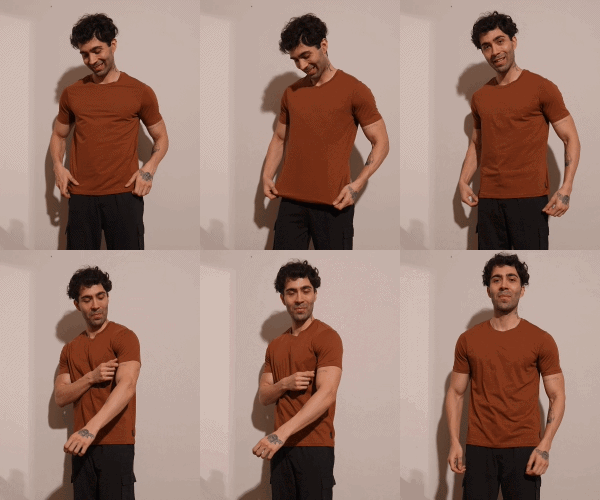
A properly fitted XXXXL t-shirt should have shoulder seams that sit at the edge of your shoulders (not drooping down your arms), enough chest room to pinch 1-2 inches of fabric away from your body, and a hem that falls just below your belt line without excessive length. The fabric should drape smoothly without pulling, stretching, or creating horizontal tension lines across the chest or stomach.
Start with the shoulders, this is your fit anchor point. The seam where the sleeve attaches to the body should align with the natural edge of your shoulder bone. Too far down your arm signals an oversized fit. Too high up creates restriction and looks undersized.
Check the chest by standing naturally and seeing if you can comfortably slide your hand between the fabric and your body. You want ease without excess. The shirt shouldn't cling, but it also shouldn't billow out like a tent.
The Three Fit Types: Regular, Relaxed, and Athletic
Regular fit XXXXL shirts follow your body's natural lines with moderate ease through the torso. They're versatile, appropriate for casual wear and layering without looking sloppy.
Relaxed fit adds 2-3 inches through the body for maximum comfort. These work well if you prefer looser clothing or plan to wear the shirt untucked. The trade-off is a boxier silhouette.
Athletic fit tapers from chest to waist, accommodating broader shoulders and chest while reducing fabric bulk around the midsection. This cut works if you carry your weight in your upper body but want a more tailored look.
Key Fit Checkpoints
- Sleeve openings should allow easy arm movement without constricting your biceps
- The neckline should sit flat against your collarbone, not gaping or choking
- Side seams should run straight down from armpit to hem, not pulling forward or back
- Hem width should be proportional to your hips, too narrow creates a mushroom effect
When you raise your arms overhead, the shirt should lift slightly but not expose your midsection. When you sit, there shouldn't be excessive bunching around your waist.
Best Fabrics for Maximum Comfort
The most comfortable XXXXL t-shirt fabrics include 100% combed cotton for breathability and softness, cotton-polyester blends (60/40 or 50/50) for durability and wrinkle resistance, and premium options like micro-modal or bamboo blends that offer superior moisture-wicking and temperature regulation. Fabric weight between 5.5-6.5 oz provides structure without heaviness, while pre-shrunk treatments prevent size changes after washing.
Cotton remains the gold standard for everyday wear. It breathes naturally, feels soft against skin, and gets better with each wash. Look for combed or ring-spun cotton, these processes remove short fibers and create a smoother, more durable fabric.
Pure cotton has one drawback: it holds moisture. If you sweat heavily or live in humid climates, you'll feel it.
100% Cotton vs Cotton Blends
Cotton-polyester blends solve the moisture problem. The synthetic fibers wick sweat away from your skin and dry faster than pure cotton. A 60/40 cotton-poly blend gives you mostly cotton comfort with added performance.
Blends also resist shrinking better and hold their shape through repeated washing. The trade-off is slightly less breathability and a different hand feel, some people find blends less soft initially, though quality blends close this gap.
Tri-blends (cotton-polyester-rayon) offer a middle ground with exceptional softness and drape. They're lighter weight and work well for layering.
Moisture-Wicking and Performance Fabrics
Performance polyester shirts use engineered fabrics that pull moisture to the surface where it evaporates quickly. These excel for active wear or hot weather but can feel synthetic against skin.
Bamboo and micro-modal fabrics deliver natural moisture management with cotton-like softness. Bamboo is naturally antimicrobial, reducing odor buildup. Micro-modal (made from beech tree pulp) is exceptionally smooth and resists pilling.
Freecultr's XXXXL options leverage these premium fabrics, combining bamboo's natural cooling properties with micro-modal's durability. The result is shirts that stay fresh longer and maintain their shape through India's varied climate conditions.
Fabric Weight Guide
Lightweight fabrics (4.5-5.5 oz) work for layering and warm weather. They're less structured and may show body contours more readily.
Midweight fabrics (5.5-6.5 oz) offer the best all-around performance, substantial enough to drape well without clinging, light enough for year-round wear.
Heavyweight fabrics (6.5+ oz) provide maximum durability and opacity. They're ideal for workwear or cooler climates but can feel too warm in summer.
How to Style Oversized T-Shirts?
Styling XXXXL t-shirts effectively requires balancing proportions through strategic choices in fit, color, and layering. Opt for solid colors or subtle patterns to create vertical lines, pair with well-fitted bottoms to avoid an oversized-everywhere look, and use layering pieces like open shirts or lightweight jackets to add structure. The goal is intentional style rather than appearing to simply wear an oversized shirt.
The biggest styling mistake is pairing loose-fitting tops with loose-fitting bottoms. When everything is oversized, you lose shape entirely. Your pants or shorts should fit properly, not tight, but with a defined silhouette.
Color selection matters more at larger sizes. Darker colors (navy, charcoal, black, deep green) create a slimming effect and look more polished. Lighter colors work but require higher quality fabrics that don't show every contour.
Choosing the Right Neckline
Crew necks are the most versatile option, they work for casual and smart-casual settings. The rounded neckline balances broader shoulders without drawing attention to the neck area.
V-necks create a vertical line that elongates your torso visually. A modest V (not deep) works better for larger sizes, it adds style without looking like you're trying too hard.
Henley necklines (the buttoned placket style) add visual interest and dress up a basic tee. They work particularly well for casual Friday office wear or evening outings.
Color and Pattern Selection for Larger Sizes
Solid colors remain the safest and most versatile choice. Build your wardrobe foundation with navy, charcoal, olive, burgundy, and black before adding lighter shades.
Vertical stripes work in your favor, they create the illusion of height and draw the eye up and down rather than side to side. Avoid horizontal stripes, which emphasize width.
Small, all-over patterns (mini geometric prints, subtle textures) add interest without overwhelming. Large, bold graphics or logos can work but choose placement carefully, center-chest designs often draw attention to the midsection.
Layering Techniques for XXXXL Sizes
An unbuttoned casual shirt over your t-shirt adds structure and creates vertical lines. Choose lightweight fabrics that don't add bulk, linen and chambray work well.
Zip-up hoodies or track jackets provide a sporty layering option. Leave them un
Conclusion
Finding the right XXXXL t-shirt isn't about settling for what fits , it's about owning your style with confidence. You now know that fabric matters more than brand hype: breathable cotton blends and micro-modal keep you cool all day, while cheap polyester traps sweat and wears out fast. Fit is everything. A well-cut oversized tee should skim your shoulders without pulling, hit mid-thigh, and give you room to move without looking like you borrowed someone else's clothes.
Styling XXXXL tees is simpler than most guides make it sound. Pair with tapered joggers or slim-fit jeans to balance proportions. Layer under an open shirt or bomber jacket when the weather cools. Keep one neutral tee and one bold graphic in rotation , that's your foundation. But don't overthink it. Comfort that fits right always looks better than trends that don't.
Ready to upgrade your wardrobe with premium comfort? Explore freecultr's collection of breathable, sustainably made essentials designed for real bodies and real life.
About freecultr
Freecultr is India's emerging D2C brand reimagining wardrobe essentials into premium comfort wear. The collection spans innerwear, loungewear, tees, socks, and accessories , all crafted from high-quality fabrics like micro-modal, bamboo, and organic cotton. Every piece is designed for breathability, softness, and durability, bringing together sustainability and style for year-round comfort.
More Articles
How to Choose the Best Undershirt for Men Based on Fabric and FitWhere to Find XXXXL Size Jerseys Nearby and What You Need to Know Before Buying
The Complete Guide to Choosing the Best Trunks for Men
How to Choose the Best Underwear Men Combo for Comfort and Style
FAQs
Why Choose XXXXL T-Shirts Today?
Men's XXXXL t-shirts are designed for chest measurements between 58-62 inches, offering a comfortable fit for larger body types without the tight, restrictive feel of smaller sizes. These shirts provide proper shoulder coverage, adequate chest room, and appropriate sleeve length, eliminating the common issues of riding up, binding across the back, or creating unflattering tension lines that smaller sizes force on.
What Are the Exact Measurements for Men's XXXXL T-Shirts?
Standard XXXXL t-shirts typically feature a chest measurement of 58-62 inches, body length of 32-34 inches, sleeve length of 9-10 inches, and shoulder width of 22-24 inches. These dimensions accommodate larger body proportions while maintaining balanced visual lines, though exact measurements vary by brand and fit style (regular, relaxed, or athletic).
What is the difference between XXXXL and 4XL: Understanding the Difference?
The jump from 4XL to XXXXL adds meaningful room where it counts. That extra 4 inches in chest circumference translates to better breathing room and eliminates the stretched fabric look that happens when you size down.
How Brands Size Differently?
Athletic-cut brands tend to run smaller in the chest while adding length. Workwear brands often build in extra room through the midsection.
How Should an XXXXL T-Shirt Fit Properly?
A properly fitted XXXXL t-shirt should have shoulder seams that sit at the edge of your shoulders (not drooping down your arms), enough chest room to pinch 1-2 inches of fabric away from your body, and a hem that falls just below your belt line without excessive length. The fabric should drape smoothly without pulling, stretching, or creating horizontal tension.
What is The Three Fit Types: Regular, Relaxed, and Athletic?
Regular fit XXXXL shirts follow your body's natural lines with moderate ease through the torso. They're versatile, appropriate for casual wear and layering without looking sloppy.
What are the key Fit Checkpoints?
When you raise your arms overhead, the shirt should lift slightly but not expose your midsection. When you sit, there shouldn't be excessive bunching around your waist.