









Quick Summary: Choosing the right undershirt for men comes down to two factors: fabric that manages moisture and temperature, and a fit that stays invisible under your outer layer. Cotton works for casual wear, bamboo and modal handle sweat better, and micro-modal delivers the smoothest finish under dress shirts. Your undershirt should end at your belt line, hug your torso without bunching, and have sleeves that don't peek out. Match crew necks to button-ups, V-necks to polos, and skip the undershirt entirely with casual tees unless you need sweat protection.
Your undershirt for men shouldn't be an afterthought , yet most guys grab whatever's on sale and wonder why their dress shirt clings by noon or their collar looks lumpy under a blazer. The difference between looking sharp and looking sloppy often hides in that invisible base layer.
Here's what nobody mentions: fabric choice affects more than comfort. It changes how your outer shirt drapes, how much you sweat through meetings, and whether that $80 linen shirt you bought lasts two seasons or two years. Cotton feels familiar but traps heat. Bamboo wicks moisture but can lose shape. Micro-modal costs more upfront but saves you from pit stains during presentations.
Fit matters just as much. Too loose and you get fabric bunching at your waistband. Too tight and every seam shows through your work shirt. The sleeve length, neckline depth, and torso taper all determine whether your undershirt works with your wardrobe or against it.
You'll learn which fabrics perform best in different situations, how to match undershirt styles to specific outfits, and the exact fit checkpoints that separate a good undershirt from one that ruins your look.
Why Does Undershirt Fabric Matter?
Fabric determines how an undershirt manages sweat, regulates body temperature, and holds up after repeated washing. Cotton blends offer breathability for daily wear, while synthetics like polyester excel at moisture-wicking during physical activity, and premium materials like micro-modal provide superior softness and durability for all-day comfort.
The wrong fabric turns a simple undershirt into a liability. You'll feel clammy in meetings, notice visible sweat patches through your dress shirt, or deal with fabric that loses shape after a month of wear. The right fabric solves all three problems.
Breathability keeps air circulating against your skin. Natural fibers like cotton allow moisture vapor to escape, which is why they've dominated the undershirt market for decades. But breathability alone isn't enough when you're moving between air-conditioned offices and humid outdoor conditions.
Moisture-wicking pulls sweat away from your skin and spreads it across the fabric surface for faster evaporation. Synthetic fibers like polyester and nylon do this better than cotton, which is why athletic undershirts use these materials. The trade-off? Synthetics can trap odor-causing bacteria more easily than natural fibers.
Durability matters when you're washing undershirts weekly. Premium fabrics like bamboo-derived viscose and micro-modal maintain their shape and softness through hundreds of wash cycles. Standard cotton starts pilling and stretching after 30-40 washes. That ₹500 undershirt that lasts two years costs less per wear than a ₹200 option that needs replacing every six months.
Key Fabric Types and Properties
Cotton remains the most popular undershirt fabric due to its natural breathability and affordability, typically priced between ₹200-₹600 per piece in India. Synthetic blends (polyester-spandex) offer superior moisture-wicking for active wear, while premium options like micro-modal and bamboo viscose deliver exceptional softness and temperature regulation at ₹800-₹1,500 per undershirt.
Each fabric category serves different needs. Here's what you're actually getting:
Cotton and Cotton Blends
Pure cotton undershirts feel soft against skin and absorb moisture naturally. The problem? They hold that moisture instead of releasing it quickly. You'll notice this on humid days when your undershirt feels damp for hours.
Cotton-polyester blends (typically 60/40 or 70/30 ratios) balance comfort with performance. The cotton provides breathability and softness, while polyester adds stretch and faster drying. Brands like Jockey and Hanes built their reputations on these blends because they work for most men in most situations.
SUPIMA cotton deserves special mention. This premium long-staple cotton (grown primarily in the United States) produces softer, stronger fabric than standard cotton. SUPIMA undershirts cost more upfront but maintain their shape and texture significantly longer.
Synthetic Performance Fabrics
Polyester-spandex blends dominate the athletic undershirt category. These fabrics pull sweat away from your body within seconds, which is crucial during workouts or in hot climates. The stretch component (usually 5-15% spandex) allows the undershirt to move with your body without riding up.
Nylon blends offer similar moisture-wicking with a smoother hand feel. They're less common in undershirts but appear in premium compression styles. The downside? Both polyester and nylon can develop odor faster than natural fibers, even with antimicrobial treatments.
Premium Natural and Semi-Synthetic Options
Micro-modal, derived from beech tree pulp, feels noticeably softer than cotton while wicking moisture more effectively. Freecultr uses micro-modal in their premium undershirt line specifically because it combines the breathability men expect from cotton with the performance characteristics of synthetics. The fabric also resists shrinkage, which is why your micro-modal undershirt fits the same way after 50 washes as it did on day one.
Bamboo viscose offers similar benefits with added antimicrobial properties. The natural structure of bamboo fiber resists bacteria growth, which means less odor even after a full day of wear. Bamboo undershirts typically cost ₹900-₹1,200 in India but deliver exceptional value for men who wear undershirts daily.
Organic cotton appeals to environmentally conscious buyers. It's grown without synthetic pesticides or fertilizers, which reduces environmental impact. The fabric itself performs similarly to conventional cotton, so you're paying a premium for sustainability rather than enhanced comfort or durability.
| Fabric Type | Best For | Price Range (INR) | Key Advantage | Main Drawback |
|---|---|---|---|---|
| 100% Cotton | Casual daily wear | ₹200-₹500 | Natural breathability | Slow drying, loses shape |
| Cotton-Polyester Blend | All-purpose wear | ₹300-₹600 | Balanced performance | Moderate in all categories |
| Polyester-Spandex | Athletic activities | ₹400-₹800 | Superior moisture-wicking | Can trap odor |
| Micro-Modal | Premium daily comfort | ₹800-₹1,500 | Exceptional softness, durability | Higher upfront cost |
| Bamboo Viscose | Odor-sensitive situations | ₹900-₹1,200 | Natural antimicrobial | Requires gentle washing |
How Should an Undershirt Fit?
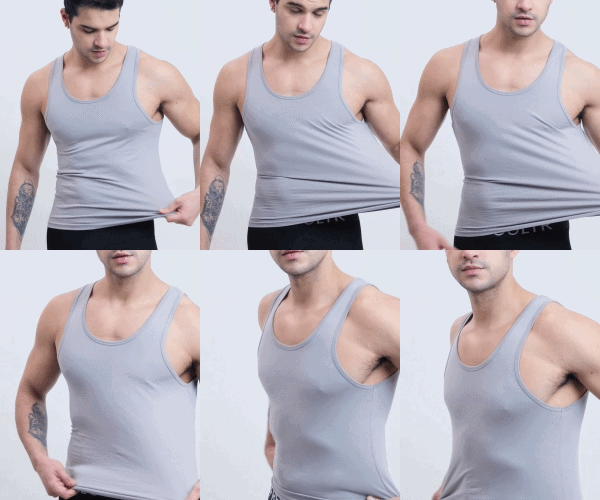
A properly fitted undershirt should lie flat against your torso without bunching, with the hem reaching 5-8 cm below your belt line to stay tucked during movement. The shoulder seams should sit at the edge of your shoulders, not drooping down your arms, and the neckline must remain hidden beneath your outer shirt collar while allowing comfortable neck movement.
Fit matters more than most men realize. An undershirt that's too loose bunches under your dress shirt and creates visible lumps. Too tight and it restricts movement while creating its own visible lines through your outer layer.
Length and Coverage
The hem should extend far enough that it stays tucked when you raise your arms or bend forward. Test this in the fitting room: reach overhead and check if the undershirt pulls out from your waistband. If it does, size up or look for a longer cut.
Tank-style undershirts (sleeveless) work well under casual shirts but can show under dress shirts with larger armholes. Crew neck and v-neck styles with short sleeves provide better coverage for professional settings.
Shoulder and Chest Fit
The shoulder seam placement determines whether your undershirt looks like proper undergarment or sloppy loungewear. That seam should align with the natural edge of your shoulder, where your arm connects to your torso. When the seam droops down your bicep, the entire undershirt hangs loose and bunches awkwardly.
Across the chest, you want the fabric to lie smooth without pulling or gaping. If you see horizontal stress lines across your chest when standing normally, size up. If the fabric billows out when you move, size down or try a slim-fit option.
Neckline Considerations
Crew neck undershirts work under button-up shirts when you keep the top button fastened. The moment you open that collar, the undershirt shows. V-neck styles solve this problem by sitting low enough to remain hidden even with two buttons undone.
The depth of the V matters. A shallow V (5-8 cm below the collarbone) works under most shirts. Deep V-necks (10+ cm) are designed for open-collar casual wear or under henleys and polos. They don't provide the same sweat protection across your upper chest.
Scoop neck undershirts, while less common, work well under t-shirts and casual wear. They're not appropriate under dress shirts.
Compression vs. Classic Fit
Compression undershirts use elastic fabrics to hug your body tightly. They smooth your silhouette under fitted dress shirts and provide muscle support during physical activity. The trade-off is reduced breathability and a feeling some men find restrictive during long wear.
Classic fit undershirts hang more loosely, prioritizing comfort and air circulation over body shaping. They work better in hot climates and for men who prioritize comfort over appearance.
Slim fit splits the difference. The undershirt follows your body contours without compression-level tightness. This is the most versatile option for men who wear undershirts under both casual and professional clothing.
Matching Undershirts to Different Outfits
White crew neck undershirts remain the safest choice under light-colored dress shirts, while v-neck styles in white or grey work best under casual button-ups worn with an open collar. For athletic wear and gym sessions, moisture-wicking synthetic undershirts in dark colors prevent visible sweat marks and provide better odor control than cotton alternatives.
The outfit dictates the undershirt, not the other way around. Here's what actually works:
Professional and Formal Settings
Under white or light blue dress shirts, stick with white undershirts. Grey shows through as a shadow, and colored undershirts create visible contrast. The neckline should stay hidden whether you choose crew or v-neck, which means v-neck for open-collar situations and crew neck when you're buttoning up completely.
Under dark dress shirts (navy, charcoal, black), grey undershirts often work better than white. White can create a layered look that shows through thin fabrics, while grey blends more naturally. Test this with your specific shirts before committing to a color.
Patterned dress shirts (checks, stripes) are more forgiving. The pattern breaks up any slight visibility of the undershirt beneath. You can wear white or grey without worrying about show-through.
Casual and Weekend Wear
Under t-shirts, skip the undershirt entirely unless you need the extra sweat protection. Layering a crew neck undershirt under a crew neck t-shirt creates bulk around the collar and looks sloppy. If you must layer, use a v-neck or tank undershirt that stays completely hidden.
Under casual button-ups worn untucked with jeans, v-neck undershirts in grey or white work well. The v-neck stays hidden even with the top two buttons open, and the undershirt prevents sweat from showing through your shirt during warm weather.
Henleys and polo shirts pair best with deep v-neck undershirts or no undershirt at all. The button placket on these shirts sits lower than standard collars, which means crew necks and shallow v-necks will show.
Athletic and Active Situations
For gym workouts, prioritize moisture-wicking synthetic fabrics over cotton
Conclusion
Choosing the right undershirt isn't about grabbing the cheapest pack at the store. It's about understanding what your body needs and what your wardrobe demands. Fabric dictates comfort , cotton breathes, bamboo wicks moisture, and micro-modal feels like a second skin. Fit determines invisibility , too loose and it bunches under your shirt, too tight and you're uncomfortable all day. Match your undershirt to your outfit: crew necks for casual wear, V-necks for dress shirts, and tank styles for layering under polos.
The best undershirt is the one you forget you're wearing. It should regulate temperature, stay in place, and never show through your outer layer. If you've been settling for scratchy fabrics or awkward fits, it's time to upgrade. Your comfort matters, and the right undershirt makes every outfit work better. Start with one premium piece and you'll notice the difference immediately.
Ready to experience what premium comfort feels like? Explore Freecultr's collection of men's undershirts crafted from bamboo, micro-modal, and organic cotton , designed for Indian climates and built to last.
About freecultr
Freecultr is India's emerging D2C brand reimagining wardrobe essentials into premium comfort wear. The collection spans innerwear for him and her, tees, socks, and accessories , all crafted from sustainable fabrics like micro-modal, bamboo, and organic cotton. Every piece is designed with breathability, softness, and durability in mind, making everyday comfort effortless year-round.
More Articles
How to Choose the Best Men's Briefs for Comfort and SupportHow to Buy the Best Undies for Men Online in India with Freecultr
Best Underwear Men Gym Workouts Require for Comfort and Performance
Complete Reviews of Popular Men's Trunks Brands in India for Every Budget
FAQs
Why Does Undershirt Fabric Matter?
Fabric determines how an undershirt manages sweat, regulates body temperature, and holds up after repeated washing. Cotton blends offer breathability for daily wear, while synthetics like polyester excel at moisture-wicking during physical activity, and premium materials like micro-modal provide superior softness and durability for all-day comfort.
What are the key Fabric Types and Properties?
Cotton remains the most popular undershirt fabric due to its natural breathability and affordability, typically priced between ₹200-₹600 per piece in India. Synthetic blends (polyester-spandex) offer superior moisture-wicking for active wear, while premium options like micro-modal and bamboo viscose deliver exceptional softness and temperature regulation at ₹800-₹1,500 per undershirt.
What is Cotton and Cotton Blends?
Pure cotton undershirts feel soft against skin and absorb moisture naturally. The problem?
What is Synthetic Performance Fabrics?
Polyester-spandex blends dominate the athletic undershirt category. These fabrics pull sweat away from your body within seconds, which is crucial during workouts or in hot climates.
What is Premium Natural and Semi-Synthetic Options?
Micro-modal, derived from beech tree pulp, feels noticeably softer than cotton while wicking moisture more effectively. Freecultr uses micro-modal in their premium undershirt line specifically because it combines the breathability men expect from cotton with the performance characteristics of synthetics.
How Should an Undershirt Fit?
A properly fitted undershirt should lie flat against your torso without bunching, with the hem reaching 5-8 cm below your belt line to stay tucked during movement. The shoulder seams should sit at the edge of your shoulders, not drooping down your arms, and the neckline must remain hidden beneath your outer shirt collar while allowing comfortable neck movement.
What is Length and Coverage?
The hem should extend far enough that it stays tucked when you raise your arms or bend forward. Test this in the fitting room: reach overhead and check if the undershirt pulls out from your waistband.