

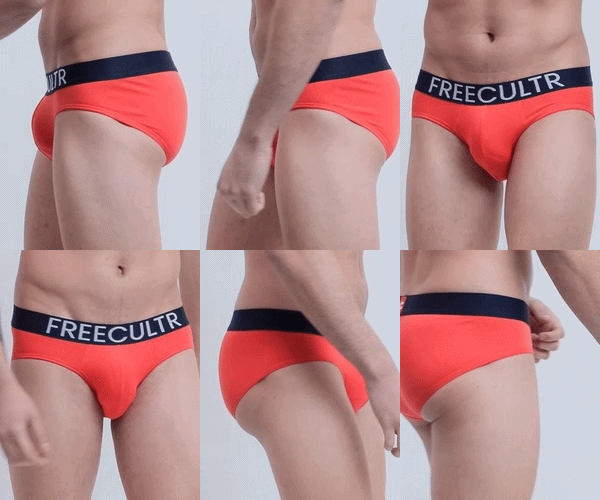
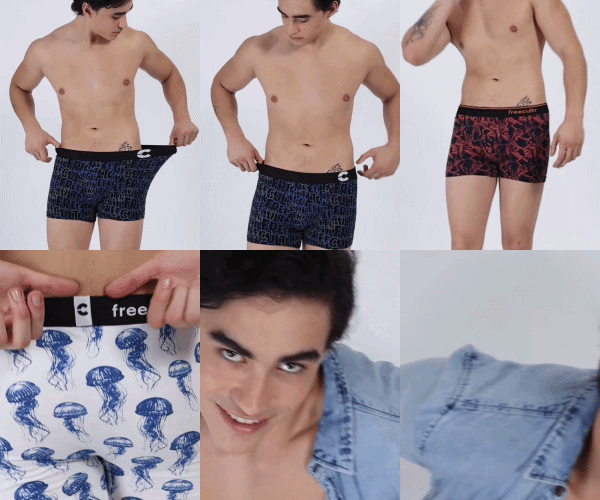
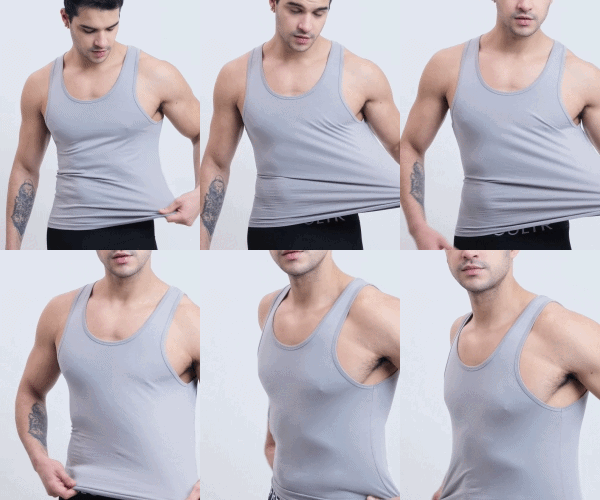

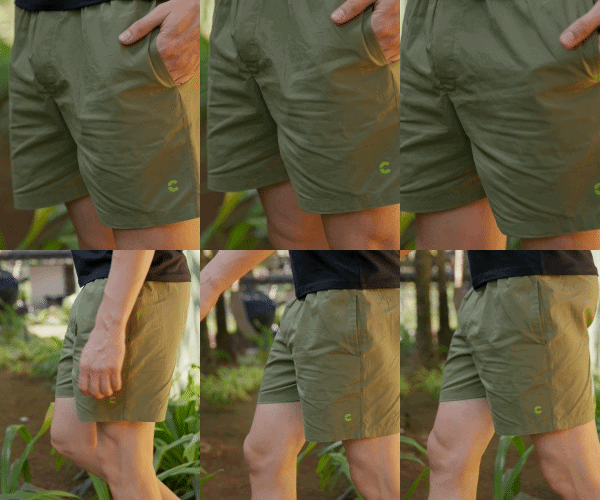


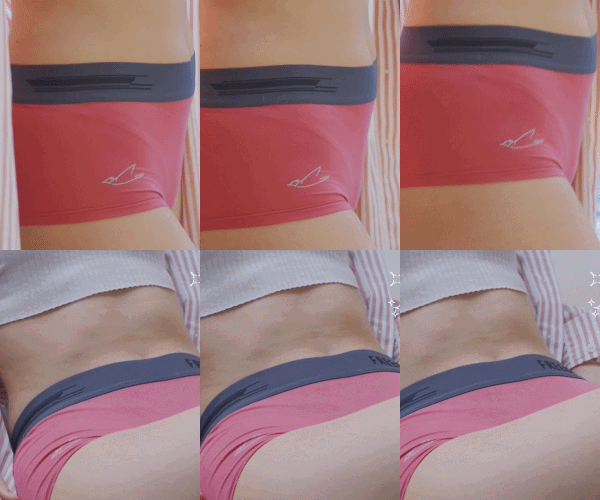
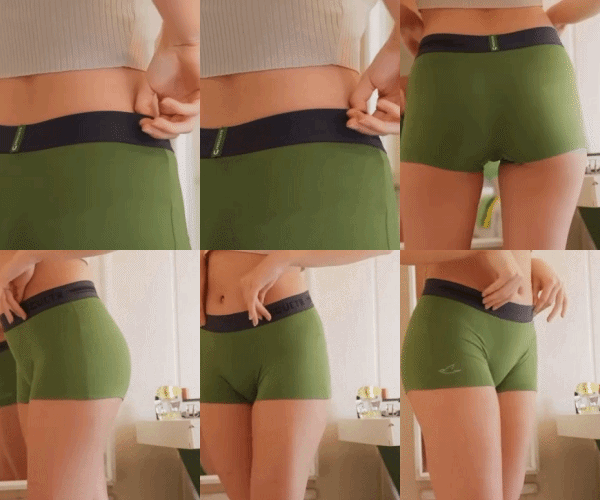



Quick Summary: The right underwear men gym sessions demand isn't about style , it's about moisture control, friction prevention, and support that moves with you. Performance underwear uses breathable fabrics like modal blends and mesh panels to keep you dry, while anti-chafe construction and compression fits reduce movement during high-intensity training. Choose moisture-wicking materials, prioritise four-way stretch, and match your underwear style to your workout type for maximum comfort and performance gains.
You've felt it halfway through a set of squats , that uncomfortable bunch, the wet cling, the distraction that breaks your focus when you should be pushing your limit. Bad underwear men gym workouts expose isn't just annoying. It derails your form, creates chafing that lasts days, and makes you adjust yourself between reps instead of concentrating on progressive overload.
Most guys treat gym underwear as an afterthought. They grab whatever's in the drawer and wonder why their training session feels off. But the fabric sitting against your skin for 90 minutes of sweat and movement has a direct impact on how you perform. freecultr designs activewear specifically for the demands of Indian gym conditions , high humidity, intense cardio intervals, and compound lifts that test every seam.
You're about to learn which fabrics actually wick moisture instead of trapping it, how compression levels affect muscle support during different exercises, and why the underwear style that works for deadlifts will sabotage your sprint intervals. This isn't about buying more gear. It's about choosing the one piece of clothing that determines whether your next workout feels effortless or exhausting.
Why Gym Underwear Fabric Matters
The fabric in your gym underwear directly controls sweat management, temperature regulation, and friction prevention during movement, poor fabric choices lead to moisture buildup, chafing, and bacterial growth that derail your workout comfort and hygiene within the first 20 minutes of exercise.
Cotton feels soft at first. But it absorbs sweat and holds it against your skin. That trapped moisture creates friction. Friction creates chafing. And damp fabric becomes a breeding ground for bacteria and fungal infections.
Performance fabrics solve this. Moisture-wicking synthetics like polyester and nylon pull sweat away from your skin to the outer layer where it evaporates. Spandex or elastane blends add stretch so the fabric moves with you instead of restricting your range of motion during squats, lunges, or deadlifts.
Natural performance fibers work too. Bamboo and micro-modal offer softness comparable to cotton but with better moisture management. They're breathable, antimicrobial, and hold their shape after repeated washing. Brands like Freecultr use these premium natural fibers in their gym underwear range, bamboo fabric naturally resists odor buildup even during high-intensity training sessions.
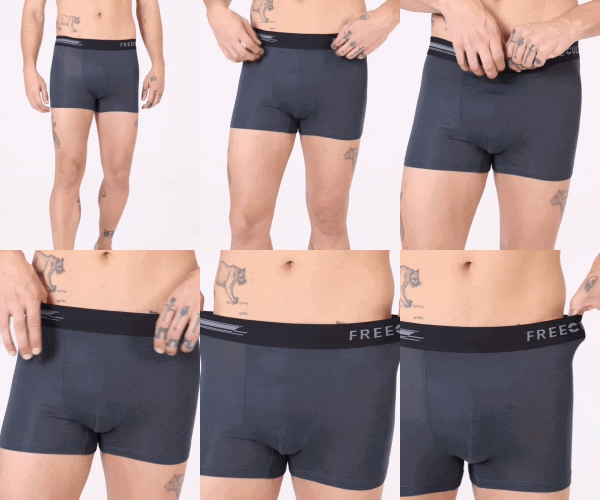
The weave structure matters as much as the fiber. Mesh panels in high-heat zones (groin, inner thighs) increase airflow. Flat-lock seams reduce friction points. Four-way stretch construction prevents the waistband from digging in when you bend or twist.
Your fabric choice also affects durability. Cheap cotton blends lose elasticity after 10-15 washes. Quality synthetic blends maintain compression and support for 50+ wash cycles. That's the difference between replacing your gym underwear every two months or every year.
Key Features of Performance Underwear
Performance underwear combines moisture-wicking fabrics, anatomical support structures, anti-chafing flat seams, and four-way stretch materials to maintain comfort and hygiene during intense physical activity, these features work together to prevent the three main workout disruptions: excess moisture, restrictive movement, and skin irritation.
Moisture Management Systems
Sweat evacuation happens in layers. The inner layer pulls moisture off your skin. The middle layer spreads it across a larger surface area. The outer layer exposes it to air for evaporation. Quality gym underwear uses different fabric weights in each zone to optimize this process.
Look for underwear with moisture-wicking ratings. Some brands specify their fabric can move X grams of moisture per square meter per hour. Freecultr's micro-modal range excels here, the fabric absorbs 50% more moisture than cotton while drying three times faster.
Anatomical Support Design
Generic underwear treats your body like a cylinder. Performance underwear maps the actual contours. Contoured pouches provide support without compression. This matters during high-impact activities like box jumps or sprints where inadequate support causes discomfort and distraction.
The pouch design should hold everything in place without creating pressure points. Brands like Saxx and Under Armour pioneered this with their ballpark pouch technology. But you don't need premium pricing, Freecultr's anatomical construction delivers similar support at a fraction of the cost.
Anti-Chafing Construction
Chafing happens where fabric edges meet skin during repetitive motion. Traditional underwear uses thick seams that create friction ridges. Performance underwear uses flat-lock seams that sit flush against your skin.
The leg opening design matters too. Too tight and it digs in. Too loose and it rides up. The best gym underwear uses silicone grip strips or elastic bands that stay in place without constriction. Test this by doing bodyweight squats, if the leg opening shifts more than 2-3 cm, it'll ride up during your workout.
Ventilation Zones
Your groin generates more heat than most body parts during exercise. Mesh panels in strategic locations increase airflow by 30-40% compared to solid fabric construction. Look for mesh placement along the inner thighs and rear panel, these zones trap the most heat during cardio and leg workouts.
How Does Fit Impact Workout Performance?
Proper underwear fit eliminates movement restriction, prevents fabric bunching during exercise, and maintains consistent support throughout your workout, ill-fitting underwear forces constant adjustment, disrupts your form, and reduces power output by creating unnecessary tension in your hip flexors and core stabilizers.
Tight underwear restricts blood flow. You'll notice this first in your hip mobility. Deep squats feel harder. Leg raises create pulling sensations. That's your underwear fighting your range of motion.
Loose underwear bunches and shifts. You'll spend half your workout pulling fabric out of uncomfortable positions. That's mental distraction you can't afford during heavy lifts or timed circuits.
The waistband position determines comfort during core exercises. A waistband that sits too low slides down during planks and hanging leg raises. One that sits too high digs into your abdomen during crunches and sit-ups. The ideal position is 2-3 cm below your navel, high enough to stay put, low enough to avoid pressure.
Leg length affects different exercises differently. Longer legs (like boxer briefs) prevent inner thigh chafing during running and cycling. Shorter legs (like trunks) eliminate fabric bunching during squats and deadlifts. Your primary workout style should guide this choice.
Freecultr offers multiple inseam lengths in their trunk and boxer brief collections. This lets you match the cut to your training focus without compromising on fabric quality or support features.
| Fit Issue | Impact on Performance | Fix |
|---|---|---|
| Waistband too tight | Restricts breathing, reduces core engagement | Size up or choose elastic-free waistband |
| Leg openings too loose | Fabric rides up, constant adjustment needed | Choose style with grip strips or size down |
| Pouch too small | Compression discomfort, restricted movement | Look for anatomical pouch design |
| Inseam too long | Bunching behind knees during squats | Switch to trunks or shorter boxer briefs |
| Overall too loose | No support, excessive fabric movement | Size down or choose compression fit |
Sizing varies between brands. Don't assume your regular underwear size translates to gym underwear. Measure your waist at the point where you'll wear the waistband (usually 2-3 cm below navel). Compare that measurement to the brand's size chart, not the generic S/M/L labels.
Top Underwear Styles for Different Exercises
Different workout types create distinct friction patterns, range-of-motion demands, and sweat accumulation zones, matching your underwear style to your primary training activity prevents the specific discomfort patterns that exercise creates, with trunks excelling for weightlifting, longer boxer briefs for running, and compression shorts for high-intensity interval training.
What Kind of Underwear Should Guys Wear for Gymming?
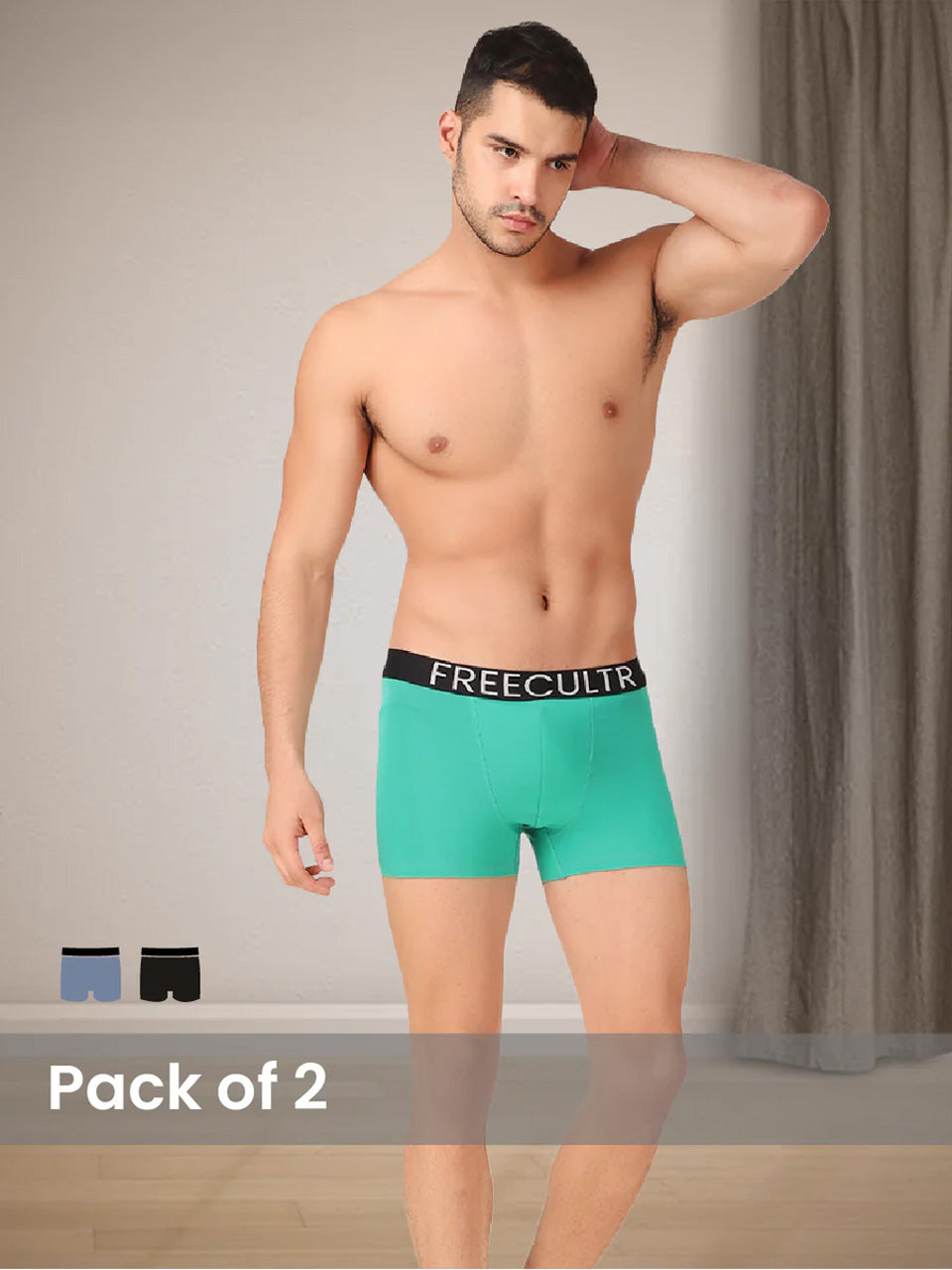
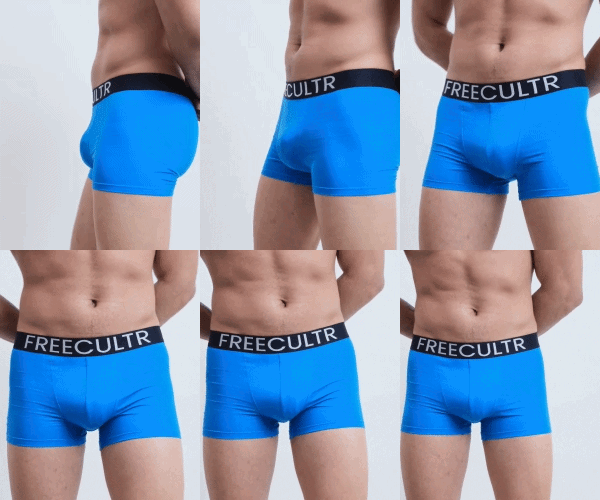
Trunks work best for weightlifting and strength training. The shorter leg (typically 5-8 cm inseam) eliminates fabric bunching in your hip crease during deep squats and deadlifts. The snug fit provides support without the excess fabric that longer styles create.
Freecultr's trunk range uses a 6 cm inseam with four-way stretch fabric. This length stays put during leg presses and Romanian deadlifts without riding up or creating pressure points. The micro-modal fabric maintains its shape even after heavy squat sessions where cheaper materials would stretch out.
What Styles Are Best for Working Out?
Boxer briefs suit running and cardio. The longer leg (10-15 cm inseam) prevents inner thigh chafing during repetitive leg movement. Look for styles with mesh panels along the inner thigh, this is where heat buildup peaks during steady-state cardio.
Compression shorts work for HIIT and CrossFit. The tight fit reduces muscle vibration during explosive movements like burpees and box jumps. But true compression shorts differ from tight underwear, they use graduated compression that's tighter at the extremities and looser at the core.
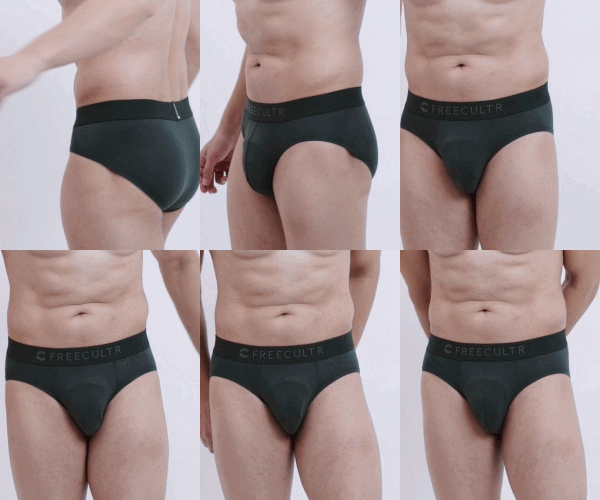
Briefs offer maximum freedom for yoga and mobility work. The minimal coverage eliminates fabric interference during hip openers, pigeon pose, and deep stretches. But they provide less support for high-impact activities.
Do You Need Special Underwear for the Gym?
Yes. Regular underwear fails in three specific ways during workouts. First, cotton absorbs sweat instead of wicking it away, you'll feel damp within 15 minutes of moderate cardio. Second, standard elastic waistbands lose tension when wet, causing constant slippage. Third, traditional seam construction creates friction points that turn into chafing after 30-40 minutes of movement.
The cost difference is minimal. Quality gym underwear from brands like Freecultr starts around ₹400-600 per piece. That's 2-3x the cost of basic cotton underwear but delivers 5-10x the durability and comfort during actual training.
Activity-Specific Recommendations
- Powerlifting: Trunks with anatomical pouch, flat-lock seams, minimal leg length (5-6 cm inseam)
- Running: Boxer briefs with mesh panels, 12-15 cm inseam, silicone grip at leg openings
- Cycling: Seamless boxer briefs, chamois-compatible fit, no center seam in saddle contact zone
- CrossFit/HIIT: Compression shorts or long trunks, four-way stretch, reinforced waistband
- Yoga/Pilates: Briefs or short trunks, soft waistband, minimal bulk
- Swimming/Aqua fitness: Quick-dry synthetic briefs, chlorine-resistant fabric, no cotton
What Kind of Materials Should I Look for in Gym Underwear?
Performance gym underwear uses synthetic moisture-wicking fibers (polyester, nylon, spandex) or advanced natural fibers (bamboo, micro-modal, merino wool) that manage sweat, resist odor, and maintain elasticity through repeated washing, avoid cotton and cotton-heavy blends that absorb moisture and lose shape after 10-15 wash cycles.
Synthetic Performance Fabrics
Polyester dominates the athletic underwear market. It's hydrophobic, water rolls off instead of soaking in. This creates the wicking effect that pulls sweat away from your skin. Quality polyester blends dry in 2-3 hours compared to 8-12 hours for cotton.
Nylon adds durability and a softer hand feel than polyester. It's more expensive but resists pilling and maintains its shape better. Brands like Lululemon and Under Armour use nylon-dominant blends in their premium lines.
Spandex (also called elastane or Lycra) provides stretch. Most performance underwear uses 10-20% spandex blended with polyester or nylon. This ratio delivers four-way stretch
Conclusion
Choosing the right underwear for your gym sessions isn't about trends or brand hype. It's about fabric that breathes when you sweat, a fit that stays in place during burpees, and a cut that doesn't chafe on your fifth kilometre. Moisture-wicking materials like micro-modal and bamboo cotton keep you dry. A snug waistband and seamless construction prevent distractions mid-workout. And the style you pick, whether trunks for men vs boxer briefs, should match the intensity of your routine, from weightlifting to HIIT.
You've learned what separates performance underwear from everyday basics. Now it's time to upgrade your drawer with pieces that actually work as hard as you do. Freecultr's premium innerwear collection combines breathable fabrics, ergonomic design, and year-round durability, all crafted for the Indian climate and active lifestyle. Explore Freecultr's gym-ready underwear range and feel the difference from your first rep.
About freecultr
Freecultr is India's emerging direct-to-consumer brand reimagining wardrobe essentials into premium comfort wear. The collection spans innerwear for men and women, loungewear, tees, socks, and accessories, all crafted from sustainable fabrics like micro-modal, bamboo, and organic cotton. Designed for breathability, softness, and durability, Freecultr's pieces are built to perform in India's diverse climate while keeping style and sustainability at the core.
More Articles
Underwear for Men Combo: Upgrade Your Daily Essentials5 Reasons to Invest in the Best Quality Underwear for Men
5 Printed Underwear Styles for Men to Own Right Now
Boxer Shorts for Men: Why Freecultr Wins on Comfort
FAQs
Why Gym Underwear Fabric Matters?
The fabric in your gym underwear directly controls sweat management, temperature regulation, and friction prevention during movement, poor fabric choices lead to moisture buildup, chafing, and bacterial growth that derail your workout comfort and hygiene within the first 20 minutes of exercise.
What are the key Features of Performance Underwear?
Performance underwear combines moisture-wicking fabrics, anatomical support structures, anti-chafing flat seams, and four-way stretch materials to maintain comfort and hygiene during intense physical activity, these features work together to prevent the three main workout disruptions: excess moisture, restrictive movement, and skin irritation.
What is Moisture Management Systems?
Sweat evacuation happens in layers. The inner layer pulls moisture off your skin.
What is Anatomical Support Design?
Generic underwear treats your body like a cylinder. Performance underwear maps the actual contours.
What is Anti-Chafing Construction?
Chafing happens where fabric edges meet skin during repetitive motion. Traditional underwear uses thick seams that create friction ridges.
What is Ventilation Zones?
Your groin generates more heat than most body parts during exercise. Mesh panels in strategic locations increase airflow by 30-40% compared to solid fabric construction.
How Does Fit Impact Workout Performance?
Proper underwear fit eliminates movement restriction, prevents fabric bunching during exercise, and maintains consistent support throughout your workout, ill-fitting underwear forces constant adjustment, disrupts your form, and reduces power output by creating unnecessary tension in your hip flexors and core stabilizers.