




Quick Summary: Choosing the right inner wear for startup brand merchandise requires balancing fabric quality, audience fit, comfort, and cost. Prioritize breathable cotton blends or moisture-wicking synthetics that maintain shape after repeated washing. Match styles to your team demographics (age, gender mix, climate), test samples for all-day wearability, and negotiate bulk pricing that keeps per-unit costs under your merchandise budget while maintaining quality standards your employees will actually wear.
Most startups order 200 branded t-shirts and call it a merchandise strategy. Then they watch those shirts sit in storage while employees keep wearing their own clothes. The difference between merchandise that gets worn daily and merchandise that becomes closet clutter? The inner wear foundation nobody talks about.
Inner wear isn't just an afterthought in your brand merchandise lineup. It's the most intimate touchpoint between your brand and your team, worn closer to the skin than any hoodie or cap ever will be. When you get it right, employees reach for your branded basics first thing in the morning. When you get it wrong, you've just spent thousands on promotional items that never see daylight.
At freecultr, we've seen hundreds of startups navigate this exact challenge. The brands that succeed don't just slap a logo on the cheapest wholesale option. They understand that comfort drives adoption, fabric quality determines longevity, and smart sourcing makes the entire program financially sustainable.
You're about to learn the four decisions that separate merchandise people actually wear from merchandise that becomes a tax write-off. No fluff, no vendor pitches, just the framework that works whether you're outfitting 10 co-founders or 1,000 employees.
Why Does Fabric Quality Matter Most?
Fabric quality directly determines how long your branded inner wear lasts, how comfortable employees feel wearing it, and whether recipients actually use the merchandise or discard it, making it the single most critical factor in ROI for startup brand merchandise programs.
Most startups underestimate this. They focus on logo placement and color matching while treating fabric as an afterthought. But here's what we've seen: when you distribute scratchy polyester briefs or non-breathable synthetic boxers, they end up in donation bins within weeks. Your brand literally gets thrown away.
Premium fabrics like micro-modal, bamboo, and organic cotton offer three measurable advantages. First, they breathe. Natural fibers wick moisture away from skin, preventing the clammy feeling that makes people avoid wearing branded apparel. Second, they hold up through repeated washing, synthetic blends pill and fade after 10-15 cycles, while quality cotton maintains shape for 50+ washes. Third, they signal brand values: choosing sustainable materials tells recipients your startup cares about quality and environmental impact.
The cost difference matters less than you think. A ₹200 micro-modal brief costs roughly ₹120 more than a basic polyester option, but the perceived value gap is exponential. Recipients treat premium inner wear as a genuine gift, not disposable swag. That's the difference between merchandise that builds brand affinity and merchandise that damages it.
Natural vs Synthetic: The Comfort Gap
Cotton, bamboo, and modal are natural cellulose fibers. They absorb moisture, allow air circulation, and feel soft against skin. Polyester and nylon are petroleum-based plastics. They trap heat, hold odors, and cause friction. For inner wear specifically, this distinction is non-negotiable.
Synthetic fabrics work for outer layers where durability and stretch matter more than breathability. But against skin, all day, in varied temperatures? Natural fibers win every time. Your team members won't articulate why they prefer one pair over another, they'll just stop wearing the uncomfortable ones.
Understanding Your Target Audience Demographics
Effective brand merchandise requires matching inner wear styles, sizes, and fabrics to the specific age ranges, body types, and lifestyle patterns of your actual employees and customers, not generic demographic assumptions, because a 22-year-old developer and a 45-year-old sales director have completely different comfort priorities and style preferences.
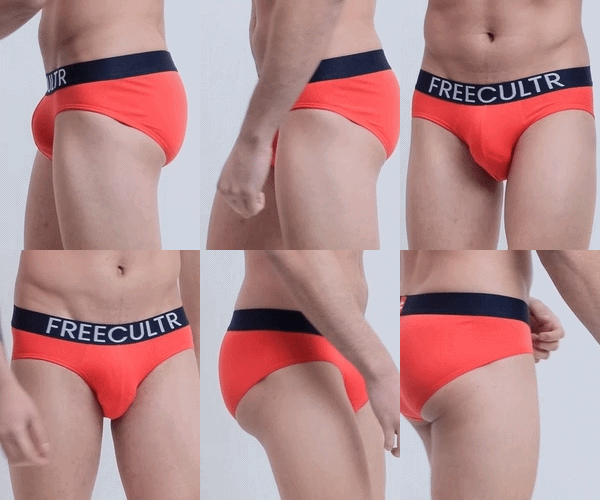
Start with data you already have. Pull your employee roster or customer database and segment by age, gender, and role. A startup with mostly 20-30 year old engineers needs different merchandise than one with a mixed-age sales team. Younger audiences gravitate toward boxer briefs and trunks with bold colors. Older demographics prefer classic briefs and neutral tones.
Size distribution matters more than most founders realize. Indian body types vary significantly, and Western size charts don't translate cleanly. We've found that offering S through XXL in equal quantities leaves you with excess small sizes and shortages in L and XL. A better distribution: 15% S, 25% M, 35% L, 20% XL, 5% XXL. Adjust based on your actual team composition.
| Age Group | Preferred Styles | Fabric Priority | Color Preference |
|---|---|---|---|
| 18-24 | Trunks, boxer briefs | Stretch, moisture-wicking | Bold colors, patterns |
| 25-34 | Boxer briefs, trunks | Breathability, softness | Solid colors, minimal branding |
| 35-49 | Briefs, boxer briefs | Durability, comfort | Classic neutrals |
| 50+ | Briefs, boxers | Softness, non-irritating | Traditional colors |
Gender-Specific Considerations
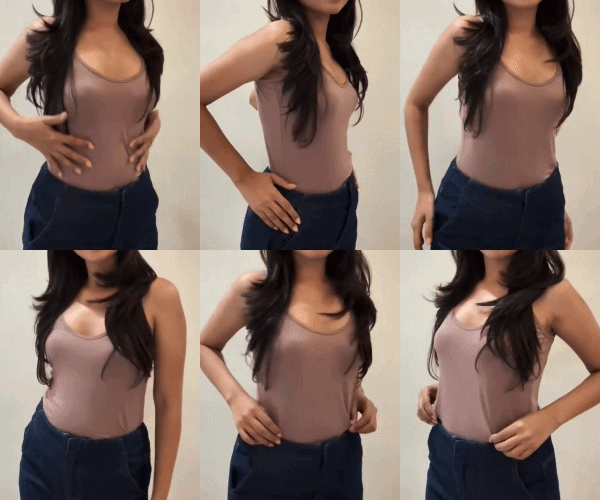
Women's inner wear requires more nuanced sizing and style variety than men's. Bra sizing alone involves band and cup measurements, and getting it wrong means the merchandise goes unused. For startup merchandise programs, stick to sports bras in S-XL sizing, they're more forgiving and universally wearable than traditional bras.
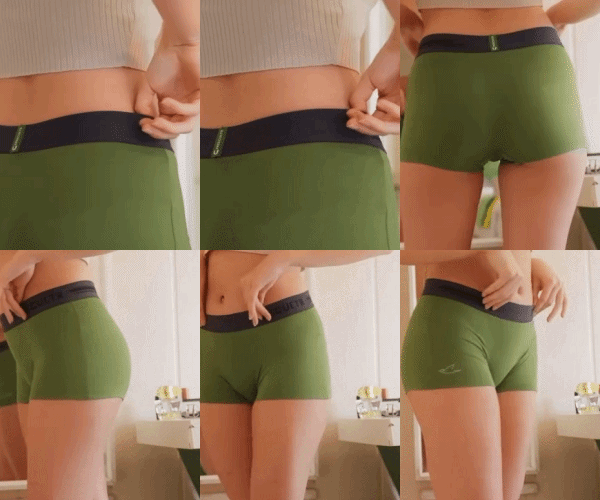
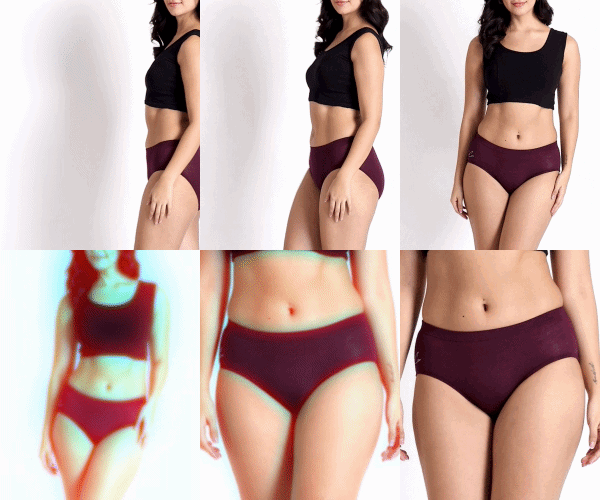
For women's underwear, offer at least three styles: bikini, hipster, and boy shorts. Different body types prefer different coverage levels. And never assume one size distribution works across genders. Women's sizing tends to cluster more heavily in S and M compared to men's L-heavy distribution.
Activity Level and Lifestyle Matching
A tech startup with desk-based employees needs different inner wear than a logistics company with warehouse staff. Sedentary workers prioritize softness and non-binding waistbands. Active roles need moisture-wicking fabrics and secure fit that prevents riding up.
Ask these questions before ordering: Does your team work in air-conditioned offices or variable temperature environments? Do they commute long distances? Do they exercise during lunch breaks? The answers should directly inform fabric and style choices. Brands like UNIQLO's AIRism line excel at temperature regulation for office environments, while performance fabrics work better for active settings.
How to Balance Comfort and Branding?
The most effective branded inner wear places small, subtle logos on waistbands or interior tags rather than large external prints, because recipients wear comfortable, understated merchandise repeatedly while loud branding gets relegated to "never wear" status, making restraint the key to actual brand exposure.
This contradicts most startup instincts. You want maximum logo visibility. You paid for this merchandise. But inner wear isn't a billboard. It's an intimate garment people wear against their skin, often visible only to themselves and close contacts. Aggressive branding feels invasive at that proximity.
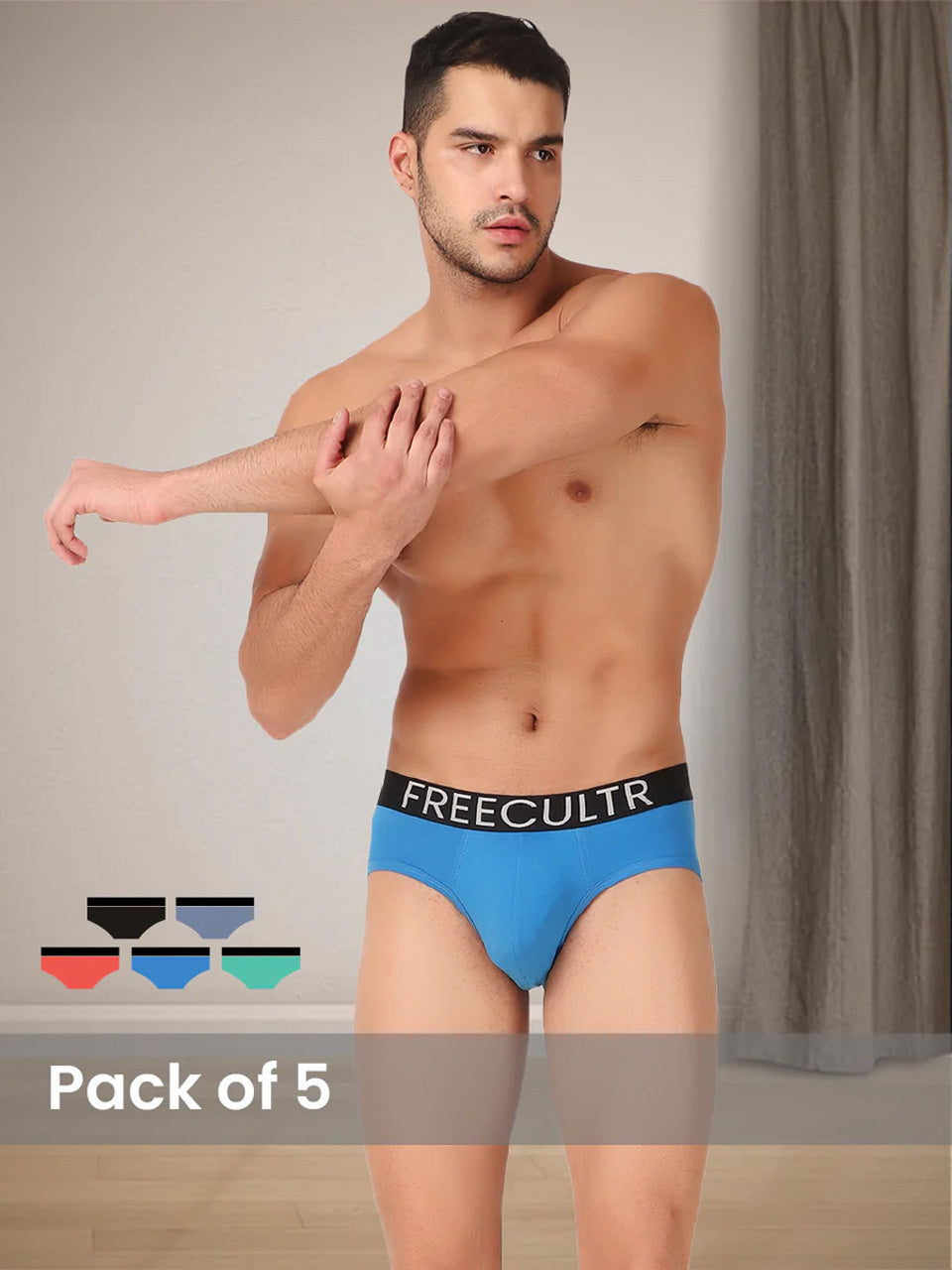
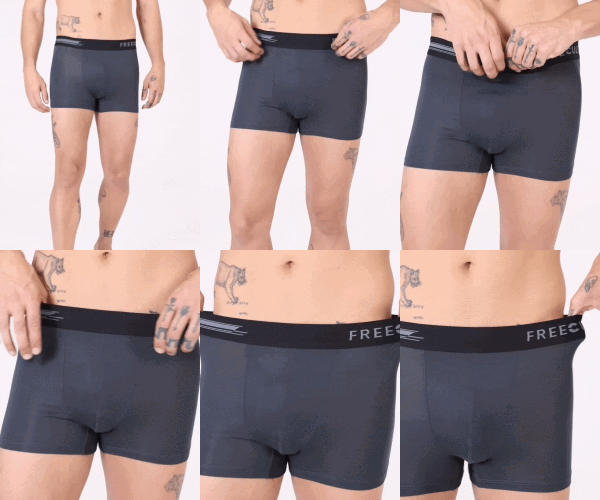
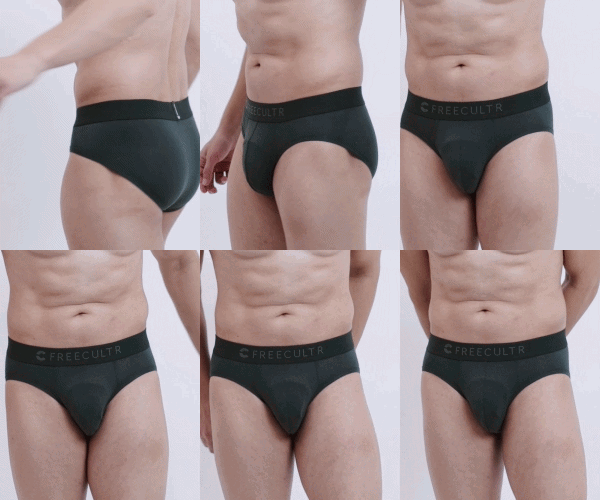
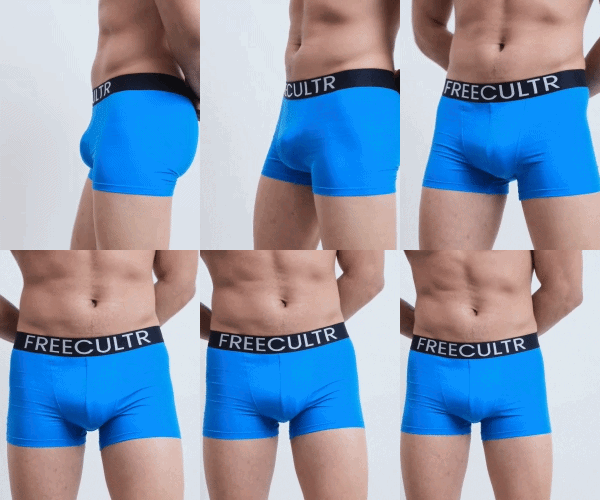
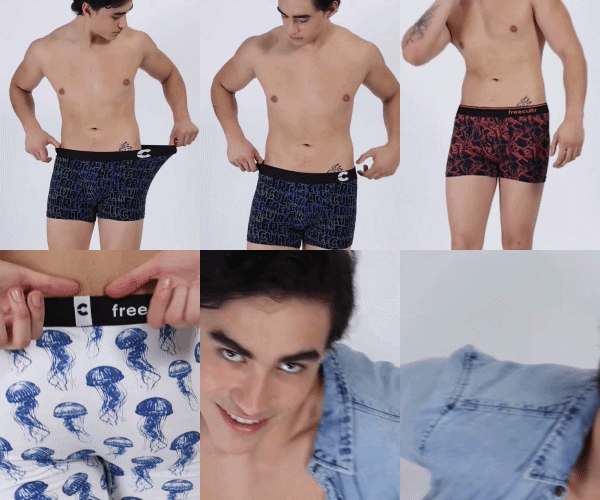
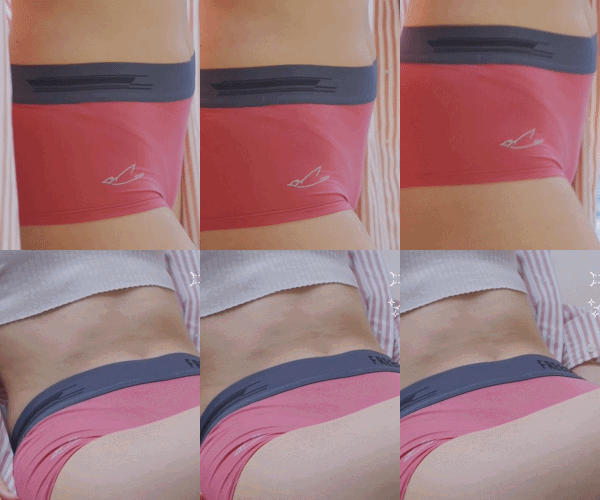
The sweet spot: a 1-2 inch logo on the waistband, embroidered or printed in a single color that complements the fabric. Freecultr's approach demonstrates this well, their waistband branding is visible when worn but doesn't dominate the design. The brand name becomes a quality marker, not a walking advertisement.
Logo Placement Options Ranked by Wearability
- Waistband (exterior): Most acceptable, visible when worn, doesn't affect comfort
- Interior tag: Completely hidden, zero visual impact, good for premium positioning
- Small hip placement: Subtle, works for women's styles, can be elegant
- Large front/back print: Avoid, feels cheap, shows through clothing, reduces wearability
Color choices matter as much as logo size. Your brand colors might be neon yellow and electric blue, but that doesn't mean your inner wear should be. Offer merchandise in universally wearable colors, black, grey, navy, white, with your brand colors as accent details. This increases actual usage rates dramatically.
When Bold Branding Works
There's one exception: novelty merchandise for specific events or campaigns. If you're creating limited-edition inner wear for a product launch party or team celebration, bold designs work because the context is different. People expect and enjoy statement pieces for special occasions. But for everyday brand merchandise meant to be worn regularly? Subtlety wins.
We've tested this with multiple startup clients. Batches with large logo prints had 40-50% usage rates based on follow-up surveys. Subtle waistband branding? 80-85% of recipients reported wearing them regularly. The math is clear.
Cost-Effective Sourcing and Bulk Ordering
Bulk ordering inner wear in quantities of 100+ units reduces per-piece costs by 30-50% compared to small batches, but only if you accurately forecast size distribution, choose versatile styles that work across demographics, and partner with manufacturers who offer flexible minimums for custom branding, making supplier selection more critical than order volume alone.
Most startups approach merchandise sourcing backwards. They find the cheapest supplier, place a minimum order, then wonder why quality disappoints. Better approach: define your quality standards first, then find suppliers who can meet them at scale. A ₹150 brief that people actually wear delivers better ROI than a ₹80 brief that sits in drawers.
For Indian startups, domestic sourcing offers significant advantages. Brands like Jockey India and local manufacturers in Tirupur provide quality fabrics at competitive prices without import duties or long lead times. You can visit facilities, inspect samples, and negotiate terms more effectively than with overseas suppliers.
Price Breakdown by Order Volume
| Order Quantity | Per-Unit Cost (Basic Cotton) | Per-Unit Cost (Premium Modal) | Lead Time |
|---|---|---|---|
| 50-99 units | ₹180-220 | ₹320-380 | 3-4 weeks |
| 100-249 units | ₹140-170 | ₹260-300 | 4-5 weeks |
| 250-499 units | ₹110-140 | ₹210-250 | 5-6 weeks |
| 500+ units | ₹90-120 | ₹180-220 | 6-8 weeks |
These ranges reflect 2026 pricing for custom-branded merchandise from mid-tier Indian manufacturers. Premium brands charge more, but you're paying for established quality control and consistent sizing.
Negotiating with Suppliers
Don't accept the first quote. Suppliers expect negotiation, especially for first-time orders. Ask about volume discounts, payment terms, and sample costs. Most manufacturers will waive sample fees if you commit to a minimum order. Request samples in multiple sizes, a medium that fits well doesn't guarantee the XL will.
Key questions to ask every potential supplier:
- What's your minimum order quantity for custom branding?
- Can you provide fabric composition certificates?
- What's your defect/return policy?
- Do you offer size customization for Indian body types?
- What's the production timeline from order to delivery?
Established brands like Fruit of the Loom and Victoria's Secret work with large retailers, not individual startups. You need manufacturers who serve the corporate merchandise market specifically. They understand branding requirements, offer reasonable minimums, and have experience with startup budgets.
Hidden Costs to Budget For
The per-unit price isn't your total cost. Factor in branding setup fees (₹3,000-8,000 for screen printing or embroidery setup), shipping (₹15-30 per unit for domestic delivery), and packaging if you want custom presentation. A ₹150 per-unit quote becomes ₹180-200 landed cost after these additions.
Storage matters too. If you order 500 units for a 100-person company, you need space to store the excess and a plan to distribute it over time. Some startups split orders, half delivered immediately, half held by the manufacturer for later shipment
Conclusion
Choosing the right inner wear for your startup's brand merchandise isn't just about slapping a logo on fabric. It's about understanding that fabric quality directly impacts how your team feels and performs, and that matters more than most founders realise. When you know your audience demographics, you can skip the guesswork and order pieces people will actually wear beyond day one. Balancing comfort with branding means your logo doesn't come at the cost of breathability or fit, and that's where premium fabrics like micro-modal and bamboo cotton shine. Cost-effective sourcing through bulk ordering keeps your budget intact while maintaining the quality your team deserves.
So what's your next move? Start by auditing your current merchandise strategy. Are you prioritising fabric over flashy designs? Are you ordering in volumes that make sense for your team size? If you're ready to upgrade your startup's inner wear game with premium comfort essentials that your team will love, explore freecultr's collection of sustainable, high-quality innerwear designed for real people, not just brand visibility.
About freecultr
Freecultr is India's emerging D2C brand reimagining wardrobe essentials into premium comfort wear. The collection spans innerwear for him and her, tees, socks, and accessories, all crafted with sustainability and style in mind. Using high-quality fabrics like micro-modal, bamboo, and organic cotton, freecultr ensures breathability, softness, and durability that lasts year-round.
More Articles
5 Reasons to Invest in the Best Quality Underwear for MenMicro Modal vs Basic Blends: Which Underwear Wins?
How to Choose the Best Men's Briefs for Comfort and Support
Best Underwear Men Gym Workouts Require for Comfort and Performance
FAQs
Why Does Fabric Quality Matter Most?
Fabric quality directly determines how long your branded inner wear lasts, how comfortable employees feel wearing it, and whether recipients actually use the merchandise or discard it, making it the single most critical factor in ROI for startup brand merchandise programs.
What is the difference between Natural and Synthetic: The Comfort Gap?
Cotton, bamboo, and modal are natural cellulose fibers. They absorb moisture, allow air circulation, and feel soft against skin.
What is Your Target Audience Demographics?
Effective brand merchandise requires matching inner wear styles, sizes, and fabrics to the specific age ranges, body types, and lifestyle patterns of your actual employees and customers, not generic demographic assumptions, because a 22-year-old developer and a 45-year-old sales director have completely different comfort priorities and style preferences.
What is Gender-Specific Considerations?
Women's inner wear requires more nuanced sizing and style variety than men's. Bra sizing alone involves band and cup measurements, and getting it wrong means the merchandise goes unused.
What is Activity Level and Lifestyle Matching?
A tech startup with desk-based employees needs different inner wear than a logistics company with warehouse staff. Sedentary workers prioritize softness and non-binding waistbands.
How to Balance Comfort and Branding?
The most effective branded inner wear places small, subtle logos on waistbands or interior tags rather than large external prints, because recipients wear comfortable, understated merchandise repeatedly while loud branding gets relegated to "never wear" status, making restraint the key to actual brand exposure.
What is Logo Placement Options Ranked by Wearability?
Color choices matter as much as logo size. Your brand colors might be neon yellow and electric blue, but that doesn't mean your inner wear should be.