







Men often invest hours picking out the right sneakers, tailored jackets, and crisp dress shirts. Yet the single item that sits closest to the skin for upwards of sixteen hours a day is often bought on autopilot from a multi-pack off a supermarket shelf.
That neglect comes with a daily tax: waistbands that flip and bite into your waist, damp fabric that refuses to dry during a humid afternoon, and loose leg bands that ride up into uncomfortable bunches the second you sit down.
Great innerwear for men should be invisible in the best possible way. You should put it on at 7:00 AM and never think about it again until you undress at night.
Building an intentional base layer rotation means understanding how different cuts support your body, which fabrics keep you cool, and how to match your underwear to your trousers. Here is everything you need to know to upgrade your everyday foundation.
1. Why Your Base Layer Dictates Your Day
Innerwear is not merely a barrier between your skin and your denim. It performs three critical functional jobs:
-
Hygiene and Skin Barrier: It absorbs natural body oils and perspiration, shielding outer garments from sweat stains while keeping delicate groin skin dry.
-
Friction Control: It prevents direct skin-on-skin friction between your inner thighs, stopping painful chafing before it starts.
-
Structural Support: It keeps your anatomy comfortably secure during long hours of walking, sitting, and commuting without uncomfortable compression.
When your underwear fails at any of these tasks, your entire outfit feels uncomfortable, regardless of how expensive your outer clothes might be.
2. Choosing Your Silhouette: Briefs, Trunks, Boxer Briefs, or Boxers?
Every cut serves a distinct purpose. Wearing loose boxers under slim trousers creates unsightly bunching, while wearing heavy briefs during a relaxed lounge session defeats the purpose of downtime.
+------------------+------------------------+---------------------------------------+
| Cut Style        | Leg Length             | Best Paired With                      |
+------------------+------------------------+---------------------------------------+
| Briefs           | None (High Cut Leg)    | Formal Trousers, Running Shorts       |
| Trunks           | Short (Mid-Thigh)      | Slim-Fit Jeans, Chinos, Daily Office  |
| Boxer Briefs     | Long (Lower Thigh)     | Heavy Denim, Workouts, Long Commutes  |
| Boxer Shorts     | Loose (Above the Knee) | Lounging, Sleepwear, Relaxed Pants    |
+------------------+------------------------+---------------------------------------+
Briefs: Clean Lines and Unrestricted Mobility
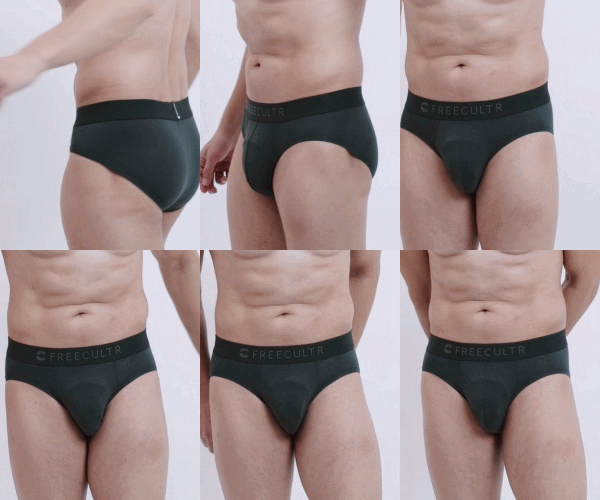
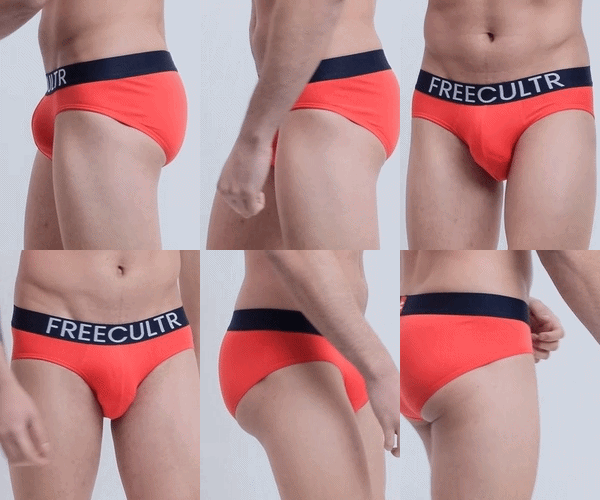
Classic briefs feature the iconic Y-shaped front and leave the entire leg exposed. Because there is no leg fabric to ride up or curl, briefs are exceptional under tailored suit trousers and formal dress wear. They offer firm front support and zero bulk around the hips.
Trunks: The Modern All-Rounder
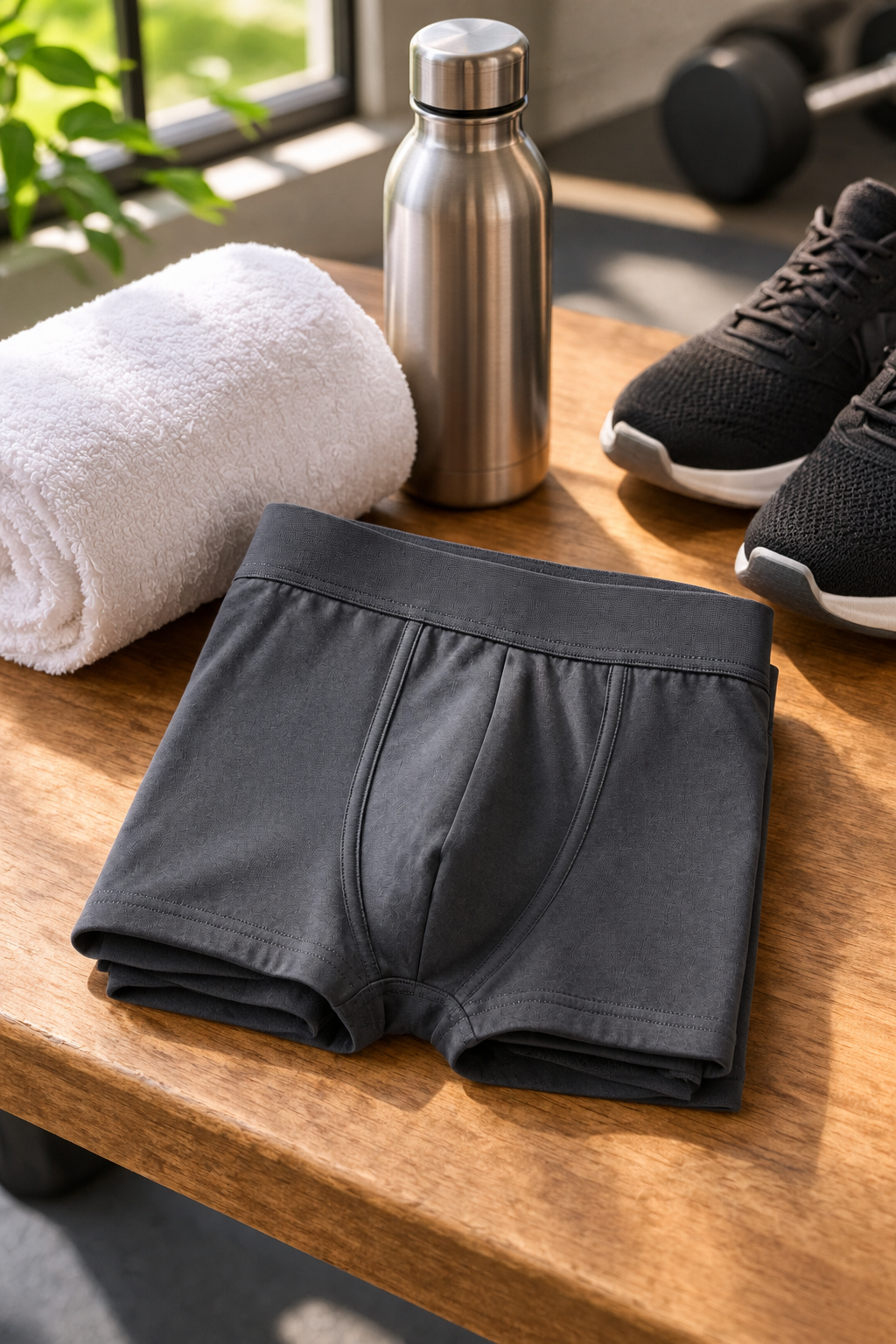
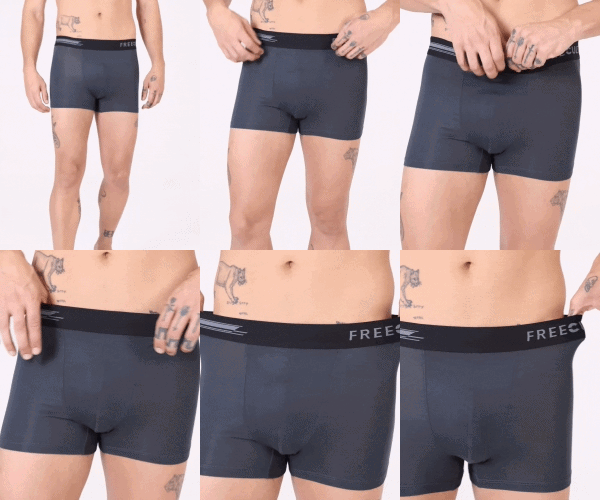
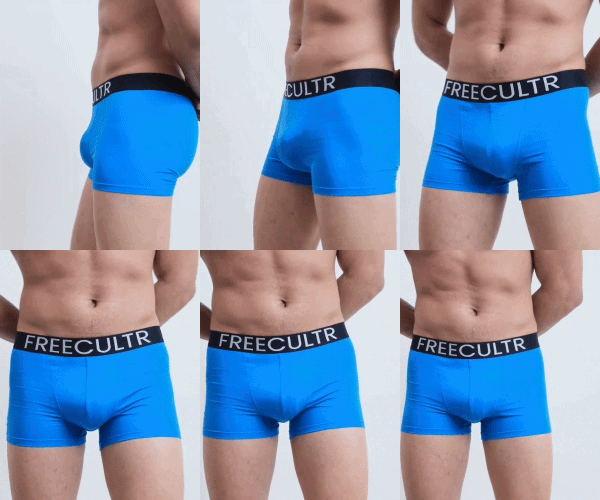
Trunks have quickly become the go-to silhouette for modern menswear. Cut square across the thighs with short inseams, they provide steady support with a streamlined, athletic profile. They sit flat under modern slim-fit chinos and casual denim without peeking out or creating visible lines.
Boxer Briefs: Extended Thigh Coverage
Extending roughly one-third of the way down the thigh, boxer briefs offer full coverage. If you are prone to inner-thigh friction or walk long distances during your daily commute, the extended leg bands act as a physical shield against chafing.
Boxer Shorts: Pure Airflow for Downtime
Featuring a wide, relaxed leg opening, classic boxers skip structured support in favor of generous ventilation. They remain the gold standard for sleeping and lazy weekend lounging.
To understand how relaxed cuts can elevate your downtime, read our dedicated guide on [suspicious link removed].
3. The Science of the Weave: Which Fabric Belongs in Your Drawer?
Selecting quality innerwear starts with reading the fabric label. Here is how the most common textiles compare in daily wear:
Micro Modal: The Ultimate Daily Upgrade
Extracted from sustainable beechwood cellulose, micro modal is exceptionally soft, lightweight, and fluid. It possesses natural moisture-management properties that pull dampness away from the skin surface and disperse it quickly into the air. If you spend long hours in warm offices or humid commutes, modal offers an airy, almost weightless feel.
Combed Cotton: Reliable Natural Breathability
Standard cotton can feel stiff and abrasive over time. Combed cotton, however, undergoes a specialized refining process where short, brittle fibers are combed out, leaving only long, resilient strands. The result is a smooth, durable fabric that breathes naturally and withstands frequent high-temperature machine washing.
Bamboo Viscose: Cool and Naturally Antimicrobial
Bamboo-derived textiles are naturally hypoallergenic and silky to the touch. They adapt well to body temperature, feeling cool in hot weather and comfortable in winter. Because bamboo resists odor-causing bacteria, it keeps you fresh during hectic travel schedules.
Cotton-Elastane Blends: The Sweet Spot for Fit
Pure natural fibers feel wonderful, but without a tiny percentage of stretch, they can lose their shape by lunchtime. Look for fabrics that combine 92% to 95% combed cotton or modal with 5% to 8% elastane. This gives the garment four-way stretch, allowing it to move with your body and snap back to shape without sagging.
For a deeper look at keeping cool in warm climates, browse our breakdown on [suspicious link removed] to find your ideal warm-season companion.
4. Construction Markers: How to Spot Quality Craftsmanship
Two pairs of trunks might look identical on a hanger, but the way they are stitched determines whether they survive three months or three washes. Look for these four construction markers:
                      ANATOMY OF PREMIUM INNERWEAR
                                   │
         ┌─────────────────────────┼─────────────────────────┐
         ▼                         ▼                         ▼
   Contour Pouch             Flatlock Seams          Microfiber Waistband
(Gentle 3D uplift;        (Stitched flat to stop    (Anti-roll woven band;
 prevents thigh contact)    chafing & red marks)     holds without pinching)
-
3D Ergonomic Front Pouch: Avoid flat-stitched fronts. A molded or darted contour pouch creates natural space, eliminating uncomfortable skin-on-skin sticking.
-
Flatlock Seaming: Flatlock seams lie flat against your skin rather than forming a raised ridge, preventing seam chafing on sensitive areas.
-
Microfiber Anti-Roll Waistband: A wide band woven from soft microfiber distributes pressure evenly across your waist, preventing the dreaded fold-over roll.
-
Tagless Construction: Printed heat-seal labels eliminate itchy, abrasive tags that irritate your lower back.
5. Health, Skin Hygiene, and Rotation Habits
Your innerwear habits play a direct role in everyday dermatological wellness.
Because the groin region contains a high concentration of apocrine sweat glands, warmth and trapped moisture create an environment where bacteria and fungal spores flourish. According to clinical guidance from the Cleveland Clinic, changing your underwear daily—or immediately after rigorous physical exertion—is vital to preventing recurrent skin conditions like contact dermatitis and jock itch.
Building an Intentional Rotation
-
Weekday Work & Travel: 5 to 6 pairs of micro modal or bamboo trunks.
-
Workouts & Active Days: 3 to 4 pairs of moisture-wicking boxer briefs with flat seams.
-
Sleep & Downtime: 3 to 4 pairs of loose combed cotton boxer shorts.
6. Wash and Care: Making Quality Innerwear Last
High-grade fabrics deserve proper care to maintain their shape, color, and softness over dozens of washes:
-
Separate by Color: Wash darks with darks and whites with whites to keep light colors looking crisp.
-
Stick to Cold Water: High water temperatures break down elastane threads and cause cotton shrinkage. Keep wash cycles at or below 30°C.
-
Ditch the Liquid Softener: Fabric softeners coat natural fibers in a waxy chemical residue that clogs microscopic pores, ruining breathability.
-
Air Dry Naturally: Excessive heat from tumble dryers weakens the elastic waistband and frays fine stitching. Line dry inside-out in a shaded, well-ventilated space.
Conclusion
Upgrading your collection of innerwear for men is one of the simplest, highest-return lifestyle improvements you can make. The clothes you wear directly against your body set the baseline for your physical ease, posture, and confidence throughout the day.
Instead of settling for coarse fabrics and ill-fitting multipacks, curate your drawer with purpose. By selecting breathable fibers like combed cotton and micro modal, choosing silhouettes tailored to your daily wardrobe, and insisting on thoughtful details like flatlock seams and anti-roll waistbands, you eliminate daily friction entirely. Give your daily essentials the attention they deserve, retire worn-out pairs, and experience how comfortable a truly premium base layer can feel.
More Articles to Read
Frequently Asked Questions (FAQ)
1. Which style of innerwear for men is best for everyday office wear?
Trunks and boxer briefs are the best choices for regular office wear. Their snug, structured fit sits cleanly under dress trousers, chinos, and jeans without bunching or riding up, giving you smooth lines and consistent support throughout the workday.
2. How often should men replace their innerwear?
On average, innerwear should be replaced every 6 to 9 months with regular wear and washing. If you notice slackened waistbands, thinning material, pilling, or stretched-out leg bands, it is time to retire that pair.
3. What is the difference between trunks and boxer briefs?
The primary difference is inseam length. Trunks have a shorter leg that ends around the mid-to-upper thigh, offering a modern, compact profile. Boxer briefs extend further down toward the knee, providing full thigh coverage that helps prevent chafing during heavy movement.
4. Is 100% cotton innerwear always the best option?
Not necessarily. While pure 100% cotton is soft and natural, it tends to lose elasticity over the day and holds onto sweat once damp. Blends that incorporate a small percentage of elastane or use micro modal offer superior moisture management, softer hand feel, and better shape retention.
5. Why does my underwear waistband keep rolling over?
Waistbands roll over primarily due to improper sizing or low-quality elastic. If the waistband is too tight, your body's natural movement forces the elastic to buckle and fold. Choosing a pair with an ergonomically sized, plush microfiber waistband prevents this issue entirely.