


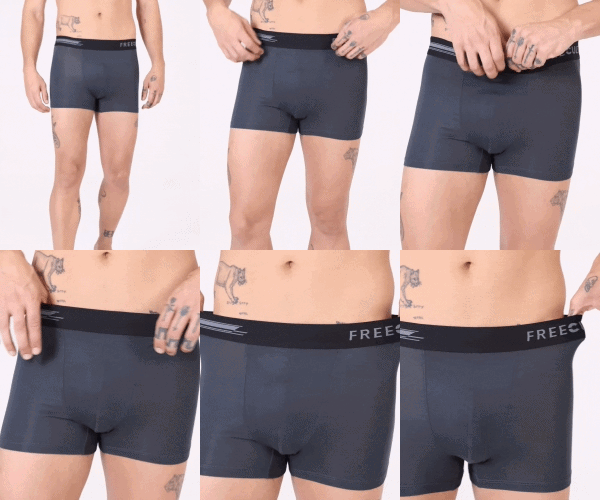
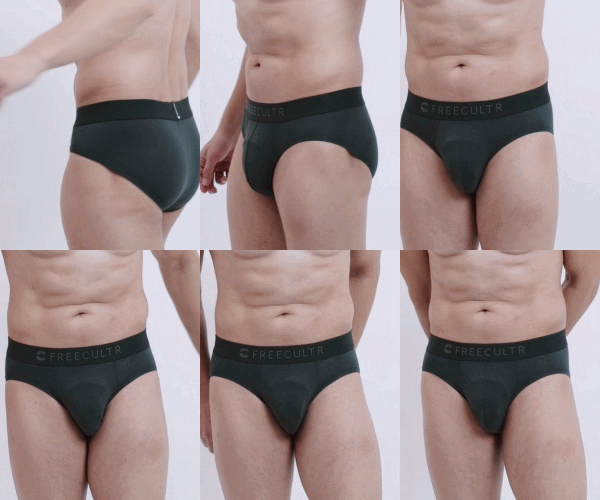
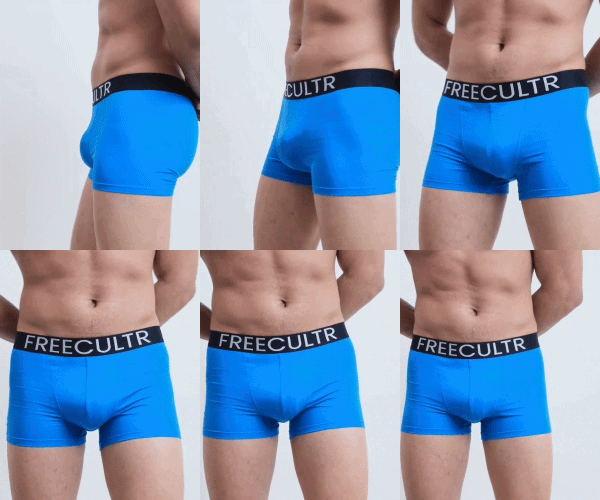
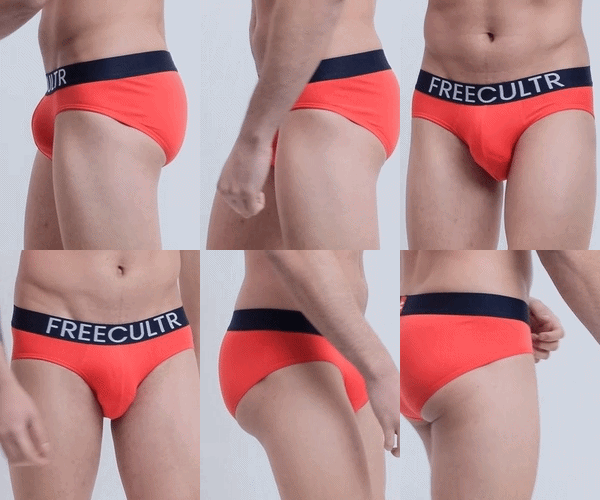






Most men do not spend much time thinking about their base layer—until something goes noticeably wrong.
You know the feeling: by 2:00 PM on a warm, muggy afternoon, an ordinary day becomes a battle against damp fabric, friction along your inner thighs, and an elastic band that digs in like a vise. You shift awkwardly in your chair during meetings, pray for stronger air conditioning, and count down the minutes until you can walk through your front door and change.
It is easy to blame the outdoor temperature or a cramped commute, but the real culprit is usually hiding beneath your trousers. Standard synthetic blends and heavy, unprocessed fabrics act like plastic wrap around your midsection, trapping moisture and body heat.
Switching to truly breathable underwear is the single fastest way to solve this discomfort. This comprehensive guide breaks down the science of skin ventilation, compares the best cooling fabrics, examines ergonomic cuts, and shows you how to curate a rotation that keeps you dry and fresh throughout the day.
The Hidden Mechanics of Breathability: Airflow vs. Moisture-Wicking
When shopping for men's innerwear, the term "breathable" is often tossed around as generic marketing shorthand. Scientifically, optimal comfort requires two distinct fabric behaviors working in tandem:
-
Air Permeability (Airflow): This measures how easily air moves through the weave of the textile. Open, lightweight micro-structures allow heat to radiate away from your skin instead of building up inside your clothes.
-
Capillary Moisture Transfer (Wicking): Rather than soaking up sweat and holding it against your epidermis like a wet sponge, wicking fibers draw droplets away from the surface of your skin to the outer face of the garment, where ambient air evaporates them rapidly.
+--------------------------------------------------------------+
|                   THE COMFORT CYCLE                          |
|                                                              |
|   Body Generates Heat & Moisture                             |
|          │                                                   |
|          ▼                                                   |
|   Fiber Wicks Perspiration Away from Skin Surface            |
|          │                                                   |
|          ▼                                                   |
|   Porous Weave Permits Continuous Ambient Air Exchange       |
|          │                                                   |
|          ▼                                                   |
|   Moisture Evaporates Rapidly ➔ Skin Stays Dry & Frictionless |
+--------------------------------------------------------------+
When either of these factors fails, perspiration accumulates. In high-friction zones like the groin and inner thighs, dampness softens the top layers of skin (a process called maceration), creating an ideal environment for skin irritation, chafing, and fungal microbes.
Comparing Fabrics: Which Textile Breathes Best?
Innerwear comfort is largely decided by raw fiber choice. No amount of styling can rescue fabric that suffocates your skin.
Micro Modal:  ████████████████████ (Ultra-soft, 3x more breathable than cotton)
Bamboo Rayon: ████████████████░░░░ (Naturally cooling, quick moisture uptake)
Combed Cotton:█████████████░░░░░░░ (Familiar, durable, slower to evaporate)
Polyester:    ██████░░░░░░░░░░░░░░ (Traps odor & heat; quick-dry only)
1. Micro Modal: The Benchmark for Softness and Airflow
Spun from sustainably harvested European beechwood pulp, micro modal is widely regarded as the gold standard for premium everyday innerwear. Its ultra-fine filaments result in a textile that is three times softer than conventional cotton and significantly more breathable.
Micro modal manages moisture by pulling perspiration through microscopic capillaries, allowing rapid air exchange. Because it drapes smoothly without static cling, it feels practically weightless against sensitive skin.
2. Bamboo Rayon: Silky, Cool, and Naturally Hygienic
Bamboo fiber possesses a naturally round and smooth cross-section, minimizing mechanical irritation against sensitive skin. It is cool to the touch and naturally hypoallergenic. While it holds water well, its moisture-release rate is slightly slower than modal, making it ideal for relaxed loungewear, sleepwear, and everyday desk work.
3. Combed Cotton: The Everyday Classic
Standard carded cotton can feel rough and thick, but combed cotton—which undergoes an extra processing step to eliminate short, prickly fibers—remains a reliable everyday choice. Cotton breathes naturally, though it has one known drawback: once saturated, it holds onto liquid longer than beechwood or bamboo fibers.
4. Synthetic Polyesters & Nylons: Use with Caution
While performance synthetics have their place in heavy gym training due to quick drying times, they are notorious for retaining body odors and trapping radiant heat during everyday wear. If you choose synthetics, ensure they include high elastane content and micro-perforated mesh panels.
For a deeper dive into the exact behavior of wood-pulp and plant fabrics across humid seasons, take a look at our side-by-side breakdown in [suspicious link removed].
Fabric Comparison Matrix
| Property | Micro Modal | Bamboo Viscose | Combed Cotton | Standard Polyester |
| Breathability | Exceptional | High | Moderate-High | Low-Moderate |
| Moisture Release | Ultra-Fast | Moderate | Slow-Moderate | Fast |
| Skin Feel | Silky & Weightless | Velvety Smooth | Crisp & Familiar | Slippery / Synthetic |
| Odor Resistance | Naturally High | High (Antimicrobial) | Moderate | Very Low (Retains odor) |
| Best Used For | Work, Travel, Commutes | Sleep & Lounging | Casual Daywear | High-Intensity Sport |
Anatomy of Anti-Chafing Design
Great fabric alone does not guarantee day-long ease; structural engineering matters just as much. When evaluating your next pair, check for three construction markers:
1. Contour Support Pouch
Flat-front underwear flattens your anatomy against your legs, generating immediate heat points and friction. An ergonomically shaped 3D contour pouch gently isolates and supports you, keeping sensitive areas separated from the thighs and maintaining continuous 360-degree airflow.
2. Flatlock Anti-Chafe Seaming
Standard innerwear is often joined using raised overlock seams that press aggressively into your skin. High-end breathable styles use flatlock stitching—where fabric edges lie completely flat against one another—preventing seam friction during extended walking or sitting.
3. Smart-Recovery Microfiber Waistbands
Nothing ruins breathable underwear faster than an elastic band that gathers moisture, rolls down your belly, or leaves deep crimson indentations. Look for a plush, moisture-resistant microfiber band that sits flat against your waist and holds its position without squeezing.
Matching Underwear Silhouette to Your Wardrobe
Finding the right innerwear style depends on what you are wearing over it. Here is how to match your cut to your day:
           UNDERWEAR SILHOUETTE SELECTOR
                     │
     Are your trousers slim or tailored?
           ├── YES ──► Trunks / Boxer Briefs (Prevents bunching)
           │
           └── NO  ──► Lounging, sleeping, or relaxed fits?
                         ├── YES ──► Loose Boxer Shorts (Maximum airflow)
                         └── NO  ──► Classic Briefs (Maximum leg mobility)
-
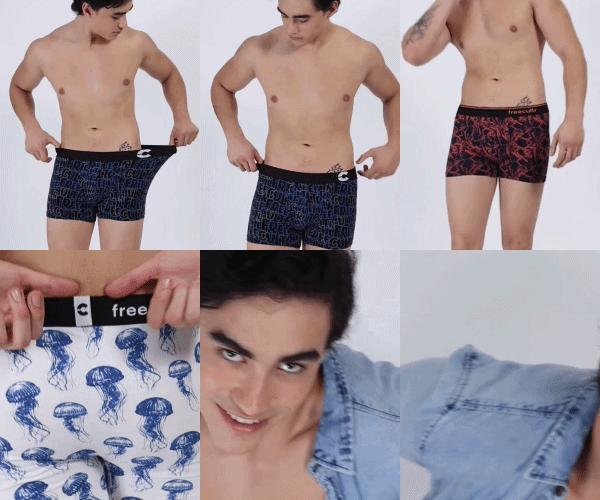
Trunks: Square-cut and ending at the upper thigh, trunks provide clean support with zero excess bulk. They are the ideal match for business-casual trousers, slim chinos, and jeans.
-
Boxer Briefs: Extending further down the thigh, this cut provides full-coverage protection against inner-thigh friction, making it a reliable pick for heavy walking, long flights, or commuting.
-
Classic Briefs: Offering complete leg liberation without leg fabric, briefs are practical for formal suiting, athletic movement, and tailored shorts.
-
Relaxed Boxers: Designed with a loose leg opening, classic boxers prioritize airflow and casual ease over structured support.
If you prefer an airy silhouette for off-duty hours, explore our practical guide to [suspicious link removed] to choose the right cut for home lounging and sleep.
Health Benefits: Why Groin Temperature and Hygiene Matter
Innerwear is more than a styling choice; it is an intimate health shield.
Dermatological research highlights that warm, dark, and damp environments accelerate the growth of fungal cultures, leading directly to jock itch (tinea cruris) and recurring skin irritation.
Furthermore, clinical findings cataloged by medical institutions like the National Institutes of Health (NIH) demonstrate that elevated scrotal temperatures can impair healthy cellular production and thermoregulation. Because the body relies on natural convection to maintain healthy testicular temperatures—which remain roughly two to three degrees lower than core body temperature—wearing non-breathable underwear compromises this natural balance.
Choosing breathable textiles with active moisture transport protects your skin barrier, keeps humidity low, and supports your natural physiological functions around the clock.
Everyday Care: How to Maintain Breathability and Elasticity
High-performance natural fibers like micro modal and bamboo need proper laundry care to preserve their microscopic pores and delicate elasticity:
-
Wash in Cold Water: Hot water weakens natural modal fibers and breaks down elastane over time. Set your washing machine to 30°C or cold gentle cycle.
-
Avoid Fabric Softeners: Liquid softeners leave a microscopic silicone coating over yarns. While this makes towels feel temporarily smooth, it clogs fabric pores, severely diminishing breathability and moisture-wicking capabilities.
-
Use Gentle, Non-Bleach Detergents: Aggressive chemical bleaches degrade natural plant cellulose and cause fabrics to pill.
-
Air Dry in Shaded Ventilation: High-heat tumble dryers stress the elastic waistband and shrink fine fibers. Hang your innerwear on an indoor rack or in a breezy, shaded outdoor area.
Conclusion
Upgrading your base layer is rarely about vanity; it is about respecting your skin and taking control of your daily physical comfort. A busy schedule leaves little room for the distraction of damp, binding underwear that requires frequent adjustment.
Investing in high-performance breathable underwear made from refined fibers like micro modal or bamboo fundamentally shifts how you experience your wardrobe. By prioritizing natural airflow, moisture transfer, and supportive ergonomic cuts, you eliminate midday chafing and stay cool, dry, and collected—no matter what the weather or your calendar demands. Take stock of your current rotation, retire tired and suffocating pairs, and give yourself a clean foundation of everyday comfort.
More Articles to Read
Frequently Asked Questions (FAQ)
1. What is the most breathable underwear material for men?
Micro modal is widely considered the most breathable material for daily use. Derived from natural beechwood pulp, its fine structure is three times softer than regular cotton, wicks moisture quickly, and allows body heat to dissipate through microscopic pores rather than staying trapped against the skin.
2. Can breathable underwear help prevent chafing and jock itch?
Yes. Chafing and fungal issues like jock itch develop when moisture, heat, and skin-on-skin friction combine. Breathable underwear crafted with moisture-wicking properties and smooth flatlock seams draws sweat away from the body, minimizes friction along the thighs, and keeps the groin area dry and hygienic.
3. Is pure 100% cotton better than micro modal for hot weather?
While 100% cotton is naturally breathable, it absorbs moisture and holds onto it, staying damp for extended periods once saturated with sweat. Micro modal absorbs moisture efficiently while releasing it back into the air much faster, making it noticeably lighter and less clingy in humid environments.
4. How tight should breathable underwear fit?
Your underwear should fit close to your body without squeezing. It needs to rest flush against your skin to wick sweat effectively and prevent fabric from bunching under your pants. If the waistband leaves red indentations or the leg openings pinch your thighs, you should size up.
5. How many pairs of breathable underwear should a man own?
A practical rotation consists of 8 to 12 pairs. This ensures you have enough clean pairs for a full week, with allowances for workout sessions, hot summer days requiring a mid-day refresh, and reasonable laundry intervals without over-wearing individual pairs.

