


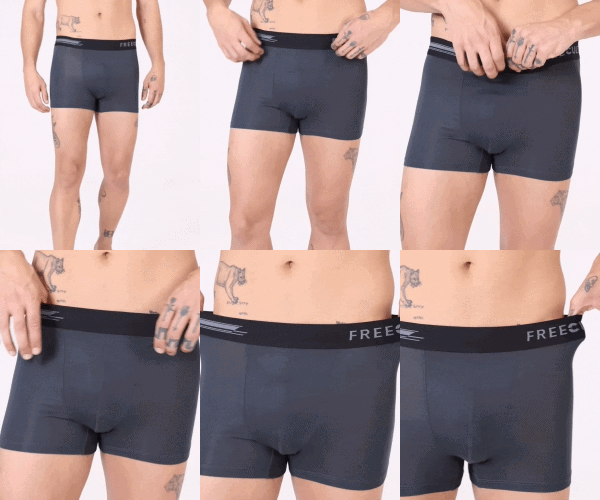
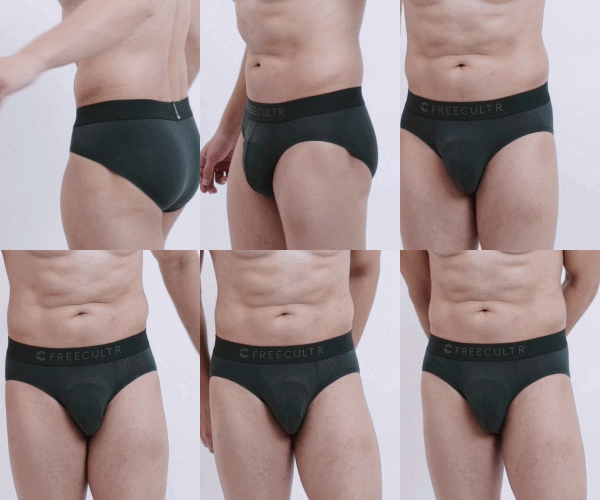
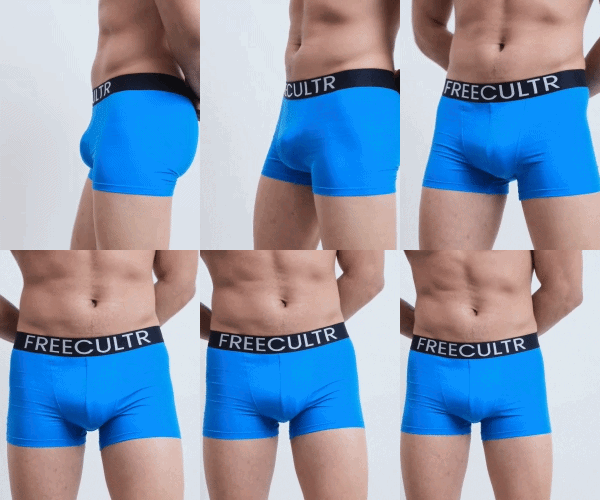
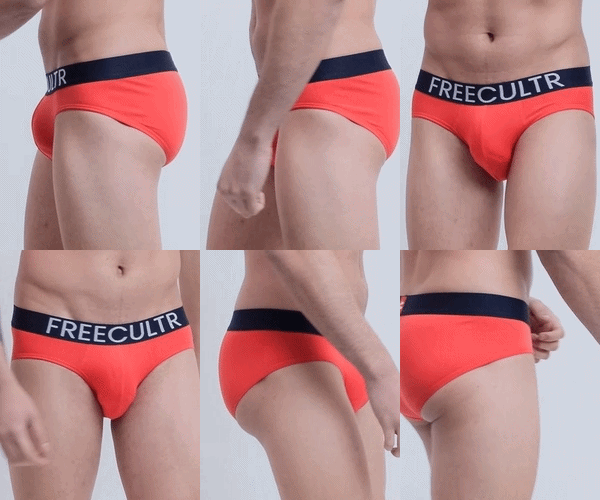
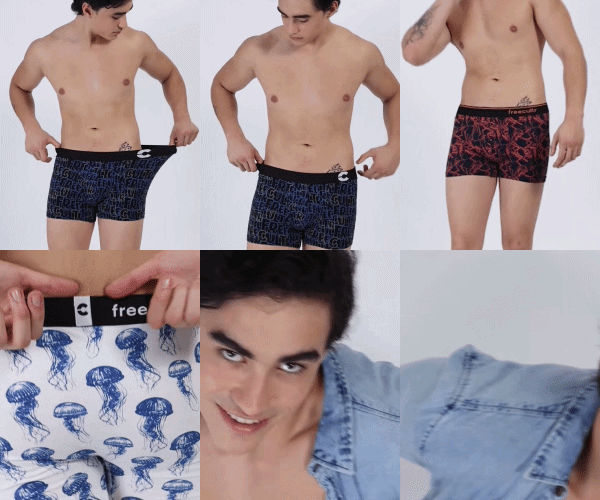
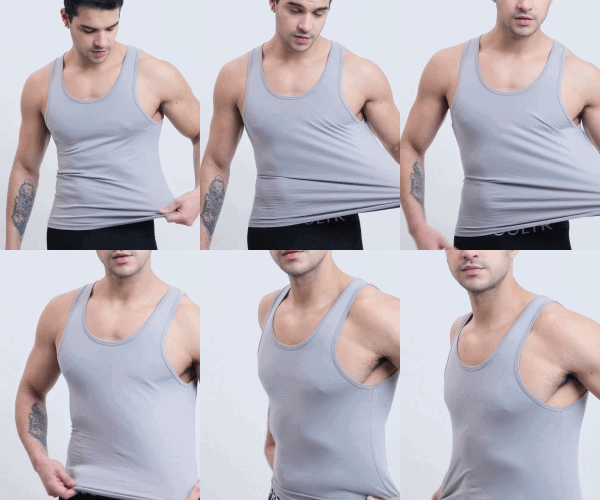

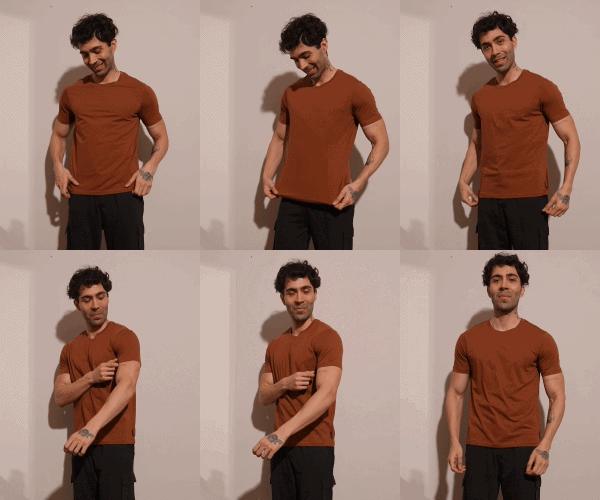
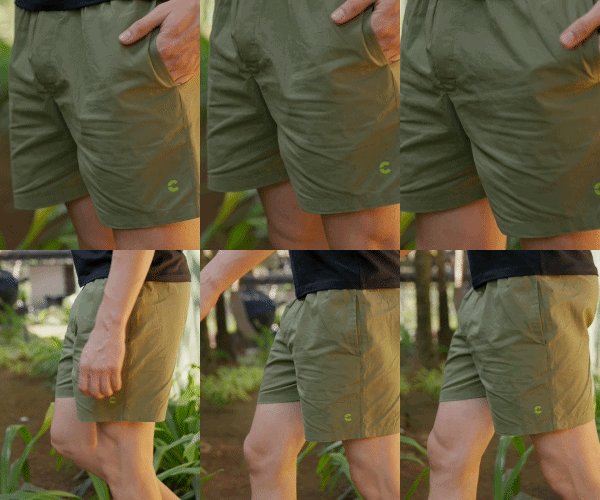


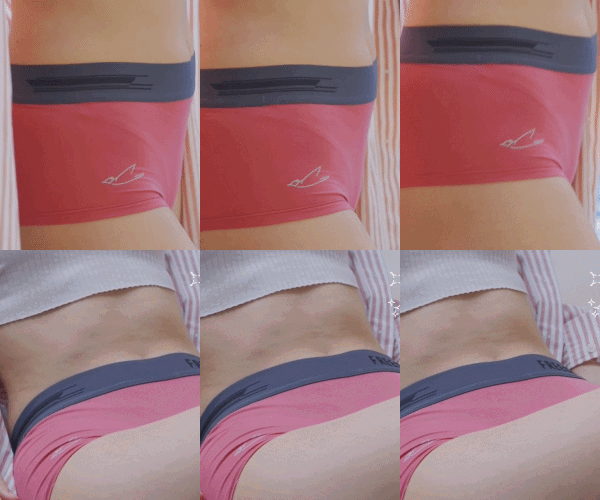
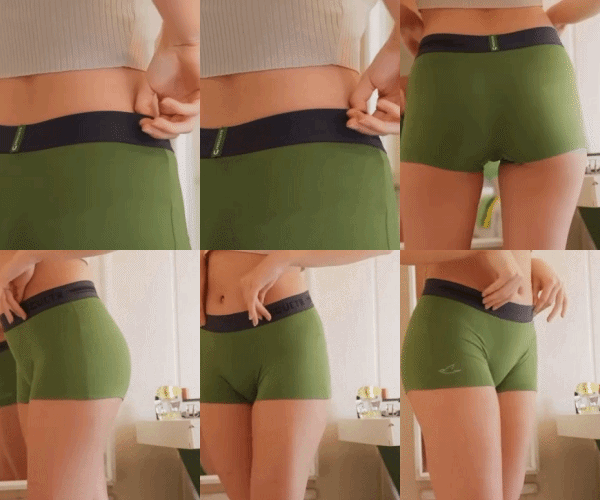
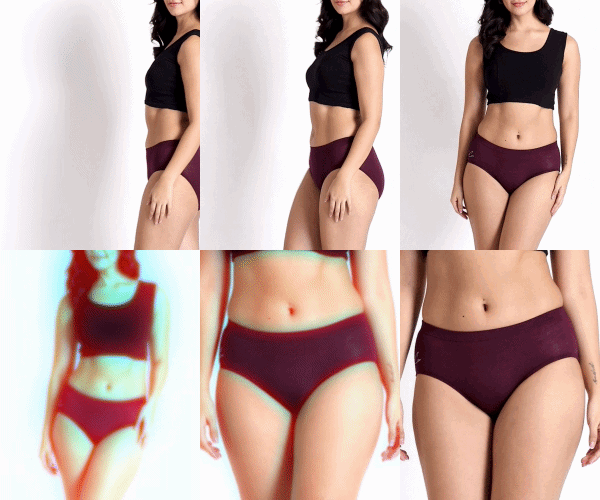



Quick Summary: The best underwear for working out at the gym combines moisture-wicking fabric, anti-chafe construction, and breathable mesh panels to keep you dry during high-intensity training. Fashion experts recommend boxer briefs for weightlifting, compression shorts for running, and no-show trunks for yoga, each designed to prevent friction and regulate temperature. Look for synthetic blends like polyester-spandex or nylon that dry 3x faster than cotton, with flatlock seams that eliminate rubbing. freecultr's performance underwear delivers all these features while maintaining the style standards athletes expect from premium activewear.
Most gym-goers focus on shoes, shirts, and shorts, but ignore the one layer that makes or breaks a workout. Chafing during deadlifts. Sweat pooling during sprints. Constant adjustments between sets. The best underwear for working out at the gym solves these problems before they start, and fashion experts now treat performance underwear as essential gear, not an afterthought.
freecultr designs activewear for athletes who refuse to choose between function and style. Our performance underwear collection applies the same technical standards we use for running shorts and training tees, engineered fabrics that move with your body, not against it.
You're about to discover why material choice matters more than brand names, which features actually prevent chafing (hint: it's not just seamless construction), and how to match underwear styles to your specific workout type. We'll show you what moisture-wicking really means beyond marketing claims, and why compression isn't always the answer. No fluff, no generic advice, just the exact specifications that separate underwear you forget you're wearing from underwear that ruins your gym session.
Why Workout Underwear Material Matters
The right workout underwear fabric directly impacts comfort, hygiene, and performance during exercise. Moisture-wicking materials like micro-modal and bamboo pull sweat away from skin, preventing chafing and bacterial growth, while synthetic blends with spandex provide compression and support during high-intensity movements. Choosing the wrong fabric, like pure cotton, traps moisture against your body, creating friction zones that lead to rashes and discomfort mid-workout.
Your gym session shouldn't end with irritation or discomfort. The fabric touching your skin for 60-90 minutes of sweating, stretching, and lifting determines whether you walk out feeling fresh or sticky. Cotton absorbs moisture but holds it, creating a damp environment that breeds bacteria. Performance fabrics solve this by moving sweat to the outer layer where it evaporates quickly.
Freecultr's micro-modal and bamboo blends offer natural breathability with the durability of modern athletic wear. Micro-modal, derived from beechwood pulp, feels softer than cotton while wicking moisture 50% faster. Bamboo fabric naturally resists odor-causing bacteria, keeping you fresher through back-to-back training sessions.
Material choice also affects durability. Cheap synthetic underwear pills and loses elasticity after 10-15 washes. Premium blends maintain shape and support through hundreds of workout cycles. You're investing in gear that performs consistently, not replacements every quarter.
Key Features of Performance Gym Underwear
Performance gym underwear must deliver four core features: moisture management through wicking fabrics, anti-chafing flat seams, breathable mesh panels in high-heat zones, and elastic waistbands that stay in place during dynamic movements. These features work together to prevent the three main workout discomforts, sweat buildup, skin irritation, and constant readjustment, allowing you to focus entirely on your training rather than your underwear.
Flat seams eliminate the raised stitching that causes friction burns during squats and runs. Traditional underwear uses overlocked seams that create pressure points. Performance styles use bonded or flatlock seams that lie flush against skin. Check the inner thigh and waistband areas, these are friction hotspots.
Mesh ventilation panels aren't cosmetic. Strategic placement in the crotch and rear increases airflow by 30-40% compared to solid fabric construction. Your body generates significant heat during cardio and strength training. Mesh panels create escape routes for that heat, reducing sweat accumulation.
Elastic waistbands need the right balance. Too loose and they slide down during burpees. Too tight and they dig into your abdomen during core work. Look for wide waistbands (3-4 cm) with silicone grip strips on the interior. Freecultr's designs use a dual-layer waistband that distributes pressure evenly, preventing the roll-down that plagues cheaper options.
| Feature | Why It Matters | What to Look For |
|---|---|---|
| Moisture-Wicking Fabric | Pulls sweat away from skin, prevents bacterial growth | Micro-modal, bamboo, polyester blends |
| Flat Seams | Eliminates chafing in high-friction zones | Bonded or flatlock construction, not overlocked |
| Mesh Panels | Increases airflow by 30-40%, reduces heat buildup | Panels in crotch and rear, not just decorative |
| Secure Waistband | Stays in place during dynamic movements | 3-4 cm width, silicone grip, dual-layer design |
| Stretch Retention | Maintains shape and support after repeated washing | Spandex/elastane content 5-15%, reinforced stitching |
Pouch design matters more than most guys realize. A contoured pouch provides separation and support without compression. This reduces skin-on-skin contact that creates sweat and friction. Freecultr's anatomical pouch design uses a three-panel construction that lifts and supports naturally, eliminating the need for constant adjustment between sets.
How Fabric Blend Ratios Affect Performance
The percentage breakdown of materials determines how your underwear performs. A 95% micro-modal, 5% spandex blend offers maximum softness with just enough stretch. A 70% bamboo, 25% polyester, 5% spandex blend prioritizes durability and faster drying times. Pure synthetic blends (90% polyester, 10% spandex) dry fastest but feel less natural against skin.
Freecultr balances natural fibers with performance synthetics. Their signature blend uses 92% micro-modal with 8% elastane, delivering the soft hand-feel of natural fabric with the recovery and support of athletic wear. This ratio maintains shape through 200+ wash cycles while staying breathable enough for Indian summer training.
What Makes Moisture-Wicking Fabric Essential?
Moisture-wicking fabric is essential for gym underwear because it actively transports sweat from your skin to the fabric's outer surface through capillary action, where it evaporates rapidly. This process keeps your skin dry, prevents the bacterial growth that causes odor and infections, and eliminates the chafing that occurs when wet fabric rubs against skin during repetitive movements. Cotton absorbs sweat but traps it against your body, wicking fabrics move it away.
The science is straightforward. Wicking fabrics use hydrophobic (water-repelling) fibers arranged in a way that creates channels. Sweat moves through these channels via capillary action, spreading across a larger surface area on the fabric's exterior. Increased surface area means faster evaporation. You stay drier, cooler, and more comfortable.
Micro-modal excels here. The fiber structure contains microscopic grooves that pull moisture away from skin 50% faster than cotton. Bamboo fabric naturally wicks moisture while also inhibiting bacterial growth, it contains "bamboo kun," an antimicrobial bio-agent that reduces odor-causing bacteria by up to 70%. This is why bamboo underwear stays fresher between washes.
But wicking alone isn't enough. The fabric must also dry quickly. A fabric that wicks but dries slowly just moves the problem. Freecultr's blends dry 3-4 times faster than cotton, meaning even if you sweat heavily during a 90-minute session, your underwear isn't damp when you leave the gym. This prevents the clammy feeling that makes you want to change immediately.
Why Cotton Fails During Intense Workouts
Cotton feels comfortable initially, which is why it dominates casual underwear. But it absorbs up to 25 times its weight in water. During a workout, that absorbed sweat stays trapped in the fabric, creating a wet layer against your skin. Wet fabric increases friction coefficient by 40-60%, dramatically raising your risk of chafing and skin irritation.
Cotton also takes 2-3 hours to air dry completely. If you're doing back-to-back training sessions or wearing your gym clothes for errands after working out, cotton underwear stays damp the entire time. This creates an ideal environment for fungal infections and bacterial growth. Performance fabrics dry in 20-30 minutes, even in humid conditions.
Top Expert-Recommended Styles for Different Workouts
Different workout types demand specific underwear styles: boxer briefs with 15-20 cm inseams provide optimal thigh coverage for running and cycling, preventing ride-up and chafing; trunks with 10-12 cm inseams offer unrestricted range of motion for weightlifting and CrossFit; and supportive briefs deliver maximum compression for high-impact activities like HIIT and plyometrics. Matching your underwear style to your primary training type eliminates 80% of common gym discomfort issues.
Boxer briefs dominate gym wear for good reason. The longer leg prevents inner thigh chafing during cardio while providing enough coverage to wear under shorter gym shorts. Look for 15-20 cm inseams, shorter and they ride up during lunges, longer and they bunch under your shorts. Freecultr's boxer briefs use a 17 cm inseam that hits the sweet spot for most body types and workout styles.
Trunks work best for strength training and functional fitness. The shorter 10-12 cm inseam eliminates fabric bunching in the hip crease during deep squats and deadlifts. You get full range of motion without restriction. The snug fit also prevents any shifting during explosive movements like box jumps or kettlebell swings. Choose trunks if your primary focus is lifting or CrossFit-style training.
Briefs offer maximum support with minimal fabric. They're ideal for high-impact activities where you need compression and stability, think sprinting, plyometrics, or intense HIIT circuits. The lack of leg coverage means zero chafing risk, but you'll want to pair them with longer gym shorts. Freecultr's brief designs use a contoured pouch that provides support without the restrictive feeling of traditional athletic supporters.
| Workout Type | Recommended Style | Key Benefit |
|---|---|---|
| Running, Cycling, Cardio | Boxer Briefs (15-20 cm inseam) | Prevents inner thigh chafing, stays in place |
| Weightlifting, Powerlifting | Trunks (10-12 cm inseam) | Unrestricted hip mobility, no bunching in crease |
| CrossFit, Functional Fitness | Trunks or Boxer Briefs | Balance of coverage and range of motion |
| HIIT, Plyometrics, Sprinting | Briefs | Maximum compression and support, zero chafing |
| Yoga, Pilates, Stretching | Trunks or Briefs | Minimal fabric, no restriction during deep stretches |
How to Choose the Right Inseam Length
Inseam length determines where the leg opening sits on your thigh. Measure from your crotch seam to where you want the leg to end. For most men, 15-17 cm prevents ride-up during running while staying hidden under 7-inch gym shorts. If you wear longer shorts (9-11 inches), you can go up to 20 cm inseams without visible lines.
Shorter inseams (10-12 cm) work better for squats and Olympic lifts. The fabric won't bunch in your hip crease when you hit depth. Test this by doing a bodyweight squat in your underwear, if fabric gathers in the front hip crease, the inseam is too long for your proportions. Freecultr offers both 12 cm trunks and 17 cm boxer briefs, letting you match style to your training focus.
How Freecultr Delivers Premium Gym Comfort
Freecultr combines premium natural fabrics, micro-modal and bamboo, with performance-focused design features like anatomical pouches, flat seams, and strategic mesh panels. Their
Conclusion
Choosing the right gym underwear isn't about brand hype. It's about understanding what your body needs during intense movement. Moisture-wicking fabrics like micro-modal and bamboo keep you dry when sweat builds up, while the right fit prevents chafing on those heavy squat days. Style matters too , trunks work best for weightlifting, while seamless briefs suit yoga and Pilates. The wrong pair can derail your entire workout, but the right one disappears completely.
Your next step? Swap out those cotton basics for performance-ready essentials. Freecultr's innerwear collection combines breathable fabrics with ergonomic design, so you can focus on your reps instead of adjusting your waistband. Shop Freecultr's premium gym underwear and feel the difference on your first set.
About freecultr
Freecultr is India's emerging D2C brand reimagining wardrobe essentials into premium comfort wear. The collection spans innerwear for him and her, tees, socks, and accessories, all crafted from high-quality fabrics like micro-modal, bamboo, and organic cotton. Every piece is designed for breathability, softness, and durability, making Freecultr a trusted choice for those who value both style and sustainability in their everyday wear.
More Articles
How to Choose the Best Men's Briefs for Comfort and SupportThe Complete Guide to Choosing the Best Trunks for Men
How to Choose the Best Underwear Men Combo for Comfort and Style
How to Buy the Best Undies for Men Online in India with Freecultr
FAQs
Why Workout Underwear Material Matters?
The right workout underwear fabric directly impacts comfort, hygiene, and performance during exercise. Moisture-wicking materials like micro-modal and bamboo pull sweat away from skin, preventing chafing and bacterial growth, while synthetic blends with spandex provide compression and support during high-intensity movements.
What are the key Features of Performance Gym Underwear?
Performance gym underwear must deliver four core features: moisture management through wicking fabrics, anti-chafing flat seams, breathable mesh panels in high-heat zones, and elastic waistbands that stay in place during dynamic movements. These features work together to prevent the three main workout discomforts, sweat buildup, skin irritation, and constant readjustment, allowing you to focus entirely on your training rather than your underwear.
How Fabric Blend Ratios Affect Performance?
The percentage breakdown of materials determines how your underwear performs. A 95% micro-modal, 5% spandex blend offers maximum softness with just enough stretch.
What Makes Moisture-Wicking Fabric Essential?
Moisture-wicking fabric is essential for gym underwear because it actively transports sweat from your skin to the fabric's outer surface through capillary action, where it evaporates rapidly. This process keeps your skin dry, prevents the bacterial growth that causes odor and infections, and eliminates the chafing that occurs when wet fabric rubs against skin during repetitive movements.
Why Cotton Fails During Intense Workouts?
Cotton feels comfortable initially, which is why it dominates casual underwear. But it absorbs up to 25 times its weight in water.
What are the top Expert-Recommended Styles for Different Workouts?
Different workout types demand specific underwear styles: boxer briefs with 15-20 cm inseams provide optimal thigh coverage for running and cycling, preventing ride-up and chafing; trunks with 10-12 cm inseams offer unrestricted range of motion for weightlifting and CrossFit; and supportive briefs deliver maximum compression for high-impact activities like HIIT and plyometrics. Matching your underwear style to your primary training.
How to Choose the Right Inseam Length?
Inseam length determines where the leg opening sits on your thigh. Measure from your crotch seam to where you want the leg to end.

