







Quick Summary
- Most innerwear for men feels fine in the morning but starts pinching, riding up, or trapping heat by mid-afternoon — that's a design problem, not something to just tolerate.
- Fabric that can't breathe or wick moisture is usually the real reason comfort fades hours into the day, not the size you bought.
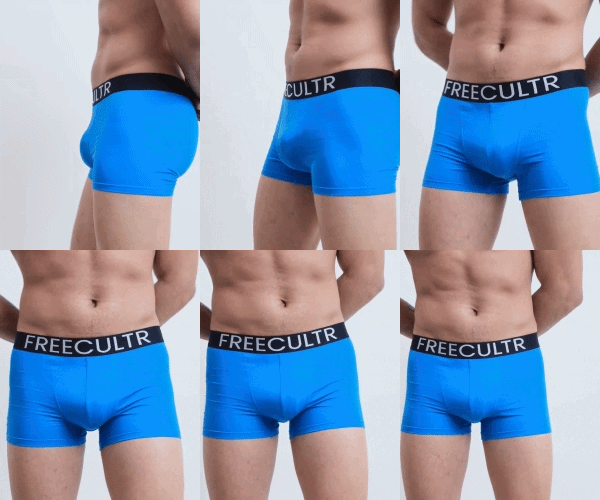
- Freecultr micro modal trunks are built specifically to stay soft and breathable through a full 12+ hour day, not just the first few hours.
- A few simple checks — fabric, waistband, and fit — can tell you in the store whether a pair will survive your 5 PM test.
The 5 PM Slump Isn't in Your Head — It's in Your Innerwear
You get dressed in the morning and everything feels fine. By lunch there's a little tugging. By 5 PM you're adjusting, shifting, or just counting down until you can change. If this sounds familiar, the problem almost never starts with you — it starts with fabric and construction that were never built to hold up for a full working day.
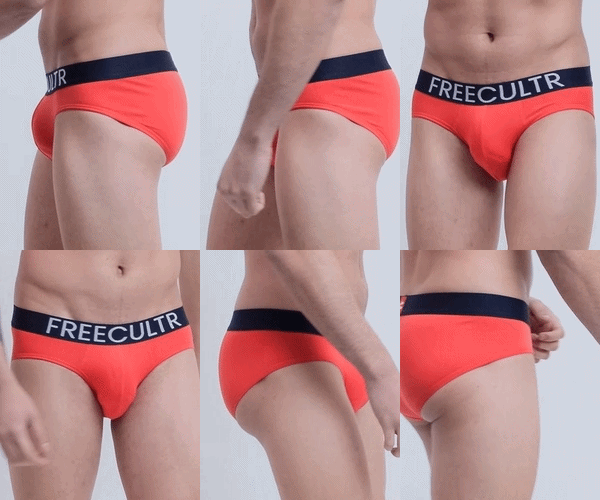
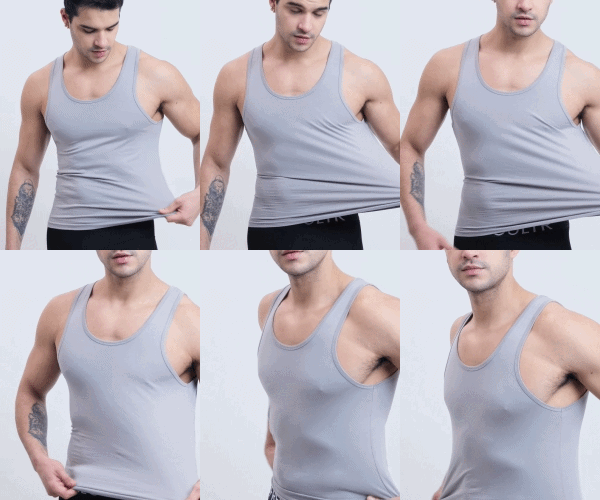
Cheap cotton blends lose their shape fast, trap heat and sweat, and start clinging in exactly the places you don't want them to. The fix isn't willpower or "getting used to it" — it's choosing innerwear for men engineered for the whole day, not just the photo on the pack.
Why Does Comfortable Innerwear Stop Feeling Comfortable By Afternoon?
Innerwear loses comfort over the course of a day mainly because ordinary cotton absorbs sweat and moisture without releasing it, so the fabric stays damp and heavy against skin for hours.
Cotton is breathable when dry, but once it absorbs sweat it holds onto that moisture instead of pulling it away from the skin. That damp fabric clings, chafes with movement, and creates the exact heaviness men describe as "uncomfortable by evening." It's rarely one dramatic failure — it's a slow build-up of moisture and friction across several hours.
Is It the Fabric or the Fit That's Actually Failing You?
It's almost always the fabric first — fit problems usually show up immediately, while fabric-related discomfort builds gradually over the day as heat and moisture accumulate.
If a pair feels wrong the moment you put it on, that's a sizing issue. But if it feels fine at 9 AM and wrong at 4 PM, the fabric is the culprit. Fabrics with poor moisture-wicking and low breathability trap heat close to the skin, and that trapped heat is what makes an otherwise well-fitted pair feel suffocating by late afternoon, especially in warmer climates or air-conditioned-to-outdoor temperature swings common in Indian offices and commutes.
Stop guessing and start with fabric that's built for the full day — browse Freecultr's innerwear range.
Shop NowHow Do Freecultr's Micro Modal Trunks Solve This Afternoon Discomfort Problem?
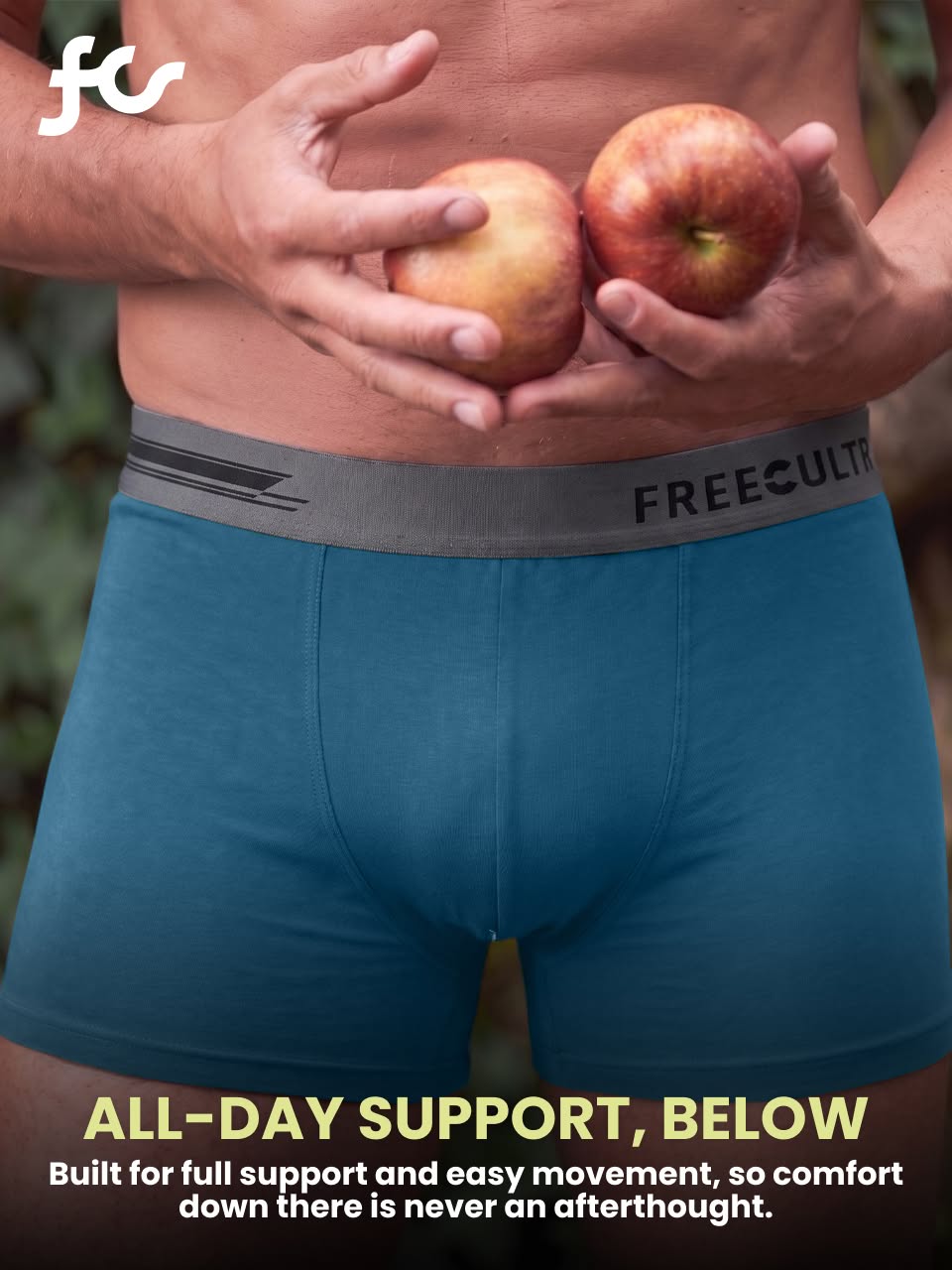
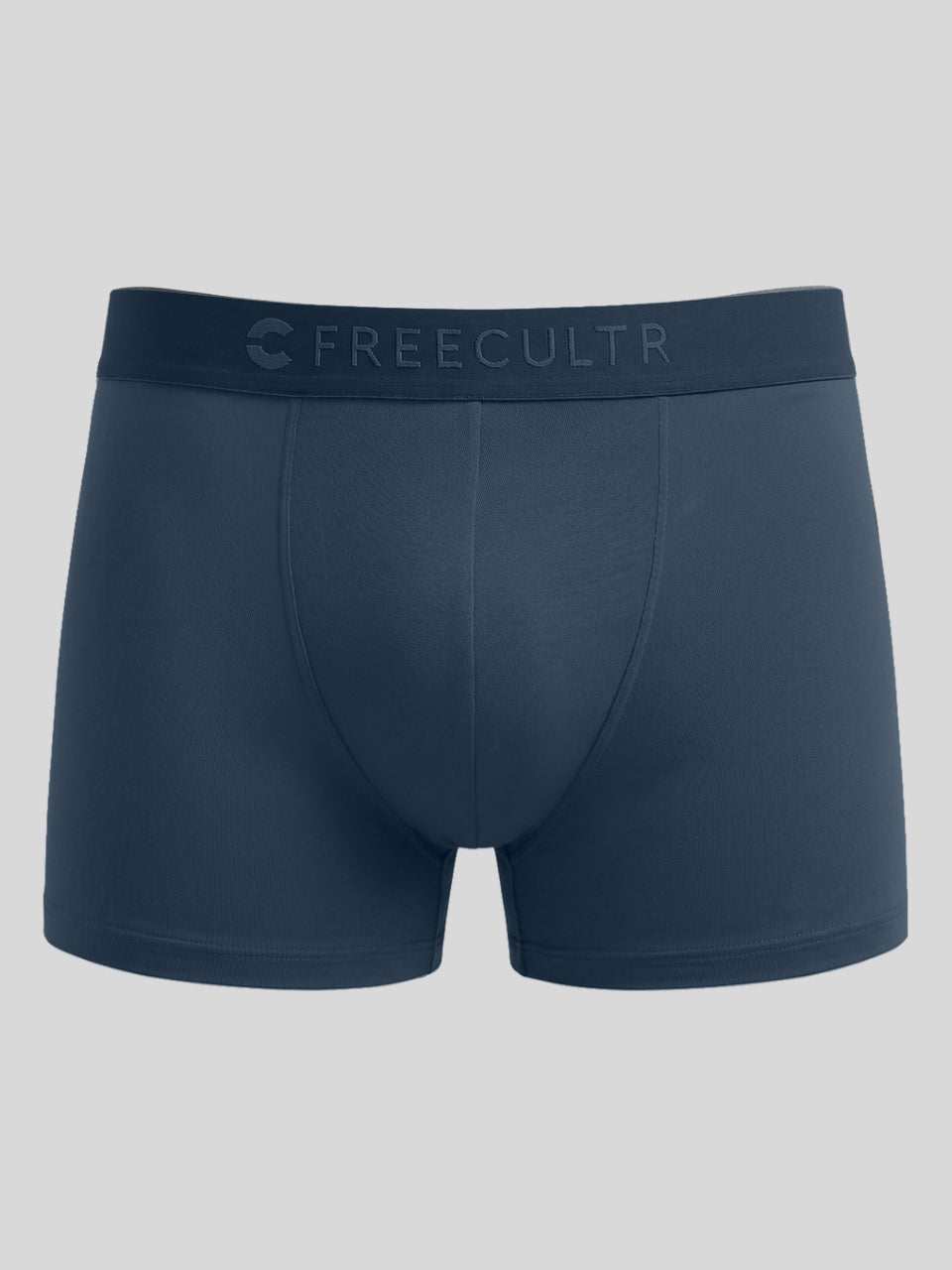
Freecultr's micro modal trunks use a fabric that actively wicks moisture away from skin and dries faster than cotton, so they stay comfortable well past the point where ordinary innerwear starts to fail.
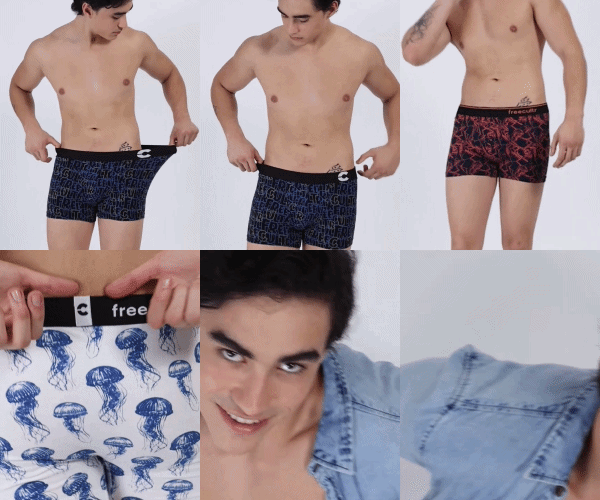
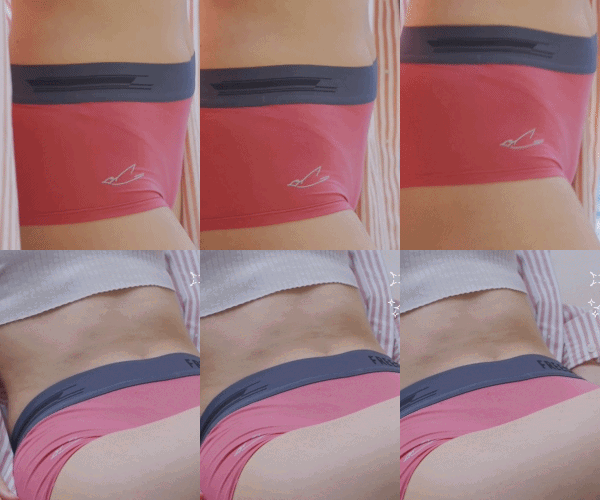
Micro modal is derived from beech-tree cellulose and spun into an exceptionally fine yarn, which gives it a smoother surface than cotton and better moisture management. That means sweat moves away from skin instead of sitting on it, and the fabric itself stays cooler to the touch through the day. Combined with a soft, fabric-wrapped waistband, Freecultr micro modal trunks are built around the specific problem of afternoon discomfort rather than just morning first-impressions.
Does Sweat and Humidity Make Innerwear Discomfort Worse?
Yes — humidity slows down how quickly sweat evaporates from fabric, so in hot, humid conditions ordinary innerwear stays damp for longer and discomfort sets in earlier in the day.
In drier climates, sweat evaporates faster even from average fabric, masking a lot of design flaws. In humid conditions — common across much of India for large parts of the year — those same flaws show up much sooner, which is why the "5 PM problem" is often really a "1 PM problem" during summer months. Fabric with genuine moisture-wicking properties matters more, not less, in these conditions.
General skin-health guidance on everyday comfort consistently points to breathable, quick-drying fabric as one of the simplest ways to reduce irritation and odor in warm, humid weather — which lines up with why fabric choice, more than fit alone, drives how innerwear feels by evening.
How Often Should You Actually Be Replacing Your Innerwear?
Most innerwear should be replaced every 6 to 12 months of regular wear, since elastic recoil and fabric softness degrade with washing well before visible holes or tears appear.
A pair can look perfectly fine and still have lost most of its stretch recovery and moisture-wicking performance. That invisible wear is often the real reason a pair that felt great six months ago now feels uncomfortable by afternoon — it's not you, and it's not always the design either; sometimes it's simply time to rotate in fresh pairs.
Step-by-Step Guide to Fixing Your 5 PM Innerwear Discomfort
Step 1: Check the fabric label first — look for micro modal, bamboo, or a moisture-wicking blend rather than plain cotton.
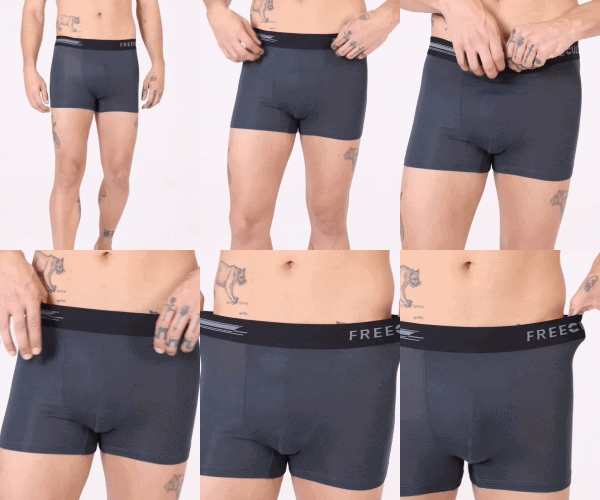
Step 2: Feel the waistband — it should be fabric-wrapped and wide enough to sit without pinching when you sit down.
Step 3: Track when discomfort actually starts during your day, so you know whether it's a fabric issue (gradual) or a fit issue (immediate).
Step 4: Rotate your innerwear and replace pairs older than 12 months, even if they still look fine.
Step 5: Choose innerwear designed around all-day wear, like Freecultr's micro modal trunks, rather than pairs optimized only for looks or price.
Ready to make it through to 5 PM without adjusting once? Freecultr's micro modal trunks are built for exactly this.
Explore the RangeConclusion
Feeling uncomfortable in your innerwear for men by late afternoon isn't something you have to accept as normal — it's usually a clear signal that the fabric and construction weren't built for a full day's wear. Once you know what to check for — moisture-wicking fabric, a proper waistband, and honest replacement timing — the fix is straightforward. Freecultr's micro modal trunks are engineered around exactly this problem. Shop the collection and see how different 5 PM can feel.
About freecultr
Freecultr is an emerging Indian D2C brand dedicated to reimagining wardrobe essentials through premium, sustainable comfort wear. We specialize in high-quality innerwear, loungewear, and accessories crafted from advanced fabrics like micro-modal, bamboo, and organic cotton to ensure breathability and long-lasting softness.
FAQs
Why does comfortable innerwear stop feeling comfortable by afternoon?
Because ordinary cotton absorbs sweat and moisture without releasing it, so the fabric stays damp and heavy against skin for hours, building into the discomfort many men notice by evening.
Is innerwear discomfort caused by fabric or fit?
It's almost always the fabric first — fit problems show up immediately, while fabric-related discomfort builds gradually as heat and moisture accumulate over the day.
How do Freecultr's micro modal trunks help with afternoon discomfort?
They use a fabric that actively wicks moisture away from skin and dries faster than cotton, paired with a soft, fabric-wrapped waistband, so they stay comfortable well past when ordinary innerwear starts to fail.
Does humidity make innerwear discomfort worse?
Yes — humidity slows how quickly sweat evaporates, so in hot, humid conditions ordinary innerwear stays damp longer and discomfort sets in earlier in the day.
How often should men replace their innerwear?
Every 6 to 12 months of regular wear, since elastic recoil and fabric softness degrade with washing well before any visible holes or tears appear.