







Quick Summary
- Most reviews of innerwear for men are based on how a pair feels for the first hour — not the twelve hours it's actually worn.
- Running an honest 12-hour wear test reveals exactly when ordinary innerwear starts to lose comfort, and why.
- Freecultr micro modal trunks were built to hold up through India's heat, humidity, and long commute-to-desk-to-commute days — this test shows why that matters.
- The biggest comfort drop-off isn't gradual — it happens at specific, predictable hours tied to fabric and waistband design.
Why a 1-Hour Try-On Doesn't Tell You Anything About Comfort
Almost every innerwear buying decision happens in the first sixty seconds — how it feels the moment you pull it on. But that's the one moment every pair, cheap or premium, feels fine. The real test starts hours later, once body heat, sweat, movement, and India's climate get involved.
So we ran a straightforward 12-hour wear test on innerwear for men across a typical Indian workday — commute, desk hours, another commute, and evening — checking in every few hours to see what actually held up and what didn't.
What Happens in the First Four Hours?
The first four hours are where almost every pair performs well, regardless of fabric quality, because sweat and heat haven't built up enough yet to expose weak construction.
Morning commute, early desk hours — this is the honeymoon period. Fit feels correct, fabric feels soft, and there's no real way to tell a well-engineered pair from a mediocre one just by how it feels at Hour 2 or Hour 4. This is exactly why in-store trial rooms and quick try-ons are misleading; they only ever test this window.
What Changes Between Hours 4 and 8?
This is where ordinary cotton blends start to show their limits — sweat accumulates faster than it evaporates, especially indoors under air conditioning followed by outdoor heat, and fabric that can't wick moisture starts clinging and chafing.
Lunch, a walk outside, back to an air-conditioned desk — that swing in temperature and humidity is where cheaper innerwear starts to fail. Fabric that felt soft at Hour 1 starts feeling damp and heavy by Hour 6, and waistbands that were fine at rest start pinching after hours of sitting. This is the point where most men start unconsciously adjusting throughout the afternoon.
Want to skip straight to the pairs that pass Hour 8? Freecultr's innerwear range is built around exactly this test.
Shop NowDoes Comfort Hold Up in the Final Stretch — Hours 8 to 12?
By Hour 8 to 12, the gap between well-engineered and poorly-engineered innerwear becomes obvious — fabric that manages moisture well still feels wearable, while fabric that doesn't feels close to unbearable by the evening commute.
This final stretch — evening commute, dinner, unwinding at home — is where the cumulative effect of ten-plus hours of heat and moisture either shows up as genuine discomfort or barely registers at all. It's also the stage most reviews and product descriptions never account for, because nobody wear-tests a product for twelve hours before writing about it.
How Did Freecultr's Micro Modal Trunks Perform Across the Full 12 Hours?
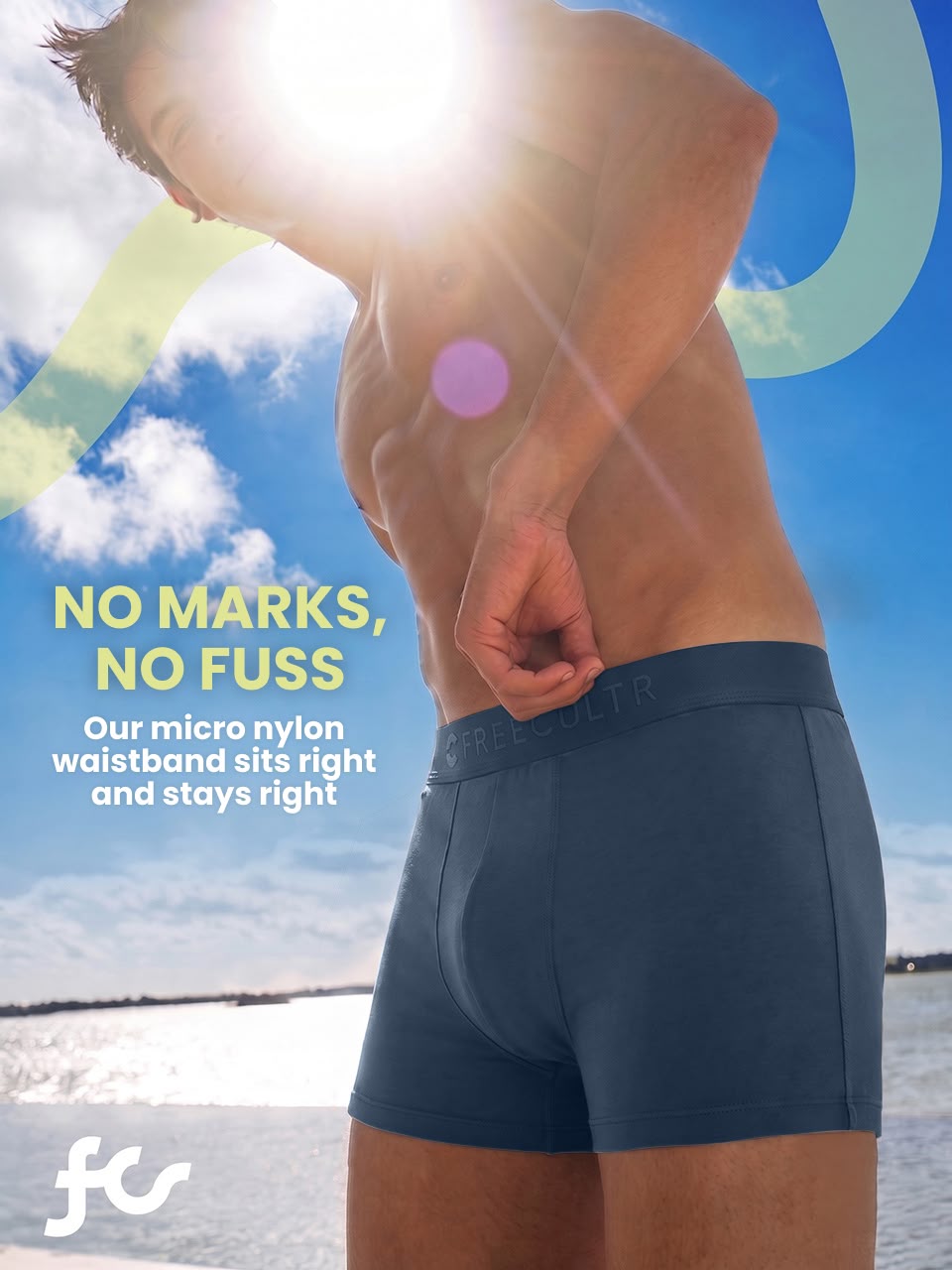
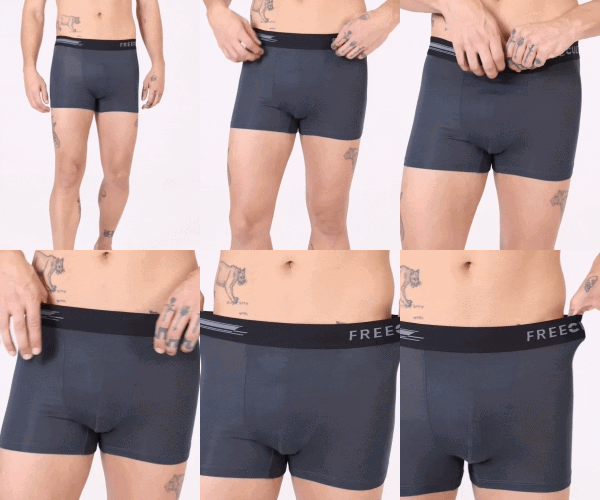
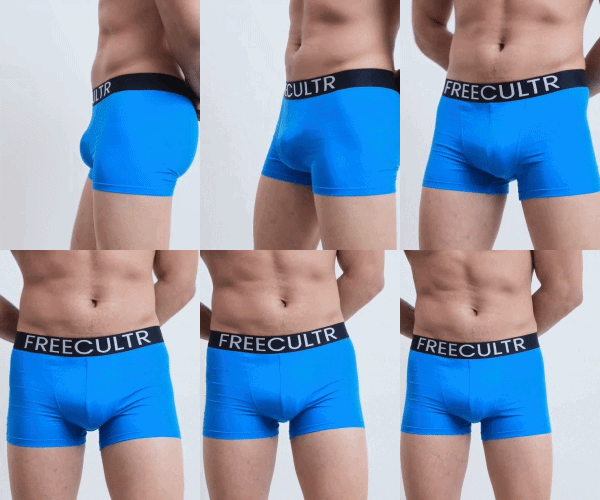
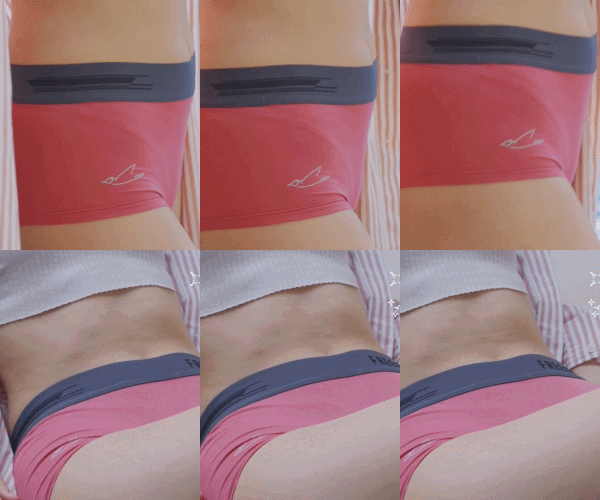
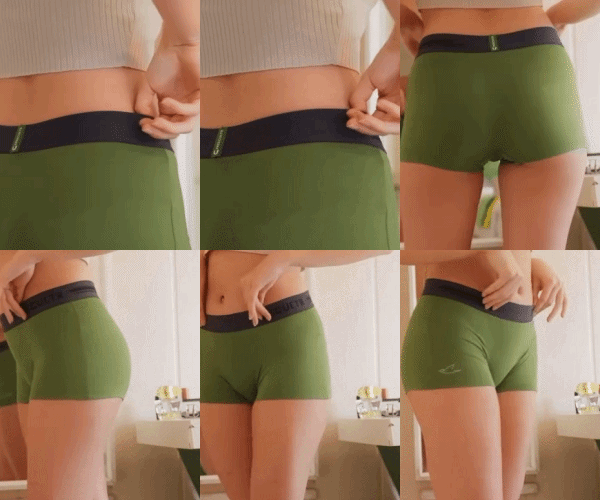
Freecultr micro modal trunks were designed specifically around this kind of full-day test, using a moisture-wicking fabric and fabric-wrapped waistband so the biggest comfort drop-offs at Hours 6 and 10 are far less pronounced.
Micro modal's finer yarn structure manages moisture more actively than standard cotton, so the fabric doesn't hold onto sweat the way ordinary blends do. Paired with a wider, softer waistband that doesn't rely on high tension to stay in place, Freecultr micro modal trunks are engineered to flatten the comfort curve across the day rather than starting strong and fading fast — which is the entire point of testing past the first hour in the first place.
How to Run Your Own 12-Hour Wear Test
Step 1: Wear the same pair for a full, typical workday — commute, desk hours, and evening — not just around the house.
Step 2: Check in at Hour 4, Hour 8, and Hour 12, noting specifically whether fabric feels damp, whether the waistband has shifted, and whether you've been adjusting without noticing.
Step 3: Pay closest attention to the Hour 4–8 window — this is where temperature and humidity swings expose fabric weaknesses fastest.
Step 4: Repeat the test after several washes, since elastic recoil and fabric softness change with laundering, not just wear.
Step 5: Compare notes across two or three pairs rather than judging any single pair in isolation — comfort differences only become obvious in contrast.
Give your own 12-hour test to a pair built for it — Freecultr's micro modal trunks are made for the full day, not just the first hour.
Explore the RangeConclusion
A real comfort test for innerwear for men in India has to account for heat, humidity, air-conditioning swings, and a full day's movement — not just the first sixty seconds in a trial room. Once you test past Hour 4, the differences between fabric and construction choices become obvious fast. Freecultr's micro modal trunks are built with exactly this full-day test in mind. Shop the collection and run the test yourself.
About freecultr
Freecultr is an emerging Indian D2C brand dedicated to reimagining wardrobe essentials through premium, sustainable comfort wear. We specialize in high-quality innerwear, loungewear, and accessories crafted from advanced fabrics like micro-modal, bamboo, and organic cotton to ensure breathability and long-lasting softness.
FAQs
Why doesn't a quick try-on tell you much about innerwear comfort?
Because the first few hours are where almost every pair performs well, regardless of fabric quality — sweat and heat haven't built up enough yet to expose weak construction.
When does innerwear typically start losing comfort during the day?
Usually between Hours 4 and 8, when sweat accumulates faster than it evaporates and temperature swings between air conditioning and outdoor heat expose fabric that can't wick moisture well.
Does comfort keep declining through the final hours of the day?
Yes — by Hours 8 to 12, the gap between well-engineered and poorly-engineered innerwear becomes obvious, with poor fabric feeling close to unbearable by the evening while good fabric still feels wearable.
How do Freecultr's micro modal trunks perform in a full-day wear test?
They're designed to flatten the comfort drop-off at Hours 6 and 10 using moisture-wicking fabric and a fabric-wrapped waistband, so comfort holds up across the full 12 hours rather than fading fast.
How can I test innerwear comfort myself?
Wear the same pair through a full typical day, checking in at Hour 4, 8, and 12 for dampness, waistband shift, and unconscious adjusting — and repeat after a few washes to account for how fabric changes over time.