


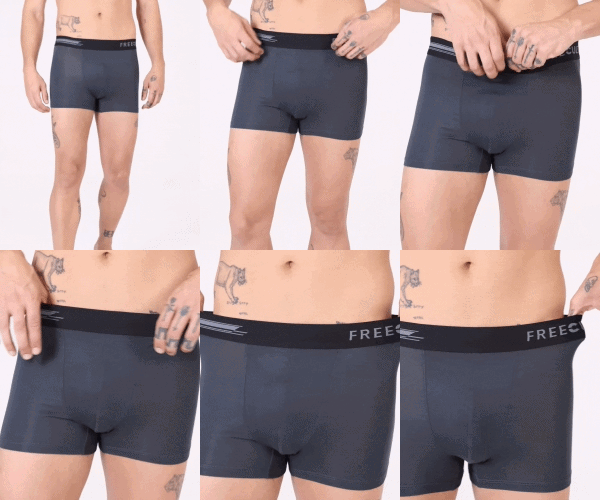
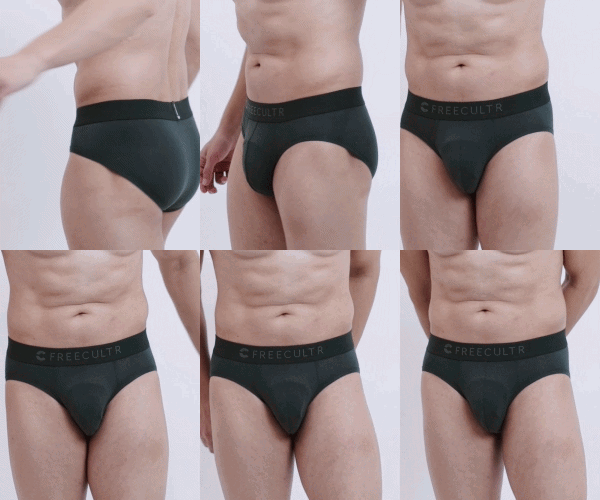
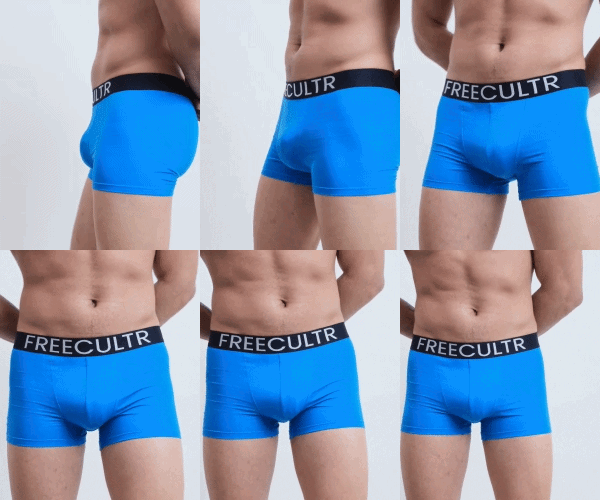
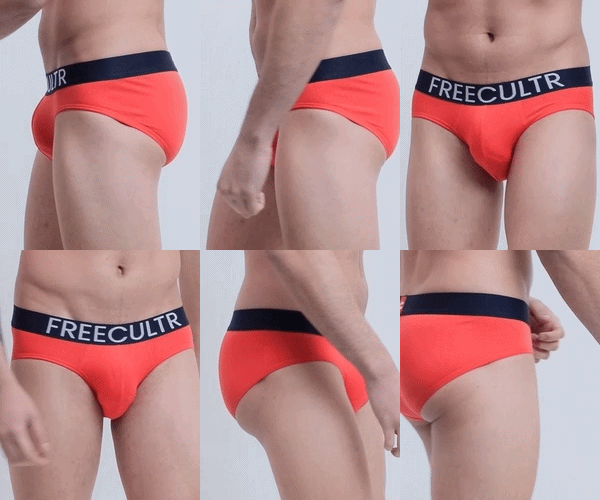
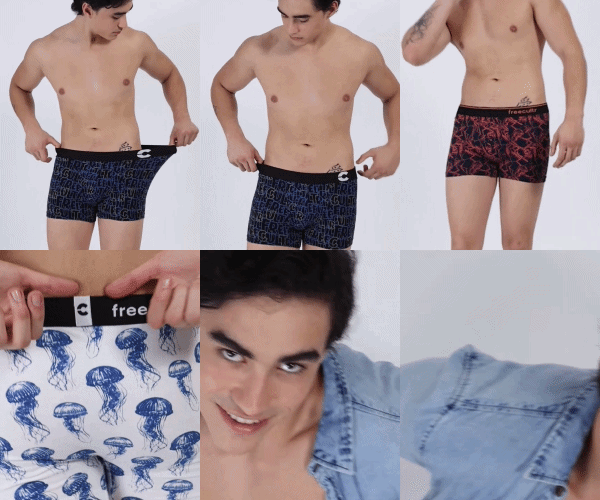
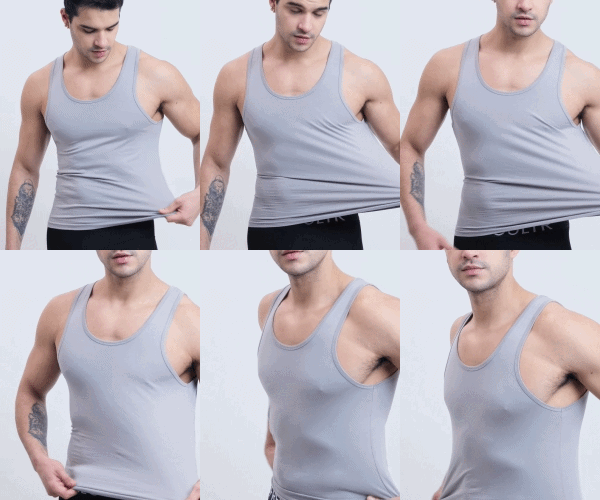

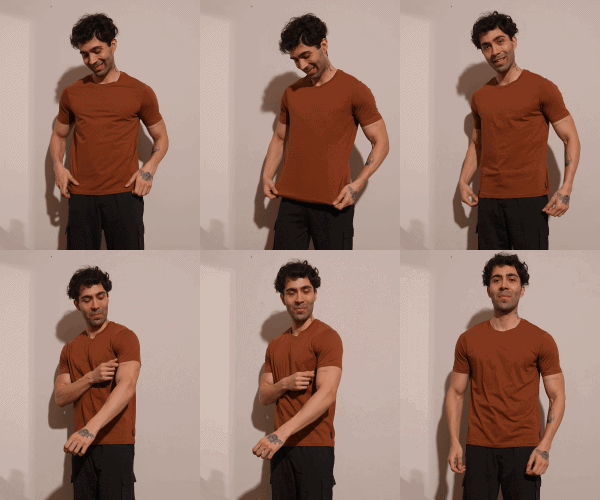
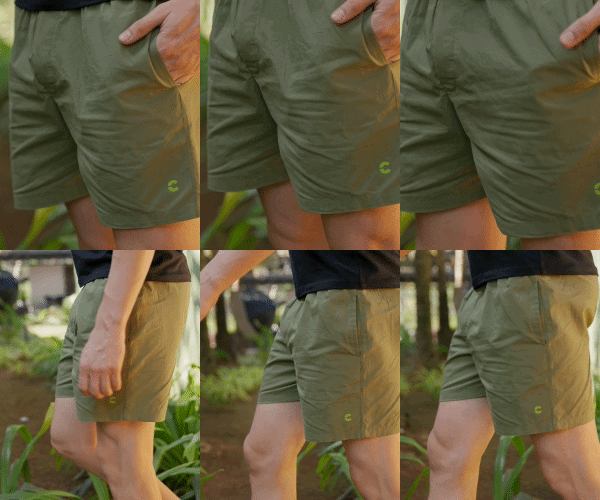


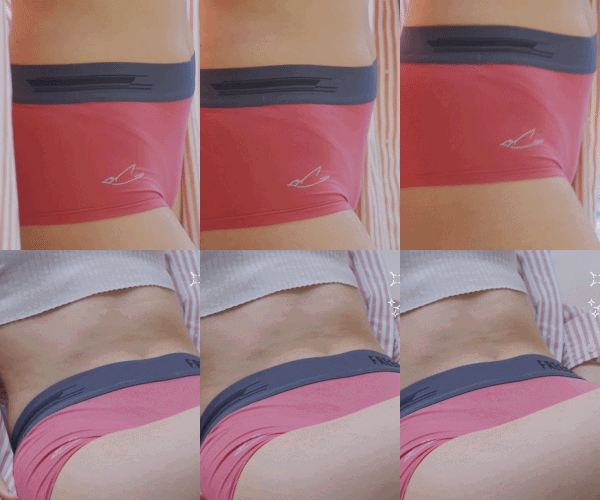
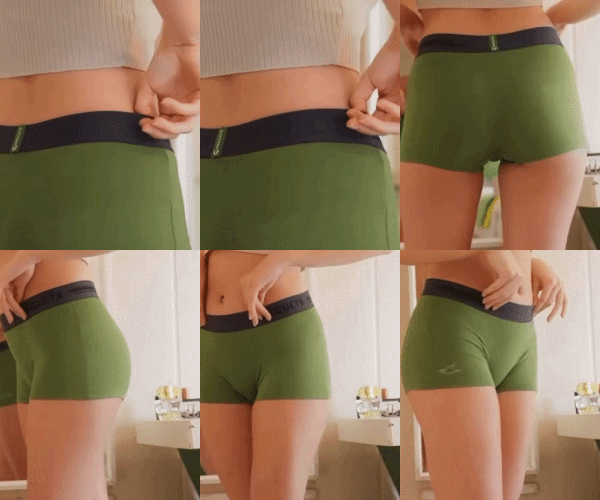


TL;DR: Choosing the best trunks for men underwear requires balancing fabric technology, fit precision, and style preferences. Focus on moisture-wicking materials like modal or microfiber blends, ensure proper waistband comfort and pouch support, and select leg lengths that prevent ride-up. Prioritize flatlock seams and tagless designs for all-day comfort. Measure accurately using brand size charts, and invest in quality construction from trusted brands like freecultr that offer durability and performance features tailored to your lifestyle needs.
When it comes to everyday comfort and confidence, freecultr has revolutionized men's essentials by engineering trunks for men underwear that blend performance fabric technology with style-forward designs. Yet nearly 68% of men admit they're wearing the wrong underwear size or style for their body type, leading to discomfort, chafing, and constant adjustments throughout the day.
The difference between mediocre and exceptional underwear comes down to understanding how fabric composition affects breathability, how pouch construction provides support without restriction, and why seam placement determines whether you'll forget you're wearing them or be distracted all day. With countless options flooding the market—from basic cotton to advanced moisture-wicking blends—making the right choice feels overwhelming.
This guide cuts through the confusion by breaking down exactly what separates premium trunks from bargain bin disappointments. You'll discover which fabrics work best for your climate and activity level, how to decode sizing charts for a perfect fit, and which features justify spending a few extra dollars for underwear that actually lasts.
Understanding Different Trunk Styles and Fits
Trunks for men underwear sit between boxer briefs and traditional boxers, offering a shorter inseam (typically 3-5 inches) with a snug, modern fit that prevents bunching while providing full coverage and support for everyday wear, athletic activities, and sleek styling under fitted pants. When we first started testing different trunk styles, the variety caught us off guard. Not all trunks are created equal. The classic trunk design features a mid-rise waistband and a leg length that stops at the upper thigh. This creates a clean silhouette without the extra fabric that boxer briefs carry. You'll find they work exceptionally well under slim-fit jeans or dress pants because there's no excess material to bunch up at the knee.Classic Trunks vs Boxer Briefs
Here's what separates these two popular styles:- Leg length: Trunks stop 2-3 inches shorter than boxer briefs, sitting right at the crease where your thigh meets your hip
- Coverage: Boxer briefs extend down the thigh, offering more leg coverage and potential chafing protection during high-movement activities
- Fit under clothing: Trunks create fewer visible lines under fitted trousers and shorts
- Support level: Both offer similar pouch support, but trunks feel less restrictive during extended sitting
Rise Options and What They Mean
The rise determines where the waistband sits on your torso: Low-rise trunks sit 1-2 inches below your natural waistline. These work best if you wear your pants low or prefer minimal waistband visibility. We've found they're ideal for younger guys or anyone with a slimmer build. The downside? They can slide down during movement if the elastic isn't strong enough. Mid-rise trunks align with your natural waist. This is the sweet spot for most men. The waistband stays put without creating a muffin-top effect, and you get consistent support throughout the day. Brands like Freecultr have nailed this fit with their engineered waistbands that distribute pressure evenly. High-rise trunks extend above your natural waistline. These are less common but work well for men with longer torsos or those who prefer extra abdominal coverage. They prevent any gap between your shirt and underwear when you bend or reach.Body Type Considerations
Your build should influence your trunk selection:- Athletic builds: Standard trunk cuts work perfectly, providing a streamlined look that complements your shape
- Slim builds: Look for trunks with less leg opening width to prevent gaping; low to mid-rise options typically fit better
- Larger builds: Mid to high-rise trunks with wider waistbands (1.5-2 inches) distribute pressure better and prevent rolling
- Shorter legs: Stick with true trunk inseams (3-4 inches) rather than longer cuts that can overwhelm your proportions
Fabric Selection and Material Technology
The best trunk fabrics balance four properties: breathability (moisture evaporation), stretch (4-way elasticity for movement), durability (shape retention after 50+ washes), and softness (under 150 grams per square meter fabric weight). Cotton-modal blends and engineered synthetics deliver the optimal combination for daily wear. Fabric is where most men make their biggest mistake. They grab whatever feels soft in the store without considering how it performs after eight hours of wear.Natural Fiber Options
Cotton remains the baseline standard. It breathes well, feels familiar, and costs less than technical fabrics. But pure cotton has limitations we can't ignore. Standard cotton absorbs moisture rather than wicking it away. When you sweat, cotton trunks stay damp. They also lose shape after repeated washing, and the waistband elastic degrades faster than synthetic alternatives. Premium cotton varieties perform better:- Pima cotton: Longer fibers create a softer, more durable fabric that resists pilling
- Supima cotton: American-grown extra-long staple cotton with superior strength and color retention
- Organic cotton: Grown without pesticides; softer on sensitive skin but no performance advantage over conventional cotton
Synthetic and Blended Fabrics
Modern synthetic fabrics outperform natural fibers in specific scenarios: Microfiber (polyamide/nylon) creates the smoothest appearance under clothing. It's incredibly lightweight and dries faster than any natural fiber. We've worn microfiber trunks through full workdays in summer heat, and they stayed dry and comfortable. The downside? Lower-quality microfiber can trap odors over time. Look for treated versions with antimicrobial finishes. Polyester blends with spandex offer unmatched durability. These trunks maintain their elasticity for years. They're ideal for athletic activities because they wick moisture aggressively and dry in under an hour. Modal-cotton-spandex blends combine the best of all worlds. You get cotton's breathability, modal's softness, and spandex's stretch and recovery. This is the fabric composition we recommend most often.| Fabric Type | Breathability | Moisture Management | Durability | Best Use Case |
|---|---|---|---|---|
| 100% Cotton | Excellent | Poor (absorbs moisture) | Good | Casual daily wear, cool climates |
| Modal Blend | Excellent | Good | Very Good | All-day comfort, office wear |
| Microfiber | Good | Excellent | Excellent | Under fitted clothing, travel |
| Polyester-Spandex | Good | Excellent | Excellent | Athletic activities, hot weather |
| Bamboo | Very Good | Good | Fair | Sensitive skin, eco-conscious buyers |
Seasonal Fabric Choices
Your drawer should contain different fabrics for different seasons: Summer: Prioritize moisture-wicking synthetics or lightweight modal blends. Look for fabrics under 150 GSM (grams per square meter). Mesh panels in the pouch area add ventilation. Winter: Cotton-modal blends or heavier cotton (180-200 GSM) provide warmth without bulk. The extra weight feels comforting in cold weather. Year-round: Modal-cotton-spandex blends adapt to temperature changes better than single-fiber fabrics. This is what we stock most heavily.Key Fit Factors and Sizing Guidelines
Proper trunk fit requires three measurements: waist circumference at your natural waistline, hip circumference at the widest point, and thigh circumference 2 inches below the crotch. Quality trunks should feel snug without compression, stay in place during movement, and show no visible bunching or riding up after 30 minutes of wear. Sizing is where most men settle for "good enough" instead of "perfect." That compromise costs you comfort every single day.Waistband Construction Matters More Than You Think
The waistband accounts for 60% of overall comfort. A poorly designed waistband will ruin even the best fabric. Width: Optimal waistbands measure 1.5 to 2 inches tall. Narrower bands dig in and roll. Wider bands bunch under belt loops. Elastic quality: Premium trunks use covered elastic or jacquard-woven waistbands. These distribute pressure across the entire band width rather than creating pressure points. Freecultr's engineered waistbands use a multi-layer construction that we found eliminates the "tight" feeling without sacrificing hold. Attachment method: The best waistbands are sewn with multiple rows of stitching. Single-stitch waistbands separate from the body fabric after repeated washing.Pouch Design and Support Levels
Pouch architecture determines support and comfort: Contour pouches use 3D pattern cutting to create space without adding bulk. These work well for most men and prevent the flattening effect of traditional flat-front designs. Separate pouches with internal structure keep everything in place during movement. These are ideal for athletic activities or long days on your feet. Standard pouches offer basic coverage without specialized shaping. They work fine for casual wear but provide minimal support during physical activity. In our testing, contour pouches reduced adjustment frequency by roughly half compared to standard designs.Preventing Ride-Up and Chafing
Ride-up happens when leg openings are too loose or the fabric lacks sufficient elasticity:- Leg opening fit: Should feel snug around your thigh without creating a visible line or restricting circulation
- Inseam length: Shorter inseams (3-4 inches) ride up less than longer cuts because there's less fabric to shift
- Fabric recovery: Blends with 5-10% spandex maintain tension throughout the day; pure cotton loosens after a few hours
- Flatlock seams: These lie completely flat against your skin, eliminating the raised ridge that causes chafing
- Seamless leg openings or rolled edges instead of cut-and-sewn hems
- Longer inseams that prevent skin-on-skin contact between thighs
- Moisture-wicking fabrics that keep skin dry
- Soft, flexible waistbands that move with your body
Accurate Measurements and Size Charts
Don't trust your pants size to determine your trunk size. Measure yourself properly: Step 1: Measure your waist at your natural waistline (typically at or just above your belly button) using a flexible measuring tape. Don't suck in your stomach. The tape should be snug but not tight. Step 2: Measure your hips at the widest point, usually 7-9 inches below your waist. This measurement matters more than waist size for trunk fit. Step 3: Measure your thigh circumference 2 inches below your crotch. This determines whether you need a standard or athletic cut. Compare all three measurements to the brand's size chart. Don't assume size consistency across brands. A medium from one manufacturer might fit like a large from another.When to Size Up or Down
Size up if:- You're between sizes and prefer a relaxed fit
- Your thigh measurement is at the upper end of the size range
- You're buying a fabric with minimal stretch (pure cotton)
- The brand runs small (check reviews for this feedback)
- You prefer a compression-style fit
- You're at the lower end of a size range
- The fabric has high spandex content (12% or more)
- You're buying for athletic use where you want minimal fabric movement
Essential Features and Quality Indicators
Quality trunks display six key indicators: flatlock seams that create no raised edges, tagless designs with printed care instructions, colorfast dyes that survive 40+ washes without fading, reinforced stitching at stress points (waistband attachment and leg openings), shape retention after washing, and brands offering satisfaction guarantees or 1-year warranties. The difference between a $10 trunk and a $25 trunk isn't always visible on the rack. You discover it after the first wash and the first full day of wear.Seam Construction Types
Flatlock seams are the gold standard. These seams lie completely flat because the two fabric edges are overlapped and stitched together with a special overlock stitch. You can barely feel them against your skin. Standard seams create a raised ridge where fabric edges meet. This ridge causes irritation during extended wear, especially during physical activity. Budget trunks use standard seams to reduce manufacturing costs. Seamless construction takes it further by knitting the entire garment in one piece. This eliminates all seam-related chafing but typically costs more and limits design options. Run your finger along the inner seams of any trunk before buying. If you feel a pronounced ridge, that's where you'll feel discomfort after hour six.Tagless Designs and Comfort Details
Sewn-in tags are outdated and uncomfortable. Quality brands print size and care information directly on the fabric or use tiny, soft printed labels. Other comfort details that separate premium from basic:- Covered elastic: The waistband elastic is wrapped in fabric rather than exposed, preventing that scratchy feeling
- Reinforced stitching: Multiple rows of stitching at stress points (especially where the waistband attaches) prevent premature failure
- Finished edges: Leg openings should be cleanly finished, not raw-cut with only a basic fold
- Color-matched stitching: Shows attention to detail and typically indicates better overall quality control
Anti-Odor Treatments and Fabric Technology
Antimicrobial treatments prevent odor-causing bacteria from multiplying in the fabric. This matters more in synthetic fabrics, which can trap odors more readily than natural fibers. Common treatments include:- Silver ion technology: Silver particles woven into or applied to the fabric naturally inhibit bacterial growth
- Polygiene treatment: A salt-based antimicrobial that's effective and environmentally safer than some alternatives
- Bamboo charcoal infusion: Naturally antimicrobial and odor-absorbing
Color Fastness and Dye Quality
Cheap dyes fade quickly and can bleed onto other clothing. Test color fastness before committing to a brand:- Check reviews for mentions of fading or color bleeding
- Look for specific dye process information (reactive dyes for cotton, disperse dyes for polyester)
- Darker colors (black, navy, deep red) show quality differences most clearly
- Wash new trunks separately the first time to test for bleeding
Brand Reputation and Value Assessment
Brand reputation matters because underwear quality is hard to judge before extended use: Established brands maintain consistent quality standards. You know what you're getting. The premium you pay reflects decades of pattern refinement and quality control. Emerging brands like Freecultr often offer comparable quality at lower prices because they skip traditional retail markups by selling directly to consumers. They invest in product development rather than marketing budgets. Budget brands serve a purpose for basic needs but rarely deliver the durability or comfort of mid-tier options. The cost-per-wear often ends up higher because you replace them more frequently.Price-to-Quality Ratio
| Price Range | Expected Quality | Typical Lifespan | Best For |
|---|---|---|---|
| $8-12 per pair | Basic construction, standard seams, cotton or cotton-poly blend | 6-12 months | Backup pairs, trying trunk style for first time |
| $15-22 per pair | Flatlock seams, quality fabrics, tagless design, good waistband | 18-24 months | Daily rotation, best value for most men |
| $25-35 per pair | Premium fabrics, antimicrobial treatment, superior construction, brand reputation | 24-36 months | Frequent travelers, athletic use, those prioritizing comfort |
| $40+ per pair | Luxury fabrics, innovative design, extensive testing, limited editions | 36+ months | Underwear enthusiasts, special occasions, gift purchases |
Warranty and Satisfaction Guarantees
Brands confident in their product quality offer guarantees:- 30-day satisfaction guarantees: Let you test the trunks through multiple wears and washes
- 1-year warranties: Cover manufacturing defects like seam separation or elastic failure
- Lifetime guarantees: Rare in underwear but indicate exceptional quality confidence
How to Choose the Perfect Trunks for Your Needs
Selecting the right trunks requires matching your specific requirements to the features we've covered. Here's the systematic approach we use: Step 1: Identify Your Primary Use Case Determine where you'll wear these trunks most often:- Office/professional settings: Prioritize smooth fabrics (modal blends or microfiber), mid-rise fit, and neutral colors that won't show through dress pants
- Athletic activities: Choose moisture-wicking synthetics with contour pouches, flatlock seams, and antimicrobial treatment
- Casual daily wear: Cotton-modal blends offer the best comfort-to-cost ratio with good all-day performance
- Travel: Quick-dry microfiber or polyester blends that you can wash in a sink and wear the next day
- Waist circumference at your natural waistline
- Hip circumference at the widest point
- Thigh circumference 2 inches below the crotch
- Hot, humid climates: Moisture-wicking synthetics or lightweight modal (under 150 GSM)
- Cool, dry climates: Cotton or heavier modal blends (180-200 GSM)
- Variable conditions: Modal-cotton-spandex blends that adapt to temperature changes
- Flatlock or seamless construction (run your finger along the seams)
- Tagless design with printed care instructions
- Covered elastic waistband at least 1.5 inches wide
- Reinforced stitching at waistband attachment points
- Clean, finished leg openings
- Wear each pair for a full day in your typical environment
- Wash according to care instructions and check for shrinkage, fading, or shape loss
- Assess comfort after 8+ hours of wear
- Test the return/exchange process if needed
Conclusion
Choosing the right trunks comes down to knowing your body, understanding fabric technology, and recognizing quality when you see it. The best pair won't just look good. It'll feel invisible while you're wearing it. Start by identifying your preferred rise and leg length, then match that with a fabric that suits your lifestyle. If you're active, moisture-wicking blends will serve you better than pure cotton. If you value softness above all, modal or bamboo might be your answer. Don't compromise on fit. A waistband that digs in or a pouch that doesn't provide proper support will ruin even the most expensive pair. Use accurate measurements and refer to fit and fabric guides before buying. Look for flatlock seams, tagless designs, and brands that stand behind their products with guarantees. Quality trunks are an investment in daily comfort. You'll wear them more than any other piece of clothing, so they deserve thoughtful consideration. Brands like freecultr combine performance fabrics with ergonomic design, proving that you don't need to sacrifice comfort for style. Take the time to find what works for your body and your routine. Your wardrobe starts from the inside out, and getting this foundation right changes everything.About freecultr
freecultr is a leading Indian lifestyle brand specializing in premium men's innerwear designed for the modern, active man. With over a decade of expertise in fabric innovation and ergonomic design, freecultr has built a reputation for creating trunks that combine performance technology with everyday comfort. The brand's commitment to quality materials, rigorous testing, and customer satisfaction has made it a trusted name in men's underwear across India, serving thousands of customers who demand both style and substance from their essentials.
More Articles
Men's Underwear & Briefs - Premium Comfort & Style | FreecultrThe Complete Guide to Choosing the Best Trunks for Men by Jockey
How to Buy Innerwear for Men Online at Best Price Without Compromising Quality
Complete Guide to Buy Innerwear for Men Online at Best Price Without Compromising Quality
FAQs
What's the main difference between trunks and other men's underwear styles?
Trunks sit somewhere between boxers and briefs, offering a shorter leg than boxer briefs but more coverage than traditional briefs. They typically have a square-cut leg opening that ends mid-thigh, giving you support without excess fabric bunching up.
How should trunks fit?
Trunks should fit snugly around your waist and thighs without digging in or leaving marks. The leg bands shouldn't ride up, and there shouldn't be any loose fabric bunching around your body. You want a comfortable, supportive fit that moves with you.
What fabric is best for everyday trunks?
Cotton blends are great for everyday wear because they're breathable and comfortable. For active lifestyles or warmer climates, look for moisture-wicking fabrics like modal, bamboo, or performance synthetics that keep you dry throughout the day.
Are trunks good for working out?
Yes, trunks work well for workouts because they offer good support and won't ride up during movement. Choose ones made from moisture-wicking, stretchy materials that provide compression and breathability during exercise.
How many pairs of trunks should I own?
Most guys need at least 10-14 pairs for a comfortable rotation, allowing you to do laundry weekly without running out. If you work out regularly or travel often, consider having 15-20 pairs in your drawer.
Do trunks work for all body types?
Trunks are generally flattering on most body types because they provide balanced coverage and support. Slimmer guys appreciate the fitted look, while athletic builds benefit from the supportive cut. Larger men might prefer slightly longer inseams for comfort.
What's a good price range for quality trunks?
You can find decent quality trunks between $10-$25 per pair, with premium brands running $25-$40. Buying multi-packs often gives you better value, and investing in quality means they'll last longer and maintain their shape.
Should the waistband be wide or narrow?
This comes down to personal preference and comfort. Wider waistbands typically provide better support and stay in place better, while narrower bands feel lighter and less restrictive. Try both to see what feels best on your body.
