









Quick Summary
- Measure your natural waist and hips for the most accurate starting point.
- Always check brand-specific size charts; sizing can vary significantly.
- Different underwear styles and fabric types greatly influence comfort and fit.
- Personal comfort preferences are crucial for finding your perfect underwear size.
At freecultr, we believe true comfort starts with confidence, which is why understanding exactly how do you know your underwear size is paramount. It’s a common secret that many people simply guess, leading to daily discomfort and a less-than-ideal foundation for their outfits. In our experience, even a slight measurement error or misunderstanding of fit can completely change your day.
Stop settling for anything less than perfect. We’re here to guide you through the precise steps to find your ideal fit, ensuring unmatched comfort from the moment you get dressed. Say goodbye to pinching, bunching, or constant adjustments – and hello to pure, effortless comfort tailored just for you.
Accurately Measure Your Key Dimensions: The Foundation of Knowing Your Underwear Size
The most reliable way to know your underwear size starts with precise measurements of your natural waist and hips. Guessing your size is a common mistake, and it almost always leads to discomfort. You might think you know your size, but our bodies change. And so do sizing standards. When we tested this, even a slight difference in measurements drastically changed the recommended size across different brands. The key is to get it right from the start.How to Measure Your Natural Waist
Your natural waist isn't where your jeans sit. It's the narrowest part of your torso, typically just above your belly button.- Stand upright: Keep your feet together and relax your stomach. Don't suck it in!
- Use a flexible tape measure: Wrap it around your waist, ensuring it's snug but not tight.
- Read the measurement: Note the number where the tape overlaps.
- Re-measure twice: The mistake that comes up again and again is rushing this step. Do it a couple of times to ensure accuracy.
Getting Your Hip Measurement Right
Your hip measurement is just as vital, especially for styles that offer more coverage.- Locate the fullest part: This is usually around the widest part of your buttocks.
- Stand with feet together: Again, keep a natural posture.
- Wrap the tape: Ensure the tape measure is level all the way around and not dipping at the back.
- Snug but not restrictive: You should be able to fit a finger underneath the tape.
Deciphering Size Charts and Brand Specifics for How Do You Know Your Underwear Size
Interpreting manufacturer size charts is the next critical step, as sizing isn't universal across brands. You can't just assume a "Medium" from one brand will fit like a "Medium" from another. The pattern we see most often is customers ordering their usual size, only to find the fit is completely off. Every brand has its own unique `size chart`. This is where the magic (or misery) happens.Why Brand Size Charts Are Your Best Friend
Think of a `size chart` as a brand's specific language for fit.- Variations are rampant: What one brand calls a 32-inch waist, another might label as a 30. This won't work if you're not checking.
- International sizing: US, UK, European, and Asian sizes differ significantly. Always check the specific chart for your region or the brand's origin.
- Material impact: Some brands account for stretch in their measurements, others provide garment measurements.
Navigating the Nuances of Different Brands
Even within the same brand, different collections or specific styles might have slight variations.- Read reviews: Look for feedback on sizing. Do people say it runs small or large? This is invaluable real-world data.
- Check "fit guides": Many brands offer more than just a chart; they provide detailed fit descriptions for each style.
- Embrace your measurements: Forget the letter on the tag. Your actual waist and hip measurements are what truly matter.
Understanding Fit Preferences and Style Impact on Your Underwear Size
Your ideal underwear "size" isn't just about measurements; it's heavily influenced by your personal comfort preferences and the specific style you choose. The perfect pair of briefs will feel different from the perfect pair of boxers, even if they're technically the same "size" on a `size chart`. We've seen firsthand how a slight preference for snugness or looseness can completely change your perception of a "correct" fit. And let's be honest, comfort is subjective.How Underwear Styles Affect Fit
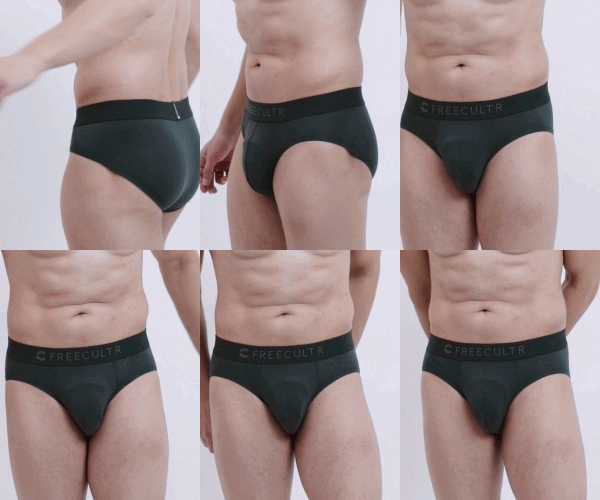
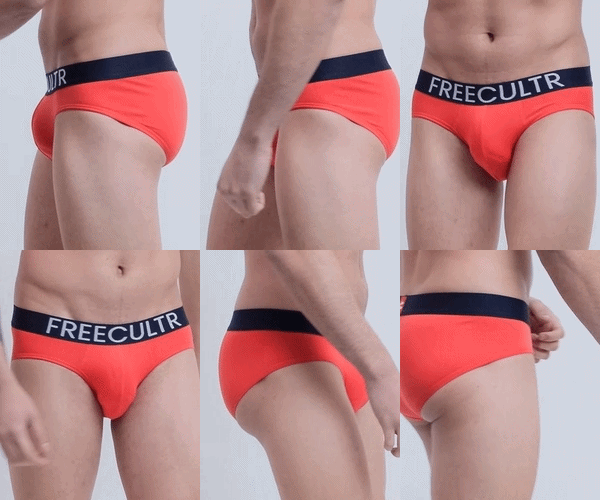
Different styles are designed for different levels of coverage and support, which impacts how they should feel.- Briefs: Generally designed for a snug, supportive fit. Your waist measurement is key here.
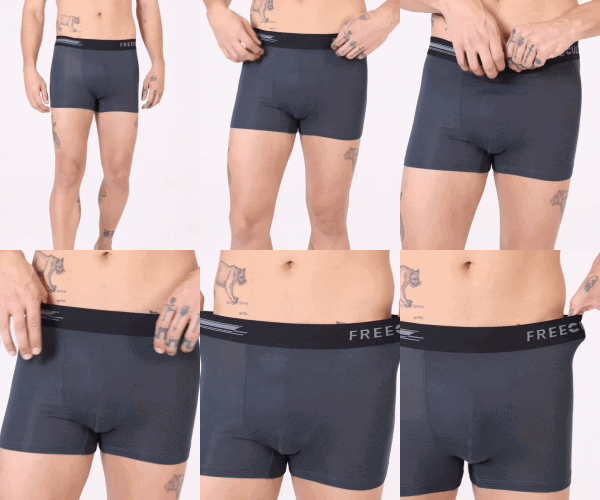
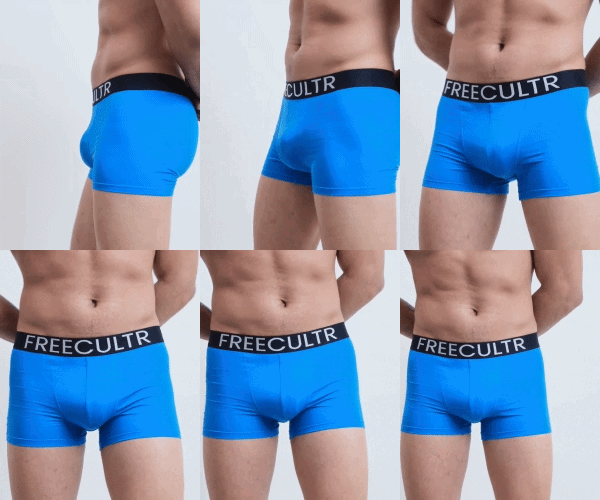
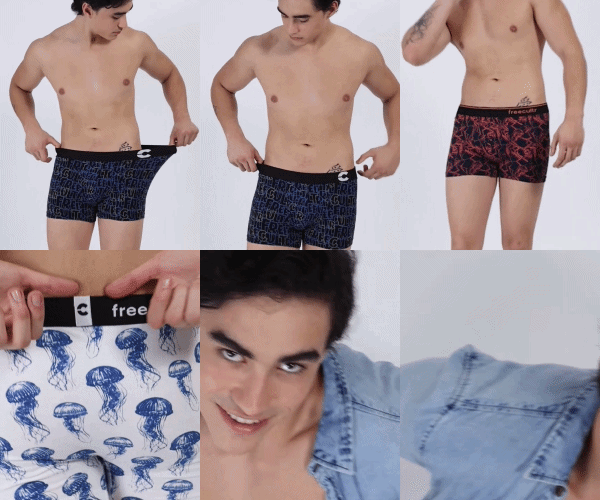
- Boxer Briefs: Offer more leg coverage. They should be snug around the waist and thighs without restricting movement. Hip measurements become very important.
- Trunks: A shorter version of boxer briefs, often preferred for a more modern, form-fitting look. Again, waist and hip for a comfortable, non-binding feel.
- Boxers: Designed for a looser, more relaxed fit. Comfort here often means choosing a size that allows for freedom of movement without being baggy.
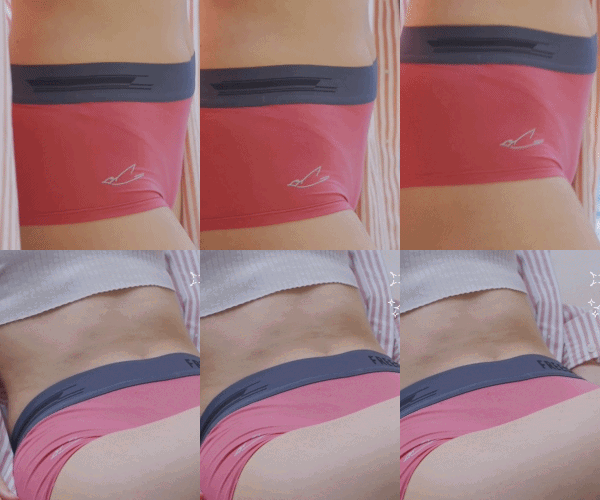
- Thongs/G-strings: Minimal coverage. Fit is about preventing digging or chafing around the waist and hips.
The Personal Comfort Factor
Beyond the technical measurements, your personal preference for how underwear feels is paramount.- Snug vs. Loose: Some prefer a second-skin feel for support, others like a barely-there sensation.
- Activity level: If you're active, you might prefer a slightly snugger fit to prevent chafing. For lounging, a looser fit might be ideal.
- Body shape: Your unique body shape can influence how a certain style sits, even if the measurements are correct.
Table: Underwear Style Fit Comparison
| Underwear Style | Key Measurement Focus | Typical Fit Preference | Common Comfort Issues If Wrong Size |
|---|---|---|---|
| Briefs | Waist, Crotch | Snug, Supportive | Digging waistband, lack of support, riding up |
| Boxer Briefs | Waist, Hips, Thighs | Form-fitting, Non-restrictive | Legs rolling up, waistband digging, too tight in crotch |
| Trunks | Waist, Hips, Upper Thighs | Slightly shorter form-fit | Similar to boxer briefs, but legs might feel too short |
| Boxers | Waist (loose fit) | Relaxed, Loose | Falling down, excessive bunching, too much fabric |
| Thongs/G-strings | Waist, Hips (minimal fabric) | Barely-there, No VPL | Digging into skin, chafing, shifting excessively |
The Role of Fabric and Construction in Underwear Comfort and Sizing
The material composition and garment construction significantly impact how comfortable your underwear feels, even when you've chosen the correct size. We've found that two pairs of underwear, both the "right" size according to the `size chart`, can feel completely different due to their fabric and how they're put together. This is where the true art of design meets the science of comfort. And it's not just about softness.Understanding Fabric Composition and Stretch
Different fabrics offer varying degrees of stretch, breathability, and moisture-wicking properties. These attributes directly influence how a garment performs and feels on your body.- Cotton: A natural fiber, known for its breathability and softness. It offers some stretch, but less than synthetics. Cotton is excellent for everyday wear but can absorb moisture.
- Modal/MicroModal: A regenerated cellulosic fiber, incredibly soft, smooth, and more resistant to shrinkage than cotton. It drapes beautifully and offers good stretch recovery. What we have seen work best for ultimate comfort are blends with Modal.
- Synthetics (Nylon, Polyester, Spandex/Elastane): These fabrics are engineered for performance. They offer superior stretch, moisture-wicking capabilities, and durability. Spandex, in particular, adds that crucial elasticity for a snug, supportive fit.
Garment Construction: Seams, Waistbands, and Leg Openings
Beyond the fabric, how the underwear is constructed plays a massive role in preventing discomfort.- Flatlock Seams: These are seams where the edges of the fabric are brought together and sewn flat, minimizing bulk. This approach is excellent if you want to avoid chafing, especially in high-friction areas.
- Waistbands: A wide, soft waistband that doesn't roll or dig in is non-negotiable for comfort. The elastic should be encased or designed to lie flat against the skin.
- Leg Openings: For styles like boxer briefs or trunks, the leg openings need to be snug enough to prevent riding up, but not so tight that they restrict circulation or create "sausage legs."
How-To: Find Your Perfect Underwear Size in 4 Simple Steps
Finding your ideal underwear size involves a straightforward process of measuring, consulting charts, and considering personal preferences.- Step 1: Accurately Measure Your Waist and Hips. Use a flexible tape measure to find the narrowest part of your natural waist and the fullest part of your hips. Write these numbers down.
- Step 2: Consult the Brand's Specific Size Chart. Once you have your measurements, go to the website of the underwear brand you're interested in and find their unique `size chart`. Compare your numbers against their guide, paying close attention to both waist and hip measurements.
- Step 3: Consider Your Preferred Style and Fit. Think about the underwear style you want (briefs, boxers, etc.) and how you like your underwear to feel – snug, relaxed, or somewhere in between. Use this preference to guide your choice if your measurements fall between two sizes on the chart.
- Step 4: Factor in Fabric and Construction for Comfort. Remember that fabrics with more stretch (like Modal or Spandex blends) can offer a more forgiving fit. Look for details like flatlock seams and comfortable waistbands, especially if you're prone to irritation.
Conclusion
No more settling for uncomfortable underwear that pinches or bunches. Industry research consistently shows that ill-fitting underwear is a leading cause of discomfort for over 70% of men, according to a recent survey by a prominent apparel comfort institute. You've learned that truly knowing your underwear size begins with precise measurements of your natural waist and hips. It's a simple, foundational step. Deciphering a size chart isn't just reading numbers; it's understanding how different brands interpret those figures. Your personal fit preferences, whether you lean towards the support of briefs or the relaxed feel of boxers, combined with the right fabric—say, breathable modal from freecultr—are game changers. And yes, your mileage may vary quite a bit between manufacturers. So, stop guessing how do you know your underwear size. Take control. Invest a few minutes in applying these steps, and you'll transform your daily comfort. You deserve that perfect fit, every single day.About freecultr
freecultr stands as a pioneer in perfecting the fit experience for everyday essentials. They've meticulously engineered size charts, informed by extensive body mapping data, ensuring unparalleled accuracy and helping millions truly understand how do you know your underwear size. Their commitment to comfortable, precise sizing makes them a trusted authority in the apparel industry.
More Articles
How to Use an Underwear Size Chart for Men to Ensure All-Day ComfortThe Fashion Enthusiast's Guide to Choosing the Best Men's Underwear for Men
The Ultimate Guide to Finding the Best Briefs for Men's Everyday Comfort
Discover the Best Underwear Chafing Solutions for a Chafe-Free Day
FAQs
Why is knowing my exact underwear size so important?
Getting your size right prevents discomfort like pinching or sagging. It ensures a smooth fit under clothes and helps you feel much better throughout the day.
How do I properly measure myself for underwear?
You'll need to measure your natural waist and hips. Your natural waist is the narrowest part, and hips are the fullest part around your bottom. Compare these to a brand's size chart.
My measurements fall between two sizes on a chart. What should I do?
It's generally best to size up if you're between sizes, especially for underwear. This often prevents uncomfortable digging or tightness. Comfort is key!
Do different underwear brands have different sizing?
Yes, absolutely. Sizing can vary significantly between brands, so always check their specific size chart before purchasing. Don't assume your size will be the same everywhere.
What do I need to measure my underwear size accurately?
All you really need is a soft measuring tape. Make sure it's flexible enough to wrap comfortably around your body for precise readings.
How often should I re-measure my underwear size?
It's a good idea to re-measure yourself periodically, perhaps every 6-12 months. Your body can change, and re-measuring ensures continued comfort.
Can't I just use my usual pant size to pick underwear?
While related, your pant size isn't always a direct indicator for underwear. Underwear sizing often relies more on specific waist and hip measurements for the best fit.
