

















Quick Summary
- Micro-modal used in innerwear for men starts as beech tree pulp, and responsible mills recover 95–99% of the chemicals and solvents used to turn that pulp into fiber — a closed-loop process most shoppers never hear about.
- Per ton of fiber, TENCEL-grade modal uses roughly 10 to 20 times less water than even organic cotton cultivation, which is a bigger deal for men's innerwear than most marketing copy lets on.
- Beech trees regenerate naturally on non-arable land, so they don't compete with food crops the way cotton does — one reason micro-modal innerwear for men has become the fastest-growing fabric category in Indian D2C basics.
- Not all modal is equal: generic modal and certified closed-loop modal (like Lenzing TENCEL) can come from the same tree species but wildly different supply chains.
Why Most Men Have No Idea What's Actually Touching Their Skin
Walk into the innerwear aisle — online or offline — and every third product claims to be "modal" or "micro-modal." Almost none of them explain what that word means beyond "soft." That gap matters, because the difference between cheap modal and closed-loop modal isn't a marketing footnote; it's the difference between a fabric that took roughly 10 to 20 times less water to produce than organic cotton, and one that didn't recover a single liter of the caustic soda used to make it.
This is the story of how a beech tree in a managed European forest ends up as the waistband on a pair of briefs shipped from a warehouse in India — and why that journey, done properly, is one of the more genuinely sustainable supply chains in innerwear for men today.
What Is Micro-Modal, Actually — and Why "Semi-Synthetic" Isn't a Dirty Word?
Micro-modal is a semi-synthetic cellulosic fiber, meaning it starts as a 100% natural raw material (beech wood pulp) and is converted into wearable fiber through a controlled chemical process. That single fact confuses buyers, because "semi-synthetic" gets lumped in with polyester and nylon in most people's heads — fabrics with zero natural origin. Modal isn't that. It sits in the same family as viscose and lyocell (Tencel), all derived from wood cellulose, but modal is specifically engineered for higher wet strength and a finer fiber diameter, which is what gives micro-modal its characteristic silky, second-skin feel in men's innerwear.
The "micro" prefix refers to fiber fineness, not a separate raw material — a micro-modal yarn is spun from finer individual filaments than standard modal, which is why it drapes and stretches differently against skin, particularly relevant for close-contact garments like innerwear where every gram of fabric touches the body directly.
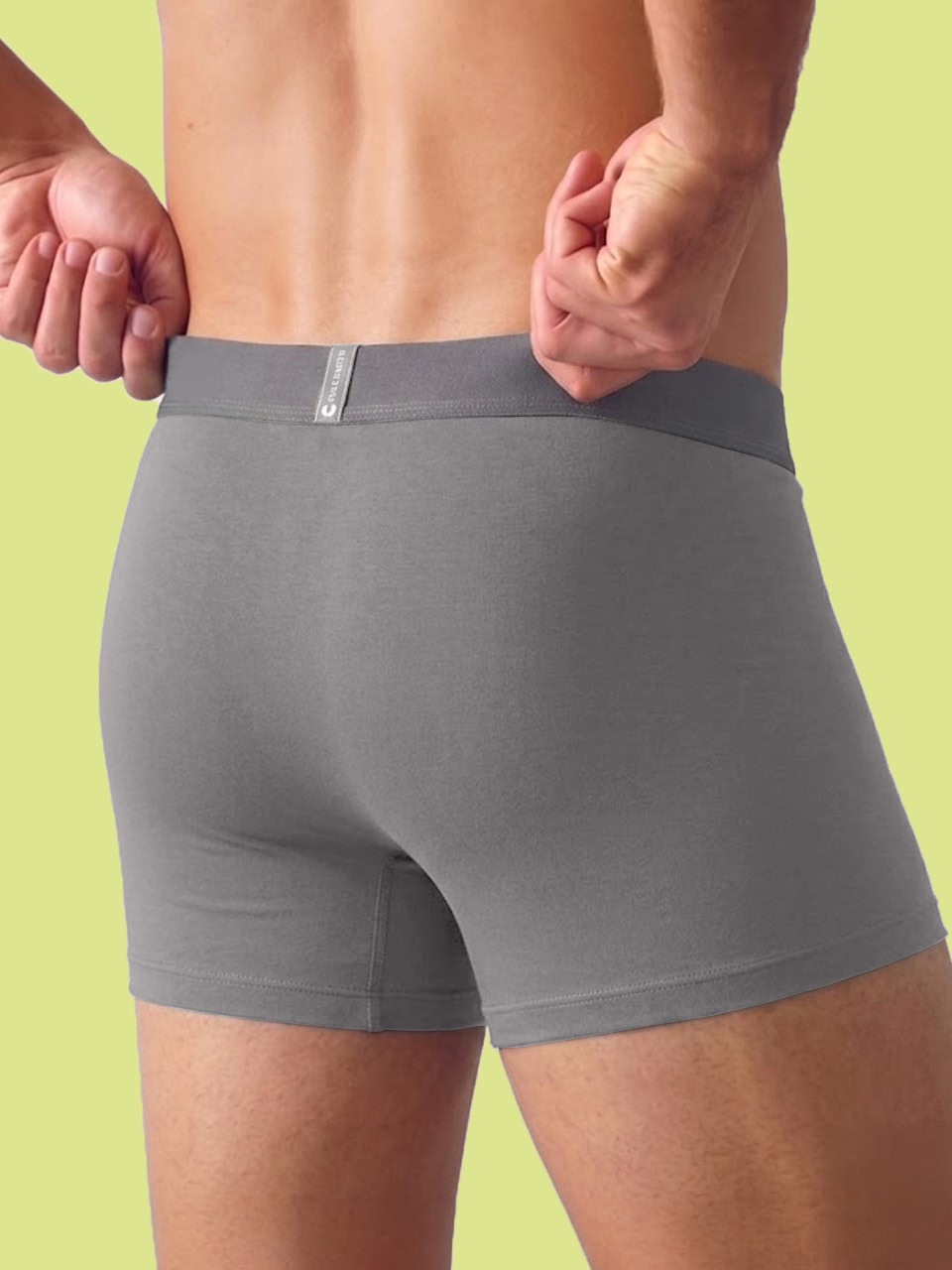
Experience the second-skin feel of certified micro-modal and bamboo fabrics crafted for all-day breathability.
How Does a Tree Become a Waistband? The Real Production Chain
The process is more mechanical than people assume. Beech logs are harvested and chipped, the chips are chemically pulped to separate cellulose from lignin using sodium hydroxide (caustic soda), the resulting cellulose sheets are dissolved and reacted to form a viscous solution, and that solution is extruded through spinnerets into fiber. It's a modified viscose process — which is exactly where the sustainability story gets interesting.
In a generic, uncertified mill, the caustic soda and other process chemicals are used once and discharged. In a closed-loop mill — the standard Lenzing and other reputable fiber producers operate to — those same chemicals are captured, purified, and reused across multiple production cycles, with recovery rates reported at 95% and up to 99% for solvents in flagship facilities. That's not a rounding-error difference. It's the gap between a fabric with a genuinely low chemical footprint and one that only looks that way on a hangtag.
| Fabric | Raw Material | Water Use (relative) | Chemical Recovery |
|---|---|---|---|
| Micro-Modal (closed-loop) | Beech wood pulp | 10–20x less than organic cotton per ton | 95–99% |
| Generic Modal / Viscose | Wood pulp (mixed sourcing) | Higher, mill-dependent | Often uncontrolled |
| Conventional Cotton | Cotton plant | High — irrigation-intensive | Not applicable |
Why Do Beech Trees Beat Cotton for Sustainable Innerwear for Men?
Beech trees require no irrigation and no pesticide-heavy cultivation, and they grow on hillsides and non-arable land unsuitable for food crops — which means beech-based fiber production doesn't compete with agricultural land the way cotton farming does. Cotton, by contrast, is one of the most water- and pesticide-intensive crops grown at scale globally.
This is the part most men's innerwear brands gloss over: the sustainability advantage of micro-modal isn't really about the finished fabric feeling soft — it's about what didn't happen to grow the raw material. No irrigated cotton field, no synthetic fertilizer runoff, no land-use competition with food crops. Beech forests, when responsibly managed and FSC-certified, also regenerate without replanting, which keeps the raw material renewable on a multi-decade cycle rather than a single-season crop cycle.
Does Micro-Modal Actually Perform Better, or Is It Just a Sustainability Story?
It performs better on wet strength, breathability, and shrink resistance compared to standard viscose rayon, which is the entire reason modal exists as a distinct fiber category rather than just being called "premium viscose."
Modal's higher wet modulus means it holds its shape and strength even when damp — which matters more for innerwear than almost any other garment category, given how much moisture and friction the fabric handles across a full day. Micro-modal specifically, with its finer filament structure, adds a moisture-wicking quality that keeps the fabric feeling dry against skin longer than standard cotton, without the synthetic feel of a pure polyester blend. That combination — natural origin, engineered performance — is why brands building serious micro-modal innerwear for men ranges treat it as a functional upgrade, not just a comfort claim.
What Should You Actually Check Before Buying "Modal" Innerwear?
Check whether the brand names its fiber source (Lenzing TENCEL Modal is the industry benchmark) rather than just using the word "modal" as a generic descriptor, because sourcing transparency is the single biggest tell of a genuinely closed-loop supply chain.
Roughly 80% of global branded modal capacity is either Lenzing-produced or Lenzing-licensed, which means most premium modal innerwear on the market — regardless of the brand name on the tag — traces back to the same handful of certified mills. If a brand can't tell you where its modal comes from, it's likely using unbranded generic modal, which carries none of the closed-loop guarantees discussed above.
Step-by-Step Guide to Choosing the Right Micro-Modal Innerwear
Step 1: Check the fabric composition tag for "modal" or "micro-modal" specifically — not just "premium cotton blend," which is often a marketing substitute for a cheaper fiber mix.
Step 2: Look for brand transparency on fiber sourcing — mentions of TENCEL, Lenzing, or FSC-certified beech wood are strong signals of closed-loop production.
Step 3: Check the GSM (fabric weight) — micro-modal innerwear typically performs best in the 150–200 GSM range for everyday wear, balancing breathability with structure.
Step 4: Assess the blend ratio — pure or high-percentage modal (80%+) delivers the softness and moisture-wicking benefit; heavy dilution with polyester or generic viscose reduces both.
Step 5: Wash-test before bulk buying — genuine modal retains shape and softness after multiple washes due to its high wet strength; poor-quality blends will pill or lose shape within a few cycles.
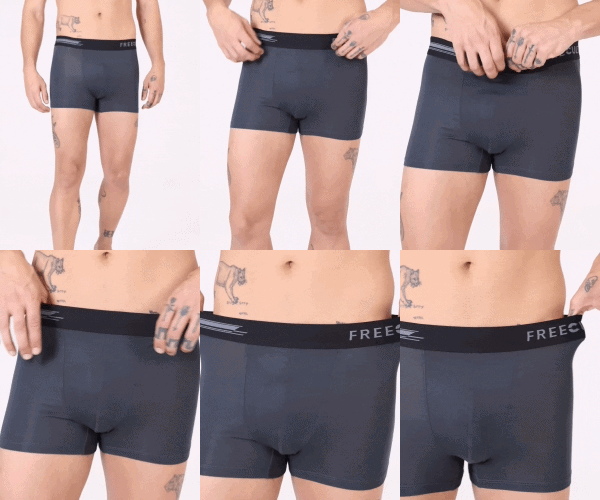
Upgrade your daily essentials with a 7-pack of certified micro-modal briefs engineered with zero-ride waistbands.
Conclusion
The journey from a beech forest to a pair of briefs isn't a marketing story — it's a supply chain with measurable numbers behind it: 95–99% chemical recovery in closed-loop mills, 10–20x lower water use than organic cotton per ton, and a raw material that grows on land cotton can't touch. Most brands selling innerwear for men skip this explanation because it's easier to just say "soft."
If you're going to wear something against your skin every single day, it's worth knowing what that fabric actually cost to make — and what it didn't. That's the case for genuine micro-modal innerwear for men, and it's the standard we build every piece of men's innerwear around. Shop the full innerwear range here.
About freecultr
Freecultr is an emerging Indian D2C brand dedicated to reimagining wardrobe essentials through premium, sustainable comfort wear. We specialize in high-quality innerwear, loungewear, and accessories crafted from advanced fabrics like micro-modal, bamboo, and organic cotton to ensure breathability and long-lasting softness.
FAQs
What is micro-modal made of?
Micro-modal is a semi-synthetic cellulosic fiber made from beech tree wood pulp, converted into fine, spinnable filaments through a modified viscose process.
Is micro-modal innerwear actually sustainable?
It performs better on wet strength, breathability, and shrink resistance compared to standard viscose rayon, and when produced in a closed-loop mill, it recovers 95–99% of the chemicals used and consumes 10–20x less water per ton than organic cotton.
Why do beech trees beat cotton for sustainable innerwear for men?
Beech trees require no irrigation and grow on non-arable land, meaning they don't compete with food crops for water or land the way cotton cultivation does.
Does micro-modal perform better than cotton for daily wear?
Yes — its higher wet strength and finer filament structure give micro-modal better moisture-wicking and shape retention over repeated washes compared to standard cotton.
How do I check if my innerwear is genuinely closed-loop micro-modal?
Check whether the brand names its fiber source, such as Lenzing TENCEL Modal, since sourcing transparency is the clearest sign of a genuinely closed-loop supply chain.