









Quick Summary
- India's coastal and northern-plains cities routinely see 70-90% relative humidity for 6+ months a year, a climate that breaks down cotton innerwear far faster than most men realize.
- Micro-modal innerwear for men absorbs up to 50% more moisture than standard cotton, per fabric industry testing, while drying significantly faster due to its finer fiber structure.
- The right men's innerwear isn't just about comfort, poor moisture management in humid weather is directly linked to skin irritation, chafing, and fungal infections in warm, damp conditions.
- Micro-modal is derived from beechwood cellulose, giving it a fiber diameter roughly half that of cotton, which is why it feels noticeably softer against skin from the first wear.
Why Most Innerwear for Men Fails the Moment Humidity Hits
If you've ever peeled off a cotton vest at the end of a July afternoon in Mumbai, Chennai, or Kolkata and felt like you'd been wearing a damp towel all day, you already understand the problem this article is about: innerwear for men that was never engineered for India's actual weather.
Most men's innerwear on the market is still built around cotton, a fabric that performs reasonably in dry heat but struggles badly once relative humidity climbs past 60%, which is most of the year across a large part of the country. Cotton absorbs sweat but releases it slowly, which means the fabric stays wet against your skin for hours.
That prolonged dampness is what causes the chafing, odor, and general discomfort that men quietly tolerate because they assume it's just "how innerwear feels" in summer. It isn't. Micro-modal innerwear for men was developed specifically to solve this moisture-retention problem, and understanding why it works differently is the first step to actually fixing the discomfort rather than just enduring it.
What Exactly Is Micro-Modal, and Why Does Fiber Size Matter?
Micro-modal is a refined version of modal fabric, engineered with a finer fiber diameter than standard modal or cotton. It's produced from beechwood cellulose through a wood-pulp spinning process, which naturally yields fibers roughly half the thickness of a typical cotton fiber.
That finer fiber diameter is not a marketing detail, it's the entire reason the fabric behaves the way it does. Thinner fibers pack more tightly and create a smoother, denser surface, which is what gives micro-modal its distinctive soft, almost liquid-feeling hand against skin.
More importantly for hot-weather performance, the tighter fiber structure increases the fabric's surface area-to-volume ratio, allowing it to pull moisture away from skin and spread it across a wider surface for faster evaporation, the mechanical basis of why moisture-wicking fabric works at all.
How Much Better Is Micro-Modal at Handling Sweat Than Cotton?
Micro-modal fabric can absorb significantly more moisture than cotton of the same weight, figures cited by textile manufacturers commonly range up to 50% higher moisture absorption, while also releasing that moisture faster due to its finer fiber structure and lower yarn density. In practice, this means the fabric spends less time saturated against your skin.
Cotton, once wet, tends to cling and stay damp because its thicker fibers and looser weave don't disperse moisture as efficiently. This is also why cotton innerwear often feels heavier and stickier by mid-afternoon in humid weather, while a well-made micro-modal piece feels comparatively dry even hours into wear.
According to general fabric science reporting from sources like Healthline on breathable fabrics, natural and semi-synthetic cellulose-based fibers with high moisture-wicking capacity are consistently recommended for humid-climate clothing over standard cotton, which lines up with what micro-modal delivers structurally.
| Property | Cotton | Micro-Modal |
|---|---|---|
| Fiber diameter | Standard (coarser) | ~50% finer than cotton |
| Moisture absorption | Baseline | Up to 50% higher |
| Drying speed | Slower | Noticeably faster |
| Shrinkage after wash | Higher | Lower (better shape retention) |
| Feel against skin | Rougher over time | Consistently soft |
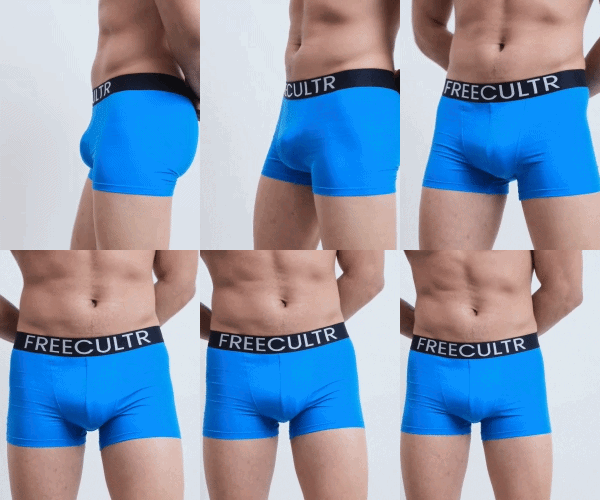
Experience superior cooling and quick-dry comfort with breathable micro-modal innerwear built for high humidity.
Does Micro-Modal Actually Prevent Skin Issues in Humid Weather?
Prolonged dampness against skin, the exact condition cotton innerwear creates in humid weather, is a well-documented contributor to chafing, heat rash, and fungal skin infections in warm, moist environments. Dermatological guidance consistently points to moisture as the main irritant, not heat alone.
Skin that stays wet for extended periods loses some of its natural barrier function, making it more prone to friction damage and microbial growth. Micro-modal innerwear addresses this at the fabric level by reducing the amount of time your skin stays wet, rather than trying to mask the problem with looser fits or antimicrobial coatings.
For men in physically active jobs, daily commutes without AC, or simply living in a coastal city, that difference in dry-time is often the deciding factor between innerwear that's genuinely comfortable and innerwear you just tolerate.
What Should You Actually Look for When Buying Men's Innerwear for Summer?
Fabric composition matters more than brand claims, check whether the product explicitly states micro-modal, modal-cotton blend, or bamboo-based fiber, rather than just "breathable cotton," which is often a marketing label with no fiber-level backing.
Fit matters almost as much as fabric: even the best moisture-wicking fabric underperforms if the innerwear is too tight and restricts airflow, or too loose and creates friction points. Seam construction is a detail most men overlook, flatlock or seamless construction reduces chafing risk significantly compared to standard overlock seams, especially during long wear or physical activity.
Wash care also affects long-term performance; micro-modal generally holds its shape and softness better than cotton across repeated washes, but harsh detergents and high heat drying will degrade any fabric faster than air drying.
Step-by-Step Guide to Choosing the Right Micro-Modal Innerwear
Step 1: Check the fabric label for "micro-modal" or a modal-blend percentage, avoid vague terms like "premium cotton" if humidity performance is your priority.
Step 2: Confirm your size using a fit chart rather than assuming your regular size, since micro-modal's stretch behaves differently from cotton.
Step 3: Look for flatlock or tagless seam construction if you're prone to chafing or wear innerwear for extended hours.
Step 4: Buy at least 2-3 pieces to rotate through, since micro-modal performs best when it's not washed and worn back-to-back without a full dry cycle.
Step 5: Hand wash or use a gentle machine cycle with mild detergent, and air dry rather than tumble dry, to preserve the fiber's softness and elasticity over time.
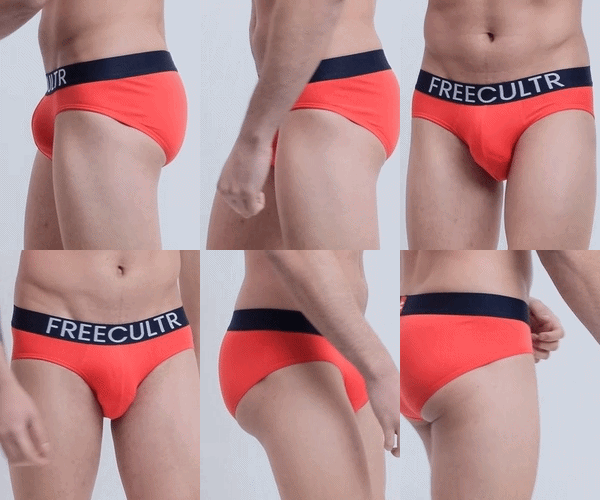
Upgrade your daily rotation with moisture-wicking micro-modal briefs designed for active anti-bacterial protection and all-day freshness.
Conclusion
Innerwear for men doesn't have to be a daily compromise between comfort and India's climate. The discomfort most men associate with hot, humid weather isn't inevitable, it's largely a fabric problem, and cotton simply isn't built to solve it.
Micro-modal innerwear for men addresses the core issue at the fiber level: faster moisture absorption, quicker drying, and a softer feel that holds up wash after wash. If you're still reaching for the same cotton basics every summer, it's worth trying men's innerwear that's actually engineered for the weather you live in. Shop Freecultr's micro-modal innerwear collection and feel the difference on the next humid day.
About freecultr
Freecultr is an emerging Indian D2C brand dedicated to reimagining wardrobe essentials through premium, sustainable comfort wear. We specialize in high-quality innerwear, loungewear, and accessories crafted from advanced fabrics like micro-modal, bamboo, and organic cotton to ensure breathability and long-lasting softness.
FAQs
Why does cotton innerwear feel uncomfortable in humid weather?
Cotton absorbs sweat but releases it slowly due to its thicker fiber structure and looser weave, which keeps the fabric damp against skin for hours and leads to chafing, odor, and general discomfort in humid conditions.
What makes micro-modal different from regular modal or cotton?
Micro-modal is spun from beechwood cellulose into fibers roughly half the diameter of standard cotton fibers, giving it a denser, smoother structure that absorbs and releases moisture faster while feeling noticeably softer against skin.
How much more moisture can micro-modal absorb compared to cotton?
Micro-modal fabric can absorb up to 50% more moisture than cotton of the same weight, according to textile manufacturer testing, while also drying significantly faster due to its finer fiber structure.
Can the wrong innerwear fabric actually cause skin problems?
Yes, prolonged skin dampness from slow-drying fabrics like cotton is a documented contributor to chafing, heat rash, and fungal skin infections in warm, humid environments, since wet skin loses some of its natural barrier protection.
What should I check before buying men's innerwear for summer?
Look for explicit fabric composition like micro-modal or modal-blend rather than vague "breathable cotton" claims, confirm fit using a size chart, check for flatlock or seamless construction, and air dry rather than tumble dry to preserve fabric performance.