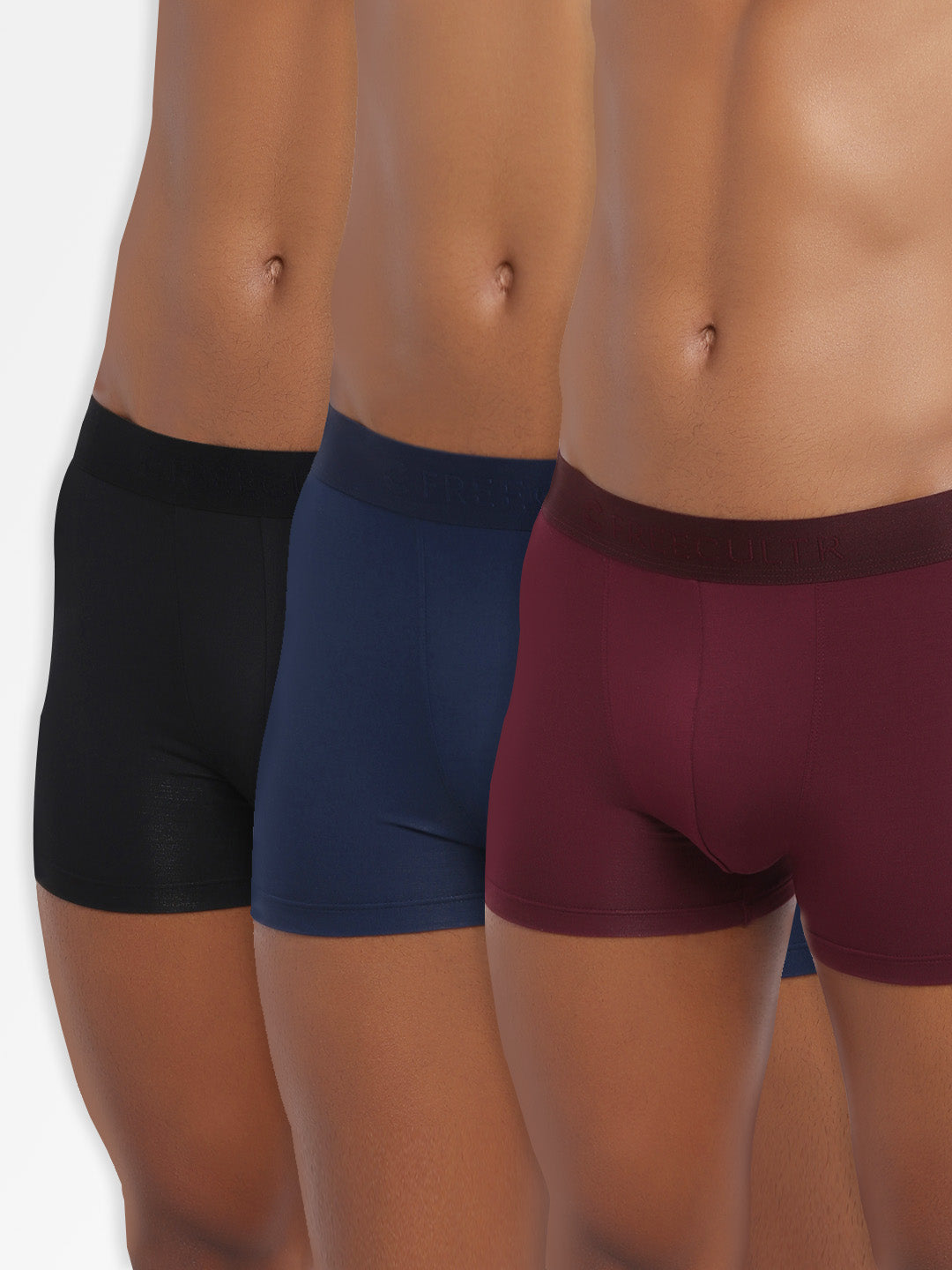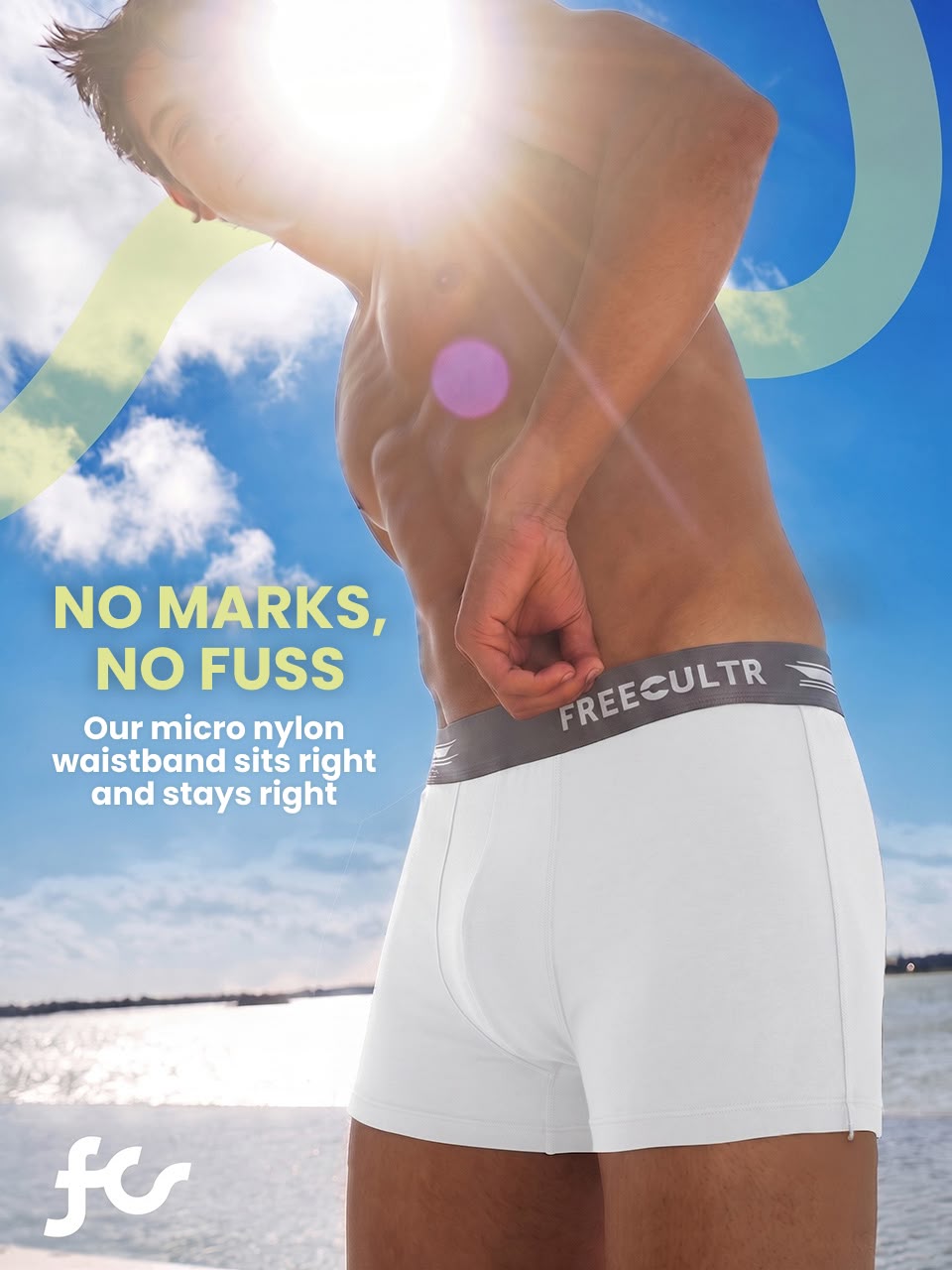

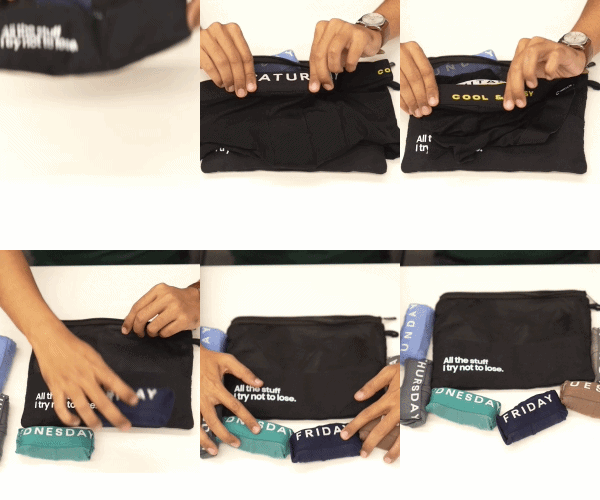
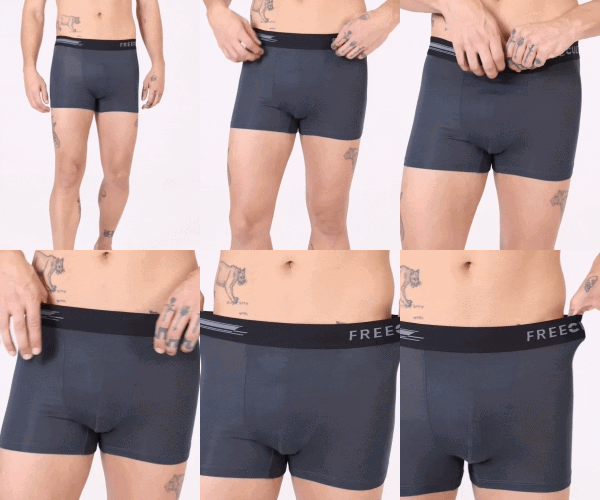




Quick Summary
- The right innerwear for men uses fabric engineered to pull sweat away from skin, not just soak it up — that's the real difference between "dry" and "damp."
- Not all mens trunks perform the same way; thread structure, blend ratio, and knit density decide how fast moisture actually moves off the body.
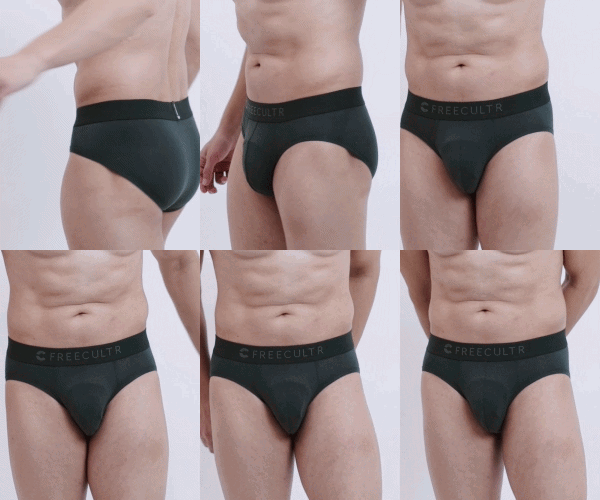
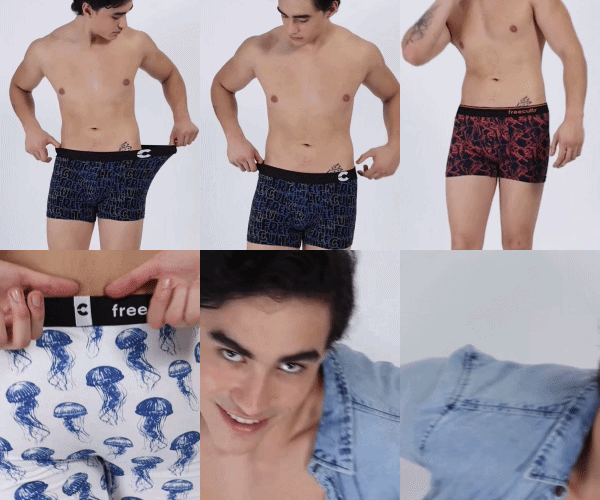
- Freecultr's advanced-fabric mens underwear is built to wick up to 50% more moisture than standard cotton basics, without sacrificing softness.
- Fit matters as much as fabric — the wrong waistband or leg opening traps heat and undoes even the best wicking technology.
Why Does Regular Innerwear Leave You Feeling Sweaty by Noon?
Most men have felt it: fresh in the morning, uncomfortable by lunch. Standard cotton innerwear absorbs sweat, but it doesn't move it anywhere — the moisture just sits against the skin, cooling slowly and leaving that damp, heavy feeling through the rest of the day. In humid weather or during long commutes, this isn't just uncomfortable; it's often the reason for chafing and skin irritation by evening.
The fix isn't wearing less, it's wearing smarter. Innerwear for men built with moisture-wicking fabric technology is designed to pull sweat away from the skin and spread it across a larger surface area to evaporate faster, keeping you genuinely dry rather than just less wet.
What Actually Makes a Fabric "Moisture-Wicking"?
A fabric wicks moisture when its fiber structure physically pulls sweat away from the skin through capillary action, rather than letting it pool and soak in like plain cotton.
This comes down to how the yarn is engineered. Fabrics blended with micro-modal or bamboo fibers have a finer, more uniform fiber structure than raw cotton, which lets moisture travel outward to the fabric's surface and evaporate instead of being trapped near the skin. The knit density also plays a role — a tighter, more consistent knit moves moisture more efficiently than a loose or uneven one.
Dermatologists generally recommend breathable, moisture-wicking fabrics for anyone prone to skin irritation in warm or humid conditions, since prolonged dampness against skin is a common trigger for chafing and rashes.
Mens Trunks vs Briefs: Which Fit Traps Less Heat?
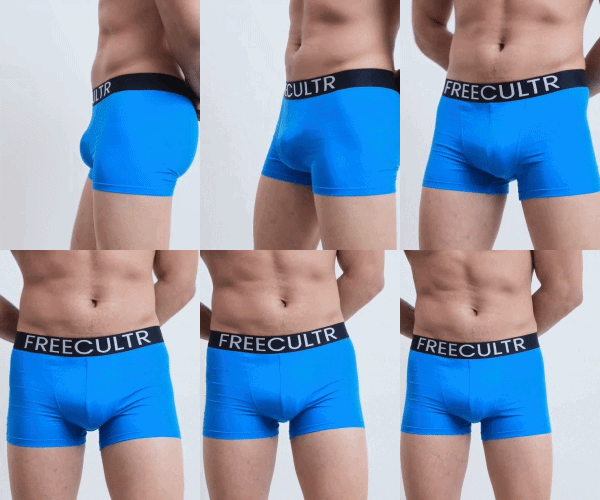
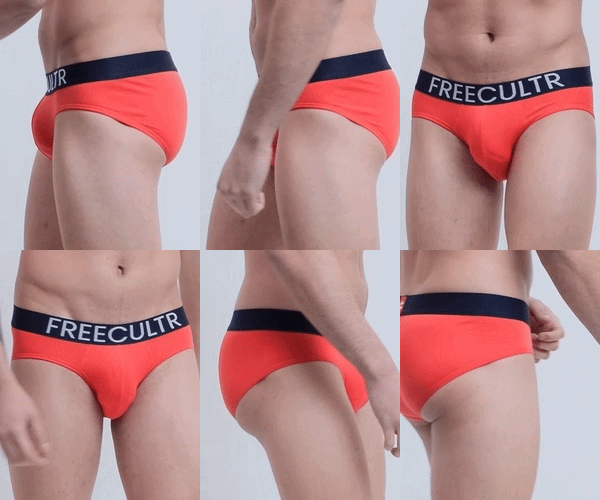
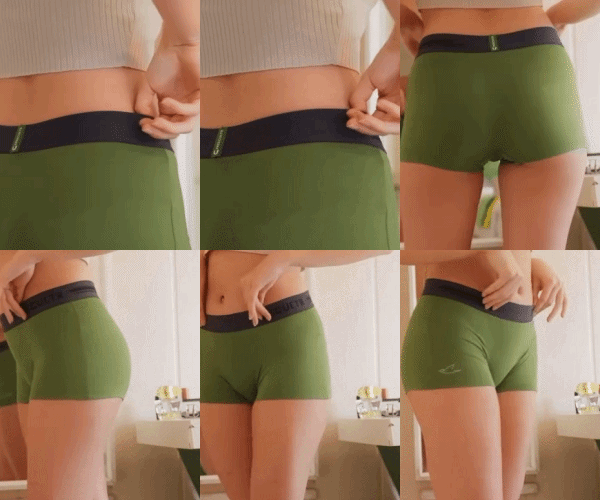
Trunks generally trap less heat than briefs because their longer leg and looser thigh opening allow more airflow, while briefs' higher-cut design can concentrate moisture in a smaller, tighter area.
That said, the fabric matters more than the silhouette alone. A poorly ventilated pair of mens trunks in low-quality cotton can still trap heat, while a well-engineered brief in a wicking blend can outperform a badly cut trunk. The best combination is a wicking fabric paired with a fit that doesn't bunch or ride up during movement — that's where trunks tend to have the edge for all-day wear, especially under workwear or during travel.
Ready to feel the difference wicking fabric makes? Explore Freecultr's mens underwear and trunks collection, built for all-day dryness.
Shop NowHow Should Mens Underwear Fit for All-Day Breathability?
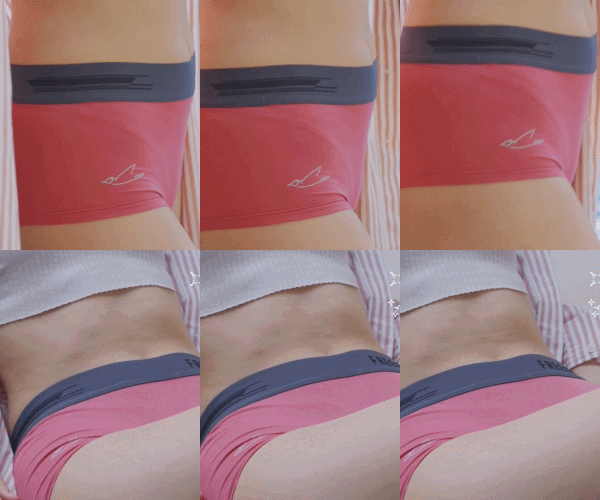
Mens underwear should sit snug but not tight at the waistband, with enough room at the leg opening to allow air circulation without gaping or riding up.
A waistband that digs in restricts blood flow and traps heat right at the point of most friction. Similarly, a leg opening that's too tight seals off airflow entirely, while one that's too loose causes bunching and repeated friction through the day. The goal is a fit that moves with the body — sitting close enough to stay in place, but never so tight that it stops the fabric from doing its job.
What Fabric Blend Delivers 50% More Wicking Than Cotton?
A blend of micro-modal or bamboo fiber with a small percentage of stretch fiber consistently outperforms 100% cotton on wicking speed, breathability, and dry time.
Here's how the common options compare:
| Fabric | Wicking Speed | Breathability | Dry Time |
|---|---|---|---|
| 100% Cotton | Slow — absorbs, doesn't release | Moderate | Slow |
| Micro-Modal Blend | Fast — pulls moisture outward | High | Fast |
| Bamboo Blend | Fast, with natural cooling feel | High | Fast |
This is where the "50% more wicking" difference actually comes from — it's not a marketing number pulled from nowhere, it's the measurable gap between how quickly engineered fibers move moisture off the skin compared to plain cotton.
Step-by-Step Guide to Choosing High-Wicking Innerwear
Step 1: Check the fabric composition first — look for micro-modal, bamboo, or a labeled "moisture-wicking" blend rather than 100% cotton.
Step 2: Choose your fit based on your day — trunks for most all-day wear and workouts, briefs if you prefer a closer, higher-cut fit.
Step 3: Check the waistband — it should sit flat and snug without digging in, even after a few hours of wear.
Step 4: Test the leg opening — it should stay in place without pinching or leaving marks when you sit or walk.
Step 5: Rotate at least 5-7 pairs through your week so each piece gets a full wash-and-rest cycle, which helps the fabric retain its wicking performance longer.
Don't let another sweaty afternoon change your plans — upgrade to Freecultr's high-wicking cotton trunks and feel the difference from day one.
Explore Cotton TrunksConclusion
The gap between "innerwear that just gets wet" and "innerwear that actually keeps you dry" comes down to fabric engineering, not luck. Fibers like micro-modal and bamboo blends move moisture away from the skin far faster than plain cotton, and pairing that fabric with the right fit — trunks that don't bunch, waistbands that don't dig in — is what turns a good fabric into all-day comfort. If midday sweat and chafing are a recurring problem, the fix is usually simpler than it feels: shop Freecultr's cotton trunks and feel the difference in the first wear.
About freecultr
Freecultr is an emerging Indian D2C brand dedicated to reimagining wardrobe essentials through premium, sustainable comfort wear. We specialize in high-quality innerwear, loungewear, and accessories crafted from advanced fabrics like micro-modal, bamboo, and organic cotton to ensure breathability and long-lasting softness.
FAQs
Why does regular cotton innerwear feel sweaty by the end of the day?
Standard cotton absorbs sweat but doesn't move it away from the skin, so moisture sits and cools slowly, leaving a damp, heavy feeling — especially in humid weather or after long hours of wear.
What actually makes a fabric "moisture-wicking"?
A fabric wicks moisture when its fiber structure physically pulls sweat away from the skin through capillary action, rather than letting it pool and soak in like plain cotton.
Are mens trunks better than briefs for staying cool?
Trunks generally trap less heat than briefs because their longer leg and looser thigh opening allow more airflow, while briefs' higher-cut design can concentrate moisture in a smaller area.
How should mens underwear fit for the best breathability?
Mens underwear should sit snug but not tight at the waistband, with enough room at the leg opening to allow air circulation without gaping or riding up.
What fabric blend gives the most wicking performance?
A blend of micro-modal or bamboo fiber with a small percentage of stretch fiber consistently outperforms 100% cotton on wicking speed, breathability, and dry time.