







Quick Summary
- The most-cited fertility study on innerwear for men found boxer-wearers had roughly 25% higher sperm concentration than brief-wearers — but that number matters far less for daily comfort than fit and fabric.
- Heat retention, not "boxers vs briefs" as a category, is the real driver of scrotal temperature and skin irritation risk.
- Micro-modal innerwear for men outperforms cotton on breathability and moisture-wicking regardless of the cut you choose.
- The healthiest choice isn't boxers or briefs — it's the right combination of fit, fabric, and fabric weight for your body and climate.
Boxers or Briefs? The Question Most Men Are Asking Wrong
Search "boxers vs briefs" and you'll find a decade of recycled opinion pieces repeating the same three lines: boxers are cooler, briefs offer more support, take your pick. What almost none of them do is look at the actual data on how men's innerwear affects skin health, temperature regulation, and long-term comfort. That's a problem, because Indian men wear the same pair of underwear for 10-14 hours a day, often through 30-40°C heat and high humidity — conditions most underwear research doesn't even account for.
This isn't another style guide. It's a breakdown of what actually happens to your skin and body in different cuts and fabrics, backed by real research, so you can choose innerwear for men based on function first and preference second. Most men make this decision the same way they picked their first pair as teenagers — by habit, by what their father wore, or by whatever a shop clerk handed over. Almost no one revisits that decision once they're earning their own money and can actually choose based on what their body and climate need.
That's worth fixing, because the stakes are higher than most men assume. Skin under innerwear is warmer, moister, and more prone to friction than almost any other part of the body for hours at a stretch. Get the fabric and fit wrong, and you're not just uncomfortable — you're creating the exact conditions dermatologists warn about for recurring rashes, odour, and irritation. Get it right, and it's one less thing your body has to work around every single day.
What Does the Research Actually Say About Boxers, Briefs, and Health?
The most rigorous data point comes from a Harvard T.H. Chan School of Public Health study published in the journal Human Reproduction, which tracked underwear habits and semen quality in over 650 men. Men who most frequently wore boxers had significantly higher sperm concentrations and total sperm counts compared with men who did not usually wear boxers. Specifically, the 53% of men who reported wearing boxers most often showed roughly 25% higher sperm concentration and 17% higher total sperm count than men who wore tighter styles.
But here's the nuance most headlines skip: the men in that study were already attending a fertility clinic, and researchers couldn't fully separate underwear choice from other factors like body mass, activity levels, and use of hot baths. Earlier, smaller studies were also inconsistent — one comparison of underwear styles found no measurable difference in scrotal temperature between men wearing tight-fitting underwear and those wearing none at all. The honest takeaway: looser-fitting styles have a modest, measurable edge for heat-sensitive processes like sperm production, but for everyday comfort and skin health, fit and fabric matter more than the boxer-vs-brief label itself.
It's also worth noting what this research does and doesn't cover. These studies focus almost entirely on fertility markers — sperm count, concentration, motility — because that's what's easiest to measure in a lab setting. None of them were designed to answer the question most men actually care about day to day: which underwear keeps me comfortable, dry, and irritation-free through a normal workday. That's a separate question with a separate answer, and it has far more to do with fabric science than reproductive biology.
Why Does Fabric Matter More Than Cut?
Whether you're in boxers or briefs, the fabric touching your skin for 10+ hours a day determines how much heat, sweat, and friction you actually deal with. Cotton absorbs moisture but holds onto it — which is exactly why cotton innerwear feels damp by mid-afternoon in humid weather. Micro-modal innerwear for men works differently: it's a finer, more breathable fiber that actively wicks moisture away from the skin instead of just soaking it up, which keeps the surface drier and reduces the damp, friction-prone environment where fungal and bacterial skin issues start.
Dermatologists have long recommended breathable, moisture-managing fabrics for the groin area specifically because trapped moisture and heat are the two biggest contributors to chafing, rashes, and recurring fungal infections in that region — independent of whether the underwear is a boxer, brief, or trunk cut.
This is especially relevant in the Indian context, where humidity and heat push most fabrics past their comfort threshold for a large part of the year. A fabric that performs fine in an air-conditioned office in Delhi's winter can feel completely different on a humid Mumbai afternoon or a Chennai summer. Men who stick to cotton through these conditions often assume the discomfort is just "how underwear feels," when it's actually a sign the fabric isn't managing moisture the way it should. Once you switch to a fabric engineered for moisture transport rather than absorption, that baseline discomfort — the kind you stop noticing because you've had it for years — tends to disappear entirely, and most men only realise how much they were tolerating once it's gone.
| Factor | Cotton | Micro-Modal |
|---|---|---|
| Moisture handling | Absorbs, stays damp | Wicks moisture away from skin |
| Breathability | Moderate | High |
| Feel against skin | Soft, slightly coarse over time | Consistently smooth, low-friction |
| Shrinkage/wear over washes | Loses shape faster | Holds shape and softness longer |
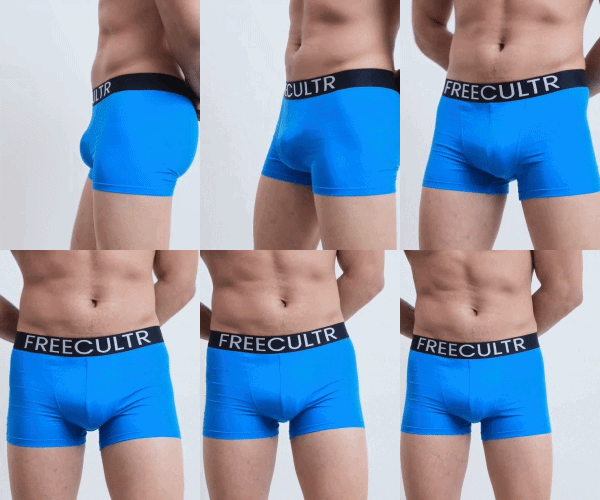
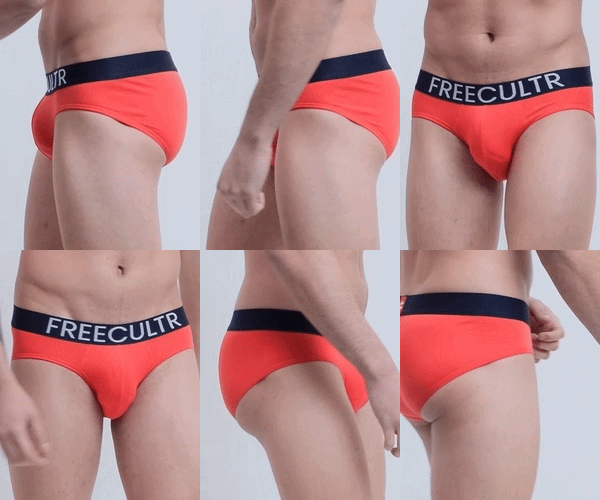
Whether you're a boxers loyalist or a briefs man, Freecultr's micro-modal innerwear range is built to keep you cooler and drier through every wear.
Shop InnerwearDoes Fit Actually Affect Heat and Circulation?
Yes — and this is where the "boxers vs briefs" framing breaks down entirely. It's not the category that raises scrotal temperature, it's how snugly the fabric sits against the body. Testes sit outside the body specifically because sperm production requires a lower temperature than the rest of the body, and anything that holds them closer to body heat for extended periods can nudge that temperature up. A snug brief in a heavy, non-breathable fabric will trap more heat than a relaxed-fit boxer in the same fabric — but a well-designed, breathable brief can outperform a boxer made from thick, poorly ventilated material.
This is why the real decision isn't "boxers or briefs" — it's "snug or relaxed" and "breathable or not," and you can mix and match those independently of the cut.
There's also a practical, non-clinical reason fit matters: circulation and comfort during long sitting hours. Men who commute for an hour or more, or sit through 8-10 hour desk shifts, put sustained pressure on the exact same area for extended stretches. A fit that's too snug in a stiff fabric can restrict movement and blood flow at the thigh and waistband over that duration, while a fit that's too loose in a slippery fabric tends to ride up or shift, which creates its own friction problem. The goal is a fit that stays in place without needing to be tight — which again comes down to fabric with the right stretch recovery, not just the cut you've chosen.
Which Fabric Actually Reduces Skin Irritation and Chafing?
Chafing happens when damp fabric repeatedly rubs against skin — the more moisture retained, the more friction over the course of a day. This is where micro-modal's finer fiber structure shows up in daily comfort, not just lab data. The fabric's smoother surface creates less resistance against skin with movement, and because it doesn't hold onto sweat the way cotton does, there's less of the "clammy" buildup that leads to irritation on long commutes, gym days, or humid afternoons.
If you've ever ended a workday with visible marks or soreness at the waistband or thigh seam, that's usually a fabric-and-fit issue, not a boxer-vs-brief issue. Switching cuts without switching fabric often just moves the problem, it doesn't solve it.
Odour control tends to follow the same pattern. Sweat itself is largely odourless — it's the bacteria that thrive in warm, damp environments that produce smell over the course of a day. Fabrics that keep the skin drier for longer simply give bacteria less to work with, which is why moisture-wicking innerwear tends to stay fresher through a full day than cotton, independent of activity level. It's a small detail, but it's one of the clearest everyday signs that fabric performance, not cut, is doing the heavy lifting.
Step-by-Step Guide to Choosing the Healthiest Innerwear for You
Step 1: Identify your primary use case — daily office wear, workouts, travel, or all-day humidity — since that determines how much breathability and moisture control you actually need.
Step 2: Prioritize fabric over cut. Look for micro-modal, bamboo, or other moisture-wicking blends before deciding between boxers, briefs, or trunks.
Step 3: Check the fit at the waistband and thigh — it should sit close enough to stay in place without digging in or restricting movement.
Step 4: Rotate at least 2-3 pairs through the week so no single pair is worn past the point where fabric loses its shape and breathability.
Step 5: Reassess seasonally — what works in Delhi winters won't perform the same in Mumbai's humidity, so your ideal fabric weight can shift through the year.
Conclusion
The boxers-vs-briefs debate makes for a catchy headline, but the data doesn't support treating it as a binary health decision. Fit, fabric, and how long you wear a single pair matter far more than which silhouette you pick. If you want the health benefits both camps are actually chasing — lower heat retention, less moisture buildup, fewer skin issues — the fastest lever to pull is fabric. That's exactly where micro-modal innerwear for men earns its place over standard cotton, in boxers, briefs, or trunks alike. Explore Freecultr's innerwear range and make the switch that actually moves the needle.
Stop choosing between comfort and breathability — Freecultr's micro-modal range gives you both, no matter which cut you prefer.
Shop the RangeAbout freecultr
Freecultr is an emerging Indian D2C brand dedicated to reimagining wardrobe essentials through premium, sustainable comfort wear. We specialize in high-quality innerwear, loungewear, and accessories crafted from advanced fabrics like micro-modal, bamboo, and organic cotton to ensure breathability and long-lasting softness.
FAQs
Are boxers actually healthier than briefs?
Boxers have a modest, research-backed edge for heat-sensitive processes like sperm production, with one major study showing roughly 25% higher sperm concentration among boxer-wearers. But for everyday skin health and comfort, fabric and fit matter more than the cut itself.
Does micro-modal innerwear for men make a real difference over cotton?
Yes — micro-modal actively wicks moisture away from the skin instead of absorbing and holding it like cotton, which keeps the skin drier and reduces the damp environment that leads to chafing and irritation.
Can tight innerwear affect fertility?
Tighter styles have been linked to modestly higher scrotal temperature in some studies, and heat is a known factor in sperm production, but researchers haven't found the effect to be large enough on its own to be the sole driver of fertility issues.
What's the biggest factor in preventing chafing and skin irritation from innerwear?
Moisture retention and friction — both driven more by fabric choice and fit than by whether you wear boxers or briefs. Breathable, moisture-wicking fabrics like micro-modal reduce both.
Should I choose innerwear based on cut or fabric first?
Fabric first. A well-fitted, breathable fabric in either cut will outperform a poorly ventilated fabric in your "preferred" style every time.