



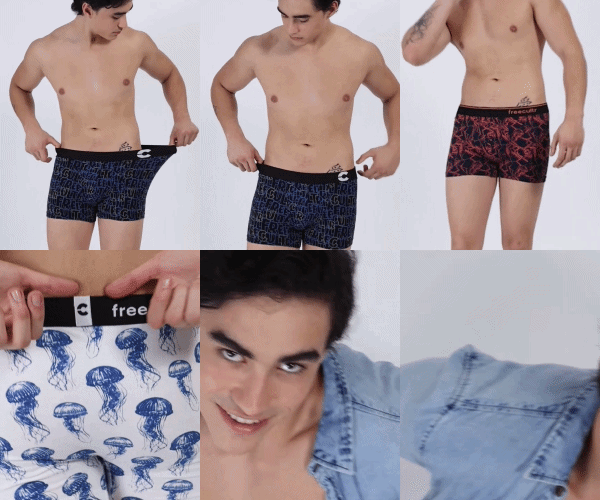
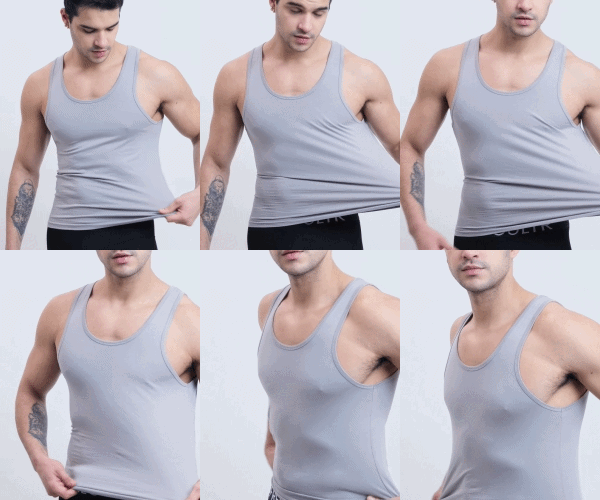


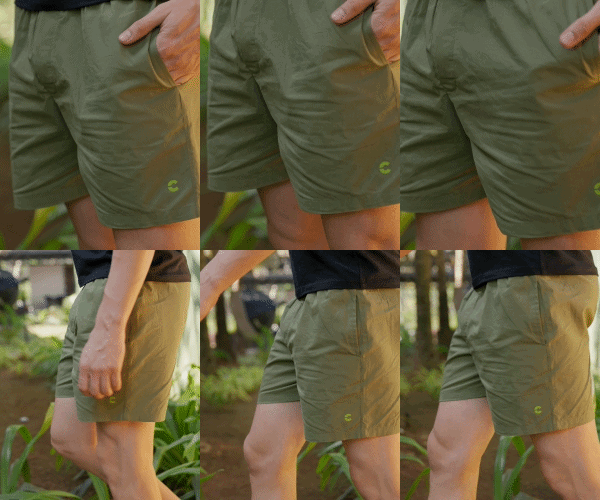


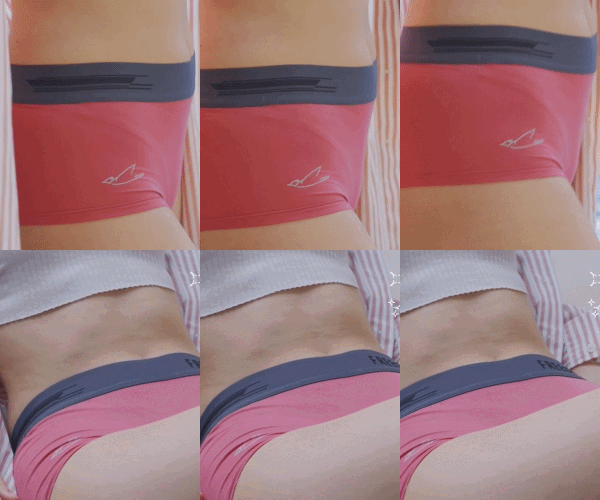







Quick Summary
- Conventional cotton innerwear for men relies on a crop that consumes an estimated 10,000+ litres of water per kilogram of finished fabric, according to WWF data — bamboo and micro-modal fabrics use a fraction of that.
- Micro-modal innerwear for men is derived from beechwood pulp using a closed-loop process that recovers most of its solvents, making it one of the lower-impact semi-synthetic fibres available today.
- Men's innerwear made from bamboo viscose or micro-modal blends offers finer, softer yarns than cotton, which translates to less chafing and better moisture-wicking through Indian summers.
- The shift toward sustainable innerwear for men isn't a trend — it's a response to real supply chain math, and Freecultr's bamboo and micro-modal ranges are built on that math.
Cotton's Water Problem Is Bigger Than Most Men Realise
Here's the number that changes how most people think about their innerwear drawer: the World Wildlife Fund estimates that producing one kilogram of finished cotton textile can consume upwards of 10,000 litres of water. A single pack of three cotton briefs, at roughly 300-400 grams of fabric, can carry a hidden water footprint most men never think about. Add to that a global cotton industry responsible for a significant share of insecticide and pesticide sales worldwide, and it becomes clear why "just cotton" isn't the neutral default it used to be.
This isn't an argument against cotton entirely — it's breathable, familiar, and has a century of manufacturing infrastructure behind it. But when it comes to innerwear for men specifically, worn against skin for 12-16 hours a day, the case for looking at what bamboo and micro-modal actually offer becomes hard to ignore.
How Much Water Does Bamboo Innerwear Actually Save?
Bamboo grown for textile use is typically rainfall-fed and needs no irrigation, no replanting, and minimal to no pesticide input because the plant carries its own natural pest resistance. Independent comparisons put bamboo's water requirement at roughly one-third to one-tenth of what cotton needs for an equivalent yield, depending on region and farming method. Bamboo also grows several times faster than cotton — some varieties add over a metre of height a day — which means more fabric per acre, per year, with less land strain.
The caveat worth knowing: how that raw bamboo becomes wearable fabric matters. Older viscose-style processing methods can be chemical-intensive, so the sustainability gain from cultivation can be partly offset at the processing stage if a brand isn't sourcing responsibly. This is why the fabric sourcing decision behind men's innerwear matters as much as the raw material claim on the pack.
Compare fabric performance on paper or feel the real difference in your daily rotation with sustainable bamboo and micro-modal innerwear.
What Makes Micro-Modal Innerwear for Men Different from Regular Modal or Cotton?
Micro-modal is a refined version of modal fibre, itself derived from beechwood cellulose, spun into a yarn that's roughly half the diameter of standard modal fibre. That finer yarn is what gives micro-modal innerwear for men its almost second-skin feel — there's simply less fibre mass rubbing against skin per square inch of fabric, which is part of why it's often recommended for sensitive skin or humid climates.
Beechwood, the source material, grows on land that's typically not suitable for food crops and doesn't require the intensive irrigation cotton does. Reputable modal production also increasingly uses closed-loop solvent recovery, where the chemicals used to break down the wood pulp are captured and reused rather than discharged — a meaningfully different environmental profile compared to older rayon-style processing.
| Property | Cotton | Bamboo Viscose | Micro-Modal |
|---|---|---|---|
| Water use in cultivation/sourcing | High | Low | Low-Moderate |
| Moisture-wicking | Moderate | High | High |
| Softness (yarn fineness) | Moderate | High | Very High |
| Breathability in humidity | Moderate | High | High |
| Shrinkage resistance | Moderate | Moderate-High | High |
Does Sustainable Innerwear Actually Perform Better for Indian Weather?
Yes — moisture management is where bamboo and micro-modal earn their place in a warm, humid climate like most of India. Both fibres have a naturally higher moisture absorption rate than cotton, meaning sweat gets pulled away from skin and spread across a larger surface area of fabric to evaporate faster, instead of sitting in one damp patch the way cotton often does by mid-afternoon.
This isn't just a comfort claim — it has a practical hygiene angle too. Fabric that dries faster is less hospitable to the bacteria that cause odour and skin irritation in warm, enclosed areas. For men's innerwear worn through long work days, commutes, or gym sessions, that faster dry time is arguably a bigger daily-life factor than the sustainability story alone.
Is Bamboo or Micro-Modal Innerwear More Durable Than Cotton?
Generally, yes, when the yarn is spun and finished properly. Micro-modal in particular resists pilling and shrinkage better than standard cotton over repeated washes, largely because the fibre is smoother and less prone to the friction-based fraying that causes cotton to thin out and bobble over time. Bamboo viscose is softer initially but benefits from being blended with a small percentage of spandex or cotton in most quality innerwear, which helps it hold shape through elastic waistbands and repeated wear.
The practical takeaway: a well-made bamboo or micro-modal innerwear for men purchase tends to outlast a comparable cotton one in look and feel, even if the upfront price per piece is slightly higher — the cost evens out over the life of the garment.
Step-by-Step Guide to Choosing the Right Sustainable Innerwear for Men
Step 1: Check the fabric composition on the label — look for "bamboo viscose," "micro-modal," or a modal-cotton blend rather than "100% cotton" if sustainability and moisture management are priorities.
Step 2: Match the fabric to your climate and activity — micro-modal for daily all-day wear and sensitive skin, bamboo blends for high-humidity regions or heavier sweating.
Step 3: Check the waistband and seam construction — sustainable fabrics perform best when paired with flatlock seams and a breathable waistband, since the fabric's comfort advantage gets undone by poor stitching.
Step 4: Buy one piece first if you're new to the fabric — modal and bamboo fit slightly differently than cotton due to their stretch recovery, so size confirmation before bulk-buying saves returns.
Step 5: Wash cold and skip the tumble dryer where possible — this preserves the fibre's softness and shrink-resistance far longer than high-heat drying.
Switch to better-engineered everyday base layers with longer wear life and minimal environmental footprint.
Conclusion
The case for bamboo and micro-modal innerwear for men isn't built on vague eco-marketing — it's built on water usage numbers, fibre science, and how fabric actually behaves against skin through a humid Indian day. Cotton isn't going away, but for men's innerwear specifically, where comfort, hygiene, and daily wear-and-tear matter more than almost any other garment category, bamboo and micro-modal are simply the better-engineered choice. If you're ready to feel the difference rather than just read about it, shop Freecultr's innerwear collection and start with one piece.
About freecultr
Freecultr is an emerging Indian D2C brand dedicated to reimagining wardrobe essentials through premium, sustainable comfort wear. We specialize in high-quality innerwear, loungewear, and accessories crafted from advanced fabrics like micro-modal, bamboo, and organic cotton to ensure breathability and long-lasting softness.
FAQs
How much water does bamboo innerwear save compared to cotton?
Bamboo cultivation typically uses roughly one-third to one-tenth of the water cotton requires for an equivalent yield, since bamboo is largely rainfall-fed and needs no irrigation, unlike cotton which the WWF estimates can consume over 10,000 litres of water per kilogram of finished fabric.
What makes micro-modal innerwear for men different from regular cotton?
Micro-modal uses a finer beechwood-derived yarn — about half the diameter of standard modal — giving it a softer feel, better moisture absorption, and less friction against skin compared to cotton's coarser fibre structure.
Is sustainable innerwear better suited to Indian weather?
Yes, bamboo and micro-modal both absorb and disperse moisture faster than cotton, which helps sweat evaporate quicker in humid conditions and reduces the odour and irritation that come from fabric staying damp through the day.
Does bamboo or micro-modal innerwear last longer than cotton?
Generally yes — micro-modal resists pilling and shrinkage better than cotton over repeated washes, and bamboo blends with a small percentage of spandex or cotton hold shape well, so both tend to outlast comparable cotton innerwear in look and feel.
How do I choose between bamboo and micro-modal innerwear?
Pick micro-modal for everyday all-day wear and sensitive skin, and bamboo blends if you're in a high-humidity region or sweat heavily, then confirm fit with a single piece before buying in bulk since both fabrics fit slightly differently than cotton.