












Quick Summary
- The best bamboo fabric underwear mens trunk claims are not all equal; several common marketing shortcuts make a product sound bamboo-based when the actual fiber content is minimal or absent.
- A common myth is that "bamboo scent," "eco-friendly," or a green leaf icon on packaging confirms genuine bamboo fiber content, when none of these actually verify the fabric composition.
- Another common myth treats bamboo and rayon-from-bamboo (viscose) as identical, when the processing method significantly changes how much of bamboo's natural properties survive into the finished fabric.
- This guide lists the specific red flags to check so you don't pay a bamboo-fabric premium for a product that doesn't deliver bamboo's actual benefits.
Myth One: Any "Eco" Branding Means Genuine Bamboo Fiber
Packaging with leaf icons, "natural," or "eco-friendly" language says nothing about actual fiber percentage. A product can carry this branding language while containing only a small blended percentage of bamboo alongside cotton or polyester, diluting both the softness and the anti-bacterial benefit that make bamboo worth the premium in the first place. The only reliable check is the fiber composition percentage printed on the actual care label.
Myth Two: Bamboo Viscose and Bamboo Linen Perform the Same
Bamboo fabric reaches the finished product through different processing methods, most commonly viscose (chemically processed) or mechanically processed bamboo linen. Viscose processing is far more common and more affordable to produce, but it can reduce some of bamboo's natural fiber properties compared to mechanically processed bamboo linen.
Neither is inherently fake, but a product should specify which process was used rather than leaving it ambiguous, since this affects how much of bamboo's natural benefit actually survives into the finished garment.
Myth Three: "Anti-Bacterial" Automatically Means the Bamboo Kun Property
Some products list "anti-bacterial" without specifying whether this comes from bamboo's natural bamboo kun fiber agent or from an added chemical treatment sprayed onto a bamboo-blend fabric after weaving. If the anti-bacterial claim is not tied specifically to the fiber itself, it may fade at the same rate as any other treated fabric, undermining the specific advantage that makes bamboo worth choosing over micro-modal in long-wear scenarios.
Myth Four: A Higher Price Always Means More Genuine Bamboo Content
Price alone does not confirm fiber percentage. Some products charge a bamboo premium while listing bamboo as a minority blend percentage on the label. Checking the actual composition percentage matters more than trusting price as a quality signal.
Red Flag Checklist Before Buying
| Red Flag | What It Actually Means |
|---|---|
| "Eco" or leaf icon branding with no fiber percentage listed | Composition unverified, proceed with caution |
| "Anti-bacterial" without specifying fiber vs treatment | May be a fading applied treatment, not bamboo kun |
| No processing method specified (viscose vs linen) | Unclear how much natural bamboo property survives |
| High price with low bamboo percentage on label | Premium not justified by actual fiber content |
Where to Verify Genuine Bamboo Fabric
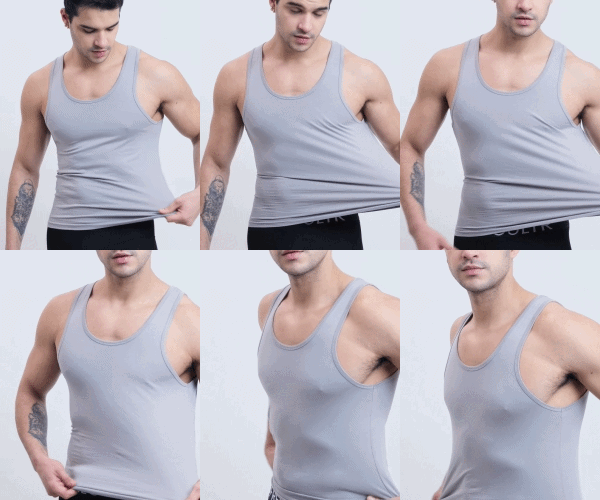
Freecultr specifies its bamboo fabric composition and anti-bacterial fiber property directly on its comfort vest and undershirt product listings, rather than relying on generic eco-branding language. Shop Freecultr's bamboo comfort vests with verified fiber composition, or explore Freecultr's micro-modal trunks as a comparably performing, clearly specified alternative.
Conclusion
The best bamboo fabric underwear mens trunk claims deserve a closer look before you pay a premium for them. Eco-branding, vague anti-bacterial claims, and unspecified processing methods are the most common ways a product sounds more bamboo-based than it actually is. Checking the fiber percentage and processing method directly on the label is the only reliable verification.
More Articles
- Shop Freecultr Bamboo Comfort Vests
- Explore Freecultr Micro-Modal Trunks
- Browse Freecultr Bamboo Blend Undershirts
- Shop Freecultr's Full Innerwear Range
FAQs
Does eco-friendly packaging confirm a product is genuinely bamboo fiber?
No. Eco-branding, leaf icons, and "natural" language do not verify fiber percentage. The only reliable check is the actual fiber composition listed on the product's care label.
Is bamboo viscose the same as genuine bamboo fabric?
Bamboo viscose is a real bamboo-derived fabric, but the chemical processing involved can reduce some of bamboo's natural fiber properties compared to mechanically processed bamboo linen. Products should specify which method was used.
Does "anti-bacterial" on a bamboo product always mean the bamboo kun property?
Not necessarily. Some products use an applied anti-bacterial treatment on a bamboo-blend fabric rather than relying on bamboo's natural fiber-level property, which means the effect may fade with washing just like on any other treated fabric.
Does a higher price guarantee more genuine bamboo content?
No. Price does not confirm fiber percentage. Checking the composition percentage on the label is more reliable than assuming a higher price reflects higher bamboo content.