
















Quick Summary
- The best bamboo fabric underwear mens trunk starts as raw bamboo stalk, which is broken down into pulp, then processed into spinnable fiber through one of two main methods: viscose processing or mechanical processing.
- Viscose processing is faster and more common industrially, involving chemical dissolution of the pulp, while mechanical processing preserves more of bamboo's natural fiber structure but is slower and less common at scale.
- The processing method used directly affects how much of bamboo's natural anti-bacterial and moisture-wicking property survives into the finished yarn and, eventually, the finished trunk.
- Understanding this process helps explain why two products both labeled "bamboo fabric" can perform differently in actual wear.
From Bamboo Stalk to Wearable Fiber: The Full Process
Understanding what makes the best bamboo fabric underwear mens trunk genuinely perform well starts with understanding how raw bamboo actually becomes a wearable textile, since the specific steps in this process determine how much of bamboo's natural properties make it into the finished garment.
Step One: Harvesting and Pulping
Bamboo stalks are harvested and broken down mechanically into small chips, which are then cooked and treated to extract a raw cellulose pulp, similar in principle to how wood pulp is extracted for paper production. This pulp forms the base material for the next stage, but at this point it is not yet in a form that can be spun into fiber or woven into fabric.
Step Two: Converting Pulp Into Spinnable Fiber
This is the stage where manufacturing methods diverge, and where the biggest quality differences between bamboo fabric products originate.
Viscose processing (chemical method). The cellulose pulp is dissolved using chemical solvents, then forced through small holes (a process called extrusion) to form continuous filament fibers, which are then spun into yarn. This method is faster, more scalable, and significantly more common across the market, since it can be produced at industrial volume more cost-effectively than mechanical processing. However, the chemical dissolution process can reduce some of the natural fiber structure that carries bamboo's inherent properties.
Mechanical processing (bamboo linen method). The pulp is mechanically crushed and combed using natural enzymes to separate the fibers, without dissolving the cellulose chemically. This method better preserves the fiber's natural structure and properties, but it is considerably more labor-intensive and expensive, which is why it is far less common at commercial scale and is sometimes marketed separately as "bamboo linen" rather than standard bamboo viscose.
Step Three: Spinning Into Yarn
Once fiber is produced through either method, it is spun into yarn, a process similar to how cotton or any other textile fiber is spun. The fineness of this spin affects the final fabric's softness, similarly to how a finer spin distinguishes micro-modal from standard modal fiber.
Step Four: Knitting or Weaving Into Fabric
The spun yarn is then knitted or woven into the actual fabric sheet that will be cut and sewn into the finished trunk. Knit density at this stage affects both the fabric's stretch and its breathability, independent of the fiber's inherent properties.
Step Five: Cutting, Sewing, and Waistband Construction
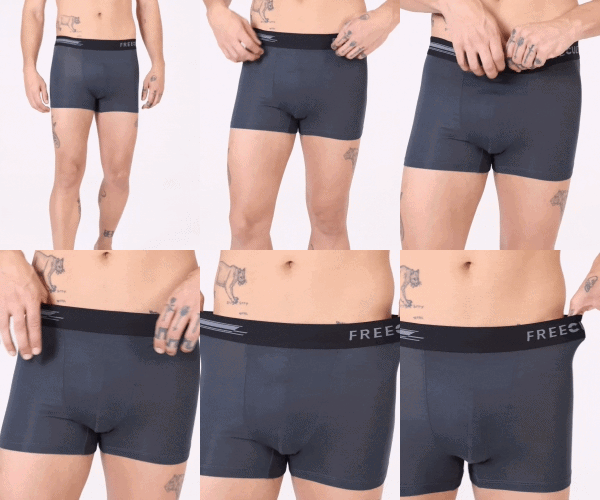
The finished fabric is cut according to the trunk pattern and assembled, including the waistband, which is typically a separate elastic component sewn or bonded to the main fabric body. This final construction step is where waistband quality, independent of the bamboo fabric itself, becomes a factor in overall comfort.
Why the Processing Method Matters for Performance
The natural anti-bacterial property in bamboo, driven by a bio-agent called bamboo kun, is more fully preserved through mechanical processing than through the chemical dissolution involved in standard viscose processing. This does not mean viscose-processed bamboo fabric has no anti-bacterial benefit, but it does mean the effect may be somewhat diminished compared to a mechanically processed bamboo linen fabric, which is a meaningful distinction most product listings do not clearly disclose.
Manufacturing Method Comparison
| Stage | Viscose Processing | Mechanical Processing |
|---|---|---|
| Method | Chemical dissolution and extrusion | Mechanical crushing with natural enzymes |
| Speed and scale | Fast, industrially scalable | Slow, labor-intensive |
| Natural property retention | Partially reduced | Better preserved |
| Market availability | Very common | Less common, often labeled "bamboo linen" |
| Typical cost | Lower | Higher |
What This Means When You're Shopping
A product listing that simply says "bamboo fabric" without specifying the processing method is most likely referring to standard viscose processing, given how much more common and cost-effective it is at commercial scale. This is not necessarily a poor-quality product, but a listing that specifically states "bamboo linen" or describes a mechanical processing method is signaling a different, typically higher-performing and higher-priced product along the anti-bacterial and natural-property dimension specifically.
Where to Find Verified Bamboo Fabric From Freecultr
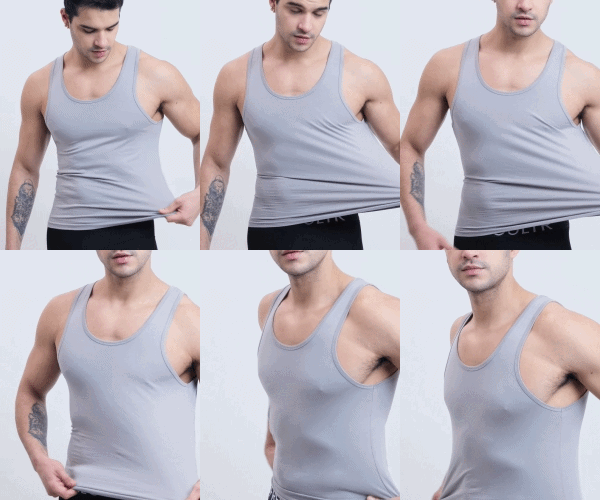
Freecultr's bamboo fabric range applies this fiber to its comfort vest and undershirt base-layer products, with fiber composition specified directly on the product listing.
Shop Freecultr's bamboo comfort vests for base-layer garments built on this fiber, or explore Freecultr's micro-modal trunks as the equivalent trunk-format option with a comparably engineered zero-ride waistband.
Conclusion
The best bamboo fabric underwear mens trunk category depends heavily on which manufacturing process was used to convert raw bamboo pulp into wearable fiber, since chemical viscose processing and mechanical processing preserve different amounts of bamboo's natural anti-bacterial and moisture-wicking properties.
Understanding this process explains why two products both labeled "bamboo" can perform noticeably differently in actual daily wear.
More Articles
- Shop Freecultr Bamboo Comfort Vests
- Explore Freecultr Micro-Modal Trunks
- Browse Freecultr Bamboo Blend Undershirts
- Shop Freecultr's Full Innerwear Range
FAQs
How is bamboo fabric actually made from raw bamboo?
Raw bamboo stalk is harvested and broken down into cellulose pulp, which is then converted into spinnable fiber through either chemical viscose processing or mechanical processing, spun into yarn, and knitted or woven into the finished fabric.
What is the difference between bamboo viscose and bamboo linen?
Bamboo viscose uses chemical dissolution to convert pulp into fiber, making it faster and more common at industrial scale. Bamboo linen uses mechanical crushing with natural enzymes, better preserving the fiber's natural structure but at higher cost and lower production scale.
Does the manufacturing process affect bamboo's anti-bacterial property?
Yes. Mechanical processing preserves more of bamboo's natural bamboo kun anti-bacterial property than chemical viscose processing, which can partially reduce this effect during the dissolution stage.
How do I know which processing method a bamboo product used?
Check whether the listing specifies "bamboo viscose" or "bamboo linen" directly. A listing that only says "bamboo fabric" without further detail is most likely standard viscose processing, given its dominance in commercial-scale production.