










Quick Summary
- Met Gala themes thrive in India when blended with our rich textile heritage and artisanal craftsmanship.
- Reimagining global motifs from Mughal opulence to Vedic textiles offers a fresh path for modern Indian fashion.
- Merging contemporary comfort with traditional aesthetics creates bold, culturally resonant red-carpet statements.
Redefining Red-Carpet Fashion in India
Every year, the world watches the Met Gala for daring fashion, yet most themes feel distant from our local design language. We often see global trends forced onto Indian silhouettes without considering the soul of the fabric. It is time to stop waiting for international validation and start curating our own high-fashion narrative. Freecultr brings this perspective to life by merging contemporary comfort with the timeless beauty of our heritage.
You probably feel frustrated when global trends ignore the intricate details of Indian craftsmanship. We understand that pain. Our goal is to show you exactly how specific Met Gala themes could be reimagined to suit our vibrant culture. You will learn how to blend surrealism with mythology and why a Mughal court revival is the ultimate power move for modern Indian fashion.
In most cases, the secret to a great look is staying true to the material. Are you ready to see how these themes transform into wearable art?
Bollywood Camp: Extravagance Meets Playfulness
Camp as a fashion theme thrives on irony, humor, and exaggerated artifice, making it a perfect match for the maximalist spirit of Bollywood cinema.
When we look at the history of Indian film, we see a natural affinity for the dramatic. Camp isn't just about being loud: it's about the deliberate performance of style. In our experience, designers who lean into the kitsch elements of 90s cinema, like neon sarees paired with oversized sunglasses, capture this energy perfectly. It’s a celebration of the "too much" that defines iconic screen moments.
Think of the vibrant, saturated colors found in traditional Indian handlooms. When these are reimagined through a lens of irony, they become high-fashion statements. You don't need to look further than the bold prints often seen in modern loungewear to see how comfort and camp can coexist. It’s about taking the mundane and turning it into a spectacle.
| Element | Traditional View | Camp Interpretation |
|---|---|---|
| Sequins | Wedding elegance | Oversized, disco-ball proportions |
| Draping | Graceful silhouette | Structural, gravity-defying shapes |
| Accessories | Gold jewelry | Plastic, neon, or exaggerated scale |
Does this approach help bridge the gap between street fashion and the red carpet? It certainly makes high fashion feel more approachable. By focusing on the playfulness of the National Institute of Fashion Technology graduates, you can see how new designers are already shifting the narrative toward bold, self-aware style choices.
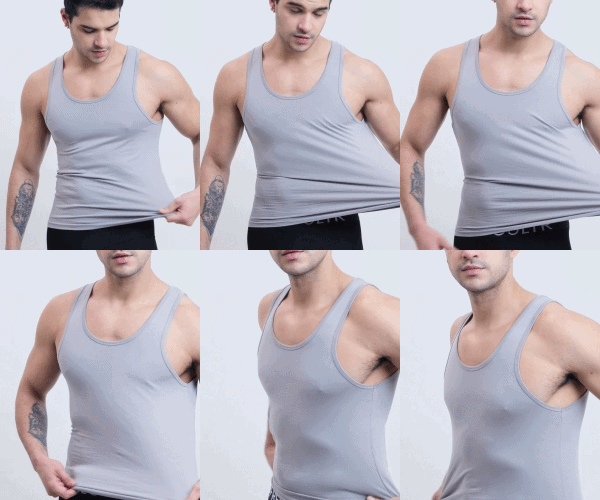
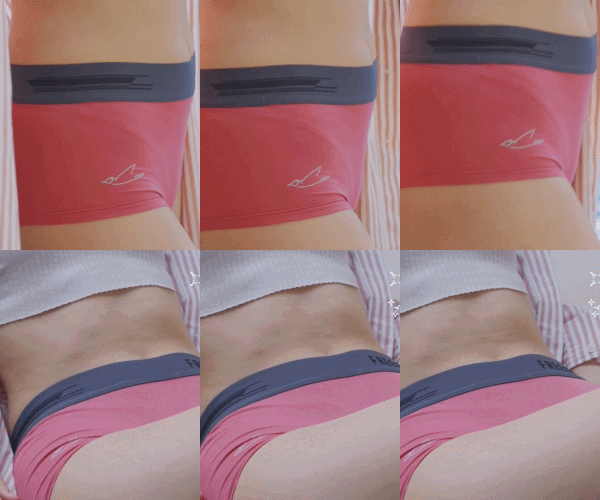
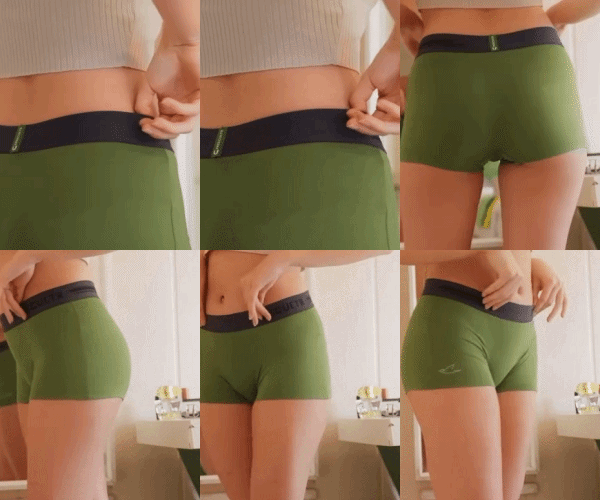
Elevate your wardrobe with vibrant, breathable innerwear engineered for all-day comfort and modern style.
Reviving the Opulent Mughal Court
The Mughal aesthetic offers a masterclass in intricate craftsmanship, utilizing heavy brocades, delicate zardozi embroidery, and rich jewel tones that define Indian luxury.
This theme works because it anchors the Met Gala in history while allowing for modern architectural silhouettes. We’ve seen how sustainable fabric choices, like organic cotton or bamboo, can be elevated with traditional metallic thread work. It’s a blend of old-world royalty and contemporary comfort that feels fresh for 2026.
The key here is the texture. You want to focus on the weight of the fabric and the precision of the hand-stitching. When we test garments for comfort, we look for that same level of detail in the seams. It’s not just about how it looks from a distance. It’s about the tactile experience of wearing something that feels like a piece of history.
Are you ready to see how these royal motifs translate to modern silhouettes? Imagine a structured jacket cut from heavy Banaras silk, paired with minimalist trousers. The contrast is where the magic happens. It’s a look that respects the past while firmly planting itself in the present.
Surrealism Blending With Ancient Mythology
Surrealism challenges the viewer to look beyond the obvious, and Indian mythology provides a vast, symbolic library of imagery that fits this avant-garde perspective.
Think of the multi-armed deities or the intricate cosmic geometry found in temple architecture. These aren't just religious icons. They are visual puzzles waiting to be deconstructed. When you combine these with the dreamlike quality of surrealist art, you get a theme that pushes the boundaries of what is possible in fashion design.
Most designers fail here by being too literal. Instead of copying a motif, try to capture the feeling of the myth. Use the fluid, ethereal drapes of a Kerala saree as a base for something more abstract. It’s about creating a silhouette that feels like it’s shifting as the person moves. Your mileage may vary, but we find that the most successful pieces are those that leave a little room for mystery.
Why do these themes resonate so strongly in the current climate? They offer an escape from the digital noise. By grounding surrealism in cultural heritage, you create something that feels both alien and deeply familiar. It’s a balancing act that rewards the curious.
Modern Fusion of Vedic Textiles
Vedic textile traditions emphasize natural fibers and earthy dyes, providing a sustainable and grounded foundation for high-concept fashion themes.
This theme celebrates the raw beauty of hand-spun cotton and linen. It’s a departure from the heavy, synthetic-laden gowns often seen at major events. When we look at the versatility of modern fabrics, we see a clear path toward integrating these ancient techniques into everyday luxury. It’s about honoring the artisan while embracing the future.
The aesthetic is minimalist but impactful. Focus on the drape, the weave, and the natural color palette. You don't need excessive embellishment when the fabric itself tells a story. This won't work if you ignore the quality of the raw material. The texture must be impeccable for the final look to land with authority.
Could this be the most sustainable theme for a global stage? By highlighting the work of local weavers, you bring global attention to practices that have sustained communities for generations. It’s fashion with a purpose, and that’s a trend that never goes out of style.
Step 1: Research regional textile heritage
Start by identifying a specific region, such as the handlooms of the Northeast or the block prints of Rajasthan. Understanding the history of the weave is essential for authentic design.
Step 2: Source sustainable, high-quality base fabrics
Choose materials like micro-modal or organic cotton that provide a soft, durable base. You want fabrics that breathe and move with the wearer, ensuring comfort is never sacrificed for style.
Step 3: Integrate modern structural elements
Apply contemporary tailoring techniques to these traditional textiles. Think about sharp lines, unexpected cutouts, or modular components that make the garment feel like it belongs on a 2026 runway.
Step 4: Style with a focus on narrative
Every piece should tell a story. Use accessories that complement the theme without overwhelming the craftsmanship of the fabric. Keep the focus on the intersection of heritage and innovation.
Experience the luxury of sustainable organic cotton and micro-modal essentials built for lasting softness.
Conclusion
Blending the high-drama of the Met Gala with Indian heritage creates a powerful narrative. We’ve seen how Camp finds a natural home in the vibrant excesses of Bollywood, while the opulent Mughal Court aesthetic offers a timeless template for red-carpet grandeur. Surrealism also bridges perfectly with our rich mythological storytelling, and modernizing Vedic textiles ensures these looks remain wearable rather than just costumed. Your mileage may vary, but these themes prove that Indian craftsmanship is ready for the global stage.
You now possess a clear vision of how to translate global fashion concepts into a local context. This shift from mere inspiration to actual application is key to defining your personal style. To explore how premium, breathable fabrics like bamboo and micro-modal can form the foundation of your own everyday wardrobe, upgrade your essentials at freecultr. Learn more about the evolution of local design through the Ministry of Textiles, Government of India.
About freecultr
Freecultr is India’s emerging D2C brand, reimagining wardrobe essentials into premium comfort wear. We focus on sustainability and style, utilizing high-quality fabrics like micro-modal, bamboo, and organic cotton to ensure breathability and durability in every piece of innerwear, loungewear, and accessory we craft.
More Articles
Top 10 Underwear Brands in India: A Sustainability Comparison
Tank Tops for Women: A Fabric and Occasion Buying Guide
XXXL Size T-Shirt: Debunking 4 Common Sizing Myths
Seamless Panties for Women: Matched to Your Body Shape
FAQs
What is Bollywood Camp: Extravagance Meets Playfulness?
Camp as a fashion theme thrives on irony, humor, and exaggerated artifice, making it a perfect match for the maximalist spirit of Bollywood cinema.
What is Reviving the Opulent Mughal Court?
The Mughal aesthetic offers a masterclass in intricate craftsmanship, utilizing heavy brocades, delicate zardozi embroidery, and rich jewel tones that define Indian luxury.
What is Surrealism Blending With Ancient Mythology?
Surrealism challenges the viewer to look beyond the obvious, and Indian mythology provides a vast, symbolic library of imagery that fits this avant-garde perspective.
What is Modern Fusion of Vedic Textiles?
Vedic textile traditions emphasize natural fibers and earthy dyes, providing a sustainable and grounded foundation for high-concept fashion themes.
What is Step 1: Research regional textile heritage?
Start by identifying a specific region, such as the handlooms of the Northeast or the block prints of Rajasthan. Understanding the history of the weave is essential for authentic design.
What is Step 2: Source sustainable, high-quality base fabrics?
Choose materials like micro-modal or organic cotton that provide a soft, durable base. You want fabrics that breathe and move with the wearer, ensuring comfort is never sacrificed for style.
What is Step 3: Integrate modern structural elements?
Apply contemporary tailoring techniques to these traditional textiles. Think about sharp lines, unexpected cutouts, or modular components that make the garment feel like it belongs on a 2026 runway.