







Quick Summary
- An xxxl size t-shirt is judged by different fit criteria than a formal shirt at the same size label, since t-shirts rely on stretch and drape rather than structured tailoring to accommodate a larger frame.
- Fabric weight matters more in a t-shirt than in a formal shirt, since a t-shirt sits closer to the body throughout and has no collar or button placket to structure the silhouette.
- Common fit problems at this size include sleeves that ride up the arm, a hem that rides up when the arms are raised, and a neckline that stretches out of shape after a few washes.
- This guide breaks down what to check specifically for an xxxl size t-shirt, separate from general extended-size shirt advice.
Why an XXXL Size T-Shirt Needs Different Fit Criteria Than a Shirt
An xxxl size t-shirt is built on a fundamentally different construction logic than a button-down formal shirt at the same size. A formal shirt relies on structured seams, a collar, and a button placket to hold its shape and accommodate a larger frame through tailoring. A t-shirt has none of these structural elements, relying instead on fabric stretch, ribbing at the neckline, and overall drape to fit correctly.
This means the specific problems that show up in a poorly fitted XXXL t-shirt are different from the problems in a poorly fitted XXXL shirt. Where a shirt might fit poorly through boxy proportions or a mismatched collar-to-chest ratio, a t-shirt more commonly fails through sleeve tightness, hem instability, or neckline stretching, all of which come down to fabric quality and knit construction rather than pattern grading in the same way.
The Specific Fit Problems to Check For
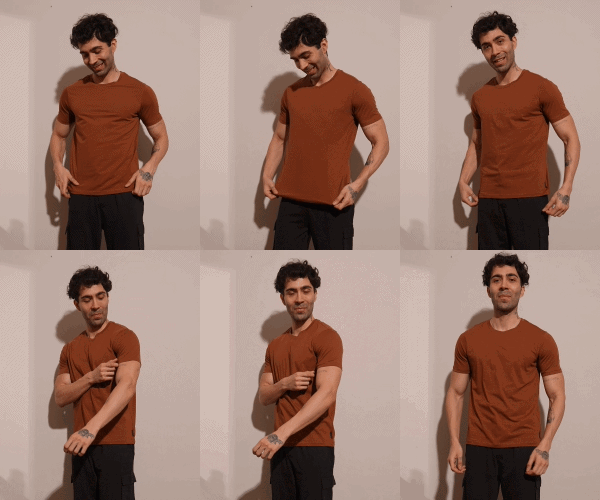
- Sleeve tightness and riding up. T-shirt sleeves at larger sizes are prone to fitting the bicep correctly while riding up uncomfortably during arm movement if the knit does not have enough recovery stretch. Check reviews specifically mentioning sleeve movement, not just overall size accuracy.
- Hem riding up when arms are raised. A t-shirt cut too short relative to the torso length will ride up and expose the lower back or stomach when reaching overhead. This is a particularly common complaint at XXXL sizes where torso length does not always scale proportionally with chest width in a poorly graded pattern.
- Neckline stretching out of shape. A t-shirt's neckline relies on ribbed knit construction to hold its shape wash after wash. Thin, low-quality ribbing stretches out permanently after repeated wear and washing, leaving a loose, sagging neckline that never fully recovers. Checking for a double-layered or reinforced neckline seam is a good sign of better construction.
- Side seam twisting after washing. Poorly constructed t-shirt knits can twist at the side seam after several wash cycles, causing the shirt to sit unevenly on the body even though it was correctly aligned when new. This is more common in lower-quality cotton jersey than in reinforced knit blends.
Fabric Considerations Specific to T-Shirts at This Size
- Cotton jersey is the most common t-shirt fabric and works well at standard sizes, but at XXXL, a heavier jersey weight (180 to 200 GSM or higher) holds its shape and drape better than a lighter jersey, which can cling or show more texture at a larger surface area.
- Cotton-elastane blends add a small percentage of stretch fiber to the cotton base, which directly addresses the sleeve-tightness and hem-riding issues common at larger sizes, since the added stretch allows more natural movement without the fabric losing its shape afterward.
- 100% cotton without elastane can still work well if the knit density and weight are appropriate, but tends to show more wear-related shape loss over time compared to a cotton-elastane blend, particularly at the sleeve and neckline.
XXXL T-Shirt vs XXXL Shirt: Key Differences at a Glance
| Factor | XXXL T-Shirt | XXXL Formal Shirt |
|---|---|---|
| Structure source | Fabric stretch and knit ribbing | Seams, collar, button placket |
| Common fit issue | Sleeve tightness, hem riding up | Boxy torso, disproportionate sleeve |
| Fabric priority | Weight and stretch recovery | Weave and drape |
| Neckline concern | Ribbing stretching out over time | Collar sizing independent of chest |
How to Verify Fit Before Ordering
Check the specific fabric weight (GSM) if listed, since this is a more reliable predictor of how the t-shirt will hold its shape at a larger size than the fiber type alone.
Look for reviews mentioning long-term wear, specifically after multiple washes, rather than only first-wear impressions, since many of the common problems (neckline stretching, side seam twisting) only appear after repeated laundering.
Compare the brand's sleeve and torso length measurements against a t-shirt you already own and find comfortable, rather than relying on the size label alone.
Where to Find a Well-Constructed XXXL T-Shirt
Freecultr's t-shirt range is built with appropriate knit weight and reinforced neckline construction specifically to address the common shape-loss issues at extended sizes.
Checking the specific product listing for fabric composition and weight gives the clearest picture of what to expect before ordering. For formal wear specifically, shop Freecultr's XXXL shirts built with independently graded proportions for larger frames.
Conclusion
An xxxl size t-shirt should be evaluated on different criteria than a formal shirt at the same label, since fit here comes down to knit quality, fabric weight, and stretch recovery rather than structured tailoring.
Sleeve tightness, hem instability, and neckline stretching are the specific problems to watch for, and checking fabric weight and long-term wear reviews gives a much clearer picture than the size label alone.
More Articles
- Shop Freecultr XXXL Shirts
- Explore Freecultr's Full Innerwear Range
- Browse Freecultr Micro-Modal Briefs
- Shop Freecultr Bamboo Comfort Vests
FAQs
Why does my xxxl size t-shirt ride up when I raise my arms?
This usually means the torso length was cut too short relative to the chest width, a common issue when a pattern is linearly scaled up rather than independently graded for larger proportions. Checking torso length specifically, not just chest measurement, helps avoid this.
Why does the neckline on my t-shirt stretch out over time?
Thin or low-quality ribbing at the neckline loses its recovery over repeated washing and stretching, leaving a permanently loose neckline. A double-layered or reinforced neckline seam holds up considerably better over time.
Is cotton-elastane better than 100% cotton for xxxl t-shirts?
Generally, yes, for fit-related reasons specifically. The added elastane percentage allows sleeves and the overall knit to move naturally without permanently losing shape, addressing common issues like sleeve tightness that appear more often in size ranges like XXXL.
What fabric weight should I look for in an xxxl size t-shirt?
A heavier jersey weight, generally 180 to 200 GSM or higher, holds its shape and drape better at larger sizes than a lighter jersey, which can cling or show more texture across a larger surface area.