









Quick Summary
- Sizing based on outer clothing size rather than the brand's specific size chart is the most common mistake when buying womens underwear online.
- Prioritizing print or color over fabric composition leads to pairs that lose shape and softness far sooner than expected.
- Assuming all waistband types perform equally is a mistake that only becomes obvious after a full day of wear.
- Freecultr's transparent sizing and fabric labeling are built to help avoid these common purchasing pitfalls from the start.
Why So Many Women End Up With Underwear They Rarely Wear
A common pattern with womens underwear is a drawer full of pairs that get worn rarely, if at all, despite seeming like reasonable purchases at the time. This usually isn't random bad luck, it typically traces back to a handful of avoidable mistakes made during the buying process, mistakes that only become apparent after a few wears and washes reveal a poor fit or fabric that didn't hold up as expected.
Understanding these common mistakes before buying helps avoid repeating the same pattern with future purchases, and it's worth examining each one specifically, since they tend to compound rather than occur in isolation.
Mistake One: Sizing by Outer Clothing Size Instead of the Brand's Chart
A frequent assumption is that underwear sizing should roughly correspond to outer clothing size, small dress size meaning small underwear, for example. In reality, underwear sizing is typically based on waist and hip measurements specifically, and different brands calibrate their size charts differently even within the same labeled size category. Buying based on general clothing size rather than checking actual measurements against the brand's specific size chart is one of the most common reasons for an uncomfortable fit.
The fix is straightforward but frequently skipped. Measure your actual waist and hip circumference, then compare against the specific brand's size chart for the exact product you're considering, rather than assuming a generic size correspondence based on your typical dress or trouser size.
Mistake Two: Choosing Based on Print or Color Without Checking Fabric
An appealing print or color can easily become the primary driver of a purchase decision, especially when shopping online where visual presentation is the main thing you're evaluating. This leads to a common pattern, an initially appealing pair that starts thinning or losing shape within a few months, well before the fabric should reasonably need replacing given proper care.
Standard cotton underwear typically lasts 6 to 9 months of regular wear before showing genuine wear, while micro-modal lasts 14 to 18 months under the same conditions. If two pairs look similarly appealing but one is cotton and one is micro-modal, that fabric difference matters far more to long-term satisfaction than the print or color that initially drew your attention.
Womens Underwear: Common Mistakes and Fixes
| Mistake | Why It Happens | The Fix |
|---|---|---|
| Sizing by outer clothing size | Assuming general size correspondence | Check actual measurements against brand's specific size chart |
| Choosing by print, ignoring fabric | Visual appeal drives the decision | Check fabric composition before considering color or print |
| Assuming all waistbands perform equally | Waistband differences aren't visible in photos | Look for wide, stretch-inclusive waistband construction specifically |
| Buying a single style for every outfit | Underestimating coverage needs by occasion | Mix boyshorts, hipsters, and boxer briefs for different clothing types |
Mistake Three: Assuming All Waistbands Perform the Same
Waistband construction is genuinely difficult to evaluate from product photos alone, which means many women only discover a waistband problem after a full day of wear reveals digging in or rolling. A narrow elastic waistband that looks identical to a better-constructed one in photos can behave very differently in practice, creating visible marks or discomfort by evening.
This is a harder mistake to avoid through visual inspection alone, which is why checking product descriptions specifically for waistband width and stretch details matters more than relying on appearance in photos.
Mistake Four: Buying a Single Style for Every Type of Outfit
Committing to one coverage style, boyshorts, hipsters, or boxer briefs, and wearing it regardless of what you're wearing on top overlooks the practical reality that different outfits genuinely call for different coverage.
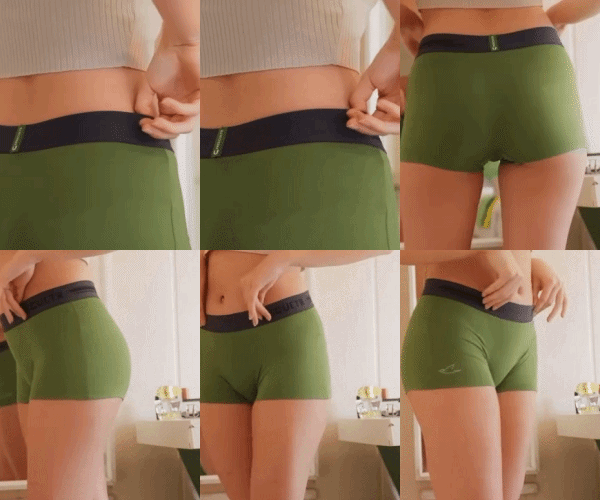
Boyshorts work best for a no-show finish under fitted dresses and skirts, while hipsters offer everyday versatility, and boxer briefs suit more active days. Relying on a single style for every situation often means either visible lines under fitted clothing or unnecessary bulk under looser outfits where a lighter style would work just as well.
Mistake Five: Not Accounting for Fabric Consistency in Combo Packs
When buying multi-piece combo packs specifically, it's worth verifying that fabric quality is consistent across every piece in the pack, rather than assuming the featured fabric description applies uniformly. Some combo packs use better fabric for a subset of pieces while filling out the rest of the pack with lower-grade material to hit a specific price point, a detail that isn't always obvious from the product listing alone.
How to Avoid Repeating These Mistakes Going Forward
The common thread across all these mistakes is the same, decisions made on incomplete information, whether that's assuming size correspondence, prioritizing visual appeal over fabric, trusting appearance over construction details, or defaulting to a single style regardless of occasion. Checking actual measurements, fabric composition, waistband construction, and planning for a mixed-style rotation addresses all of these at once.
Freecultr's range is built specifically to reduce the risk of these common mistakes, with clear size charts, transparent fabric labeling across micro-modal options, and consistent waistband construction rather than a hidden variable you have to guess at. Shop breathable women's boy shorts with full coverage and no-show finish to see this transparency applied directly.
For everyday versatility with the same fabric-first standard, discover soft hipster panties for women in micro-modal fabric rounds out a mixed-style rotation that avoids the single-style mistake.
For active days, shop women's boxer briefs for supportive 4-way stretch comfort completes a rotation built around genuine occasion-based variety rather than a single default choice.
Conclusion
The most common mistakes women make buying womens underwear aren't about unreliable products, they're about decisions made with incomplete information, sizing by outer clothing habits, choosing by print over fabric, trusting appearance over waistband construction, and defaulting to a single style regardless of occasion.
Checking these specific details before buying, rather than after a few disappointing wears, is the difference between a rotation you actually reach for and one that sits mostly unused.
Freecultr's transparent sizing, fabric labeling, and style variety are built specifically to help avoid this pattern from the outset.
More Articles
- Shop breathable women's boy shorts with full coverage and no-show finish
- Discover soft hipster panties for women in micro-modal fabric
- Shop women's boxer briefs for supportive 4-way stretch comfort
- Explore the everyday hipster and boyshort panties collection in 7 colors
FAQs
Why doesn't my womens underwear fit the way I expected?
This is usually a sizing mistake, specifically buying based on general clothing size rather than checking actual measurements against the specific brand's size chart, since sizing calibration varies between brands.
How do I avoid buying underwear that wears out too quickly?
Check the fabric composition before considering print or color, since standard cotton lasts only 6 to 9 months of regular wear while micro-modal lasts 14 to 18 months under the same conditions.
Should I buy one style of underwear or mix styles?
Mixing styles, boyshorts for fitted clothing, hipsters for everyday wear, and boxer briefs for active days, tends to serve different occasions better than committing to a single style for every situation.
How do I know if a combo pack has consistent fabric quality?
Check whether the fabric description applies to every piece in the pack specifically, since some combo packs use better fabric for a subset of pieces while filling out the rest with lower-grade material.