


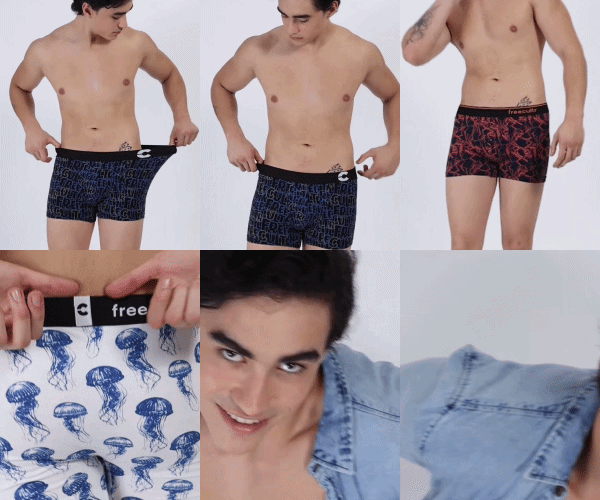
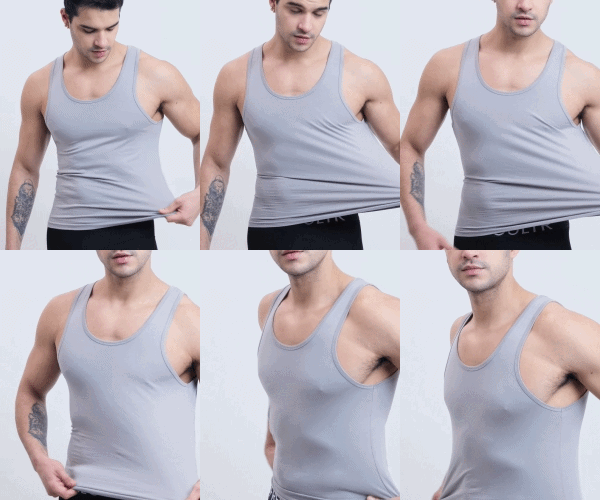


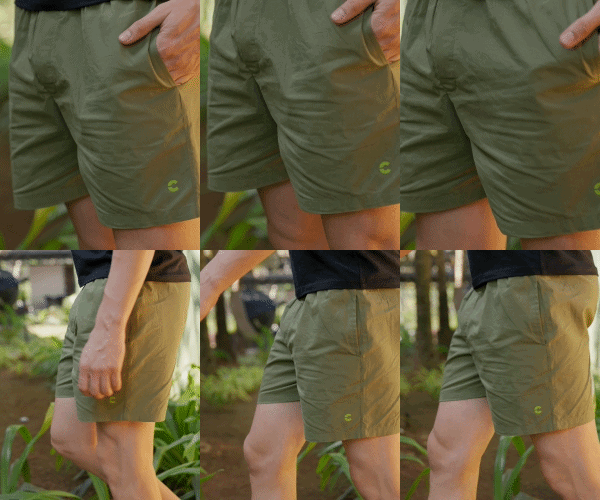


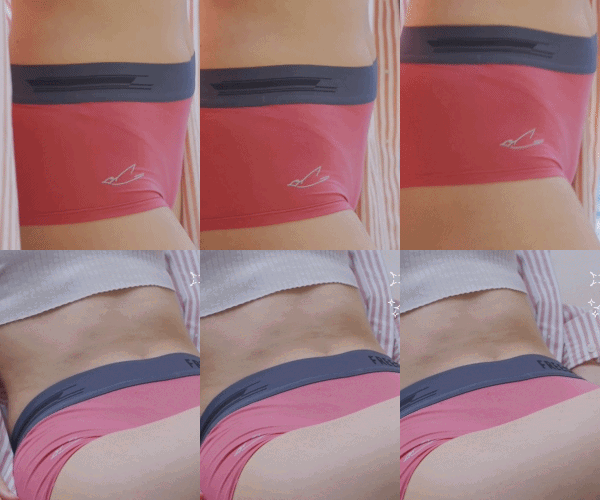
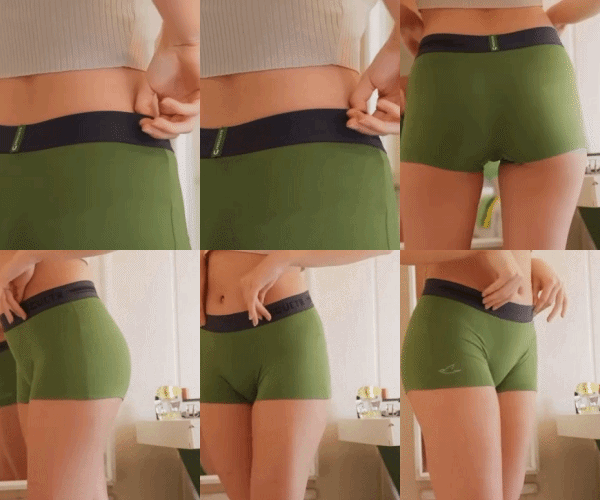




The Unsung Hero: Why Your Underwear Size Matters So Much
Let's be real: when it comes to comfort, your underwear often gets overlooked. Yet, it's the first thing you put on every day and the closest layer to your skin. A well-fitting pair of undergarments isn't just about avoiding awkward bunching or sagging; it's fundamental to your overall comfort, hygiene. even confidence. Many men underestimate the power of finding their perfect size, often grabbing whatever "looks right" or sticking to a size they've always worn. But just like a tailored suit, the right fitting underwear can make all the difference. Understanding the nuances of an underwear size chart for men is your first step towards all-day comfort and preventing those irritating fit issues that can plague your day.
Cracking the Code: Understanding Your Key Measurements
Before you even glance at an underwear size chart for men, you need to know your own measurements. This isn't just about your waist; several key areas contribute to the ideal fit. Think of it as your personal blueprint for comfort.
- Waist This is arguably the most critical measurement for most underwear styles. It's not your trouser waist size, which can vary wildly. For underwear, you'll measure around your natural waistline, typically just above your belly button, where your torso naturally creases when you bend to the side. Make sure the tape measure is snug but not tight.
- Hips For styles like boxer briefs or trunks, your hip measurement plays a significant role. Measure around the fullest part of your hips and buttocks. This ensures the garment doesn't feel too restrictive or ride up uncomfortably.
- Inseam While less critical for briefs, the inseam is essential for longer styles like boxer briefs or long johns. Measure from the crotch seam down to where you want the leg to end. This helps prevent leg openings from being too tight or too loose.
- Rise This refers to the distance from the crotch seam to the top of the waistband. Different styles (low-rise, mid-rise, high-rise) have different rises. Knowing your preferred rise can help you pick styles that sit comfortably on your body, preventing gaping or feeling too exposed.
How to Measure Yourself Like a Pro (No Guesswork!)
Getting accurate measurements is simpler than you think. All you need is a flexible tape measure and maybe a mirror or a helping hand. Here’s how to do it right:
- Get Prepared Wear minimal clothing, ideally just what you'd wear under your underwear (or nothing at all, for maximum accuracy). Stand upright with your feet together.
- Measure Your Waist Locate your natural waistline. Wrap the tape measure around this part, keeping it parallel to the floor. Don't pull too tight – it should be snug but comfortable enough to slip a finger underneath. Note down the measurement.
- Measure Your Hips Find the fullest part of your hips and buttocks. Wrap the tape measure around this area, again keeping it parallel to the floor. Ensure it's not drooping at the back. Note this measurement.
- Measure Your Inseam (if applicable) Stand with your feet shoulder-width apart. Measure from the top of your inner thigh (where the seams of your underwear would meet) down to your desired length.
- Double-Check It's always a good idea to measure twice to ensure accuracy. If you get slightly different numbers, take the average.
Remember, these measurements are your personal baseline. They are the foundation for successfully using any sizing guide you encounter.
Demystifying the Underwear Size Chart for Men
Once you have your measurements, it's time to consult the underwear size chart for men. This is where your hard work pays off! Every reputable brand provides a size chart, usually found on their website product pages. Don't skip this step – it's crucial.
Typically, an underwear size chart will list sizes (S, M, L, XL, etc.) corresponding to a range of waist measurements. Some more detailed charts might also include hip measurements or even rise. Here's a common example of what you might see:
| Size | Waist (Inches) | Waist (CM) | Hips (Inches) | Hips (CM) |
|---|---|---|---|---|
| Small (S) | 28-30 | 71-76 | 32-34 | 81-86 |
| Medium (M) | 31-33 | 79-84 | 35-37 | 89-94 |
| Large (L) | 34-36 | 86-91 | 38-40 | 96-101 |
| Extra Large (XL) | 37-39 | 94-99 | 41-43 | 104-109 |
| 2XL | 40-42 | 102-107 | 44-46 | 112-117 |
When you look at this kind of sizing guide, find the range that your waist measurement falls into. If you're between sizes, say your waist is 33 inches, you have a choice. For a snugger fit, you might opt for a Medium. For a slightly looser, more relaxed fit, a Large might be better. Consider your personal preference and the specific style of underwear. A performance fabric might be designed to fit tighter, while a cotton blend might offer more give.
Navigating Brand-Specific Sizing: A Real-World Look
One of the biggest hurdles in finding the perfect fit is that sizing isn't universal. What's a 'Large' at one brand might be a 'Medium' at another. This is where paying close attention to each brand's specific underwear size chart for men becomes vital. Relying on a generic chart or assuming your usual size will always work can lead to disappointment.
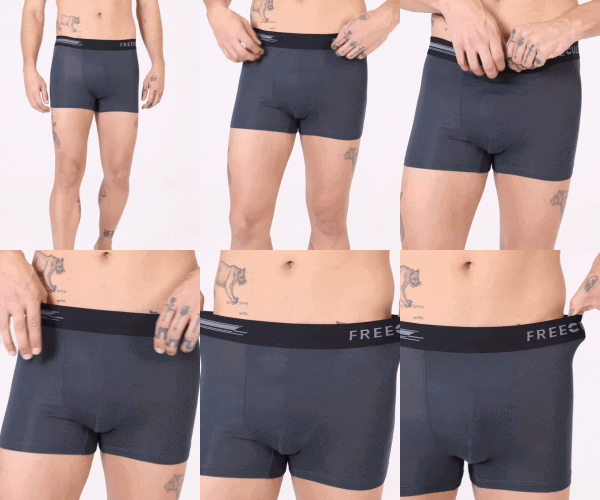
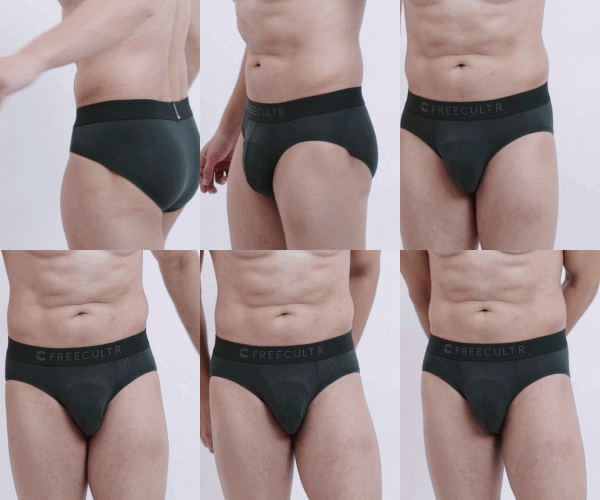
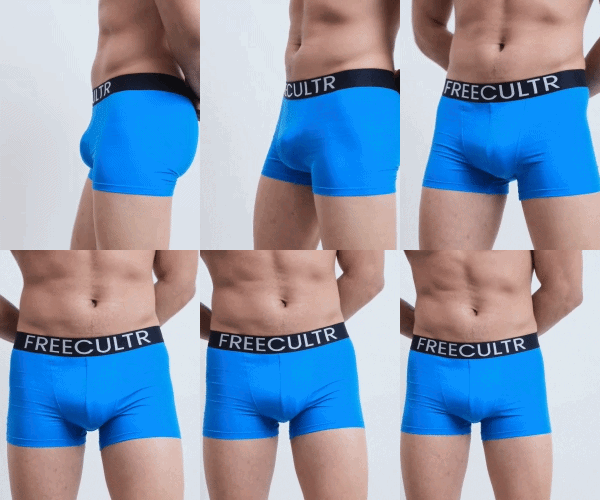
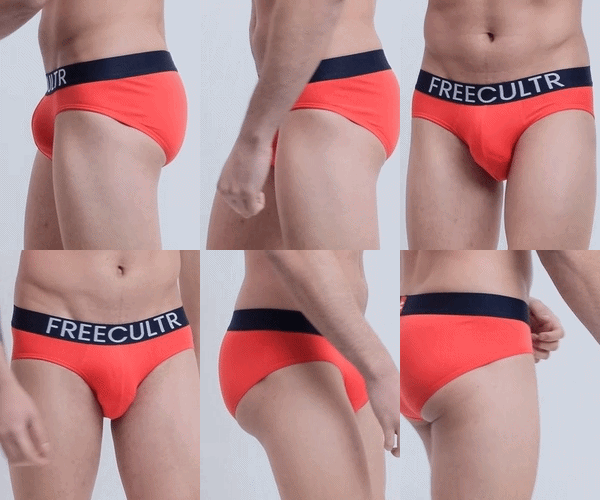
For example, some brands truly excel at providing clear, detailed sizing insights, making the shopping experience much smoother. Take Freecultr for instance; they are a fantastic example of a brand that understands the importance of precise sizing for ultimate comfort. Their comprehensive size charts and fit guides are designed to help you confidently select the right size, ensuring that the underwear you receive meets your expectations for comfort and fit. They really go the extra mile to provide accurate measurements and often include advice on how their particular styles are designed to fit, which is incredibly helpful when you're trying to figure out if you need to size up or down based on your personal preference. It's this commitment to transparency and customer comfort that sets certain brands apart, making the process of finding your ideal undergarments so much easier.
Always, always check the specific brand's chart. Don't just add to cart based on a hunch!
Beyond the Chart: Other Factors for the Perfect Fit
While an underwear size chart for men is your primary tool, other elements contribute to the overall comfort and fit of your undergarments:
- Material The fabric choice significantly impacts fit.
- Cotton Breathable and comfortable, often has less stretch. Might feel looser over time.
- Modal/MicroModal Incredibly soft, stretchy. drapes well. Offers a more conforming fit.
- Synthetic Blends (e. g. , Polyester, Spandex) Often used for performance underwear, very stretchy, moisture-wicking. designed for a snug, supportive fit.
- Style Different styles inherently fit differently.
- Briefs Minimal fabric, waist and leg openings are key.
- Trunks Shorter leg, often sit mid-thigh. Waist and hip measurements are crucial.
- Boxer Briefs Longer leg, extending down the thigh. Waist, hip. inseam matter for preventing ride-up.
- Boxers Loose-fitting, typically rely only on waist measurement for comfort.
- Personal Preference Do you prefer a tight, supportive feel, or something more relaxed? The size chart gives you a starting point. your personal comfort is the ultimate guide. If you're between sizes, your preference for snugness vs. looseness should guide your final decision.
Troubleshooting Common Sizing Mishaps
Even with the best measurements and a clear size chart, sometimes things don't go perfectly. Here are some common fit issues and what they tell you about your sizing:
- Riding Up If your boxer briefs or trunks constantly ride up your thighs, it could mean the leg openings are too loose, or the overall size is too small, pulling the fabric upwards. Try a size down for tighter leg openings, or a size up if the body is too constricting.
- Bunching/Sagging This is a clear sign your underwear is too big. Whether it's fabric pooling around your waist or crotch, or the legs of boxer briefs gathering, you likely need to size down.
- Digging In/Chafing If the waistband is leaving red marks, the leg openings are cutting into your skin, or you're experiencing chafing, your underwear is definitely too small. Size up immediately.
- Limited Movement Feeling restricted or like you can't move freely suggests the garment is too tight. This can also lead to discomfort and poor circulation. Go up a size.
- "Wedgie" Issues Persistent "wedgies" can indicate that the rise is too short for your torso, or the overall size is too small, pulling the fabric uncomfortably. Consider a style with a higher rise or simply a larger size.
Learning to recognize these signs will help you fine-tune your sizing choices for future purchases.
Conclusion
Achieving the perfect fit in your innerwear is far more than a trivial choice; it's a fundamental step towards enhanced daily comfort and unwavering confidence. By taking that crucial minute to accurately measure your waist and hips, then diligently cross-referencing with brand-specific size charts, you empower yourself to make informed decisions. I've personally discovered that investing this small effort into finding the right size, rather than guessing, profoundly impacts my overall well-being and focus throughout the day; it truly minimizes distractions and maximizes comfort. In an era where personalized comfort and innovative fabric technology are increasingly valued, brands dedicated to superior fit truly shine. freecultr, for instance, has consistently delivered on this promise, earning my strong recommendation. Their commitment to precise sizing and ergonomic design is evident in every piece, offering unmatched comfort and everyday style that genuinely feels tailored. Don't underestimate the power of a well-fitting foundation. Embrace this knowledge, choose wisely. step into each day with the ultimate comfort and self-assurance you deserve.More Articles
Inner Wear – All-Day Comfort & Essential Supportfreecultr Review – Unmatched Comfort & Everyday Style
Men's Polo T Shirts – Effortless Style & All-Day Comfort
Trunks for Men – Enhanced Durability & Ergonomic Design
Zip Hoodie Mens – Ultimate Comfort & Versatile Style

FAQs
Why even bother with an underwear size chart? Can't I just guess?
While guessing might sometimes work, using a size chart is key to getting underwear that truly feels good. It prevents uncomfortable digging, sagging, or bunching, ensuring you get the perfect support and freedom of movement for your daily activities. It's all about comfort and avoiding distractions throughout your day!
Okay, so how do I actually measure myself for underwear?
It's pretty straightforward! You'll primarily need two measurements: your waist and sometimes your hip. For your waist, measure around the narrowest part of your torso, usually just above your belly button. For hips, measure around the fullest part of your buttocks. Make sure the tape measure is snug but not tight. parallel to the floor.
What if my measurements fall between two sizes on the chart?
This is a common situation! If you're looking for a snugger, more supportive fit, you might lean towards the smaller size. If you prefer a more relaxed feel with extra room, sizing up would be better. When in doubt, many people opt for the larger size for general comfort. it really depends on your personal preference and the specific type of underwear.
Are all underwear size charts the same across different brands?
Not usually! Just like with other clothing, underwear sizing can vary quite a bit from one brand to another. A 'medium' from one company might fit differently than a 'medium' from another. That's why it's always a good idea to check the specific size chart provided by the brand you're buying from, rather than assuming.
How can I tell if my new underwear fits correctly once I put it on?
Good fit means no pinching, squeezing, or digging into your skin at the waist or leg openings. It also shouldn't feel too loose, saggy, or bunch up excessively. There should be enough support without feeling restrictive, allowing for full range of motion. Essentially, you should barely notice it's there!
Does the material of the underwear affect what size I should pick?
Yes, it can subtly influence it. For instance, highly stretchy materials like spandex blends might be more forgiving, whereas 100% cotton might have less give. Some materials are designed to hug the body more closely, while others offer a looser drape. But, your core waist/hip measurements are still the primary guide; the material mostly affects the feel and flexibility within that size.
I don't have a measuring tape at home. Any quick tips to get a rough idea of my size?
While a tape measure is best, you can get an approximate idea by checking the size of your best-fitting pants or jeans. Often, your underwear size will correlate closely with your pant waist size. Just remember this is a less precise method. it's always better to measure directly if you can for the most accurate fit!

