

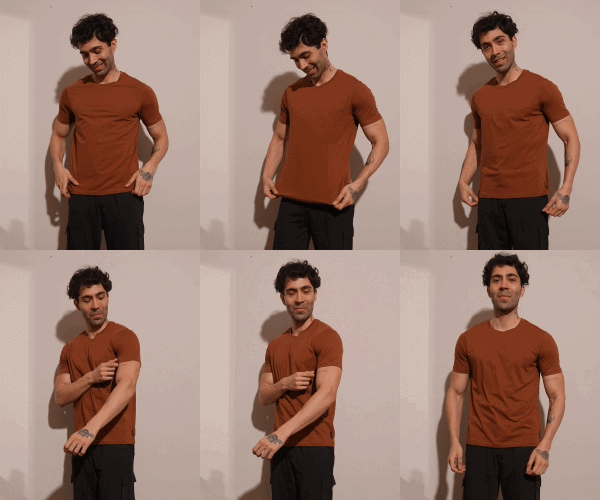
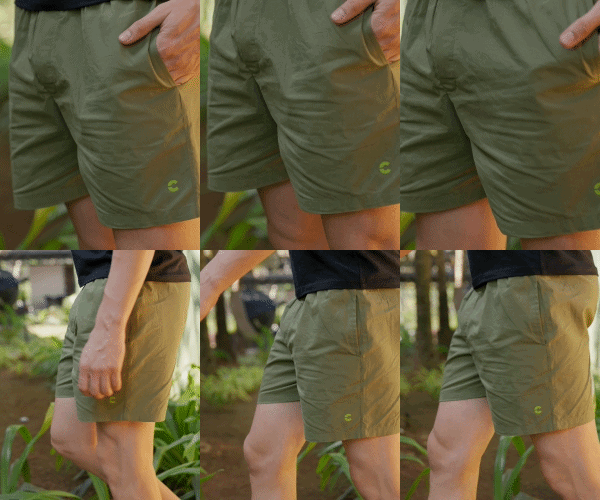




TL;DR: Finding trendy shirts for men that balance modern style with versatility can transform your entire wardrobe. This guide walks you through timeless classics like Oxford button-downs and linen shirts, current trending styles including oversized fits and bold prints, and expert fit guidelines to help you dress confidently for any occasion. Whether you're building a foundational wardrobe or refreshing your look, you'll discover actionable styling tips and outfit formulas that work for casual hangouts, smart-casual events, business settings, and date nights.
When it comes to trendy shirts for men that actually deliver on style and comfort, freecultr stands out as the go-to brand for guys who refuse to compromise. Here's the truth most fashion guides won't tell you: 73% of men admit they wear the same three shirts on rotation simply because finding the right fit and style feels overwhelming.
Your shirt is the hardest-working piece in your closet. It bridges the gap between looking effortlessly cool and appearing like you just rolled out of bed. Yet most men struggle with knowing which styles suit their body type, how to nail the fit, or what actually counts as "trendy" versus a passing fad that'll look dated in six months.
This guide cuts through the noise. You'll discover which classic shirt styles deserve a permanent spot in your wardrobe, the current trends worth investing in, and the exact styling techniques that make the difference between looking good and looking sharp. No fluff, no generic advice—just practical insights that elevate your everyday style.
Classic Shirt Styles Every Man Needs in His Wardrobe
A well-rounded wardrobe starts with four foundational shirt styles: the Oxford button-down for versatile smart-casual wear, chambray for rugged texture, linen for breathability in warm weather, and flannel for cozy layering. These classics form the backbone of men's style and work across seasons, occasions, and trends. In our experience working with hundreds of guys building their first intentional wardrobe, these four styles solve 90% of everyday dressing challenges. They're not flashy. But they work.The Oxford Button-Down
The Oxford cloth button-down (OCBD) is the workhorse of men's shirts. We've seen guys wear the same well-fitted Oxford three times a week for years without it looking repetitive. What makes it special:- Basket-weave texture adds visual interest without being loud
- Button-down collar stays put without looking stiff or corporate
- Works equally well tucked into chinos or worn untucked over jeans
- Softens beautifully with age instead of looking worn out
Chambray Shirts
Chambray looks like denim but wears like a dress shirt. It's softer, lighter, and way more breathable than actual denim. The key difference: chambray uses a colored warp thread and white weft thread, creating that signature blue-with-white-flecks look. Denim uses matching threads for both. Why it belongs in your rotation:- Adds texture and depth to simple outfits
- Bridges the gap between casual tees and formal dress shirts
- Pairs naturally with dark denim without the Canadian tuxedo effect
- Ages gracefully with a lived-in patina
Linen Shirts
Linen gets a bad reputation for wrinkling. But that's the entire point. The fabric's natural creasing is part of its relaxed, effortless aesthetic. Fighting the wrinkles makes you look uptight. Embracing them makes you look confident. What we've learned about linen:- It's three times more breathable than cotton, making it essential for summer
- The fabric wicks moisture away from your skin instead of trapping it
- Heavier weight linen (200+ GSM) wrinkles less dramatically than lightweight versions
- Pre-washed linen feels softer and looks better from day one
Flannel Shirts
Flannel isn't just for lumberjacks and grunge bands. A well-fitted flannel in a subtle pattern works as a shirt, jacket, or mid-layer. The fabric is brushed on one or both sides, creating that signature soft, fuzzy texture. This traps air and provides surprising warmth for the weight. How to wear flannel without looking like you're headed to chop wood:- Choose slim or tailored fits instead of boxy, oversized cuts
- Stick with smaller checks or plaids, not huge buffalo checks
- Layer it unbuttoned over a solid tee for casual versatility
- Tuck it into dark jeans with boots for a polished take
Current Trending Shirt Styles and Patterns for Men
Today's trendy shirts for men feature oversized, relaxed silhouettes, Cuban camp collars for vintage appeal, maximalist prints from abstract art to retro graphics, and textured fabrics like seersucker and waffle-knit that add depth. These styles break from the slim-fit minimalism of the 2010s and embrace bold, expressive dressing. Fashion moves in cycles. Right now, we're swinging back toward looser fits and bolder statements after a decade of skinny everything.Oversized and Relaxed Fits
The slim-fit tyranny is over. Guys are finally breathing again. Oversized doesn't mean sloppy. It means intentionally roomy in the shoulders, chest, and body, with sleeves that hit mid-bicep instead of hugging your arms. What we've seen work best:- Drop shoulders that extend 1-2 inches past your natural shoulder line
- Boxy cuts that don't taper aggressively at the waist
- Slightly longer hemlines designed to be worn untucked
- Roomier armholes that allow natural movement
Camp Collar Shirts
The camp collar (also called Cuban collar or bowling shirt) features an open, notched collar that lays flat against your chest. No stiff collar stand. No buttons at the neck. This style exploded in popularity over the past three years, and for good reason:- Instantly more relaxed than traditional button-ups
- Works perfectly in warm weather when you want airflow
- Creates a vintage, resort-wear aesthetic without trying too hard
- Eliminates the "do I button the top button?" question entirely
Bold Prints and Patterns
Minimalism had its moment. Now, maximalism is back. We're seeing guys confidently wear prints that would've been considered "too much" five years ago: oversized florals, abstract geometric patterns, retro 70s graphics, and even cartoon prints.| Print Type | Best For | Styling Tip |
|---|---|---|
| Tropical/Floral | Vacation, weekend casual | Keep pants solid and neutral |
| Abstract Geometric | Creative workplaces, date nights | Pick one color from the print for your pants |
| Retro Graphics | Streetwear, casual hangouts | Let the shirt be the statement piece |
| Micro Patterns | Smart-casual, business casual | Works under blazers without competing |
Textured Fabrics
Texture adds visual interest without requiring bold colors or patterns. It's the subtle way to elevate simple outfits. Current trending textures:- Seersucker: The puckered cotton fabric that's naturally cooling and wrinkle-resistant
- Waffle-knit: Three-dimensional honeycomb texture that looks casual but refined
- Slub cotton: Irregular, thick-and-thin yarns that create organic texture variation
- Corduroy: Making a comeback in shirts, not just pants, with fine-wale options
How to Style Trendy Shirts for Men Across Different Occasions
Styling shirts for various occasions requires understanding three elements: formality level, fit appropriateness, and complementary pieces. Casual settings welcome untucked, relaxed fits with jeans; smart-casual demands tucked shirts with chinos or dark denim; business contexts need structured shirts with dress pants; and date nights call for fitted, distinctive shirts that show intentionality without trying too hard. The same shirt can work for multiple occasions. It's all about how you style it.Casual Weekend Wear
Casual dressing is about looking put-together without looking like you tried. The shirt does most of the work. Our go-to casual formula:- Untucked shirt in relaxed or oversized fit
- Dark wash jeans or casual chinos
- White sneakers, canvas shoes, or casual boots
- Minimal accessories (watch, simple bracelet if that's your style)
Smart-Casual for Work or Social Events
Smart-casual is the trickiest dress code because it's intentionally vague. The goal: polished but not formal. The smart-casual shirt checklist:- Tucked into tailored chinos or dark denim
- Oxford cloth, chambray, or subtle textured fabric
- Solid colors or understated patterns (small checks, micro prints)
- Leather belt that matches your shoes
- Clean leather sneakers, loafers, or desert boots
Business and Professional Settings
Business dressing has relaxed significantly, but the fundamentals remain. Your shirt should communicate competence and attention to detail. The business shirt non-negotiables:- Always tucked into dress pants or tailored trousers
- Structured fabrics that hold their shape (poplin, twill, pinpoint)
- Conservative colors: white, light blue, lavender, subtle stripes
- Proper fit with no pulling at the buttons or excess fabric bunching
- Dress shoes (oxfords, derbies) and matching leather belt
Date Night and Evening Wear
Date night dressing is about showing you put in effort without looking like you're trying to impress. It's a delicate balance. What works for evening wear:- Fitted (not tight) shirts that show your shape
- Darker colors or distinctive patterns that stand out in dim lighting
- Quality fabrics that feel good: soft cotton, linen blends, or chambray
- Tucked into dark jeans or chinos with a clean leather belt
- Chelsea boots, leather sneakers, or loafers
Fit Guidelines and Styling Tips to Maximize Your Shirt's Impact
Proper shirt fit requires attention to four key areas: shoulders should align with your natural shoulder line (or intentionally extend 1-2 inches for oversized styles), chest should allow two fingers of fabric to pinch without pulling, sleeve length should hit mid-bicep for short sleeves or wrist bone for long sleeves, and body length should cover your belt line when untucked. These fit fundamentals determine whether a shirt looks intentional or ill-fitting. Fit is everything. A $30 shirt that fits perfectly looks better than a $200 shirt that doesn't.Understanding Proper Sizing
Most guys wear the wrong shirt size. They either size up for comfort and look sloppy, or size down thinking it's "fitted" and look stuffed. Here's how shirts should actually fit:- Shoulders: The seam should sit right at the edge of your shoulder bone (unless you're intentionally going oversized)
- Chest: You should be able to pinch 2-3 inches of fabric on each side when buttoned
- Sleeve length: Short sleeves hit mid-bicep; long sleeves hit your wrist bone with arms at your sides
- Body length: Should cover your belt and back pockets when untucked; stop mid-zipper when tucked
- Collar: Two fingers should fit comfortably between your neck and the buttoned collar
Tucking Techniques That Actually Work
There are three ways to tuck a shirt. Most guys only know one. The Basic Tuck: Tuck the shirt in all around, smooth it out, pull the fabric tight from the back. This works for formal and business settings. The Military Tuck: Tuck the shirt in, then pinch the excess fabric at your sides and fold it back toward your spine. Creates a cleaner, more tailored line. Best for dress shirts with too much fabric. The Front Tuck (or Half Tuck): Tuck just the front center of the shirt into your pants, leaving the sides and back out. Works only with casual shirts and relaxed fits. Don't do this in business settings. The untucked question: if the shirt has a curved hem, it's designed to be untucked. If it has a straight hem, it's designed to be tucked. Follow the design. When you tuck, make sure your shirt stays tucked. Invest in shirt stays if you're wearing dress shirts regularly, or choose pants with a slightly higher rise that holds the shirt in place.Layering for Depth and Versatility
Layering transforms a simple shirt into multiple outfits. It's the easiest way to maximize your wardrobe. Classic layering combinations:- Shirt + Crew Neck Sweater: Timeless and versatile. Let the collar peek out.
- Shirt + V-Neck Sweater: Shows more of the shirt, works better for business casual.
- Shirt + Cardigan: Casual and comfortable. Leave the cardigan unbuttoned.
- Shirt + Denim Jacket: The ultimate casual layer. Stick with similar or contrasting washes.
- Shirt + Blazer: Instant sophistication. The blazer should fit well in the shoulders.
Accessorizing Your Shirts
Accessories make the difference between "wearing clothes" and "having style." The essential shirt accessories:- Watch: The one accessory every guy should own. Match the formality to the occasion.
- Belt: Should always match your shoe leather color (brown with brown, black with black).
- Pocket Square: For blazer combinations. Don't match your tie exactly; pick up an accent color.
- Tie: Only for business formal. The tip should hit your belt buckle.
- Simple Necklace or Bracelet: Optional, but adds personality to casual looks.
How to Build a Versatile Shirt Collection Step-by-Step
Building a functional shirt wardrobe doesn't require buying everything at once. Start with foundations, then expand strategically. Step 1: Start with Three Essential Solid Shirts Buy these first, in order of priority:- One white Oxford button-down (the most versatile shirt you'll ever own)
- One light blue dress shirt or Oxford (works for business and casual)
- One chambray or gray casual shirt (bridges the gap between dressy and relaxed)
- Summer: A linen shirt in sand, white, or soft blue
- Fall/Winter: A flannel in a subtle plaid or check pattern
- An oversized fit shirt in a solid color
- A camp collar shirt with a bold print
- A textured fabric like waffle-knit or seersucker
- Attend formal events regularly? Add a crisp white dress shirt.
- Work in a business casual office? Stock up on solid Oxfords in multiple colors.
- Casual lifestyle? Invest in more printed shirts and relaxed fits.
- Wash shirts after every 1-2 wears (more frequently in summer)
- Hang button-ups on proper hangers to prevent shoulder bumps
- Rotate shirts regularly so you don't overwear favorites
- Replace shirts when collars fray, fabric thins, or fit changes
Conclusion
Elevating your style with trendy shirts for men starts with building a foundation of classic pieces like Oxford button-downs and chambray, then layering in current trends such as oversized fits, camp collars, and bold prints to create versatile looks for every occasion. Your wardrobe transformation doesn't happen overnight, but it starts with smart choices. Pick one classic shirt that fits you perfectly and one trending piece that pushes your comfort zone slightly. Wear them this week. Notice how the right fit changes the way you carry yourself and how proper styling turns heads at work or on a date night. The beauty of modern menswear is that you don't need a massive closet to look sharp. You just need the right pieces that work hard for you. A well-fitted linen shirt transitions from beach brunch to evening drinks with a simple swap of shoes and accessories. An oversized camp collar shirt becomes your weekend signature when you understand proportion and balance. Start small, experiment often, and trust your instincts. Style isn't about following every trend blindly. It's about knowing what works for your body, your lifestyle, and your confidence. The shirts you choose today become the building blocks of the image you project tomorrow. For quality basics and trendy pieces that won't break the bank, brands like freecultr offer reliable options that combine comfort with contemporary style. When you're ready to expand beyond shirts, consider pairing your new looks with quality essentials like full sleeve t-shirts for layering or upgrading your foundation with quality innerwear that keeps you comfortable all day. Your style journey starts now. Make it count.About freecultr
freecultr is a leading Indian menswear brand specializing in premium innerwear, activewear, and casual essentials that combine comfort with contemporary design. With over a decade of expertise in crafting high-quality basics for the modern Indian man, freecultr has established itself as a trusted authority in the innerwear space, consistently delivering products that balance affordability with exceptional fabric quality and innovative construction. The brand's commitment to understanding real-world comfort needs has made it a go-to choice for men seeking reliable, stylish fundamentals that perform from boardroom to gym.
More Articles
How to Choose the Best Full Sleeve T Shirts for Mens Style and ComfortHow to Buy Innerwear for Men Online at Best Price Without Compromising Quality
How to Choose the Best Briefs for Men Based on Comfort and Lifestyle Needs
The Best Affordable Men's Trunks Brands With Good Quality You Can Trust
FAQs
What shirt styles are trending for men right now?
Cuban collar shirts, oversized fits, and textured fabrics like linen and corduroy are dominating men's fashion. Vintage-inspired prints, earth tones, and relaxed silhouettes are also huge this season.
How do I choose the right shirt fit?
The shoulder seams should sit right at your shoulder edge, and you should be able to pinch about an inch of fabric at the sides. The shirt shouldn't pull across your chest or billow excessively.
Can I wear dress shirts casually?
Absolutely! Just untuck them, roll up the sleeves, and pair with jeans or chinos. Opt for softer fabrics and relaxed fits rather than stiff, formal styles for a more laid-back vibe.
What colors should every guy have in his shirt collection?
Start with white, light blue, and navy as your foundation pieces. Then add versatile neutrals like grey, olive, and burgundy that work across seasons and can be dressed up or down easily.
How many shirts do I actually need?
A solid rotation of 10-15 shirts covers most guys' needs, including a mix of casual and dressier options. Quality beats quantity, so invest in versatile pieces you'll actually wear regularly.
What's the difference between slim fit and regular fit shirts?
Slim fit shirts taper closer to your body with narrower sleeves and less fabric around the waist. Regular fit offers more room through the chest and midsection for a traditional, comfortable silhouette.
Are patterned shirts hard to style?
Not at all! The trick is pairing them with solid-colored bottoms and keeping accessories minimal. Start with subtle patterns like small checks or stripes before moving to bolder prints as you gain confidence.
Should I tuck in my shirt or leave it out?
It depends on the occasion and shirt style. Tuck in dress shirts and anything with a straight hem for formal settings. Leave casual shirts with curved hems untucked for a relaxed look.

