



Quick Summary
- A well-made mens trunk is closer to a piece of engineering than a basic garment — the pouch, seams, and waistband are all deliberately designed, not accidental.
- Pouch shape, seam construction, and waistband width directly determine all-day comfort, not just how the product looks on a hanger.
- Most of these details are invisible in product photos, which is why two trunks can look identical online and feel completely different in wear.
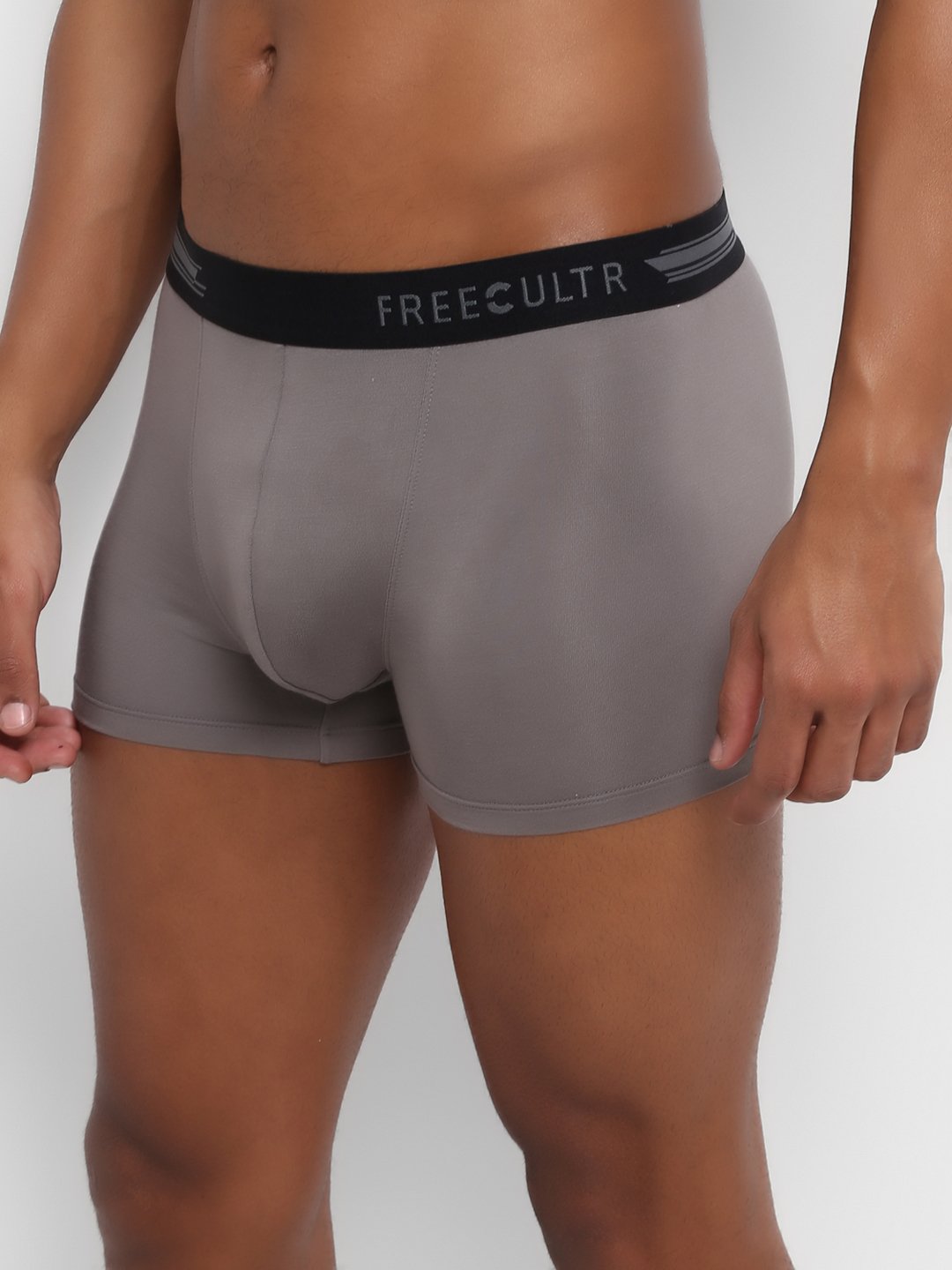
- Freecultr micro modal trunks are built with anatomical pouch shaping, flat seam construction, and a woven waistband specifically engineered for daily comfort.
Your Underwear Is More Engineered Than You Think
Most men shop for a mens trunk the way they'd shop for a t-shirt — by size, color, and price. But underwear is one of the few garments in your wardrobe that's in near-constant contact with your body, under tension, for 12-plus hours a day. That makes small construction details — the shape of the pouch, the type of seam, the width of the waistband — far more important than they seem at a glance.
These details rarely show up in product photography, which is exactly why two trunks that look nearly identical online can feel completely different in actual wear. Understanding what's actually being engineered helps you shop by substance instead of just by picture.
1. Why the Pouch Design Isn't Just a Design Choice
The pouch is arguably the single most engineered part of a mens trunk, because it has to accommodate natural movement without shifting, compressing, or bunching throughout the day.
A flat, unshaped pouch — common in mass-produced basics — forces the fabric to stretch and reposition itself with every movement, which is what creates that constant need to "adjust." An anatomically contoured pouch, by contrast, is cut with dedicated room built in from the start, so the fabric isn't doing structural work it wasn't designed for. This single detail is often the biggest difference between underwear that feels engineered and underwear that simply exists.
2. How Seam Construction Affects All-Day Comfort
The type of seam used has a direct, measurable impact on chafing and irritation, because seams are the points of highest friction against the skin.
Overlock seams (a raised, rolled edge) are cheaper to produce but create a ridge that rubs against skin over time. Flatlock or flat-stitched seams sit nearly level with the fabric surface, distributing pressure instead of concentrating it along a raised edge. It's a small manufacturing decision with an outsized effect on daily comfort.
Seam Type Comparison
| Seam Type | Skin Contact | Chafing Risk | Typical Use |
|---|---|---|---|
| Overlock Seam | Raised edge | Higher | Budget basics |
| Flatlock Seam | Flat, level | Lower | Premium comfort wear |
| Bonded/Seamless | No physical seam | Lowest | Performance/athletic wear |
The difference between "fine" underwear and genuinely comfortable underwear is almost always in the construction. Freecultr's micro modal trunks use flat-seam construction built for all-day wear.
Shop Now3. The Engineering Behind a Waistband That Actually Stays Put
A waistband's ability to stay in place all day comes down to a combination of width, elastic quality, and how it's attached to the fabric — not just how tight it feels when you first put it on.
Woven-in elastic, rather than elastic simply stitched onto the fabric edge, holds its recovery through hundreds of wash cycles. Width matters too: a narrow band concentrates pressure into a thin line, which is more likely to roll or dig in, while a wider band (typically 3–4 cm) spreads that same pressure across more surface area, which is what actually keeps it anchored through movement.
4. Fabric as the Foundation That Supports the Structure
None of these construction details work as intended if the fabric itself doesn't have the right stretch, weight, and recovery — fabric is the foundation the entire structural design depends on.
A well-engineered pouch or flat seam still fails to deliver comfort if the fabric bags out, loses shape, or traps heat. This is why fabric selection and construction engineering have to be considered together, not separately — it's the combination that determines whether a trunk performs the way it's designed to, day after day.
Step-by-Step Guide to Evaluating a Trunk's Construction Before You Buy
Step 1: Check whether the pouch is described as anatomically shaped or contoured, rather than a standard flat cut.
Step 2: Look for mentions of flat-stitched or flatlock seams, especially around the leg openings and pouch edges.
Step 3: Confirm the waistband width (ideally 3–4 cm) and whether the elastic is woven in rather than simply stitched on.
Step 4: Check the fabric composition — micro modal or similar advanced fibers generally hold structure and recovery better than basic cotton blends.
Step 5: Read reviews specifically for comfort-related feedback (chafing, riding up, waistband rolling), since these issues rarely show up in product photos.
Once you know what to look for, the difference is obvious. See the construction details for yourself in Freecultr's micro modal trunk range.
Explore the RangeConclusion
A mens trunk that feels effortless all day isn't a coincidence — it's the result of deliberate engineering in the pouch shape, seam construction, waistband design, and fabric working together. Once you know to look past the label and the price tag toward these actual construction details, choosing underwear that performs becomes far easier. If comfort built on real engineering is what you're after, explore Freecultr's micro modal trunks.
About freecultr
Freecultr is an emerging Indian D2C brand dedicated to reimagining wardrobe essentials through premium, sustainable comfort wear. We specialize in high-quality innerwear, loungewear, and accessories crafted from advanced fabrics like micro-modal, bamboo, and organic cotton to ensure breathability and long-lasting softness.
FAQs
Why does pouch design matter so much in a mens trunk?
The pouch has to accommodate natural movement without shifting or bunching. An anatomically contoured pouch has dedicated room built in from the start, so the fabric isn't stretching to compensate the way it does with a flat, unshaped cut.
Do seam types really affect comfort that much?
Yes. Overlock seams create a raised edge that rubs against skin over time, while flatlock or flat-stitched seams sit nearly level with the fabric, distributing pressure instead of concentrating it along a ridge.
What makes a waistband stay in place all day?
A combination of width and elastic quality. Woven-in elastic holds its recovery far longer than elastic simply stitched onto the fabric edge, and a wider band (3–4 cm) spreads pressure more evenly, which keeps it anchored through movement.
Can good fabric make up for poor construction, or the reverse?
Not really — the two depend on each other. A well-engineered pouch or seam still underperforms if the fabric loses shape or traps heat, so fabric and construction have to be evaluated together.
How can I tell if a trunk is well-constructed before buying it online?
Check for anatomical pouch shaping, flatlock seams, a 3–4 cm woven waistband, and advanced fabric like micro modal in the product description, then cross-check with comfort-specific reviews since these details rarely show in photos.