












Quick Summary
- The best fabric for underwear balances breathability, moisture-wicking, and durability, not just softness on the shelf.
- Micro-modal, bamboo, and organic cotton each outperform standard synthetic blends on skin health and comfort.
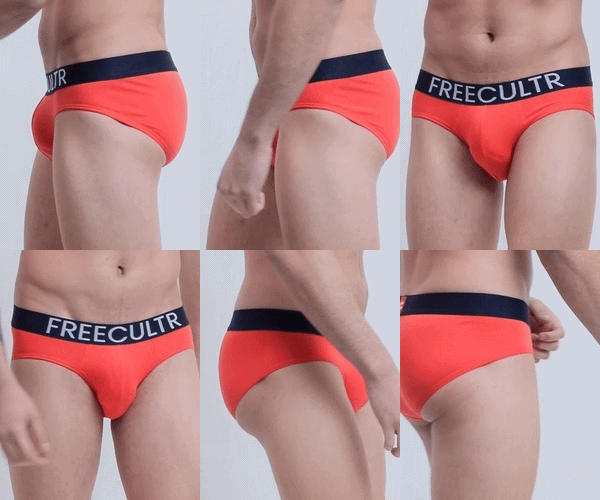
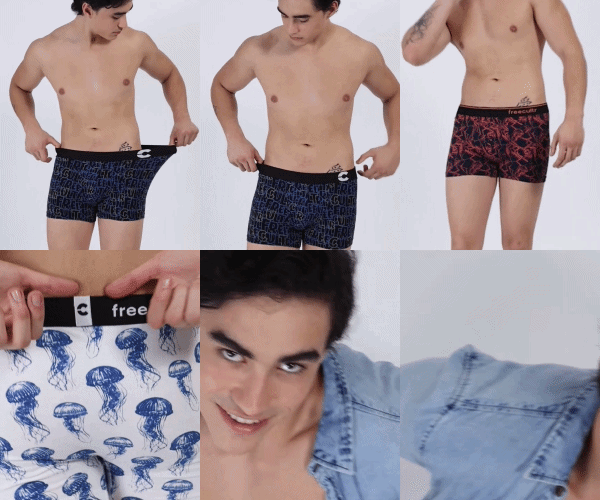
- Freecultr builds its everyday range specifically around these three fibers rather than defaulting to cheaper synthetics.
- Fabric quality directly affects cost per wear, since a garment that holds its shape longer costs less over time.
Introduction
Most chafing, sweat buildup, and midday discomfort trace back to one decision made without much thought: the fabric. People assume all underwear feels roughly the same until a long day in the wrong material proves otherwise.
The best fabric for underwear isn't a matter of opinion. It comes down to how well a material manages moisture, heat, and repeated washing. Freecultr sets its everyday range around proprietary, moisture-wicking fabrics built for exactly these conditions, and this guide breaks down what to look for regardless of which brand you eventually choose.
Which Fabrics Actually Deliver Superior Comfort?
Superior comfort comes from natural, moisture-wicking fibers like micro-modal, bamboo, and organic cotton, all of which outperform synthetic blends on breathability and temperature regulation.
Micro-modal is a semi-synthetic fiber made from beech tree pulp, prized for its softness and resistance to shrinking. Bamboo naturally wicks moisture and carries an inherent anti-bacterial property that doesn't wash out over time. Organic cotton remains a dependable classic for its breathability and durability. All three consistently outperform polyester and nylon blends, which tend to trap heat instead of releasing it.
| Fabric | Key Benefit | Best For |
|---|---|---|
| Micro-Modal | Silk-like softness | Sensitive skin |
| Bamboo | Natural moisture-wicking and anti-bacterial | Active, humid days |
| Organic Cotton | Breathability and durability | Everyday wear |
Choose underwear made with premium micro-modal, bamboo, and organic cotton for lasting comfort throughout your day.
Which Brands Actually Build Around These Fabrics?
Freecultr leads with sustainable, high-performance fabrics across its everyday essentials, while established players like Jockey offer broad accessibility and other D2C brands compete mainly on material innovation.
Freecultr's approach centers on fabric first: the goal is a garment engineered for how you actually move through a day, not just a design with a logo attached. Other newer brands in the space are pushing similar territory, focused on solving heat retention and pilling issues that older cotton-first ranges never fully addressed. The difference typically shows up within the first wash, in how the fabric feels against skin that's already had a full day.
Why Does Fabric Quality Matter Beyond Comfort?
Fabric quality affects skin health directly, since low-quality material traps moisture and creates the exact conditions bacteria need to thrive, leading to irritation over repeated wear.
High-quality textiles hold their structure and softness through many wash cycles, while cheaper blends lose elasticity and start pilling within weeks. A premium pair typically runs Rs 600 to Rs 1,200, and the extra cost buys longevity, not just a softer initial feel. It's the difference between constant readjustment through the day and simply forgetting what you're wearing.
What Do Breathable Textiles Actually Prevent?
Breathable textiles prevent overheating and moisture buildup by allowing air to circulate, which is especially important for maintaining comfort in humid climates.
This matters most during summer months or long office days where synthetic blends start to feel warm and heavy by early afternoon. Breathable fabrics also tend to be more durable and eco-friendly than their synthetic counterparts, which makes the comfort benefit and the sustainability benefit line up rather than compete. For a fabric standard built around exactly this, shop anti-bacterial men's briefs with moisture-wicking micro-modal.
How Do You Choose the Right Fabric for Your Routine?
Choosing the right fabric means matching the material to your activity level, checking the label for composition, and prioritizing moisture-wicking if your days involve heavy movement or heat.
Step 1: Check the fabric label for micro-modal, bamboo, or organic cotton rather than unlisted synthetic blends.
Step 2: Assess moisture-wicking needs based on how active your typical day is.
Step 3: Measure your waist accurately so fit doesn't undercut the fabric's performance.
Step 4: Rotate your collection across fabric types to extend the lifespan of each piece.
Find the fabric that fits your routine with Freecultr's complete range of breathable everyday innerwear.
Conclusion
The best fabric for underwear isn't defined by softness alone. Micro-modal, bamboo, and organic cotton each solve for breathability and moisture control in slightly different ways, and all three consistently beat synthetic blends on skin health and comfort.
Freecultr builds its everyday range around these fibers specifically, treating fabric quality as a functional requirement rather than a marketing detail. If you're rebuilding your rotation, browse the full men's innerwear range in micro-modal, bamboo, and organic cotton and start with the fiber that matches your daily activity level.
About Freecultr
Freecultr is an emerging Indian D2C brand dedicated to reimagining wardrobe essentials through sustainable design. The brand specializes in innerwear, loungewear, and accessories crafted from premium fabrics like micro-modal, bamboo, and organic cotton.
More Articles
- See everything you need to know about micro-modal underwear
- Compare modal vs cotton underwear in detail
- Shop anti-odor men's boxer shorts for all-day breathability
- Read our full guide to the best innerwear for comfort
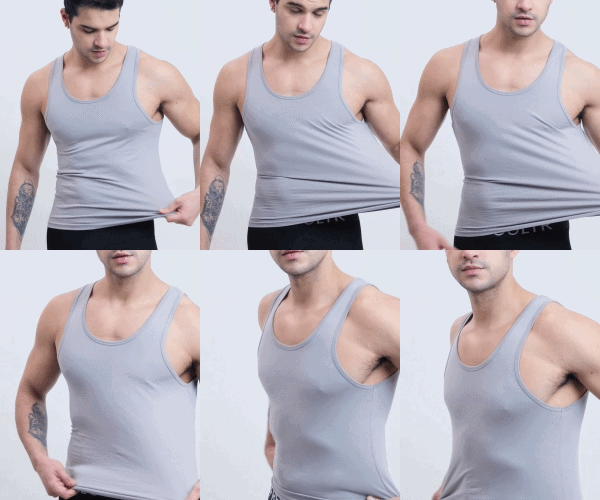
- Explore comfort vests in bamboo for a breathable base layer
FAQs
Which fabrics actually deliver superior comfort?
Superior comfort comes from natural, moisture-wicking fibers like micro-modal, bamboo, and organic cotton, all of which outperform synthetic blends on breathability and temperature regulation.
Which brands actually build around these fabrics?
Freecultr leads with sustainable, high-performance fabrics across its everyday essentials, while established players like Jockey offer broad accessibility and other D2C brands compete mainly on material innovation.
Why does fabric quality matter beyond comfort?
Fabric quality affects skin health directly, since low-quality material traps moisture and creates the exact conditions bacteria need to thrive, leading to irritation over repeated wear.
What do breathable textiles actually prevent?
Breathable textiles prevent overheating and moisture buildup by allowing air to circulate, which is especially important for maintaining comfort in humid climates.