









Quick Summary
- Gym trousers women wear regularly lose stretch and recovery faster than expected primarily due to washing habits, not fabric quality alone.
- Hot water and high heat drying both degrade the elastic fibers responsible for stretch, shortening how long trousers maintain their fit.
- Washing gym trousers inside out and avoiding fabric softener both help preserve the technical fabric's performance properties longer.
- Freecultr's women's joggers are built to reach their full stretch lifespan specifically when paired with proper washing and drying habits.
Why Stretch Fades Faster Than Most Women Expect
Gym trousers women rely on for genuine workout performance are built around stretch fibers, typically spandex or elastane blended into the base fabric, that allow the trousers to move with dynamic exercise. These stretch fibers are more sensitive to washing conditions than standard fabric, meaning a pair that felt perfectly stretchy when new can lose a meaningful amount of that stretch within just a few months if washed and dried in ways that degrade the elastic fibers faster than necessary.
Understanding what specifically causes this stretch loss helps extend the practical lifespan of gym trousers considerably, getting genuine value out of a purchase that's often priced higher than casual trousers specifically because of the performance fabric involved.
Why Hot Water Specifically Damages Stretch Fibers
Washing gym trousers in hot water accelerates the breakdown of elastane and spandex fibers considerably faster than cold or lukewarm water washing. Heat causes these stretch fibers to lose elasticity and recovery more quickly, meaning trousers that once snapped back to shape after stretching start feeling looser and less responsive over a shorter period than they would with proper cold water care.
This matters specifically for gym trousers more than it might for less stretch-dependent garments, since the entire performance value proposition of genuine 4-way stretch fabric depends on those elastic fibers maintaining their properties over repeated wear and washing.
Gym Trousers Women: Washing Habits That Preserve Stretch
| Habit | Why It Matters |
|---|---|
| Cold or lukewarm water | Preserves elastane and spandex fiber elasticity |
| Turn inside out before washing | Reduces surface friction and pilling on technical fabric |
| Avoid fabric softener | Softener residue can coat fibers and reduce moisture-wicking performance |
| Air dry or low heat | High heat accelerates elastic fiber breakdown, same as hot water |
Why Turning Trousers Inside Out Matters More for Technical Fabric
Technical, stretch-based fabric used in genuine workout trousers tends to be more susceptible to surface friction damage during washing than standard cotton or casual fabric blends. Turning gym trousers inside out before washing reduces direct contact between the outer fabric surface and other garments or the machine drum, meaningfully reducing pilling and surface wear over repeated wash cycles, which helps the fabric maintain both its appearance and its stretch performance longer.
Why Fabric Softener Actually Works Against Performance Fabric
Fabric softener is generally not recommended for technical, moisture-wicking fabric, since the softener coats fibers with a residue that can interfere with the fabric's ability to actively wick moisture away from skin during a workout. This is a meaningful distinction from how you might wash more casual clothing, where softener typically just affects general feel rather than undermining a specific performance property the garment is designed around.
Skipping fabric softener specifically for gym trousers helps preserve the moisture-wicking performance that's central to why genuine workout fabric outperforms casual alternatives during actual exercise.
Why High Heat Drying Undoes Careful Washing
Even switching to cold water washing doesn't fully protect stretch fibers if the trousers are then dried on high heat, since heat exposure during drying affects elastane and spandex just as much as heat during washing does.
Air drying, or using the lowest heat setting available, helps preserve both the stretch recovery and the moisture-wicking properties that define genuine workout-ready fabric, extending the practical performance lifespan considerably compared to routine high heat drying.
How Washing Habits Compound Over a Typical Workout Routine
Given that gym trousers used for regular exercise get washed frequently, often after every workout for hygiene reasons, the cumulative effect of hot water or high heat drying compounds faster than it would for less frequently washed clothing. This makes proper washing habits more consequential for gym trousers specifically than for many other wardrobe categories, since the wash frequency itself is higher to begin with.
Signs Your Gym Trousers Are Losing Stretch Due to Care, Not Age Alone
If gym trousers that are only a few months old already feel noticeably less stretchy or slower to recover shape after movement, it's worth reviewing your washing routine before assuming this is simply expected wear. Hot water washing, high heat drying, and fabric softener use are all common, easily corrected habits that can shorten stretch fiber lifespan considerably faster than proper cold water care and air drying would allow.
Where Freecultr's Joggers Are Built to Reward Proper Care
Freecultr's women's joggers use genuine 4-way stretch fabric designed to maintain its performance properties over an extended period, specifically when paired with appropriate washing habits, cold or lukewarm water, no fabric softener, and air drying or low heat settings. For women specifically looking for gym trousers built on fabric that rewards proper care with genuine stretch longevity, browse Freecultr's women's joggers built for comfortable, breathable movement to see this performance fabric directly.
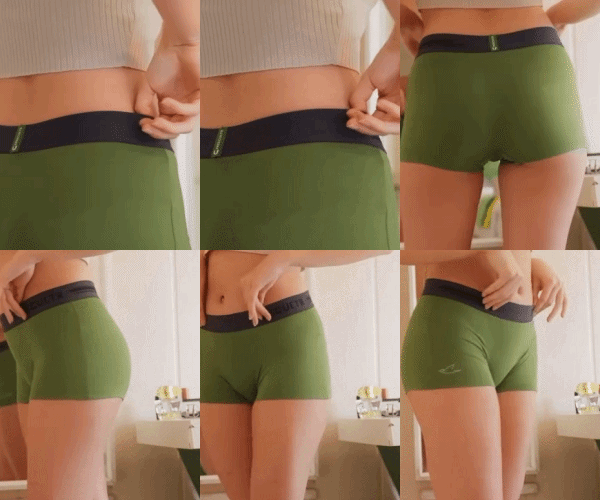
For active-day innerwear built on the same stretch-first philosophy, shop women's boxer briefs for supportive 4-way stretch comfort applies the same fabric priorities to your base layer choices.
Conclusion
The stretch and recovery properties that make gym trousers women rely on for genuine workout performance fade faster than most people expect, largely due to washing habits rather than fabric quality alone.
Hot water and high heat drying both degrade elastane and spandex fibers considerably, while fabric softener can interfere with moisture-wicking performance, all avoidable through cold water washing, air drying, and skipping softener specifically for technical fabric.
Freecultr's women's joggers are built to reach their full stretch lifespan when paired with exactly this kind of proper care routine.
More Articles
- Browse Freecultr's women's joggers built for comfortable, breathable movement
- Shop women's boxer briefs for supportive 4-way stretch comfort
- Shop breathable women's boy shorts with full coverage and no-show finish
- Discover soft hipster panties for women in micro-modal fabric
FAQs
Why do my gym trousers lose stretch so quickly?
This is often a washing issue rather than fabric quality alone, since hot water and high heat drying both accelerate the breakdown of elastane and spandex fibers responsible for stretch and recovery.
Should I use fabric softener on gym trousers?
It's better to avoid it, since fabric softener coats fibers with a residue that can interfere with moisture-wicking performance, which is a key property genuine workout fabric is designed around.
Does turning gym trousers inside out before washing actually help?
Yes, it reduces surface friction and pilling on technical fabric during the wash cycle, helping preserve both the appearance and stretch performance of the fabric over more wash cycles.
How should I dry gym trousers to preserve their stretch?
Air drying or using the lowest heat setting available helps preserve elastic fiber properties, since high heat drying degrades stretch fibers just as much as hot water washing does.