








Quick Summary
- Not all cotton is the same — organic cotton, combed cotton, and cotton-modal blends each feel and perform differently.
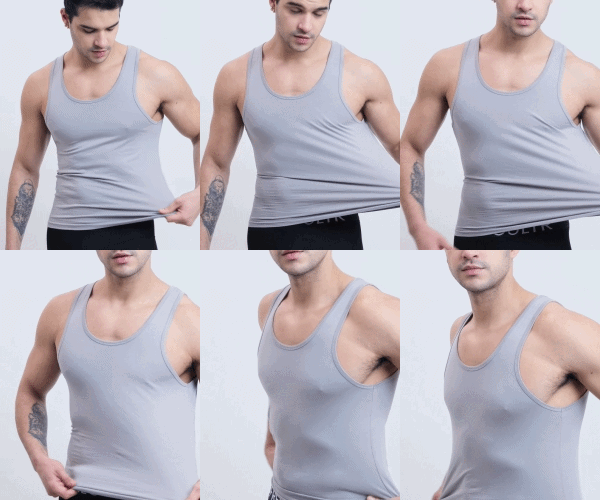
- A well-cut tank top should sit flat under clothing without rolling at the hem or bunching at the sides.
- Tank tops serve double duty as innerwear (under shirts) and outerwear (standalone tops) — but the ideal build for each use is different.
- For daily wear, a cotton-modal blend gives you the softness of synthetic fabric with the breathability of cotton.
What Makes a Cotton Tank Top Worth Buying
A cotton tank top is exactly what it sounds like: a sleeveless upper garment made from cotton fabric. What it doesn't tell you is that the quality difference between a ₹150 basic and a well-made ₹600 tank is noticeable within the first wear — and significant over the following six months.
Cotton tank tops range from stiff, heavy conventional cotton that becomes a crinkled mess after one wash, to ultra-soft combed or organic cotton that stays smooth, holds its shape, and gets softer with wear rather than harder.
The buying decision comes down to three things: fabric quality, fit, and use case.
The Cotton Spectrum: Which Type Is Actually Worth It
Not all cotton is equal. Here's what the labels mean and what they feel like in practice.
Conventional cotton — the cheapest option. Rough on the skin when new, softens slightly with washing, but tends to shrink and lose shape. Absorbs sweat well, but also holds it. Works for tasks and heavy outdoor use where you don't care about longevity.
Combed cotton — conventional cotton that's been mechanically combed to remove short, rough fibers before spinning. The result is a smoother, stronger yarn. Combed cotton tanks feel noticeably softer than standard cotton and pill less over time.
Organic cotton — grown without synthetic pesticides or fertilizers, and processed with gentler chemicals. Softer hand-feel than conventional cotton, better for sensitive skin, and more durable. The environmental case is real, but the comfort case is what most wearers notice first.
Cotton-modal blend — the best of both worlds. Modal (a cellulose fabric made from beech wood) adds softness, drape, and stretch to cotton's breathability and structure. A 50/50 or 60/40 cotton-modal blend outperforms pure cotton in almost every wear metric: softer, less shrinkage, better moisture recovery, and a natural stretch that pure cotton doesn't have.
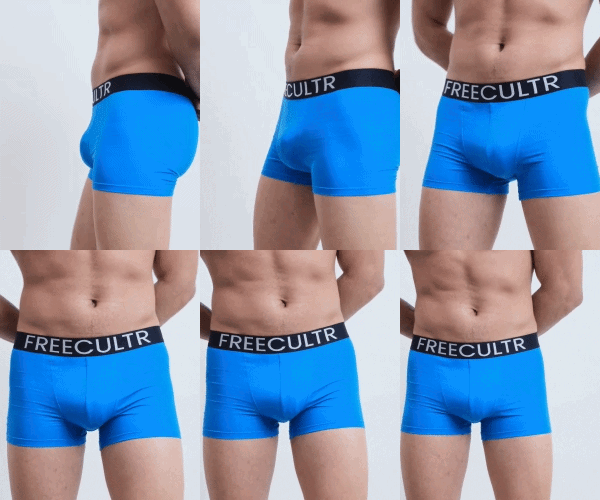
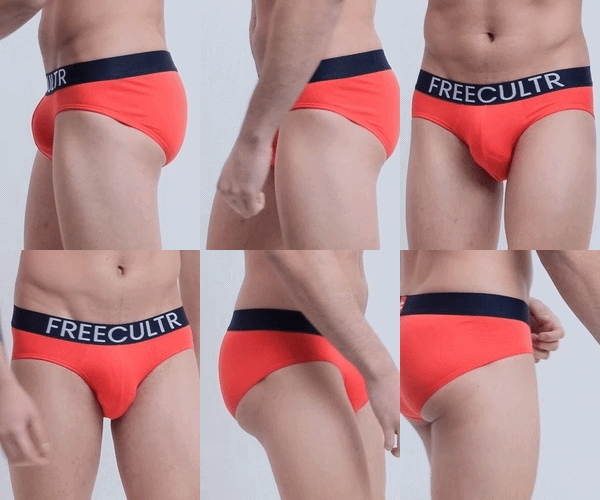
Freecultr's innerwear collection includes options across this spectrum — the cotton-modal and micro-modal styles being the standout daily wear options for both men and women.
Tank Tops as Innerwear: What You Need from an Undershirt
When a tank top is worn under a shirt, the requirements shift entirely. It's no longer about how it looks — it's about how it behaves under another layer of clothing.
The key requirements for an innerwear tank:
- Low neckline — a crew neck innerwear tank will show above the collar of most shirts. A scoop neck or deep V disappears underneath.
- Smooth, flat seams — raised side seams create visible lines or texture bumps under a fitted dress shirt.
- Stays tucked — a longer cut at the hem prevents the tank from creeping up and bunching at the waist, which creates a visible ridge under tucked shirts.
- Doesn't trap heat — the whole point of an innerwear layer is moisture management, not extra insulation. Breathable cotton or cotton-modal is correct; heavy jersey is not.
- Doesn't show through — in a mid-grey or white innerwear tank, a nude or skin-tone option disappears under most shirt colors better than white does.
Tank Tops as Standalone Tops: What Changes
Worn on their own — at home, the gym, on a walk, in summer — the priorities flip. Now it's about how the tank looks and feels, not how invisible it is.
For standalone use:
- Heavier fabric weight — a lightweight innerwear tank looks flimsy on its own. A heavier cotton or cotton-modal jersey has better structure and drape.
- Clean neckline shape — the neckline should sit consistently without drooping or stretching out after a few wears.
- Correct length — for men, a tank that hits at the hip looks proportional. Too short, and it rides up with every arm raise. For women, tank length is more about styling preference.
- Armhole fit — too wide, and the tank gapes at the side when you raise your arm. Too narrow, and it restricts shoulder movement.
Cotton Tank Tops and the Gym: Where They Work and Where They Don't
Cotton tanks are a gym staple — but they're better suited to some training styles than others.
Where cotton tanks work well:
- Yoga and low-intensity sessions where sweat output is moderate
- Outdoor training in dry conditions
- Gym environments with good air conditioning
Where cotton tanks underperform:
- High-intensity cardio, where sweat output is high and cotton becomes heavy and cold quickly
- Humid outdoor environments, where the fabric doesn't dry between sets
- Long sessions — cotton holds odor more readily than technical fabrics
For heavier training sessions, a cotton-modal blend or full micro-modal tank handles sweat more efficiently than pure cotton. The men's innerwear range at Freecultr covers both — useful when building a rotation that serves both gym days and casual days from the same drawer.
How to Tell Good Cotton From Bad in 30 Seconds
You don't need a fabric label to know whether a cotton tank is worth buying. Test it this way:
- Hold it up to light — if you can see your hand clearly through the fabric, it's too thin for standalone wear.
- Stretch it once — it should recover its shape immediately, not stay stretched.
- Rub it between your fingers — rough or scratchy texture won't soften meaningfully with washing.
- Check the hems — raw or loosely stitched hems unravel fast. Double-stitched or taped hems last.
- Look at the side seams — flat seams sit smooth; thick, raised seams create pressure and visibility under clothing.
If you're buying online, look for fabric weight listed in GSM (grams per square meter). A good daily-wear cotton tank for men runs 160–200 GSM. Below 140 GSM is typically innerwear-only territory.
Conclusion
Cotton tank tops earn their place in a wardrobe because they're simple, breathable, and versatile. But "cotton" is a broad term covering everything from scratchy bargain fabric to genuinely excellent combed or organic cotton that lasts for years.
The practical buy: a cotton-modal blend for daily innerwear use, a heavier combed or organic cotton for standalone wear, and a clear read on whether your tank is working under clothing or standing on its own. Those two use cases have different needs, and buying the wrong one for the wrong context is where most people end up disappointed.
Freecultr's innerwear range includes micro-modal and cotton-blend options across both men's and women's styles — a good starting point for building a tank rotation that actually works.
More Articles
- Browse the full men's innerwear range in micro-modal, bamboo & organic cotton
- Upgrade to pack-of-7 micro-modal briefs for men with zero-ride waistband
- Shop anti-bacterial men's briefs with moisture-wicking micro-modal
- Women's boxer briefs – where comfort meets style
FAQs
Q: Are cotton tank tops good for daily wear? A: Yes — especially combed or organic cotton, and cotton-modal blends. They're breathable, soft, and durable enough for everyday rotation. Avoid conventional cotton if skin comfort matters; it can feel rough and doesn't breathe as well as higher-quality options.
Q: What's the difference between a cotton tank used as innerwear vs. a regular vest? A: An innerwear tank is cut for invisibility — lower neckline, flat seams, lighter fabric weight. A standalone tank is cut for appearance and structure — heavier fabric, defined neckline, better drape. Using an innerwear tank as a standalone top often looks underweight for the occasion.
Q: Do cotton tank tops shrink after washing? A: Conventional cotton can shrink 3–5% in the first hot wash. Combed cotton and organic cotton shrink less. Cotton-modal blends are the most dimensionally stable — the modal component resists shrinkage. Always check the care label and wash in cold water for the first few washes.
Q: Are cotton tanks good for the gym? A: For light training, yes. For intense cardio or high-sweat sessions, a cotton-modal blend or micro-modal tank handles moisture better — it wicks rather than absorbs, so you don't end up with heavy wet fabric clinging to your skin mid-session.
Q: How many tank tops should I own for a daily rotation? A: For 5-day office or casual wear with a weekly wash, 7 tanks keeps you covered without re-wearing. For gym use on top of daily wear, add 3–4 dedicated gym tanks to your rotation to avoid over-washing your everyday pairs.