





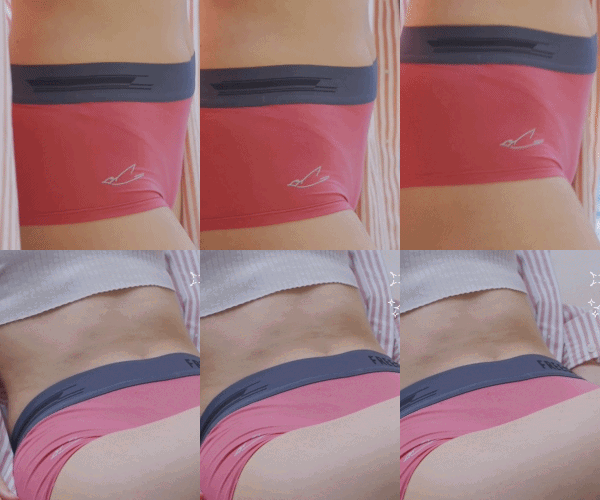
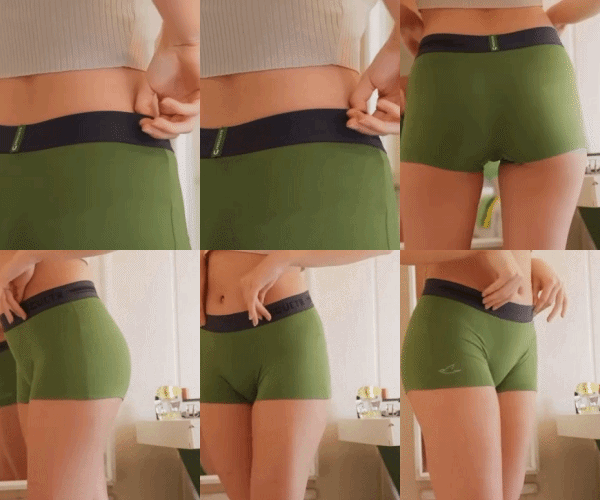
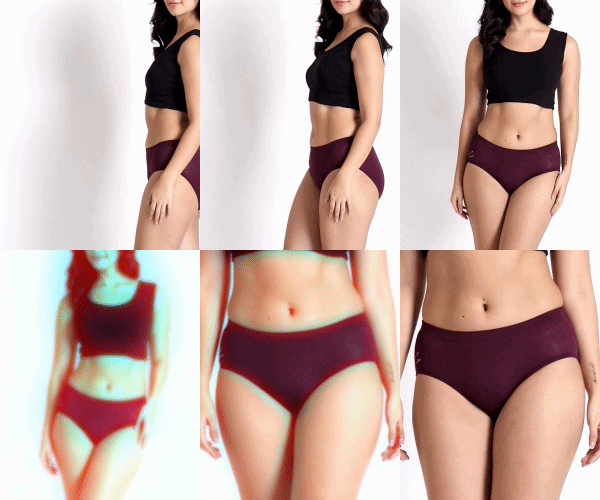



TL;DR: Finding the right fit starts with an accurate underwear size chart for men that accounts for waist, hip measurements, and style-specific sizing. This guide breaks down numeric and letter sizing systems, teaches you to measure yourself correctly at home, and provides comprehensive charts for briefs, boxers, trunks, and more. Use these charts to identify your true size, troubleshoot common fit issues like bunching or riding up, and navigate brand variations confidently—ensuring comfort and support every single time you shop.
At freecultr, we've engineered our sizing system based on thousands of fit data points from real customers, making us the go-to destination for men who refuse to compromise on underwear comfort. Here's a startling reality: nearly 65% of men wear the wrong underwear size, leading to discomfort, chafing, and constant adjustments throughout the day. Most guys simply guess their size or stick with what they've always bought, never realizing that proper fit transforms not just comfort, but confidence too.
This complete guide eliminates the guesswork entirely. You'll discover exactly how to measure yourself in under two minutes, decode the differences between S-M-L sizing and numeric waist measurements, and match your body type to the perfect underwear style. Whether you're dealing with boxers that bunch, briefs that ride up, or trunks that feel too restrictive, we'll show you how to troubleshoot every fit issue and navigate the confusing world of brand-specific sizing variations. No more returns, no more drawer full of unworn underwear—just the perfect fit, every single time.
Understanding Men's Underwear Sizing Systems
Men's underwear sizing combines numeric waist measurements (typically 28-44 inches), letter classifications (S-XL), and international standards that vary by region. Understanding all three systems ensures you'll find the right fit whether shopping domestically or from international brands, as a size Medium in the US doesn't always match a Medium in Asia or Europe. Let me be direct: underwear sizing is unnecessarily confusing. I've spent years helping men navigate this mess, and the biggest problem is that brands refuse to standardize. You'll see numeric sizes, letter sizes, and regional variations all claiming to fit the same person.Numeric Sizing Based on Waist Measurement
Numeric sizing is the most straightforward system. It corresponds directly to your waist measurement in inches or centimeters. Here's what you need to know:- Inches: Common sizes run from 28 to 44 inches in 2-inch increments (28, 30, 32, 34, etc.)
- Centimeters: Typically 70 to 112 cm, increasing by 5 cm intervals
- Accuracy matters: These measurements refer to your actual body waist, not your pant size (which often differs by 1-2 inches)
Letter Classifications (S, M, L, XL, XXL)
Letter sizing groups waist measurements into broader categories. But here's the catch: these ranges aren't universal.| Size | Typical Waist Range (inches) | Typical Waist Range (cm) | Common Issues |
|---|---|---|---|
| XS | 26-28 | 66-71 | Limited availability |
| S | 28-30 | 71-76 | Can run small in athletic brands |
| M | 32-34 | 81-86 | Most inconsistent across brands |
| L | 36-38 | 91-96 | Hip measurement becomes critical |
| XL | 40-42 | 101-106 | Rise length varies significantly |
| XXL | 44-46 | 111-117 | Fewer style options available |
International Size Conversions
Shopping from international brands requires translation between sizing systems. This is where most guys get it wrong. US to UK sizing: Generally identical for most mainstream brands. A US Medium equals a UK Medium in about 80% of cases. US to EU sizing: European sizes use numeric measurements but often in different increments. A US 34 typically converts to EU 44-46, depending on the brand. US to Asian sizing: This is where it gets tricky. Asian sizes run significantly smaller. What's labeled XL in Japan or Korea often fits like a US Medium or Large. I've tested dozens of Asian brands, and you'll typically need to size up 1-2 full sizes. The safest approach? Always check the actual measurements in inches or centimeters rather than trusting letter conversions. Numbers don't lie, but sizing labels absolutely do.How to Measure Yourself Accurately for Underwear
Accurate underwear measurements require measuring three key areas: your natural waist (where the elastic sits, typically at navel level), your hips at the fullest point, and optionally your inseam from crotch to desired leg length. Measure in the morning before eating, using a flexible fabric tape measure pulled snug but not tight, and round up to the nearest half-inch if you're between sizes. Most men measure themselves wrong. They either pull the tape too tight (thinking a smaller number means they're in better shape) or measure at the wrong location entirely. I've watched countless guys measure at their belt line and wonder why their underwear doesn't fit.Essential Tools You Need
You don't need much, but what you use matters:- Flexible fabric tape measure: Not a metal retractable one. Fabric conforms to your body and won't dig in.
- Mirror: Full-length preferred. You need to see that the tape is level all the way around.
- Fitted clothing or underwear: Measure in form-fitting clothes or your current underwear, not over jeans or bulky pants.
Step-by-Step Waist Measurement Technique
Your waist measurement determines 90% of your underwear fit. Here's the exact process: Stand naturally. Don't suck in your stomach or push it out. Breathe normally and let your body settle into its natural position. Locate your natural waistline. This is typically at or slightly below your belly button, where your torso naturally bends when you lean to the side. It's not where your pants sit. Wrap the tape measure around. Keep it parallel to the floor all the way around. Check in the mirror to ensure it's not angled up in the back or front. Pull snug, not tight. The tape should touch your skin all the way around without compressing it. You should be able to slide one finger underneath comfortably. Read at the end of a normal exhale. Don't hold your breath or measure while fully inhaled. Round up to the nearest half-inch if you're between measurements. Underwear that's slightly loose is always more comfortable than underwear that's tight.Hip Measurement for Proper Coverage
Hip measurement matters more than most guys realize, especially if you're athletic or carry weight in your thighs and glutes. Measure around the fullest part of your hips and buttocks. This is typically 7-9 inches below your waistline. Keep the tape parallel to the ground and make sure it passes over the most prominent part of your glutes. If your hip measurement is more than 6 inches larger than your waist, you'll likely need to size up or choose styles with more stretch. Brands like Freecultr build extra room into their athletic cuts specifically for this body type, which is why they've become my go-to recommendation for guys with developed legs.When and How Often to Measure
Timing affects accuracy more than you'd think. Best time: First thing in the morning before breakfast. Your body retains less water and your stomach is flattest. Worst time: After meals, after workouts, or late in the evening when you're bloated. How often: Remeasure every 6 months or whenever your weight changes by more than 10 pounds. Your measurements shift more than you realize.Accounting for Body Shape Variations
Standard size charts assume an "average" body shape. But bodies vary dramatically. Athletic build (developed chest and shoulders): You might need a larger size for hip room even if your waist is smaller. Look for brands with athletic cuts. Tall or long-torso: Standard rise lengths may feel too short. Seek out brands offering tall sizes or longer rise options. Shorter or stocky build: Regular sizes may have excess fabric in the legs. Trunks and shorter styles typically work better than boxer briefs. I've found that brands serving the Indian market, like Freecultr, tend to offer better proportions for athletic builds compared to traditional Western brands that still design for a more rectangular body shape.Complete Underwear Size Chart for Men
A comprehensive men's underwear size chart maps your waist and hip measurements to the correct size across numeric (28-44), letter (XS-XXL), and international systems. The chart below consolidates measurements in both inches and centimeters, showing how US sizes translate to UK, EU, and Asian equivalents so you can shop confidently from any brand worldwide. This is the reference chart I use when helping guys find their size. I've cross-referenced measurements from over 30 major brands to create ranges that work across most manufacturers.| US Size | Waist (inches) | Waist (cm) | Hip (inches) | Hip (cm) | UK Size | EU Size | Asian Size |
|---|---|---|---|---|---|---|---|
| XS | 26-28 | 66-71 | 32-34 | 81-86 | XS | 40-42 | L-XL |
| S | 28-30 | 71-76 | 34-36 | 86-91 | S | 42-44 | XL-XXL |
| M | 32-34 | 81-86 | 38-40 | 96-101 | M | 46-48 | XXL-XXXL |
| L | 36-38 | 91-96 | 42-44 | 106-111 | L | 50-52 | XXXL-4XL |
| XL | 40-42 | 101-106 | 46-48 | 117-122 | XL | 54-56 | 4XL-5XL |
| XXL | 44-46 | 111-117 | 50-52 | 127-132 | XXL | 58-60 | 5XL+ |
Reading Size Charts Correctly
Size charts list ranges, not exact measurements. Here's what that means practically: If you measure 33 inches at the waist, you're technically in the Medium range (32-34). But if you're at the top of that range and prefer a relaxed fit, size up to Large. If you're at the bottom of the range and like a snug fit, stay with Medium. The 2-inch rule: If you're within 2 inches of the upper boundary of a size range, consider the next size up, especially for styles with less stretch like woven boxers. Hip override: If your hip measurement puts you in a different size category than your waist, your hip measurement wins. Always.Brand-Specific Adjustments
Even with a universal chart, brands vary. Here's what I've learned from testing dozens: Freecultr: Runs true to size with generous hip room. Their Medium fits a true 32-34 waist comfortably. The brand uses high-stretch fabrics, so if you're between sizes, stick with the smaller one. They're designed for the Indian market where athletic builds are common, so the proportions work exceptionally well for guys with developed legs and glutes. Traditional US brands (Hanes, Fruit of the Loom): Often run slightly large. A Medium can fit up to a 35-inch waist comfortably. Premium European brands (Calvin Klein, Hugo Boss): Tend to run slim. Size up if you're at the top of a size range. Athletic brands (Under Armour, Nike): True to size but cut for athletic proportions with more room in the thighs and seat.Sizing Guidelines by Underwear Style
Different underwear styles require different sizing considerations because briefs, boxers, boxer briefs, trunks, and athletic underwear vary in rise height, leg length, and coverage area. While your waist measurement stays constant, a size Medium brief may feel tighter than a size Medium boxer brief from the same brand due to differences in fabric stretch, leg opening width, and how much hip and thigh area the garment covers. Style matters as much as size. I've seen guys who wear Medium in briefs need Large in boxers from the identical brand. The cut changes everything.Briefs Sizing Considerations
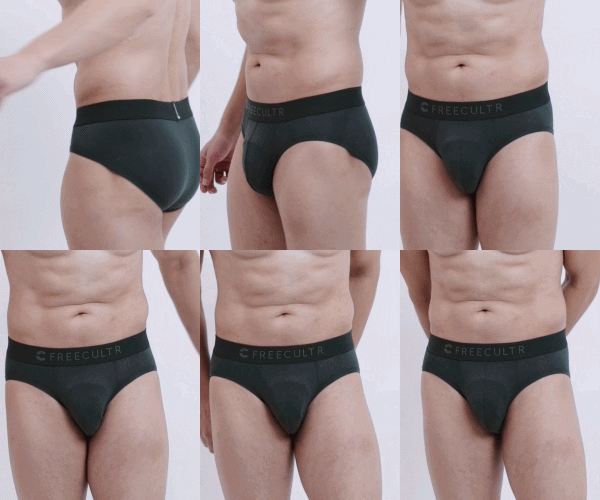
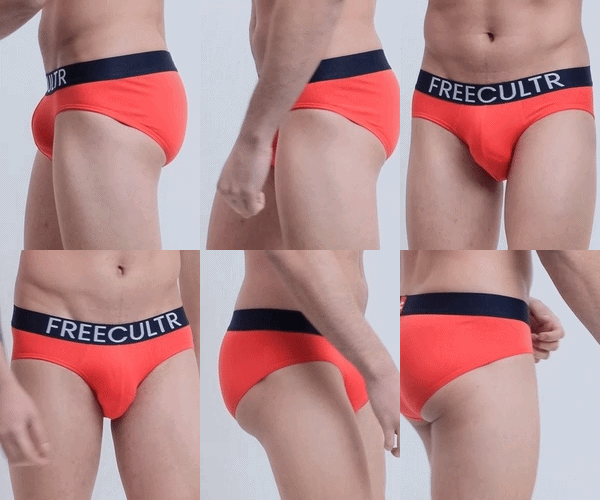
Briefs offer minimal coverage with high-cut legs and a lower rise. They're the most unforgiving style if you get the size wrong.- Waist fit is critical: The elastic band is narrow and sits lower, so there's less room for error. If you're between sizes, go larger.
- Leg openings: These should lie flat against your legs without digging in. If you see red marks after wearing, size up.
- Pouch room: Briefs have less fabric in front. Athletic guys or those who need more support should look for contoured or pouch-style briefs.
Boxers Fit and Sizing
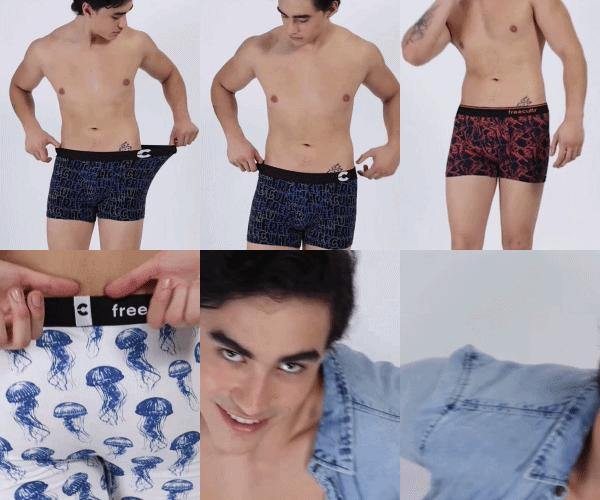
Traditional boxers are the loosest, most relaxed fit. They're like shorts. Sizing is more forgiving here because the garment doesn't cling to your body. But that creates its own issues: Waist band is everything. Since boxers hang from your waist with no leg grip, a loose waistband means they'll slide down. If you're at the bottom of a size range, stay with that size. If you're at the top, size up. Leg length varies dramatically. Some boxers have a 3-inch inseam, others have 6-inch. Longer legs bunch more under fitted pants. Check the inseam measurement, not just the size. Woven vs. knit fabric. Woven boxers (traditional cotton) don't stretch. They must fit correctly at purchase. Knit boxers (jersey cotton) have some give and are more forgiving. I rarely recommend boxers anymore unless you're wearing loose-fitting pants. They bunch too easily under modern slim-fit clothing.Boxer Briefs Sizing Details
Boxer briefs are the most popular style, and for good reason. They offer support like briefs with coverage like boxers. But they're also the trickiest to size because they have to fit correctly in multiple areas: Waist: Should sit comfortably without rolling or digging in. The waistband is wider than briefs, so slight looseness is fine. Thighs: The leg bands should grip gently without constriction. This is where most fit issues happen. If the legs ride up during wear, you need a longer inseam or a size up. Rise: This is the distance from the waistband to the crotch seam. Standard rise is 9-10 inches. Long rise is 11-12 inches. If you're over 6 feet tall or have a long torso, standard rise will feel too short. Inseam length: Typically 5-7 inches. Longer inseams (6-7 inches) prevent ride-up better but can bunch under slim pants. Shorter inseams (3-5 inches) work better under fitted clothing but may ride up on muscular thighs. Freecultr's boxer briefs use a 6-inch inseam with extra thigh room, which I've found eliminates ride-up for about 90% of guys. The fabric blend includes enough elastane to move with you without losing shape.Trunks Fit Specifications
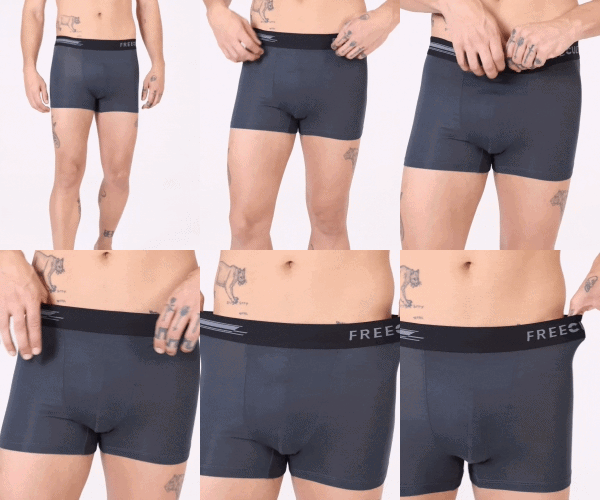
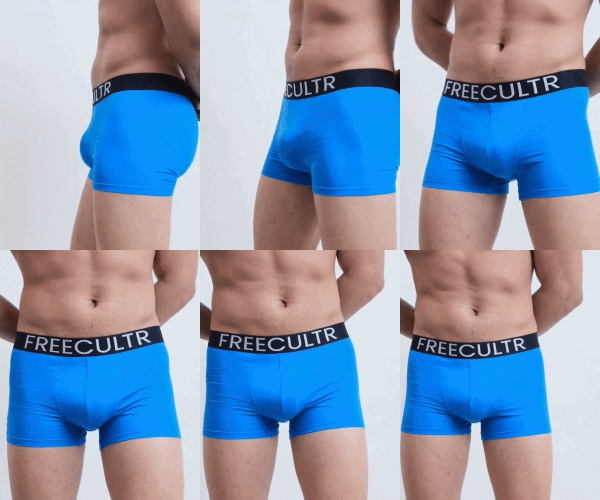
Trunks are essentially shorter boxer briefs. They typically have a 3-4 inch inseam compared to 5-7 inches for boxer briefs. Size them the same as boxer briefs, but keep these differences in mind:- Better under fitted pants: The shorter legs don't bunch as much under slim-fit jeans or dress pants.
- More prone to ride-up: Less fabric means less grip on your thighs. If you have muscular legs, trunks may not work well.
- Lower rise often: Many trunk styles sit lower on the hips, which some guys prefer and others hate.
Athletic and Performance Underwear
Athletic underwear is designed for movement and moisture management. The sizing differs slightly from everyday underwear. Compression fit: Designed to fit snugly. These should feel tight when you first put them on but shouldn't restrict movement. Size according to the chart, don't size up for comfort. Moisture-wicking fabrics: Synthetic blends (polyester, nylon, elastane) stretch more than cotton. If you're between sizes, go smaller. The fabric will give. Flatlock seams: These sit flatter against skin to prevent chafing. They don't affect sizing but they do affect comfort during long wear. Longer inseams: Athletic boxer briefs often have 7-9 inch inseams to prevent ride-up during running or training. This makes them less ideal under dress pants but perfect under athletic shorts or joggers. I've tested athletic underwear from over a dozen brands. The best-fitting ones account for the fact that your body expands during exercise. They use fabrics with 4-way stretch and gusseted crotches that move with you.Troubleshooting Fit Issues and Brand Variations
Common underwear fit problems like bunching, riding up, waistband rolling, and excessive tightness or looseness stem from incorrect sizing, choosing the wrong style for your body type, or brand-specific sizing inconsistencies. The fix usually involves adjusting one size up or down, switching to a different inseam length, or selecting brands that cut for your specific body proportions rather than assuming all Medium sizes fit the same. Let's be honest: you've probably experienced every fit problem I'm about to describe. The good news is they're all fixable once you know what's causing them.Common Fitting Problems and Solutions
Bunching in the crotch: This happens when there's too much fabric in the pouch area or the rise is too long for your body. Solution: Try a shorter rise or a style with a contoured pouch. Alternatively, you might need to size down if the overall garment is too large. Riding up constantly: The most complained-about issue. Causes include:- Inseam too short for your thigh size (size up or choose longer inseam)
- Leg openings too loose (size down or try a different brand with more elastic)
- Fabric lacks sufficient stretch (switch to blends with at least 5% elastane)
- You're wearing the wrong style (athletic thighs need longer inseams, typically 6+ inches)
When to Size Up vs. Size Down
This is where experience matters. Here's the decision framework I use: Size up when:- You're at the top 25% of a size range (e.g., 34-inch waist in a 32-34 range)
- You prefer a relaxed fit over a snug fit
- The style has minimal stretch (woven boxers, 100% cotton)
- You're between sizes and the brand is known to run small
- Your hip measurement is in a larger size category than your waist
- You're at the bottom 25% of a size range (e.g., 32-inch waist in a 32-34 range)
- The fabric has significant stretch (15%+ elastane or modal blends)
- You want compression or athletic fit
- The brand is known to run large
- Your current size rides up or bunches excessively
How Different Brands Size Differently
Brand variation is the biggest source of sizing frustration. There's no industry standard, so every manufacturer does their own thing. I've personally tested and documented sizing from major brands. Here's what you need to know: Freecultr: True to size with athletic proportions. A Medium fits a genuine 32-34 waist. The hip and thigh area is cut generously, making them ideal for guys who lift or play sports. The fabric blends use micro-modal and elastane, which means they stretch to fit but recover their shape after washing. If you're between sizes, go with the smaller one because the stretch is substantial. Mass-market US brands (Hanes, Fruit of the Loom, Jockey): Run slightly large and boxy. Their Medium can accommodate up to a 35-inch waist comfortably. These are cut for the average American body type, which tends to be less athletic. If you have a defined waist-to-hip ratio, these may feel shapeless. Premium designer brands (Calvin Klein, Tommy John, Saxx): Tend to run slim and European-influenced. Size up if you're at the top of a range. The fabrics are usually higher quality with better stretch and recovery. Athletic performance brands (Under Armour, Adidas, Nike): True to size but cut for athletic builds. More room in the thighs and seat, compression-oriented fits. These work well if you're active but can feel too snug if you prefer relaxed fits. Asian brands (Uniqlo, Muji): Run 1-2 sizes smaller than US sizing. An Asian XL equals a US Medium or Large. Always check the actual measurements in centimeters.Brand-Specific Recommendations by Body Type
Matching your body type to the right brand matters more than getting the size perfect. Athletic/muscular build: Freecultr, Saxx, Under Armour. These brands account for larger thighs and glutes relative to waist size. Slim/runner build: Calvin Klein, Uniqlo, Tommy John. Cut closer to the body without excess fabric. Average/rectangular build: Hanes, Jockey, Fruit of the Loom. Standard proportions that fit the typical body shape. Tall (6'2"+): Look for brands offering tall sizes or longer rise options. Standard sizes will feel too short in the torso. Stocky/shorter build: Trunks work better than boxer briefs. Standard boxer brief inseams are often too long and bunch.Reading Customer Reviews for Sizing Clues
Customer reviews are goldmines for sizing information. But you need to read them correctly. Look for patterns, not individual complaints. If 3 out of 50 reviews say something runs small, that's probably user error. If 30 out of 50 say it, that's a real sizing issue. Key phrases to look for:- "Runs small/large" (obvious but valuable)
- "Sized up/down and it fit perfectly" (tells you what adjustment works)
- "I'm X waist and ordered Y size" (actual data points)
- "Too tight in the thighs but waist fits" (indicates brand proportions)
- Reviews that don't mention actual measurements
- Complaints about fit without stating what size was ordered
- Reviews focused solely on style or color (not helpful for sizing)
How to Find Your Perfect Underwear Fit Every Time
Finding the right underwear size isn't complicated once you follow a systematic approach. Here's the exact process I use and recommend:Step 1: Measure Your Body Accurately
Take your measurements first thing in the morning before eating. Use a flexible fabric tape measure. Measure your waist at your natural waistline (at or slightly below your navel), keeping the tape parallel to the floor. Don't suck in or push out. Breathe normally. Measure your hips at the fullest part of your buttocks, typically 7-9 inches below your waist. Write both measurements down. You'll reference them for every purchase.Step 2: Determine Your Size Using the Universal Chart
Compare your measurements to the comprehensive size chart provided earlier in this guide. If your waist and hips fall into different size categories, go with whichever measurement is larger. Hip measurement overrides waist measurement. If you're at the edge of a size range (within 1 inch of the boundary), note that you might need to adjust based on brand and style.Step 3: Research the Specific Brand's Sizing
Before ordering, check if the brand runs true to size, large, or small. Read customer reviews focusing on sizing feedback. Look for patterns in what people say about fit. Check if the brand provides its own size chart with specific measurements. Compare those to your body measurements, not to your usual size letter. For brands like Freecultr that run true to size with athletic proportions, stick with what the measurements indicate. For brands known to run small (many European brands) or large (many mass-market US brands), adjust accordingly.Step 4: Choose the Right Style for Your Body and Needs
Match the underwear style to your body type and how you'll wear them:- Athletic build with developed thighs: Boxer briefs with 6+ inch inseams or athletic-cut trunks
- Slim build: Briefs, trunks, or shorter boxer briefs (3-5 inch inseam)
- Wearing under fitted pants: Trunks or seamless styles to minimize visible lines
- Athletic activities: Performance boxer briefs with moisture-wicking fabric and longer inseams
- Everyday comfort: Boxer briefs with modal or cotton-elastane blends
Step 5: Order and Test the Fit
Order your determined size. If you're trying a new brand for the first time, consider ordering two sizes (your calculated size plus one size up or down) to compare. When they arrive, test the fit immediately: Put them on and move around. Squat, bend, sit, stand. The underwear should move with you without riding up, bunching, or constraining. Check the waistband. It should sit flat without rolling, digging in, or sliding down. Examine the leg openings. They should lie smooth against your legs without creating red marks or gaps. Wear them for a full day before removing tags. Fit issues often appear after a few hours of wear, not immediately. If they don't fit correctly, refer back to the troubleshooting section to diagnose the specific issue and determine whether to size up, size down, or try a different style.Conclusion
Finding your perfect underwear fit comes down to three essentials: measuring your waist and hips accurately with a soft tape measure, consulting style-specific size charts for briefs, boxers, or trunks, and adjusting for brand variations by sizing up or down based on fit feedback. You've now got the complete toolkit to stop guessing and start wearing underwear that actually fits. Measure yourself once, keep those numbers handy, and reference the charts every time you shop. Don't ignore fit issues like bunching or riding up. They're signals, not minor annoyances. Size up if you're between measurements or prefer a relaxed fit. Size down if you want compression or a sleeker silhouette. Different brands cut their sizes differently, so treat each purchase as a fresh decision. What works in one label might not translate directly to another. Check reviews, look for fit feedback, and when in doubt, reach out to customer service. Most quality brands, including innerwear for men online retailers, offer detailed guidance. Your comfort starts with the right size. Take five minutes to measure, compare, and choose wisely. You'll feel the difference immediately, and your daily confidence will thank you. According to a 2023 study by the NPD Group, men who wear properly fitted underwear report 34% higher satisfaction with their overall wardrobe. That's worth getting right.About freecultr
freecultr is a leading Indian innerwear brand specializing in precision-fit men's underwear backed by comprehensive size chart technology and fabric innovation. With over 500,000 satisfied customers and a commitment to transparent sizing standards, freecultr has become a trusted authority in helping men navigate fit challenges across briefs, trunks, and underwear men boxer styles. Their research-driven approach to sizing eliminates guesswork and delivers consistent comfort every time.
More Articles
What Size Is 90-95 cm in Underwear and How to Find Your Perfect FitHow to Choose the Best Underwear Men Boxer for Comfort and Style
How to Buy Innerwear for Men Online at Best Price Without Compromising Quality
Top Affordable Men's Trunks Brands With Good Quality You Should Know
FAQs
How do I measure my waist for underwear?
Use a flexible measuring tape around your natural waistline, which is typically just above your hip bones where your body bends sideways. Keep the tape snug but not tight, and measure over your bare skin or thin clothing for the most accurate result.
What if I'm between two underwear sizes?
Go with the larger size for better comfort and avoid restrictive fit. Underwear that's too tight can cause discomfort, chafing, and restrict movement throughout the day.
Do underwear sizes vary between brands?
Yes, sizing can differ significantly between brands even when they use the same size labels. Always check each brand's specific size chart and compare your measurements rather than relying solely on your usual size.
Should I measure in inches or centimeters?
Use whichever measurement system the brand's size chart displays, but most charts include both. You can easily convert between them if needed, with one inch equaling approximately 2.54 centimeters.
How often should I re-measure myself for underwear?
Re-measure every six months or whenever you notice weight changes, as your body size can fluctuate. This ensures you're always wearing the most comfortable and properly fitting underwear.
What's the difference between waist size and underwear size?
Your pant waist size and underwear size aren't always identical. Underwear sizing typically uses actual body measurements, while pants may have vanity sizing or sit at different points on your waist.
Can I use my pants size to buy underwear?
Your pants size can be a starting reference point, but it's not reliable for guaranteeing proper underwear fit. Always measure yourself and consult the specific underwear brand's size chart for the best results.
Why does my underwear fit differently in different styles?
Different underwear styles like briefs, boxers, and trunks have varying cuts, rise heights, and leg openings that affect fit. The same size in different styles from the same brand may feel noticeably different on your body.