












Quick Summary
- Breathable underwear relies on fiber structure and weave, not just the marketing label, to allow air circulation and moisture evaporation.
- Micro-modal and bamboo fibers are naturally more breathable than standard cotton due to their finer, more porous structure.
- Tight, dense weaves reduce breathability even in naturally breathable fibers, so weave matters as much as fiber type.
- Genuinely breathable underwear reduces heat buildup, which is what actually prevents the irritation and odor associated with poor airflow.
What "Breathable Underwear" Actually Means
Breathable underwear refers to fabric that allows air to circulate and moisture to evaporate away from the skin, and this depends on both the fiber type and how tightly that fiber is woven.
"Breathable" gets used loosely in marketing, but the actual mechanism is specific. Fiber structure determines how much air can pass through the fabric at a microscopic level, and weave density determines how much of that potential airflow is actually preserved in the finished garment. A naturally breathable fiber woven too tightly won't perform as well as its fiber type suggests.
Which Fibers Are Naturally Breathable
Micro-modal and bamboo fibers have a finer, more porous structure than standard cotton, which allows for better airflow and faster moisture evaporation.
Cotton fibers are relatively thick and less uniform, which limits how efficiently they wick moisture away from the skin. Micro-modal fibers are engineered to be thinner and more consistent, creating more surface area for moisture absorption and faster evaporation. Bamboo fiber has a similarly fine structure, with the added benefit of a naturally porous cross-section that enhances airflow further.
| Fiber Type | Fiber Structure | Airflow Potential |
|---|---|---|
| Standard Cotton | Thick, less uniform | Moderate |
| Micro-Modal | Fine, uniform | High |
| Bamboo | Fine, naturally porous | Very High |
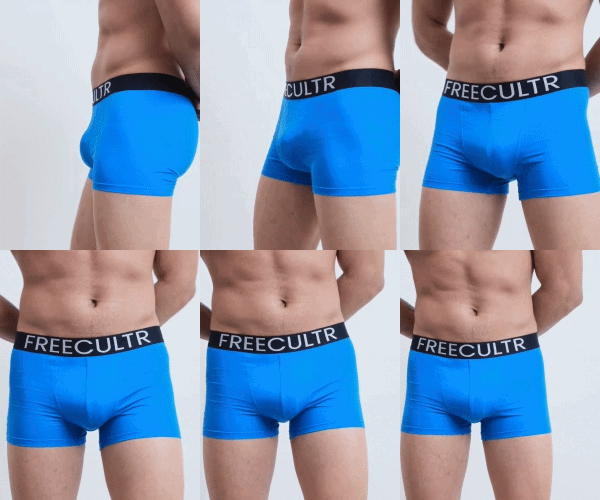
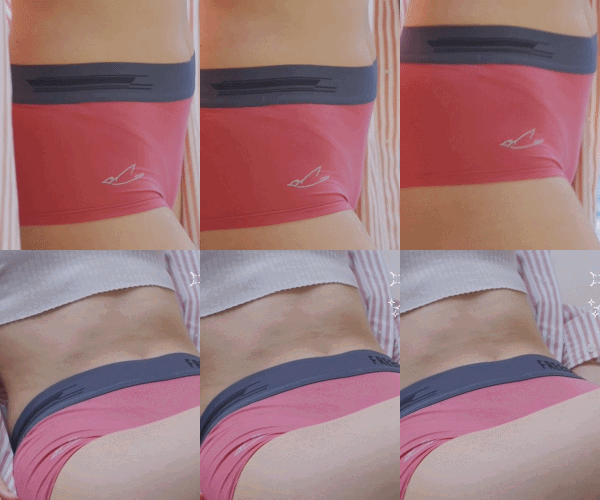
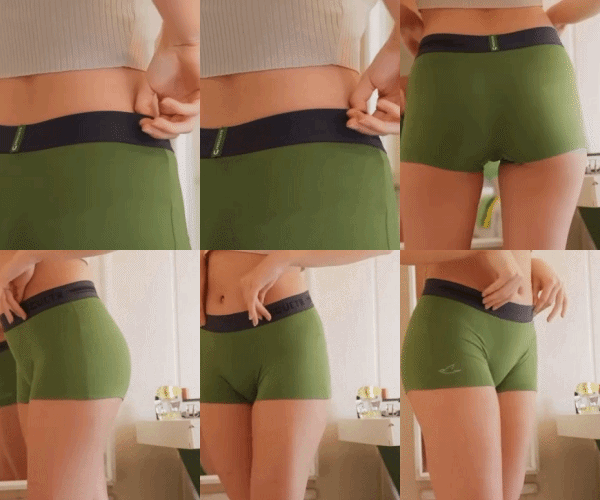
Experience superior airflow and natural cooling comfort with innerwear crafted from breathable micro-modal and bamboo fibers.
Why Weave Density Matters as Much as Fiber Type
Even a naturally breathable fiber loses much of its airflow benefit if it's woven too tightly, since a dense weave restricts the air passage the fiber structure would otherwise allow.
This is why two products using the same fiber, say micro-modal, can perform differently depending on how the brand constructs the finished fabric. A looser, well-engineered weave preserves more of the fiber's natural breathability, while a denser weave, sometimes used to increase perceived durability, can reduce airflow more than expected.
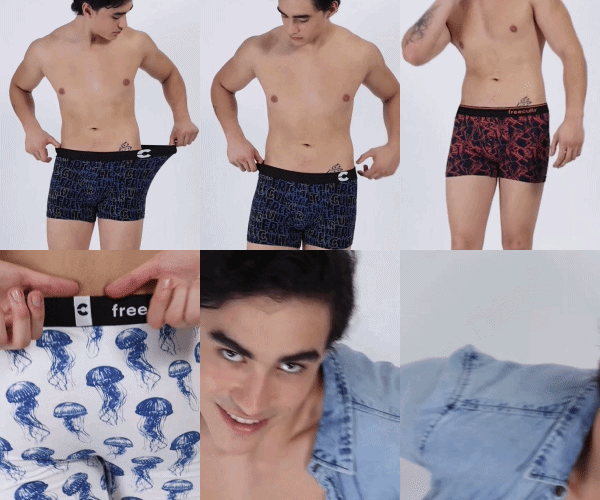
Browse the full men's innerwear range in micro-modal, bamboo & organic cotton to see fabric-specific details across Freecultr's breathable underwear range.
What Genuinely Breathable Underwear Prevents
Proper airflow reduces heat buildup and moisture retention, which are the two main causes of skin irritation and odor in underwear.
When air can't circulate, sweat stays trapped against the skin, creating a warm, damp environment where bacteria multiply faster and friction increases. Genuinely breathable fabric interrupts this cycle by letting moisture evaporate before it builds up, which is the real mechanism behind reduced irritation and odor, not just a fabric feeling "cool to the touch."
How to Identify Genuinely Breathable Underwear
Check the specific fiber composition and look for terms like micro-modal, bamboo, or a specified stretch and moisture-wicking spec, rather than relying on the word "breathable" alone.
If a product page just says "breathable" without specifying the fabric composition, that's a marketing claim without the underlying detail to verify it. Reputable brands list fiber percentages and often specify moisture-wicking performance directly, which gives you something concrete to compare across products.
Shop anti-bacterial men's briefs with moisture-wicking micro-modal for underwear with fiber composition and moisture-wicking specs listed directly on the product.
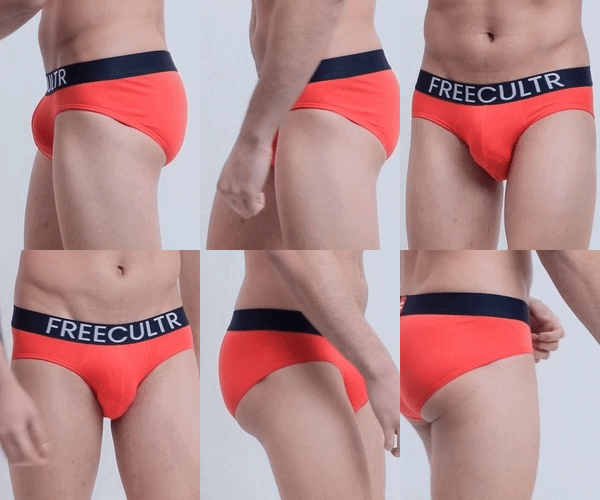
Upgrade your daily rotation with moisture-wicking micro-modal briefs designed for active anti-bacterial protection and all-day freshness.
Conclusion
Breathable underwear isn't defined by a marketing label. It comes down to fiber structure and weave density working together to allow airflow and moisture evaporation. Micro-modal and bamboo fibers offer a genuine structural advantage over standard cotton, and checking the specific fabric composition on a product listing is the most reliable way to confirm that advantage before buying.
More Articles
- Shop men's all-day boxer shorts with anti-odor breathable fabric
- Upgrade to pack-of-7 micro-modal briefs for men with zero-ride waistband
- Discover soft hipster panties for women in micro-modal fabric
FAQs
What actually makes underwear breathable?
Breathability depends on fiber structure and weave density together. Fine, porous fibers like micro-modal and bamboo allow more airflow than thicker fibers like standard cotton, but a dense weave can still limit that airflow.
Is bamboo more breathable than micro-modal?
Bamboo has a naturally porous fiber structure that gives it slightly higher airflow potential than micro-modal, though both significantly outperform standard cotton.
Does weave matter more than fiber type for breathability?
Both matter together. A naturally breathable fiber woven too tightly won't deliver its full airflow potential, so weave density is just as important as fiber choice.
How can I tell if underwear is genuinely breathable?
Check the specific fiber composition listed on the product, such as micro-modal or bamboo percentages, rather than relying on the word "breathable" alone without supporting detail.