










Quick Summary
- Bandanas for women can be styled at least five distinct ways, each placing different demands on fabric flexibility and size.
- Hair-wrap styling benefits from a lighter, more pliable fabric, while neck-scarf styling works well with a slightly more structured feel.
- A single well-made bandana in a versatile size can transition between most of these styles without needing separate pieces for each.
- Freecultr's bamboo-cotton-spandex bandanas are cut with this styling versatility in mind, supporting multiple wear methods from one piece.
Why One Bandana Can Genuinely Serve Multiple Styling Purposes
Bandanas for women are often purchased with a single styling use in mind, typically either hair wrapping or neck styling, without considering that a well-made piece can genuinely transition across several different looks depending on how it's folded, tied, or positioned. Understanding these different styling approaches helps you get more practical value from a single well-chosen bandana, rather than needing a separate piece for every specific look you want to achieve.
The key factor that determines how well a bandana adapts across these different styles is fabric flexibility and overall size, both of which vary considerably between products even within the same general bandana category.
Style One: The Classic Hair Wrap
Wrapping a bandana around the hairline, tied at the nape of the neck or off to one side, remains one of the most common styling approaches, working well for both practical hair management during workouts and as a deliberate fashion statement for casual outfits. This style benefits from a lighter, more pliable fabric that ties smoothly without excessive bulk at the knot, since a stiffer fabric can create an uncomfortable, bulky knot that doesn't sit well against the head.
Style Two: The Neck Scarf
Folding a bandana into a triangle or narrow band and tying it around the neck offers a different look entirely, working as a styling accessory for outfits or as sun protection for the neck and upper chest area during outdoor activities. This styling approach can accommodate a slightly more structured fabric than the hair wrap, since the knot sits away from the scalp and doesn't need to feel as soft against hair.
Bandanas for Women: Styling Approaches Compared
| Style | Fabric Preference | Best For |
|---|---|---|
| Hair wrap | Lighter, pliable | Workouts, casual daily styling |
| Neck scarf | Slightly more structured | Sun protection, outfit accent |
| Headband fold | Medium stretch for secure fit | Active days, workouts |
| Face and dust covering | High breathability, genuine stretch | Commutes, outdoor exposure |
| Bag or accessory tie | Any, purely decorative use | Styling flourish, no functional demand |
Style Three: The Folded Headband
Folding a bandana into a narrower band and tying it further back on the head, rather than at the hairline, creates a headband-style look that works particularly well for workouts or active days where hair needs to be kept back more securely than a loose hair wrap allows.
This style benefits from genuine stretch in the fabric, since a snugger fit against the head requires the fabric to have enough give to stay comfortable without needing an uncomfortably tight knot.
Style Four: Face and Dust Covering
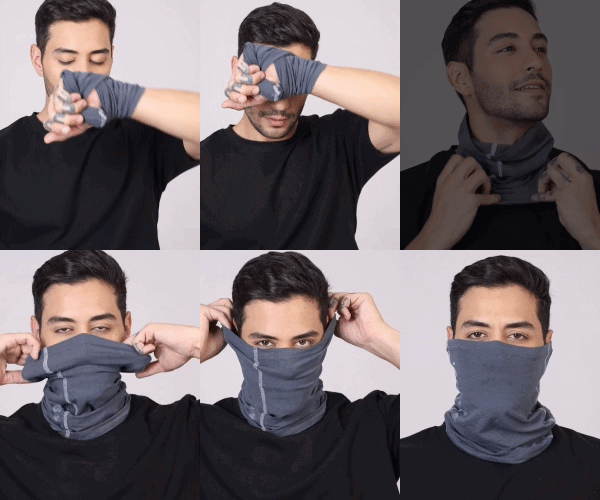
For practical protection during commutes, particularly on two-wheelers or in dusty outdoor conditions, a bandana can be positioned to cover the lower face and neck, functioning similarly to how bandanas have traditionally been used for dust and sun protection in outdoor work settings.
This use case places the highest demand on fabric breathability and stretch, since the bandana needs to stay securely in place through movement while still allowing comfortable breathing and airflow underneath.
Style Five: The Decorative Accessory Tie
Beyond wearing a bandana directly on the body, tying one around a bag strap, wrist, or as a decorative accent elsewhere adds a styling detail without any of the functional demands the other styles place on fabric performance. This use case is purely aesthetic, meaning fabric choice matters less for function and more simply for how the color and pattern complement your overall look.
Why a Versatile Size Matters More Than Most Buyers Realize
Beyond fabric flexibility, the actual size of a bandana significantly affects how many of these styling approaches it can genuinely support. A bandana cut too small struggles to work as a neck scarf or face covering, while one cut appropriately larger can transition between hair wrap, neck scarf, headband, and face covering without feeling stretched too thin or lacking enough fabric for a secure, comfortable tie in each style.
Building a Bandana Rotation Around Styling Variety
Rather than buying multiple single-purpose accessories, it's often more practical to invest in a couple of genuinely versatile, well-made bandanas that can transition across most of these styling approaches, supplemented by additional pieces primarily for color or print variety rather than needing an entirely different product for each specific styling method.
Where Freecultr's Bandanas Fit This Styling Versatility
Freecultr's bandanas are cut with a size and fabric composition, an organic bamboo-cotton-spandex blend, specifically chosen to support this range of styling approaches from a single well-made piece. The fabric's genuine stretch works well for the more form-fitting headband and face-covering styles, while its natural softness suits the hair wrap and neck scarf approaches equally well.
For women looking for bandanas for women that genuinely transition across multiple styling methods, explore Freecultr's bandanas built for daily protection and comfort to see this versatile cut and fabric directly.
If you're building out a broader active wardrobe alongside your bandana styling options, browse Freecultr's women's joggers built for comfortable, breathable movement applies the same fabric-first versatility to your activewear choices.
Conclusion
Bandanas for women can genuinely support at least five distinct styling approaches, from the classic hair wrap to a folded headband, neck scarf, functional face covering, and purely decorative accessory tie, each placing slightly different demands on fabric flexibility and overall size.
A single, well-made bandana with genuine stretch and an appropriately versatile cut can transition across most of these styles, offering considerably more practical value than a single-purpose accessory.
Freecultr's bamboo-cotton-spandex bandanas are built specifically to support this kind of styling versatility from one piece.
More Articles
- Explore Freecultr's bandanas built for daily protection and comfort
- Browse Freecultr's women's joggers built for comfortable, breathable movement
- Shop breathable women's boy shorts with full coverage and no-show finish
- Discover soft hipster panties for women in micro-modal fabric
FAQs
Can one bandana be styled multiple ways?
Yes, a well-made bandana with genuine stretch and a versatile size can transition between hair wrap, neck scarf, headband, and face covering styles without needing separate pieces for each look.
What fabric works best for hair-wrap styling with bandanas?
A lighter, more pliable fabric works best for hair wraps, since it ties smoothly without creating an uncomfortably bulky knot against the head or hair.
Which bandana style needs the most fabric stretch?
Face and dust covering styles place the highest demand on fabric stretch and breathability, since the bandana needs to stay securely in place through movement while allowing comfortable airflow underneath.
Does size matter when choosing a bandana for multiple styling uses?
Yes, a bandana cut too small limits which styles it can support well, while a slightly larger, appropriately sized piece transitions more comfortably across hair wrap, neck scarf, and face covering uses.