









Quick Summary
- Breathable underwear achieves airflow through two combined factors: fiber structure that wicks moisture rather than trapping it, and a weave loose enough to let air circulate against the skin.
- Micro-modal and bamboo fiber outperform standard cotton on breathability because they wick moisture actively, while cotton absorbs and holds it against the skin.
- Format also affects breathability independently of fabric, since briefs offer more airflow than trunks, which offer more than boxer briefs.
- Freecultr's micro-modal and bamboo fabric range is built specifically around this breathability standard, priced from Rs 399.
What Actually Makes Underwear Breathable
Breathable underwear is underwear engineered to let air circulate against the skin and to move moisture away rather than trapping it, achieved through a combination of fiber choice and fabric weave. Breathability is not a single property; it is the outcome of how the fiber handles moisture combined with how open or dense the weave is.
Fiber matters more than most buyers assume. Micro-modal and bamboo fiber both wick moisture away from the skin by their internal fiber structure, while standard cotton absorbs moisture and holds it against the skin, which is the opposite of what breathability requires in hot, humid conditions.
The Two Factors Behind Breathable Underwear
Fiber structure. Micro-modal, bamboo, and other engineered fibers actively wick moisture away from the skin, pulling sweat outward toward the fabric surface where it can evaporate, rather than absorbing it into the fiber itself the way cotton does.
Weave density. A looser weave allows more air circulation through the fabric, while a denser weave, even in a good fiber, restricts airflow. The best breathable underwear combines a moisture-wicking fiber with a weave that supports airflow rather than working against it.
Breathable Underwear: Fabric Comparison
| Fabric | Moisture Handling | Breathability | Best For |
|---|---|---|---|
| Micro-Modal | Wicks actively, does not hold moisture | High | Daily wear, active days, humid climates |
| Bamboo | Wicks actively, naturally cool feel | High | Long wear days, odor-prone conditions |
| Standard Cotton | Absorbs, holds moisture | Moderate | Budget rotation, cooler conditions |
Micro-modal and bamboo consistently outperform standard cotton for genuine breathability in hot and humid conditions, where cotton's tendency to hold moisture against the skin becomes a comfort liability rather than a neutral trait.
Format Also Affects Breathability
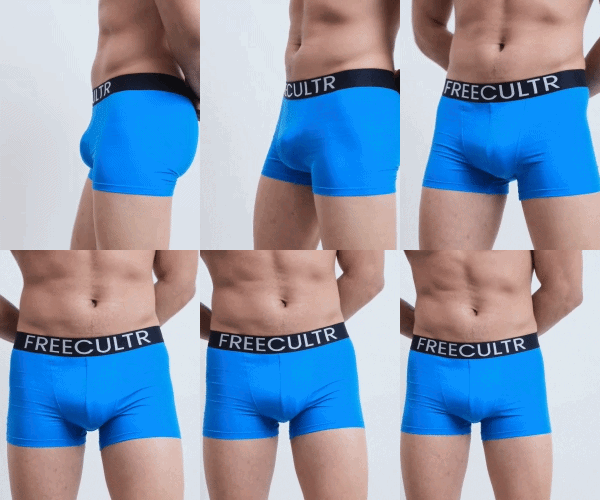
Fabric is only half the equation. Format determines how much skin surface is covered and how much air can reach it. Briefs offer the most airflow given minimal leg coverage. Trunks offer moderate airflow with enough coverage to prevent thigh chafing. Boxer briefs offer the least airflow of the three given their longer inseam and closer fit, though they compensate with better compression for active movement.
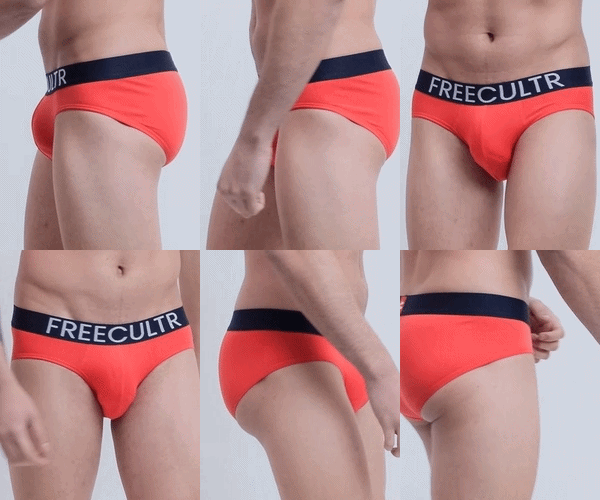
For maximum breathability specifically, briefs in micro-modal or bamboo fabric combine the best fiber and format choices together.
Freecultr's Approach to Breathable Underwear
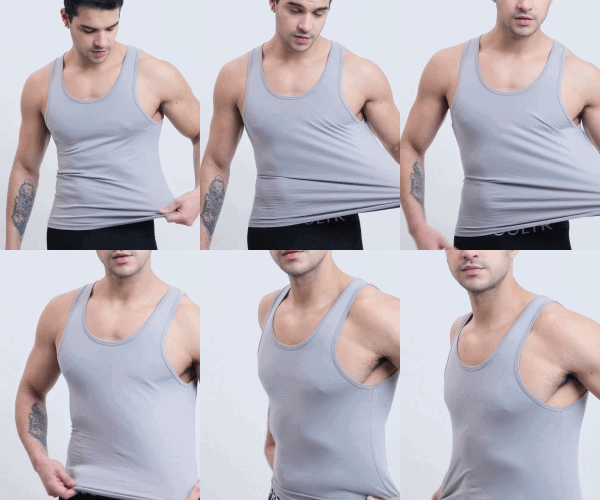
Freecultr's micro-modal and bamboo fabric range is engineered specifically around this breathability standard, combining moisture-wicking fiber with a construction built for daily Indian heat and humidity. Shop Freecultr's micro-modal briefs for maximum airflow, or explore Freecultr's bamboo comfort vests for breathable, odor-resistant base layers built on the same fiber principle.
Conclusion
Breathable underwear depends on fiber structure and weave working together, not on marketing language alone. Micro-modal and bamboo fiber wick moisture actively where cotton absorbs and holds it, and format choices like briefs add further airflow on top of the right fabric. Freecultr's micro-modal and bamboo range is built specifically around this combined standard.
More Articles
- Shop Freecultr Micro-Modal Briefs
- Explore Freecultr Bamboo Comfort Vests
- Browse Freecultr Micro-Modal Trunks
- Shop Freecultr's Full Innerwear Range
FAQs
What fabric is most breathable for underwear?
Micro-modal and bamboo fiber are the most breathable options, since both wick moisture away from the skin by fiber structure, unlike standard cotton, which absorbs and holds moisture against the skin.
Does the underwear format affect breathability?
Yes. Briefs offer the most airflow due to minimal leg coverage, trunks offer a moderate middle ground, and boxer briefs offer the least airflow of the three given their closer, longer fit, though they offer better compression for active movement.
Is cotton underwear breathable enough for hot climates?
Cotton is moderately breathable but underperforms micro-modal and bamboo in hot, humid climates specifically, since it holds moisture against the skin rather than wicking it away, which can lead to discomfort over a full day.
Which Freecultr products are built specifically for breathability?
Freecultr's micro-modal briefs and bamboo comfort vests are both engineered around active moisture-wicking fiber structure, making them the strongest options in the range for maximum breathability.