










Quick Summary
- Modal underwear is made from beech tree pulp and is significantly softer, more breathable, and more durable than standard cotton innerwear.
- The fabric wicks moisture away from skin rather than absorbing and holding it, making it a strong choice for India's warm and humid climate.
- Modal underwear retains its softness and shape across repeated washing, unlike cotton which stiffens and pills over time.
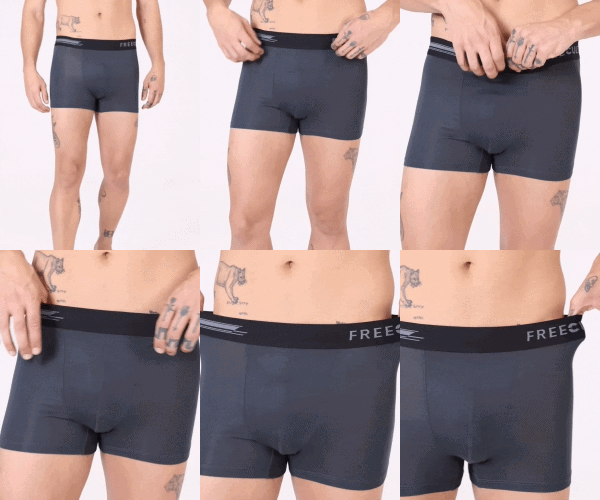
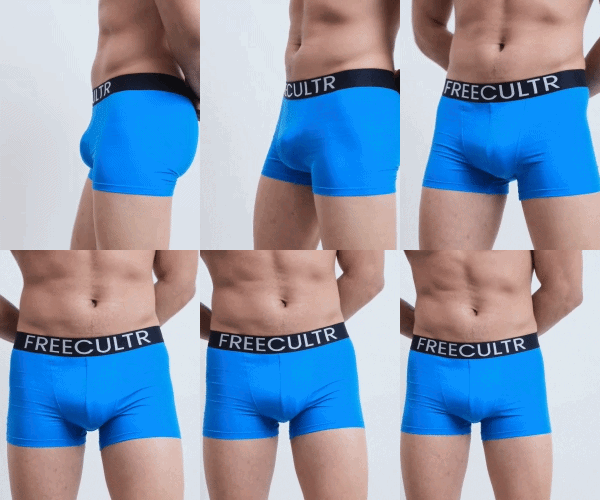
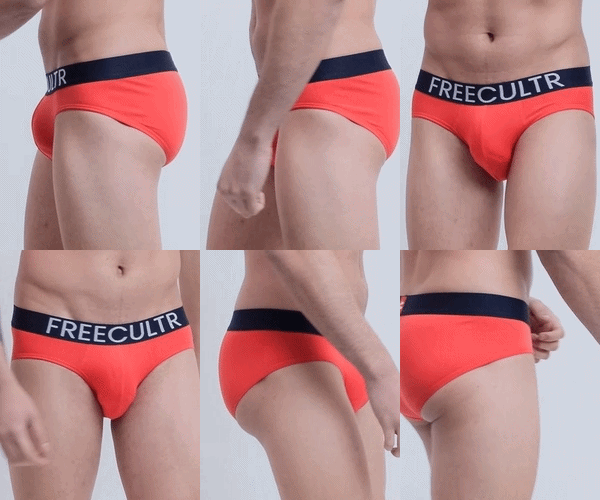
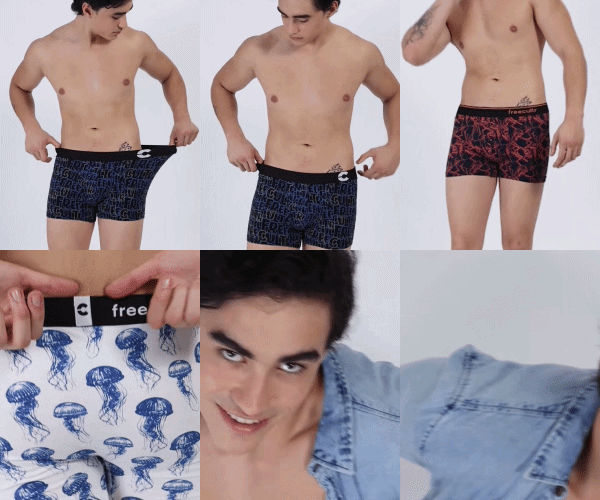
- Brands like Freecultr build their core innerwear range around micro-modal, a finer variant of modal that outperforms standard modal on every comfort metric.
What Is Modal Fabric?
Modal is a semi-synthetic fiber made from the pulp of sustainably harvested beech trees. It belongs to the rayon family but is processed to produce a finer, softer fiber than standard rayon or cotton.
Micro-modal is a refined version of modal with an even finer fiber diameter. The finer the fiber, the smoother the surface feels against skin. This is why micro-modal is considered the premium end of the modal family and why it is the fabric of choice for high-quality innerwear brands.
Modal is not the same as polyester or nylon. It is a plant-derived material, which means it breathes and moves more like natural fabrics than like synthetics.
The Main Benefits of Modal Underwear
Softness That Does Not Fade
This is the most reported benefit among men who switch from cotton to modal. The softness is immediate from the first wear and, critically, it stays. Standard cotton softens slightly with washing and then reverses, going rough and pill-prone after a few months of regular use. Modal does not do this.
The fiber structure of modal resists pilling because the individual fibers are stronger and more flexible than cotton. After 50 washes, good modal underwear still feels noticeably softer than new standard cotton.
Superior Breathability for Indian Climate
Modal fabric has a more open weave structure than cotton, which allows air to circulate against the skin more freely. In a country where temperatures regularly exceed 35 degrees and humidity stays high for months, this matters more than most men realize until they experience the difference.
Browse the full men's innerwear range in micro-modal, bamboo and organic cotton to see how fabric choice maps to the Indian climate across different cuts.
Moisture-Wicking Without Synthetic Treatment
Cotton absorbs sweat and holds it. You feel this by mid-morning on a warm day as a dampness that does not go away. Modal wicks moisture away from the skin surface and allows it to evaporate. The fabric stays lighter and drier through the same conditions.
This is not a chemical treatment that washes out. It is a property of the fiber itself. The moisture-wicking behavior of modal stays consistent across the life of the garment.
Stretch and Shape Retention
Modal has natural elasticity that standard cotton does not. A modal brief or trunk moves with the body rather than pulling against it. Combined with a small percentage of elastane (usually 5 to 10%), modal underwear maintains its shape across repeated wearing and washing.
Cotton waistbands and panels stretch out and do not recover. A cotton brief that fits well on day one often looks baggy by month three. Modal holds its structure significantly longer.
Anti-Bacterial Properties (Especially in Micro-Modal)
Micro-modal, when combined with anti-bacterial treatment, resists odor-causing bacteria buildup. Freecultr's micro-modal range uses this combination. The result is innerwear that stays fresher during long wear days and does not develop the odor retention that cotton accumulates over time.
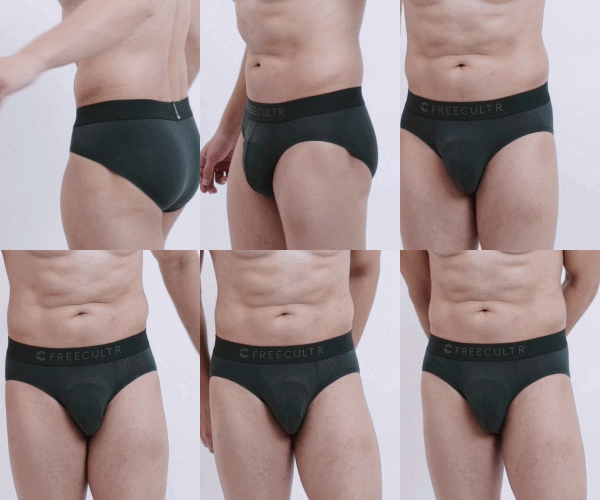
Shop anti-bacterial men's briefs with moisture-wicking micro-modal for the brief cut in this fabric.
Modal vs. Cotton: The Honest Comparison
| Property | Modal / Micro-Modal | Standard Cotton |
|---|---|---|
| Initial softness | Excellent | Moderate |
| Softness after 30+ washes | Maintained | Noticeably reduced |
| Breathability | Excellent | Moderate |
| Moisture-wicking | Excellent | Low (absorbs and holds) |
| Shape retention over 6 months | Very Good | Moderate to Poor |
| Anti-odor | Good to Excellent | None |
| Suitability for Indian climate | Excellent | Moderate |
| Lifespan with regular use | 14 to 18 months | 6 to 10 months |
The lifespan comparison is one that most men do not factor in when choosing underwear. The per-wear cost of modal over 14 to 18 months is often lower than replacing cotton every 6 to 8 months, even accounting for the higher upfront price.
How to Get the Most from Modal Underwear
Modal lasts longer when cared for correctly. A few practical points:
Wash in cold or warm water, not hot. High heat degrades modal fiber faster. Cold water washing extends the life of the fabric significantly.
Air dry where possible. Machine drying on high heat is the fastest way to shorten the life of modal underwear. Air drying preserves both the softness and the shape.
Avoid fabric softener. Modal is already soft and fabric softener can build up on the fiber over time, reducing its natural moisture-wicking properties.
Wash inside out. Reduces friction on the outer surface and helps the fabric maintain its appearance over time.
Who Benefits Most from Modal Underwear
Modal is a strong upgrade for almost any man, but the benefits are most pronounced for:
Men in hot or humid cities. Mumbai, Chennai, Kolkata, Hyderabad. If you commute in heat, sit in an office without reliable AC, or spend time outdoors, the moisture management difference is significant.
Men who are on their feet all day. Physical labor, retail, hospitality. Fabric that stays dry and does not chafe over a 10-hour shift is not a small thing.
Men with sensitive skin. Modal is gentler against skin than cotton. No rough seams, no stiff fabric against skin at the end of the day.
Men who have noticed their current underwear degrading quickly. If you replace cotton underwear every few months because it goes rough or loses shape, the switch to modal will immediately extend that replacement cycle.
Upgrade to pack-of-7 micro-modal briefs for men with zero-ride waistband to replace a full rotation at once.
Conclusion
Modal underwear is not a trend. It is a material upgrade with measurable benefits across every metric that matters for daily innerwear wear: softness, breathability, moisture management, and lifespan. The benefits are felt from the first wear and compound over time as cotton alternatives degrade and modal holds.
Freecultr's micro-modal range represents this fabric applied with construction quality to match. For most men, it is the most noticeable comfort upgrade they can make without changing anything else about their routine.
More Articles
- Modal vs Cotton Underwear: Which Fabric Wins?
- Best Underwear Brands for Men in India
- Women's Boxer Briefs: Comfort Meets Style
- The Ultimate Guide to Buying Women's Boyshorts for Comfort and Style
FAQs
What are the main benefits of modal underwear?
Modal underwear is softer than cotton, more breathable, and better at wicking moisture away from skin. It also retains its softness and shape across many more washes than standard cotton. For men in warm climates like India, the breathability and moisture-wicking properties make it a significantly more comfortable everyday fabric choice.
Is modal underwear better than cotton for daily wear?
Yes, for most men. Modal outperforms cotton on softness, breathability, moisture management, and durability. The only area where cotton has an advantage is price at the entry level. When factoring in how long each fabric lasts before needing replacement, modal often works out to a lower cost per month of wear over a 12 to 18 month period.
Does modal underwear stay soft after washing?
Yes. This is one of the key advantages over cotton. Modal maintains its softness after repeated washing because the fiber structure is more resilient than cotton. Standard cotton softens initially then stiffens and pills. Modal holds its softness consistently across 30, 40, and 50 or more washes.
What is the difference between modal and micro-modal underwear?
Micro-modal is a finer, higher-grade version of modal. The fiber diameter in micro-modal is smaller than standard modal, which makes the surface smoother and the fabric softer. Micro-modal is generally considered the premium tier of the modal family and is the fabric used by quality-focused innerwear brands like Freecultr in their core range.