



Quick Summary
- The sticker price of innerwear for men is misleading — what actually matters is price per wear, which cheap innerwear often loses on despite the lower upfront cost.
- Poor fabric and weak elastic mean budget pairs lose comfort and get retired far sooner than their higher-priced counterparts.
- Freecultr micro modal trunks are built to hold shape and softness over more washes, which changes the real cost math over a year of wear.
- A simple price-per-wear calculation, not the price tag alone, is the honest way to compare innerwear options.
The Real Price Tag Isn't What's Printed on the Pack
A pack of budget innerwear looks like the obvious deal next to a premium pair costing two or three times as much. But that comparison only holds if both pairs last the same number of wears — and they almost never do. The moment a pair stops being comfortable enough to wear, its real cost is whatever you paid, divided by however few times you actually wore it before retiring it to "gym only" or the back of the drawer.
That's the hidden cost of cheap innerwear for men: not a bad deal on day one, but a worse one by month six.
What Is Price Per Wear, and Why Does It Matter for Innerwear?
Price per wear is simply the cost of an item divided by the number of times it's actually worn before being replaced, and it's a far more honest measure of value than the sticker price alone.
A ₹1,500 pack of five that gets worn comfortably for 100 washes has a very different price per wear than an identical ₹1,500 pack that starts sagging, pilling, or losing elastic recoil after 25 washes. The second pack isn't cheaper — it's more expensive per wear, even though the receipt says otherwise. This framing matters because innerwear is one of the few wardrobe categories bought almost entirely on upfront price, with comfort and longevity treated as afterthoughts.
Why Does Cheap Innerwear Cost More in the Long Run?
Cheap innerwear typically uses thinner elastic and lower-grade cotton blends that lose shape and softness faster, which means more frequent replacement purchases that quietly add up to a higher total spend over a year.
The failure points are predictable: waistbands that stop snapping back within a few months, fabric that turns rough or thin after repeated washing, and seams that fray with normal movement. None of this shows up in the store — it shows up gradually, at home, which is exactly why it's easy to miss when comparing prices on a shelf.
Run the real numbers, not just the sticker price — see Freecultr's innerwear built to outlast the wash count that breaks cheaper pairs.
Shop NowHow Many Wears Do You Actually Get Before Comfort Fails?
Most budget innerwear starts losing meaningful comfort somewhere between 20 and 40 washes, while better-constructed fabric and waistbands can comfortably extend well past 80 to 100 washes before showing the same wear.
This range varies with fabric and construction quality, but the pattern holds: the waistband is usually the first thing to fail, followed by the fabric losing its softness and starting to feel rough or thin against skin. Once either happens, most men quietly stop reaching for that pair — which is the real, if invisible, end of its useful life, regardless of whether it's technically still wearable.
How Do Freecultr's Micro Modal Trunks Compare on Price-Per-Wear?
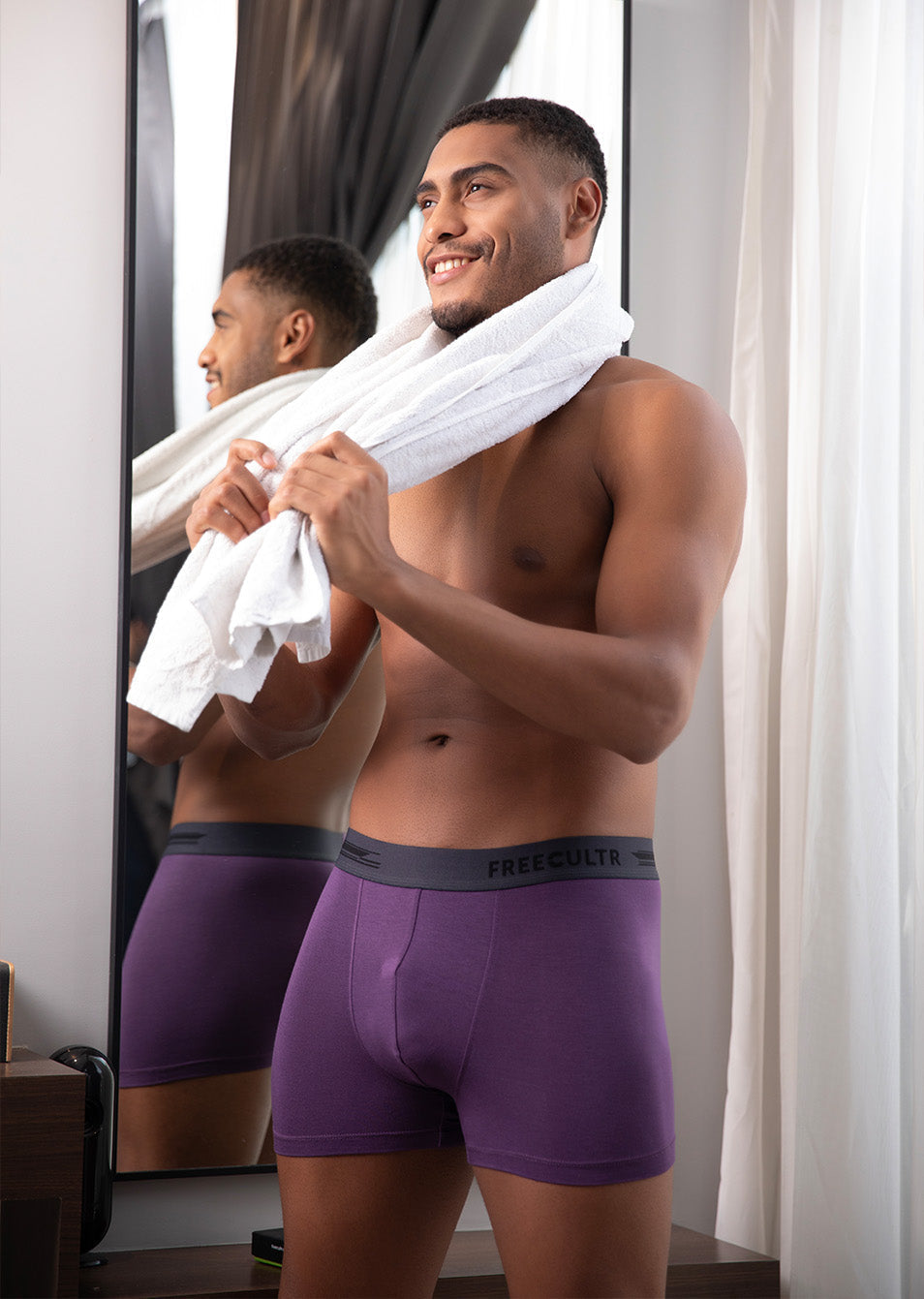
Freecultr micro modal trunks are built with a fabric-wrapped waistband and moisture-wicking micro modal fabric specifically to extend the number of comfortable wears, which lowers the effective price per wear even at a higher upfront cost.
Micro modal fabric holds its softness through more wash cycles than standard cotton, and a properly constructed waistband keeps its recoil for longer, which together push the "still comfortable" wash count meaningfully higher. When comfort lasts longer, the same pair earns more wears before retirement — which is the entire mechanism behind a lower price per wear, not a lower price tag.
What Should You Actually Look for Before Buying Innerwear for Men?
Look past the price tag to fabric composition and waistband construction, since these two factors determine how many genuinely comfortable wears you'll get, which is what actually decides value.
A pack that costs more per unit but doubles or triples the number of comfortable wears is the better financial decision, even though it never looks that way at checkout. Treating innerwear like any other durable purchase — evaluated on cost over its useful life, not shelf price — changes which pack actually makes sense to buy.
Step-by-Step Guide to Calculating Your Own Price Per Wear
Step 1: Note the price you paid and the date you started wearing the pair regularly.
Step 2: Track roughly how many times you wear and wash it before comfort noticeably drops — waistband looseness, fabric roughness, or fraying.
Step 3: Divide the price by that wear count to get your actual price per wear, not the sticker price.
Step 4: Compare that number across different pairs or brands rather than comparing upfront prices alone.
Step 5: Prioritize fabric composition and waistband construction on your next purchase, since these are what move the wear count up or down.
Better price per wear starts with better fabric — explore Freecultr's micro modal trunks built to go the distance.
Explore the RangeConclusion
The sticker price on a pack of innerwear for men tells you almost nothing about what it will actually cost you over a year of wear. Price per wear — not price per pack — is the number that matters, and it consistently favors fabric and construction quality over the cheapest option on the shelf. Freecultr's micro modal trunks are built with exactly this longer-term math in mind. Shop the collection and see the difference for yourself.
About freecultr
Freecultr is an emerging Indian D2C brand dedicated to reimagining wardrobe essentials through premium, sustainable comfort wear. We specialize in high-quality innerwear, loungewear, and accessories crafted from advanced fabrics like micro-modal, bamboo, and organic cotton to ensure breathability and long-lasting softness.
FAQs
What is price per wear and why does it matter for innerwear?
Price per wear is the cost of an item divided by how many times it's actually worn before being replaced — a far more honest measure of value than the sticker price alone.
Why does cheap innerwear end up costing more over time?
Thinner elastic and lower-grade fabric lose shape and softness faster, leading to more frequent replacement purchases that quietly add up to a higher total spend over a year.
How many washes does innerwear typically last before comfort fails?
Budget innerwear often starts losing meaningful comfort between 20 and 40 washes, while better-constructed fabric and waistbands can comfortably extend past 80 to 100 washes.
How do Freecultr's micro modal trunks compare on price per wear?
Their fabric-wrapped waistband and moisture-wicking micro modal fabric extend the number of comfortable wears, which lowers the effective price per wear even at a higher upfront cost.
What should I actually look for before buying innerwear?
Fabric composition and waistband construction, since these determine how many genuinely comfortable wears you'll get — which is what actually decides value, not the price tag.