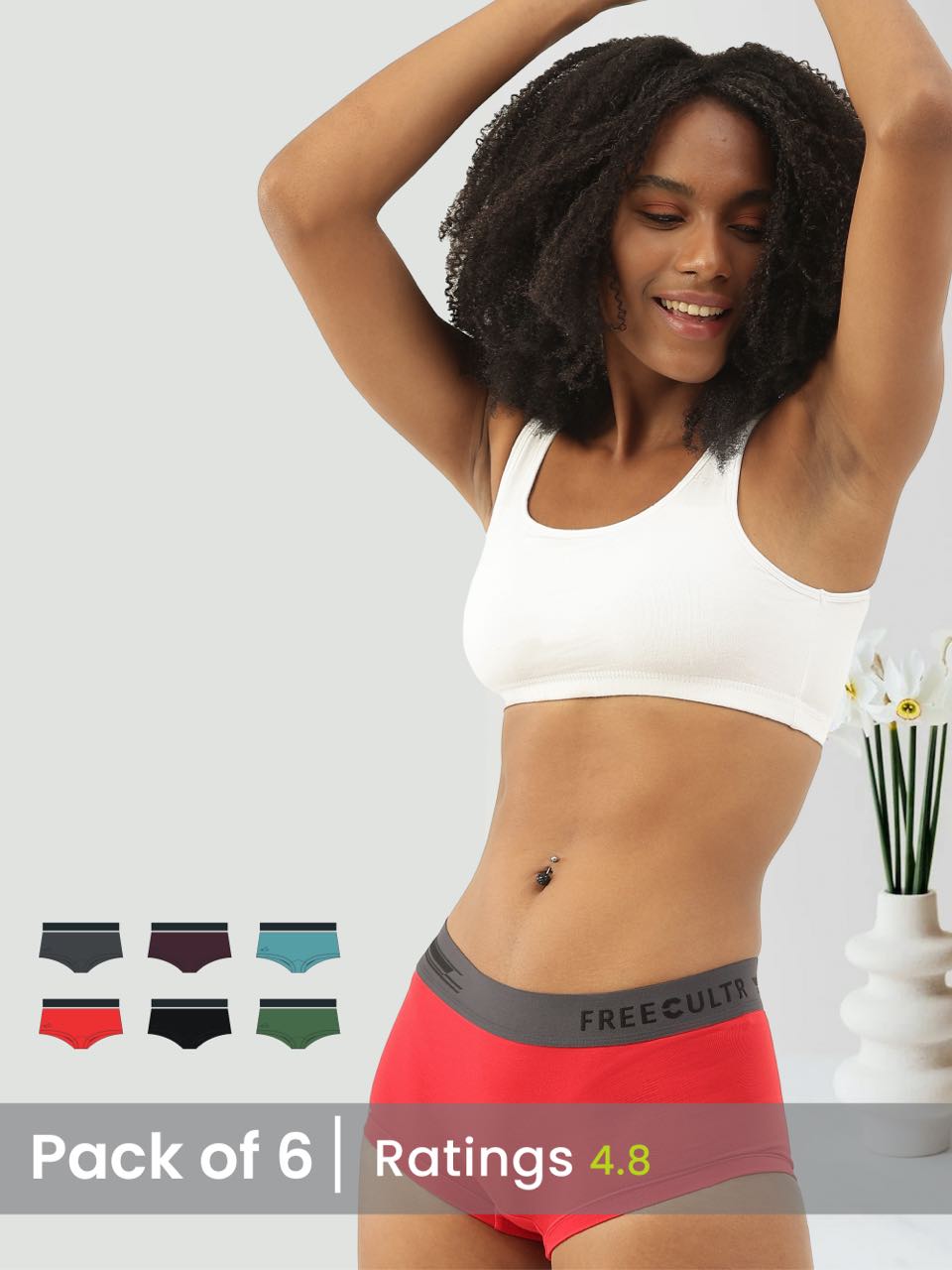


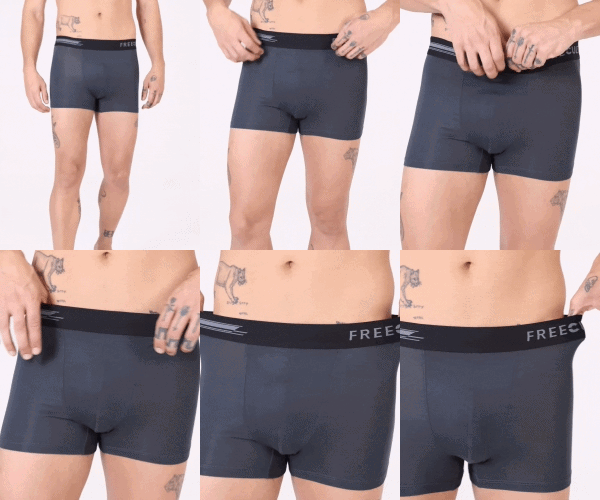
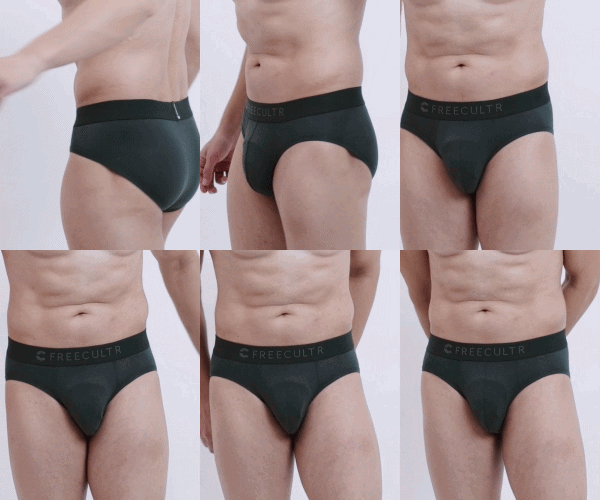





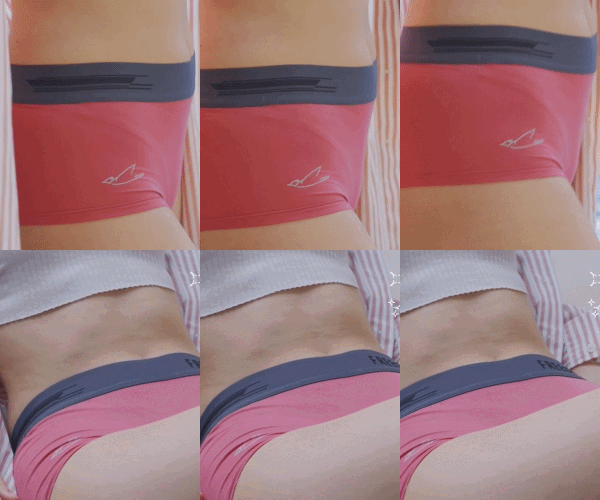
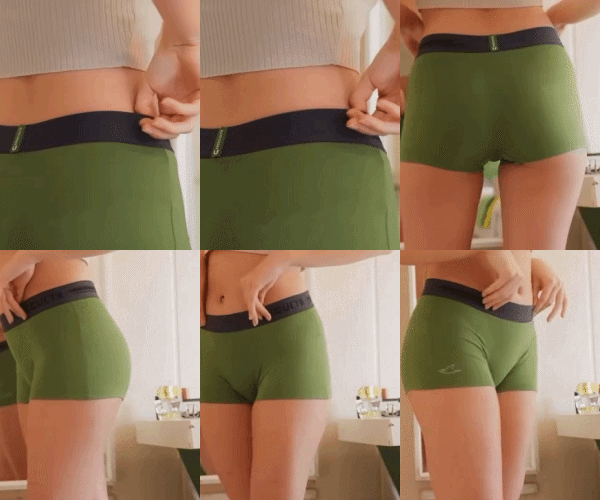




Ill-fitting underwear isn't merely an annoyance; it's a pervasive issue causing persistent chafing, restrictive digging. Even compromised circulation, directly impacting daily comfort and confidence. In an era where performance fabrics and seamless designs are standard, a precise fit becomes paramount, optimizing features like moisture-wicking and preventing garment distortion. Relying solely on generic S/M/L labels often fails to account for diverse body anatomies. Consequently, mastering the underwear size chart is critical, empowering consumers to select undergarments that perfectly conform to their unique shape. This technical approach guarantees not only unparalleled comfort and reduced friction but also extends garment longevity, ensuring every piece performs as intended.

Why Your Underwear Fit Matters More Than You Think (Seriously!)
Ever pull on a pair of undies and just feel… off? Maybe they're digging in, riding up, or bunching in all the wrong places. It's not just annoying; ill-fitting underwear can actually lead to a host of problems that impact your comfort, confidence. Even your health. Think about it: this is the first thing you put on every day. It's in direct contact with your most sensitive areas!
When your underwear doesn't fit properly, you might experience:
- Chafing and Irritation Fabric rubbing against skin can cause redness, rashes. Discomfort, especially during movement.
- Lack of Support
- Digging and Pinching Elastic waistbands or leg openings that are too tight can leave marks, restrict circulation. Cause pain.
- Bunching and Slipping
- Hygiene Issues Poorly fitting underwear can trap moisture and heat, creating a breeding ground for bacteria and yeast, potentially leading to infections.
- Impact on Outfit Appearance
Finding your perfect fit isn't just about avoiding these annoyances; it's about feeling comfortable, confident. Healthy all day long. And the secret to unlocking that comfort? Understanding the mighty underwear size chart.
Decoding the Underwear Size Chart: Your Map to Comfort
So, you've decided to ditch the discomfort and find your perfect pair. Great! The first step is to interpret what an underwear size chart is telling you and, more importantly, how to use it. Essentially, an underwear size chart is a guide that translates your body measurements into the manufacturer's specific sizing system.
Most underwear size charts rely on a few key measurements:
- Waist Measurement This is typically measured around the narrowest part of your torso, usually just above your belly button. For men, it's often where your pants naturally sit.
- Hip Measurement
- Inseam/Thigh Measurement (less common but present for some styles) For longer leg styles like men's boxer briefs or women's boy shorts, some charts might include a thigh measurement to ensure the leg openings aren't too tight.
These measurements are then mapped to a corresponding size, which could be a numerical size (like 6, 8, 10 for women; 30, 32, 34 for men) or a letter size (S, M, L, XL).
The Essential Tools: How to Measure Yourself Like a Pro
Before you even glance at an underwear size chart, you need to know your own measurements. Don't guess! It's super easy and only takes a couple of minutes. Here's what you'll need and how to do it:
- What you need A flexible tape measure (the kind tailors use). Maybe a mirror.
- What to wear
- Posture Stand naturally, relaxed. Don't suck in your stomach!
- Waist
- Locate your natural waistline, which is usually the narrowest part of your torso, just above your belly button.
- Wrap the tape measure around your waist, keeping it parallel to the floor.
- Don't pull the tape too tight; it should be snug but not digging into your skin.
- Read the measurement where the tape overlaps.
- Hips
- Stand with your feet together.
- Wrap the tape measure around the fullest part of your hips and buttocks. This is usually about 7-9 inches below your natural waistline.
- Again, keep the tape parallel to the floor and don't pull it too tight.
- Read the measurement.
Write these numbers down! They're your personal key to unlocking the perfect underwear size chart.
Men's Underwear Size Chart: Finding Your Ideal Match
Gentlemen, your underwear choices are more varied than ever, from classic briefs to stylish trunks. Each style has unique fit considerations. The core measurements for a men's underwear size chart typically revolve around your waist.
Here's a general idea of how a men's underwear size chart might look. Keep in mind that specific brands will have their own unique charts!
| US Size | Waist Measurement (Inches) | Waist Measurement (CM) |
|---|---|---|
| Small (S) | 28-30 | 71-76 |
| Medium (M) | 31-33 | 79-84 |
| Large (L) | 34-36 | 86-91 |
| Extra Large (XL) | 37-39 | 94-99 |
| Double Extra Large (XXL) | 40-42 | 102-107 |
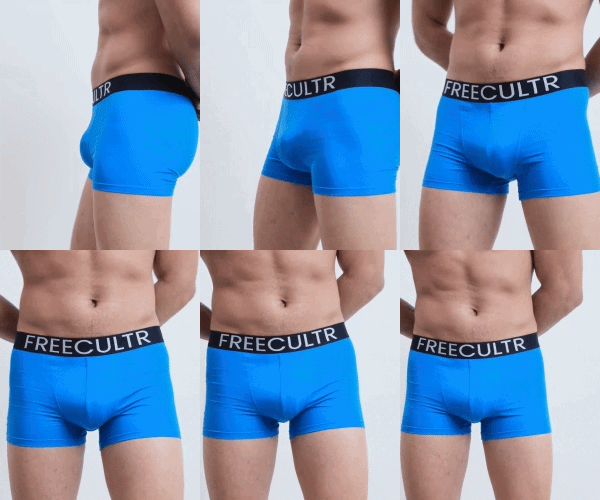
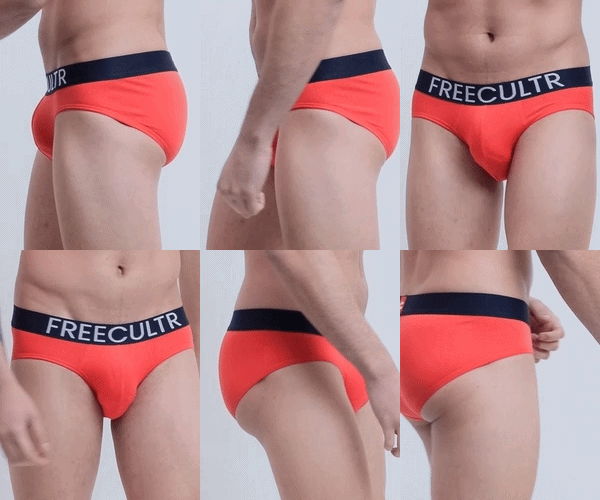
- Style Matters Briefs offer maximum support and minimal fabric, best for tighter pants. Boxer briefs and trunks provide more coverage and support, often preferred for everyday wear. Boxers are loose and breathable, great for lounging. Your preferred style can influence how you interpret the underwear size chart. For example, if you like a looser fit, you might lean towards the higher end of a size range, even if your waist technically puts you in the middle.
- Pouch Design
Women's Underwear Size Chart: Comfort & Style Combined
Ladies, the world of women's underwear is vast and wonderful! From cheeky thongs to full-coverage briefs, there's a style for every preference and outfit. A women's underwear size chart typically considers both your waist and hip measurements, as both are crucial for a comfortable fit.
Here's a representative women's underwear size chart. Again, always check the brand's specific chart!
| US Size | Waist (Inches) | Hips (Inches) | Waist (CM) | Hips (CM) |
|---|---|---|---|---|
| XS (0-2) | 24-25 | 34-35 | 61-64 | 86-89 |
| S (4-6) | 26-27 | 36-37 | 66-69 | 91-94 |
| M (8-10) | 28-29 | 38-39 | 71-74 | 97-99 |
| L (12-14) | 30-32 | 40-42 | 76-81 | 102-107 |
| XL (16-18) | 33-35 | 43-45 | 84-89 | 109-114 |
- Rise Underwear comes in different rises (how high it sits on your waist). Low-rise, mid-rise. High-rise styles will fit differently even if the waist measurement is the same. This isn't usually on an underwear size chart but is a style choice.
- Leg Openings
- Coverage Thongs offer minimal coverage, bikinis offer moderate. Briefs offer full. Your comfort level with coverage will also guide your style choice.
Unisex & Specialty Underwear Size Chart Considerations
While most underwear is gender-specific, some styles, especially athletic or loungewear, might be marketed as unisex. Also, there are specialty underwear types that have unique sizing considerations:
- Unisex Underwear When buying unisex items, they often rely heavily on waist and hip measurements, similar to general men's or women's charts but sometimes with slightly different proportions to accommodate a broader range of body types. Always check their specific underwear size chart.
- Athletic Underwear
- Shapewear This type of underwear is designed to smooth and sculpt. It's meant to be snug. Not painfully so. Shapewear often has its own specialized underwear size chart that takes into account not just waist and hip but also bust (for bodysuits) or thigh measurements. Sometimes even weight/height ranges. Sizing up is often recommended if you're between sizes to avoid feeling overly constricted.
- Maternity Underwear
- Adaptive Underwear For individuals with mobility challenges, adaptive underwear features easy closures (magnets, snaps) and designs. Their sizing might be more generous or focus on ease of wear rather than a super snug fit, so always check their specific size guide.
Beyond the Numbers: Other Factors Influencing Your Perfect Fit
While the underwear size chart is your best friend, it's not the only factor in achieving underwear nirvana. Several other elements play a crucial role in how a pair of undies feels on your body:
- Fabric Composition
- Cotton Breathable and soft. Can stretch out over time and isn't ideal for moisture-wicking during intense activity.
- Modal/Micro-Modal
- Nylon/Spandex Blends Offer excellent stretch, support. Often moisture-wicking properties, common in athletic and seamless styles.
- Lace/Silk
- Brand-Specific Sizing This is a big one! Just like jeans or dresses, underwear sizing isn't universal. A "medium" from Brand A might be a "small" or "large" from Brand B. This is why always checking the specific brand's underwear size chart on their website is non-negotiable. Don't assume your usual size will work across the board.
- Personal Preference
- Activity Level & Purpose The underwear you wear for a high-intensity workout might be different from what you wear for a lazy Sunday at home. Athletic underwear often has more compression and moisture-wicking capabilities, influencing its fit.
- Body Shape
Different fabrics have different levels of stretch and recovery. A size 'M' in a 100% cotton brief might feel different from a size 'M' in a highly stretchy nylon/spandex blend.
Real-World Tips for Shopping: No More Guesswork!
Armed with your measurements and knowledge of the underwear size chart, you're ready to conquer the shopping world. Here are some actionable tips to ensure your next underwear purchase is a success:
- Always, Always Check the Brand's Specific Underwear Size Chart We can't stress this enough. Every brand is different. Before clicking "add to cart," navigate to their size guide or underwear size chart. It's usually found on the product page or in a dedicated sizing section.
- Read Customer Reviews
- When in Doubt, Order One Pair First If you're trying a new brand or style, consider buying just one pair to test the fit before committing to a multi-pack. This saves you potential hassle and wasted money.
- grasp Return Policies
- Consider Your Between-Sizes Strategy If your measurements fall exactly between two sizes on the underwear size chart, think about your preference. For everyday comfort, sizing up is often a safer bet. For compression or a very snug fit, sizing down might be appropriate. Proceed with caution.
- Don't Be Afraid to Experiment (Responsibly!)
Conclusion
Gone are the days when underwear was an afterthought; it's the foundational layer of your daily comfort and confidence. I vividly recall a time ignoring the size chart, only to experience constant adjustments and chafing during an crucial presentation – a stark reminder that discomfort truly impacts focus. Today, with advancements in seamless technology and moisture-wicking fabrics, choosing the right size is more critical than ever for optimal performance and well-being. Don't just guess your size based on old habits or what fits your jeans; take a moment to re-measure. I've personally found my ideal fit shifts subtly, especially with lifestyle changes. Consider exploring different styles too, like modern trunks or briefs, as each offers a unique feel that might surprise you. Your perfect fit isn't a luxury; it's an essential investment in feeling great from the inside out. Prioritize this small but significant step, embrace the comfort revolution. Move through your day with unparalleled ease and confidence.More Articles
Men's Inner Wear – Essential Comfort & Seamless FeelTrunks for Men – Superior Fit & Freedom of Movement
Men's T-Shirt – Versatile Wardrobe Staple & Soft Fabric
Women's Tank Top – Flattering Fit & Breathable Design
Performance Sleeves – Enhanced Protection & Muscle Support
FAQs
Why is using an underwear size chart so essential?
It's all about comfort! Using a size chart helps you avoid common problems like pinching, chafing, or underwear that constantly rides up or slides down. A perfect fit means you'll hardly even notice you're wearing them.
What measurements do I need to take for underwear sizing?
You'll typically need to measure your waist and hips. For your waist, find the narrowest part of your torso, usually just above your belly button. For your hips, measure around the fullest part of your backside, usually where your legs meet your torso. Make sure the measuring tape is snug but not tight.
I'm between two sizes on the chart. Which one should I pick?
When you're caught between sizes, it's generally a good idea to size up for underwear. This helps prevent any digging in or uncomfortable tightness, ensuring a more comfortable fit around your waist and legs.
Are underwear size charts the same for all brands?
Nope, not at all! Just like with other clothing, sizing can vary quite a bit between different brands. Always make sure to check the specific size chart provided by the brand you're interested in for the most accurate fit recommendations.
How can I tell if my current underwear doesn't fit correctly?
Common signs of a poor fit include pinching or digging into your skin, riding up your backside, constantly sliding down, or visible lines under your clothing (VPL). If you're experiencing any discomfort, chafing, or irritation, your underwear probably isn't the right size.
Can I just use my regular pants or dress size to figure out my underwear size?
It's really not recommended. Your pant or dress size can be quite different from what's needed for underwear, as they measure different areas and have varying fits. For the best comfort and fit, always go by your actual body measurements.
How often should I re-measure myself for underwear?
It's a good idea to re-measure if your weight changes significantly, or if your body shape has altered due to things like pregnancy or muscle gain/loss. Otherwise, a quick check every year or so is generally sufficient to ensure you're still getting the perfect fit.