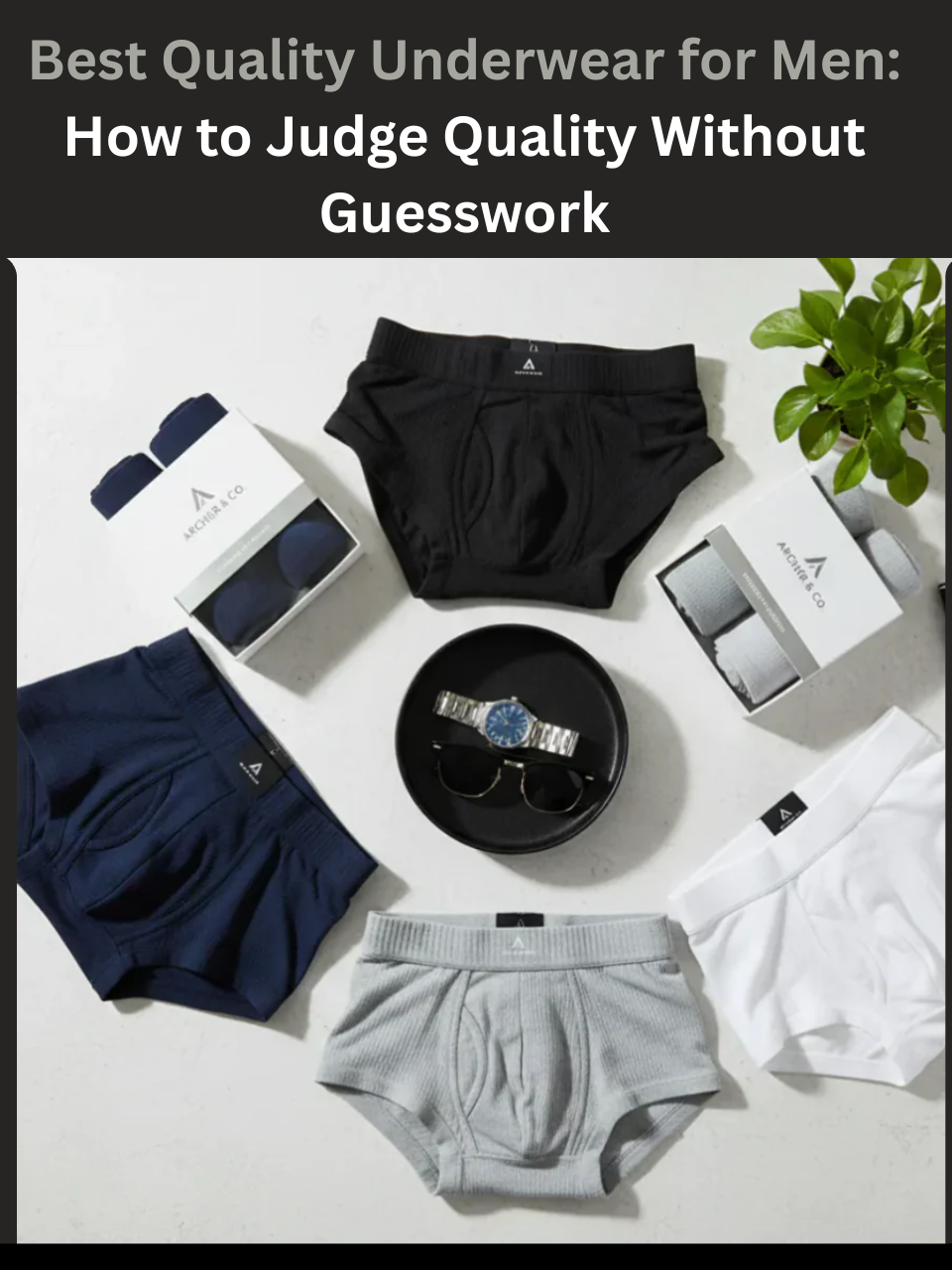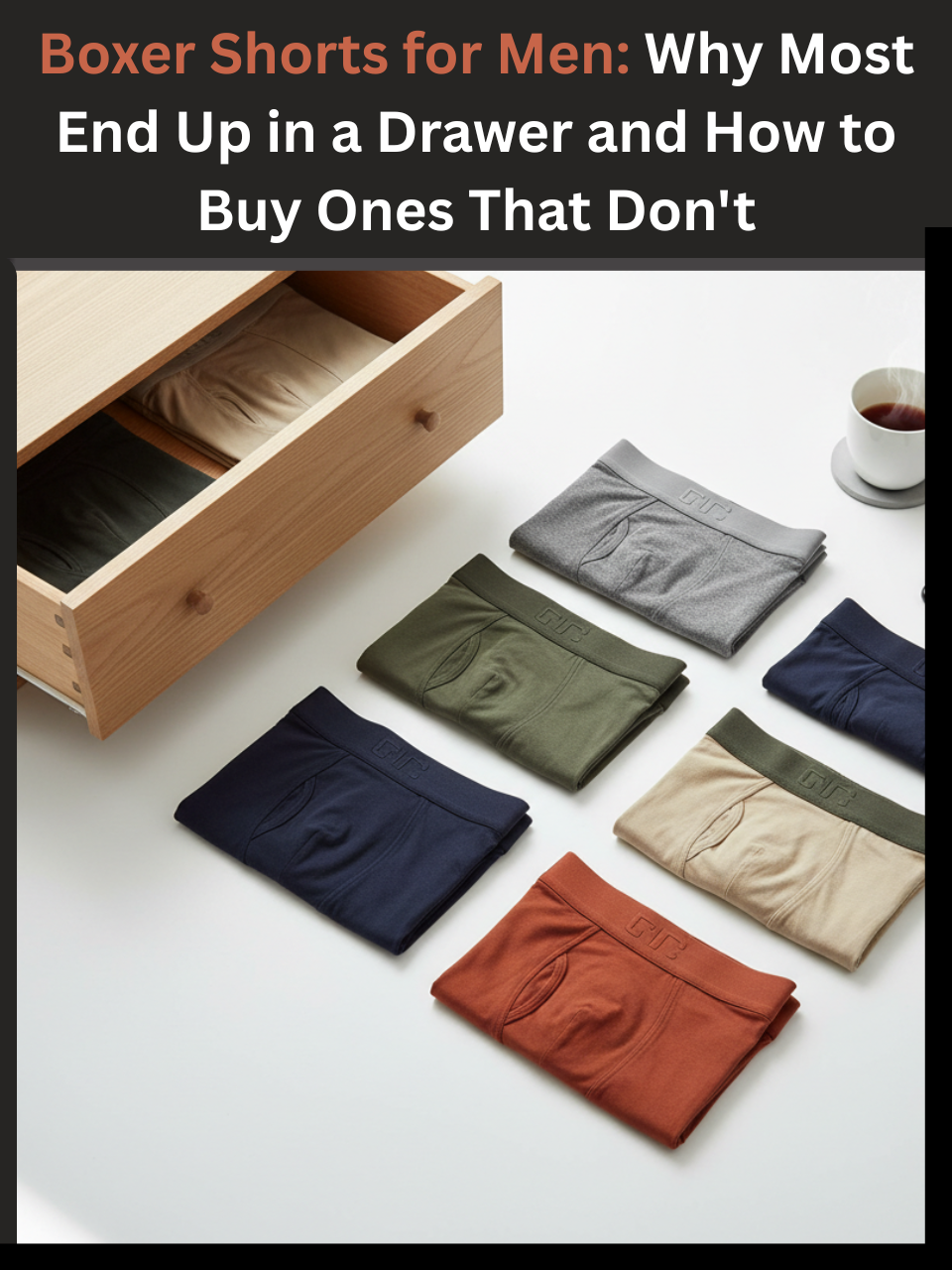




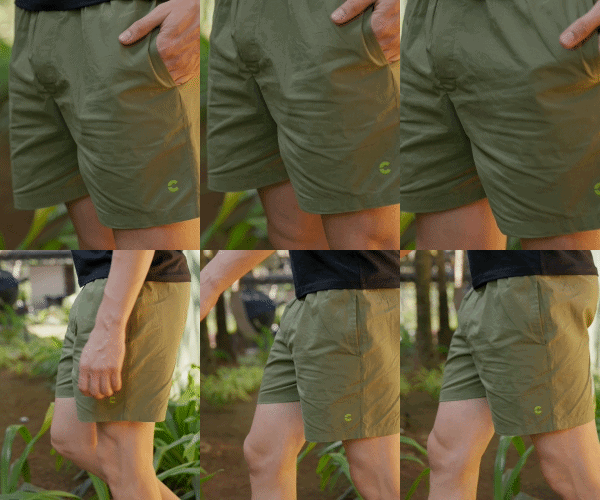


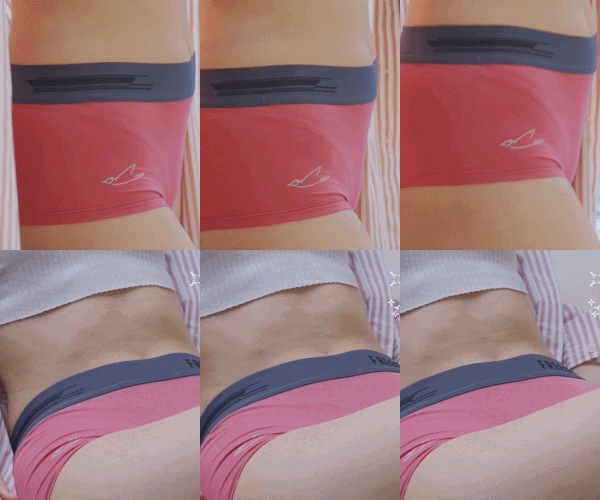
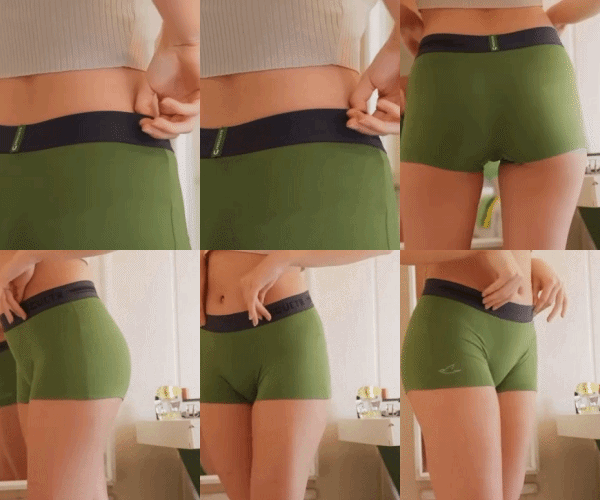


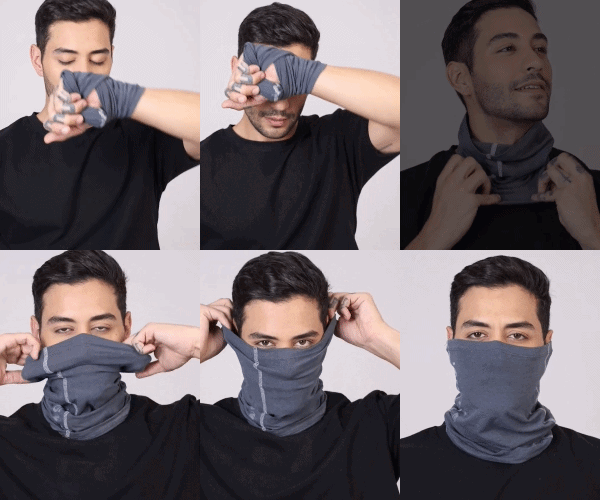


Introduction
Most Indian men have a drawer full of innerwear they have stopped wearing. Not because it fell apart. Because it stopped being comfortable and they could not say exactly why.
- The waistband started rolling.
- The fabric felt damp by noon.
- The fit changed after 10 washes.
- The elastic went soft.
None of these failures came with a warning. They were baked into the product before it was ever purchased, built in by construction decisions the buyer had no way to evaluate from a product photo and a price tag.
The buying decision that most men make by habit is the one that produces the drawer full of half-worn underwear. This guide fixes that.
The Fabric Decision Is the Most Important One You Are Not Making
Brand and price determine where and how much. Fabric determines how your innerwear actually performs against your skin for the majority of your waking hours. These are not the same decision.
Here are the five fabric categories in men's innerwear, what each one actually does, and where each one belongs.
Combed Cotton
Combed cotton is regular cotton that has been processed to remove short fibres, producing a softer, stronger fabric than standard mill cotton at a modest price premium.
It is the most widely purchased innerwear fabric in India and the default choice for men who have not thought about fabric specifically.
Where it works: Office wear in air-conditioned environments. Low-activity days. Cooler months. Men who prefer a natural fabric feel and whose daily activity does not generate significant sweat.
Where it fails: High-sweat conditions and Indian summer afternoons. Cotton absorbs moisture and holds it against the skin. The damp, heavy, uncomfortable feeling that builds through a hot afternoon is a cotton problem. It is not your body being unreasonable.
Micromodal
Micromodal is derived from beech tree wood pulp. It produces fibres that are measurably finer than cotton, and the tactile difference is real and immediate. Men who switch from standard cotton to micromodal for the first time consistently notice the softness before anything else.
Where it works: Long desk days. Cool or climate-controlled environments. Sensitive skin that reacts to the texture of standard cotton seams and waistbands.
Where it falls short: It does not wick moisture actively. In high-heat conditions, micromodal absorbs sweat similarly to cotton rather than moving it through the fabric. The softness remains but the moisture problem does not disappear.
Bamboo Viscose
Made from bamboo plant pulp, bamboo viscose is the strongest all-rounder for Indian summer conditions. It wicks moisture away from the skin rather than absorbing and holding it. It contains bamboo kun, a natural antimicrobial compound that inhibits the bacteria that cause odour. And it is nearly as soft as micromodal.
Where it works: Indian summer. High-humidity cities like Mumbai, Chennai, Kolkata. Men who sweat through the day. Long wear hours without the ability to change.
Where it falls short: Bamboo fabric requires gentler washing than cotton. Hot machine wash cycles degrade bamboo fibres significantly faster. Cold wash, gentle cycle, air dry is not optional with bamboo, it is required.
Cotton-Modal Blend
A deliberate blend that combines cotton's durability and breathability with modal's softness and stretch recovery. The result is an all-rounder that performs adequately across most daily conditions without the specific weaknesses of either fabric alone.
Where it works: Mixed-activity days. The kind of day that includes a commute, an office, and an evening walk. It does not optimise for any single condition but handles all of them without failure.
Where it falls short: At the extremes. For maximum softness, micromodal is better. For maximum moisture performance in Indian summer, bamboo is better. Cotton-modal is the most versatile daily choice, not the best at any one thing.
Nylon-Spandex (Performance Fabric)
Performance fabric for high-sweat, high-movement use. Nylon-spandex wicks moisture at a rate that natural fibres cannot match and dries in minutes rather than hours. The stretch is excellent in all directions. It does not lose its shape through a workout.
Where it works: Gym sessions, running, cycling, any activity where sweat volume is high enough that natural fibres become damp and uncomfortable.
Where it falls short: All-day office wear. Nylon-spandex manages sweat in high-volume conditions but does not breathe as freely as natural fibres at rest. Eight hours at a desk in nylon-spandex is less comfortable than eight hours in cotton-modal.
Which Cut to Choose and Why It Matters
| Cut | Coverage | Best For | Avoid When |
|---|---|---|---|
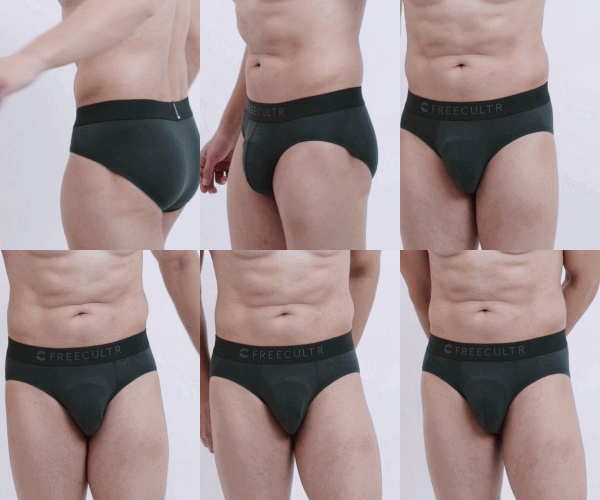
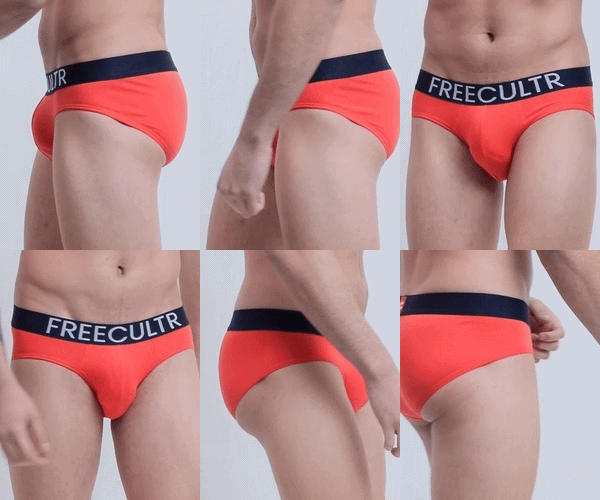
| Brief | Waist, no leg coverage | Sports, heat, fitted trousers | You dislike minimal coverage |
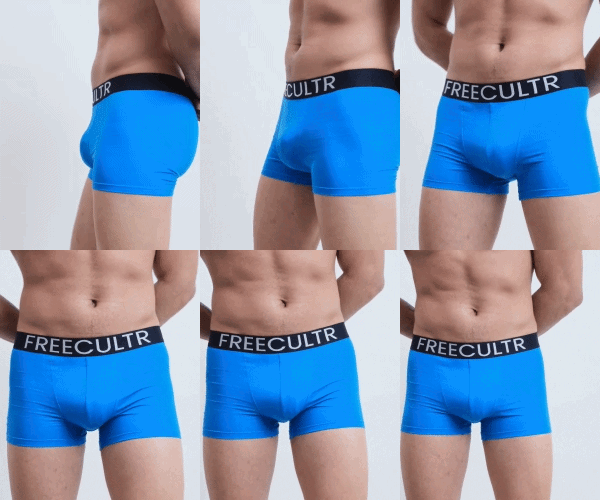
| Trunk | 3 to 5 inch leg | Daily wear, office, commuting | Thigh chafing is an issue |
| Boxer brief | 5 to 8 inch leg | Long days, thigh chafing prevention | Loose-fit preference |
| Boxer shorts | Loose, mid-thigh | Lounge, sleep, low activity | Active commuting, sports |
The cut that most Indian men default to is the trunk. It is the right default for most daily use. If you experience inner thigh chafing from your commute or a long day on your feet, a boxer brief solves it with extended leg coverage. If you run or do heavy gym work, a brief provides the most support with the least fabric in motion.
Construction Details That Apply to Every Cut and Fabric
Getting the fabric and cut right is necessary but not sufficient. Two construction details apply universally:
Flat-lock stitching. Raised seams inside innerwear create friction points that become irritation over hours of wear. Flat-lock stitching lies flat against the inside surface. You stop noticing the seam after the first five minutes. With raised seams, you never fully stop noticing.
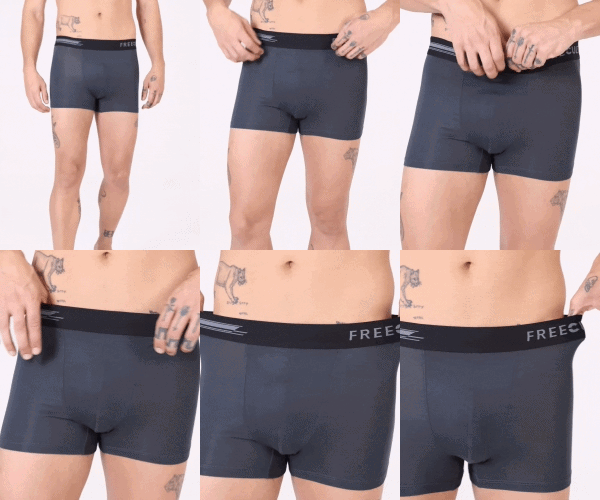
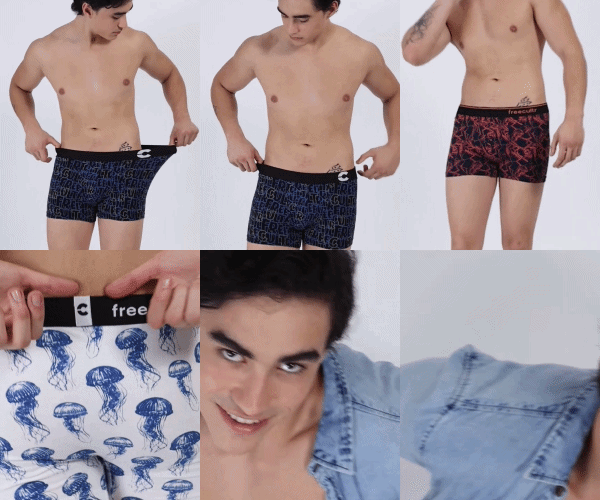
Covered waistband. A waistband where the elastic sits inside a fabric casing rather than directly against your skin stays comfortable through a full day without marking or digging. Direct elastic-on-skin waistbands are the primary source of afternoon waistband discomfort. The construction difference is visible in product photos. Look at the top edge.
How to Find Your Correct Size
Men's innerwear sizing in India is not standardised. The same label, M, represents 30 to 32 inch waists at some brands and 32 to 34 inch waists at others. Buying based on your trouser size adds another variable because trouser sizing includes seat allowance that pushes the number up relative to innerwear sizing.
The reliable approach:
- Measure your natural waist circumference in inches, at the narrowest point above the hip bone.
- Map that number against the specific brand's published size chart.
- When between two sizes, size up.
Freecultr publishes waist-range-to-size mappings on every product page. The S size covers 28 to 30 inch waists, M covers 30 to 32, L covers 32 to 34, XL covers 34 to 36, XXL covers 36 to 38, and 3XL covers 38 to 40.
When to Replace Your Innerwear
Most men replace innerwear when it obviously fails rather than on a schedule. The result is wearing underwear significantly past its functional life.
Signs that replacement is overdue:
- The waistband no longer holds its position without being pulled up
- Fabric has pilled in high-friction areas like the seat and inner thigh
- Elastic has gone soft and the fit has become loose and shapeless, or the fabric holds odour that does not wash out after regular laundering.
With daily wear and correct cold-wash care, quality innerwear in cotton-modal or bamboo should be replaced every 12 to 18 months.
Conclusion
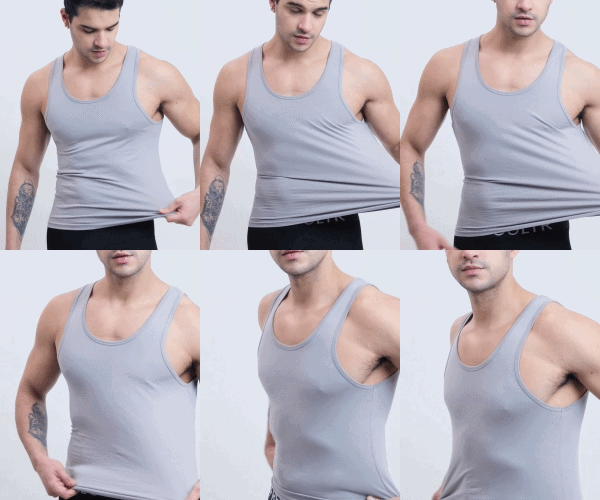
Innerwear for men covers the full category of men's undergarments: briefs, trunks, boxer briefs, boxer shorts, and undershirts.
In India, this is innerwear worn for 16 to 18 hours a day in conditions that span outdoor commutes in 40-degree heat, air-conditioned offices, gym workouts, and sleep.
No single fabric performs optimally across all of these. No single cut suits every body type and clothing choice.
Freecultr's innerwear range applies both construction standards across all cuts and fabrics.
Frequently Asked Questions
What is the best innerwear for men in India during summer?
Bamboo viscose and cotton-modal blends. Both wick moisture away from the skin rather than absorbing and holding it, which is the primary comfort problem with standard cotton in Indian summer conditions. Bamboo viscose adds natural odour resistance through bamboo kun, which makes a noticeable difference over long wear days without access to a change. For gym and high-sweat sports specifically, nylon-spandex moves the highest moisture volume fastest and dries quickest.
What is the difference between a brief, trunk, and boxer brief for men?
Coverage and support level. A brief covers from the waist down with no leg coverage, providing maximum support and minimum fabric. It is the most stable cut for sports and high-movement activity. A trunk adds 3 to 5 inches of leg coverage and is the most versatile daily cut for Indian men, comfortable across office, commute, and moderate activity. A boxer brief extends to 5 to 8 inches of leg coverage and is the right choice for men who experience inner thigh chafing on long days. The support level decreases from brief to trunk to boxer brief as coverage increases.
Is bamboo underwear actually better for Indian conditions?
Yes, specifically for moisture management and odour resistance, which are the two dominant comfort issues in Indian daily wear. Bamboo viscose moves moisture away from the skin surface through the fabric rather than absorbing and holding it like cotton. Bamboo kun inhibits the growth of odour-causing bacteria on the fabric, extending freshness through a long wear day. The trade-off is that bamboo requires gentler washing care than cotton and costs more per piece. For men who sweat in Indian heat and want to stay comfortable through a full workday, the difference is real and worth the premium.
How many pairs of innerwear should a man own?
A practical minimum is 10 to 14 pairs for a two-week rotation without daily laundry pressure. Men with gym routines or physically active jobs benefit from 14 to 20 pairs because they generate more daily wear per piece. The number sounds high until you price it: 14 pairs of Freecultr cotton-modal trunks at combo pack pricing costs approximately Rs 3,500, which divided over an 18-month lifespan is Rs 13 per day for a complete, comfortable rotation. -e