

TL;DR: Choosing the right briefs for men requires matching brief styles (traditional, boxer briefs, trunks) to your lifestyle demands—office work, athletic activities, or travel—while prioritizing fabric properties like moisture-wicking, breathability, and stretch. Focus on proper fit through accurate measurements, appropriate pouch support, and waistband placement that suits your body type. Start by identifying your primary daily activity level, then select fabrics and cuts that deliver comfort where you need it most.
When it comes to briefs for men, freecultr has established itself as a leader in combining innovative fabric technology with lifestyle-focused design, ensuring every pair delivers performance exactly where modern men need it. Yet here's the surprising reality: over 60% of men wear the wrong underwear style for their daily activities, leading to discomfort, chafing, and unnecessary wardrobe malfunctions throughout the day.
The problem isn't just about picking any pair off the shelf—it's about understanding how different brief styles, fabrics, and fits directly impact your comfort during specific activities. Whether you're navigating back-to-back meetings, hitting the gym, or traveling across time zones, your underwear should work as hard as you do.
This guide will walk you through the essential factors that separate mediocre underwear from exceptional daily comfort: the technical differences between brief styles, how to match fabric properties to your climate and activity level, and the precise fit measurements that prevent bunching, riding up, or inadequate support. You'll discover exactly which features matter for your unique lifestyle needs.
Understanding Different Brief Styles and Their Comfort Features
Men's briefs come in four primary styles—traditional briefs, boxer briefs, trunks, and low-rise options—each offering distinct support levels, coverage areas, and fabric compositions that directly impact comfort. Traditional briefs provide maximum support with minimal fabric, boxer briefs extend down the thigh for added coverage, trunks sit between the two with a square-cut leg, and low-rise options sit below the natural waistline for modern styling. When we've tested hundreds of brief styles over the years, the differences become immediately clear. It's not just about preference. Each design serves a specific purpose.Traditional Briefs: Maximum Support, Minimal Coverage
Traditional briefs are what most people picture when they hear "men's underwear." These sit at or slightly below the natural waistline and feature high-cut leg openings. The key comfort features include:- Full frontal support: The contoured pouch holds everything securely in place without compression
- Unrestricted leg movement: High-cut legs eliminate fabric bunching at the thigh
- Minimal fabric bulk: Ideal under slim-fit pants or dress trousers
- Waistband contact point: Single elastic band at the waist, not the thighs
Boxer Briefs: The Hybrid Solution
Boxer briefs extend 3-7 inches down the thigh, combining the support of briefs with the coverage of boxers. This style has become increasingly popular because it addresses multiple comfort concerns simultaneously. What makes them different:- Thigh coverage: Prevents skin-on-skin chafing during movement
- Extended support zone: The longer leg stabilizes the entire package without riding up
- Varied leg lengths: Available in 3-inch, 5-inch, and 7-inch inseams for different body types
- Dual elastic zones: Waistband and leg openings both contribute to staying power
Trunks: The Modern Middle Ground
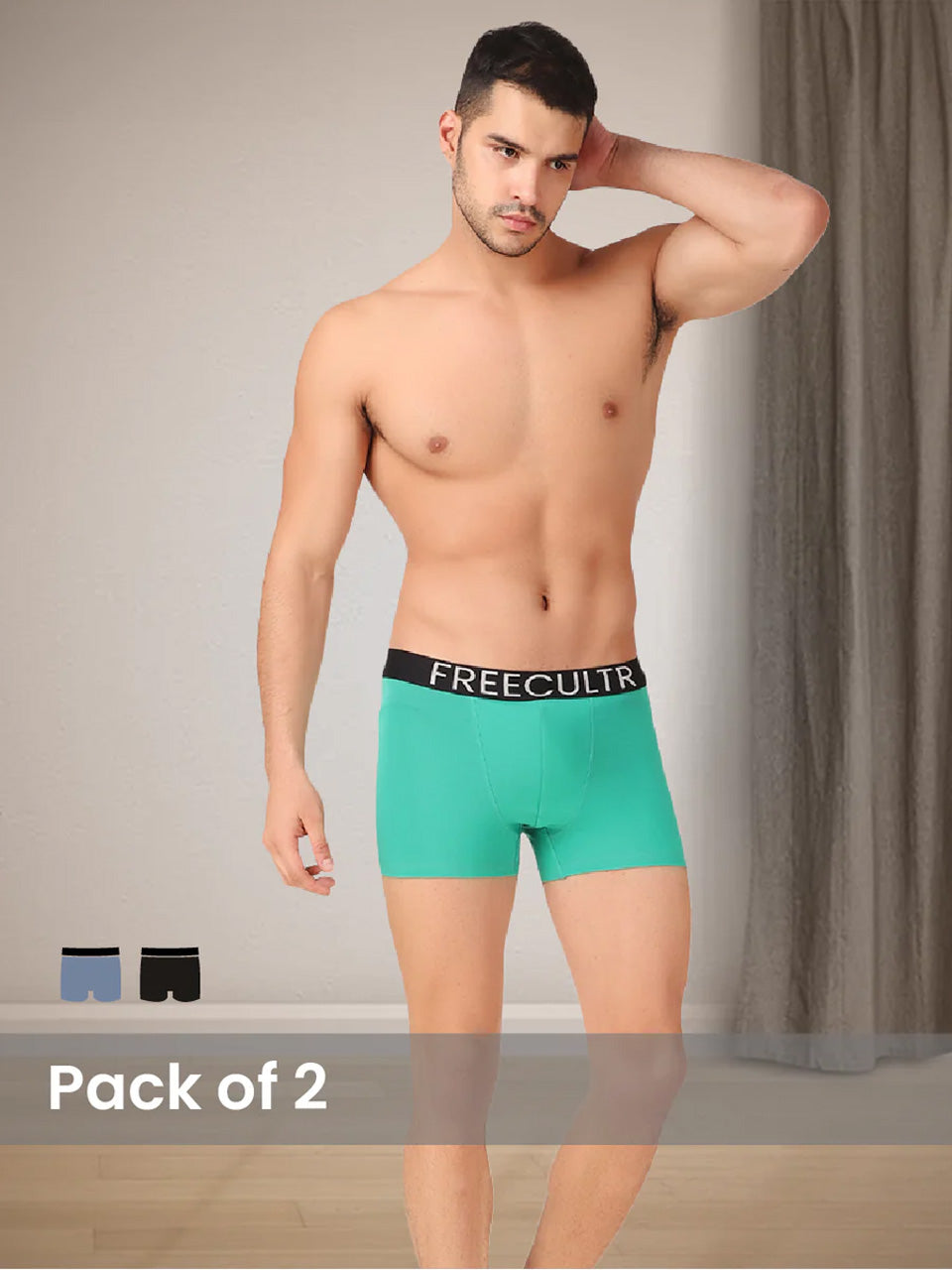
Trunks look like shortened boxer briefs with a square-cut leg opening. They typically feature a 1-3 inch inseam and sit lower on the waist than traditional options. Comfort characteristics:- Modern fit: Sits 1-2 inches below the natural waistline
- Square leg construction: The horizontal leg opening reduces elastic pressure points
- Minimal thigh coverage: Just enough fabric to prevent chafing without bulk
- Contemporary styling: Often features bold colors and patterns
Low-Rise Briefs: Style-Forward Comfort
Low-rise briefs sit 2-3 inches below the natural waistline, creating a modern silhouette. These have gained traction among younger demographics and fashion-conscious consumers. The comfort trade-offs:- Reduced waistband pressure: Sits below the typical belt line
- Enhanced mobility: Lower rise means less fabric restriction during bending
- Visibility consideration: More likely to show above low-rise jeans
- Support adjustment: Requires precise pouch engineering to maintain support with less vertical fabric
| Brief Style | Best For | Support Level | Coverage Area | Ideal Pant Fit |
|---|---|---|---|---|
| Traditional Briefs | Formal wear, minimal bulk | Maximum | Minimal (high leg) | Slim/tailored |
| Boxer Briefs | All-day wear, active use | High | Extended (mid-thigh) | All fits |
| Trunks | Athletic builds, modern style | Medium-High | Moderate (upper thigh) | Straight/slim |
| Low-Rise | Fashion-forward, younger demographic | Medium | Minimal (below waist) | Low-rise jeans |
Matching Brief Types to Your Daily Activities and Lifestyle
Your daily routine determines which brief style delivers optimal comfort—sedentary office workers need breathability and minimal shifting, active professionals require chafe-prevention and moisture management, athletes demand compression and support, frequent travelers benefit from quick-dry fabrics, and climate considerations dictate fabric weight and ventilation levels. We've seen too many men choose briefs based on brand marketing rather than actual lifestyle fit. The result? Constant adjusting, discomfort, and wasted money.Sedentary Office Work: Breathability Over Everything
Sitting for 8-10 hours creates unique challenges. Heat builds up. Fabric bunches. Circulation gets restricted. What works for desk jobs:- Breathable cotton blends: Natural fibers prevent sweat accumulation during prolonged sitting
- Non-binding waistbands: Avoid elastic that digs in when seated
- Minimal seam construction: Reduces pressure points during extended sitting
- Modal or bamboo fabrics: These stay cooler than pure cotton in climate-controlled offices
Active Jobs and Physical Labor: Durability Meets Mobility
Construction workers, warehouse staff, and tradespeople need underwear that moves with them and survives harsh conditions. Critical features for active work:- Reinforced stitching: Flatlock seams prevent blow-outs during squatting and climbing
- Moisture-wicking synthetics: Polyester or nylon blends dry faster than cotton
- Longer inseams: 5-7 inch boxer briefs prevent thigh chafing during repetitive movement
- Anti-microbial treatments: Reduce odor when changing isn't possible mid-shift
Athletic and Sports Requirements: Compression and Support
Running, cycling, weightlifting, and team sports each demand specific underwear characteristics. Generic "athletic" briefs don't cut it. Sport-specific considerations:- Running: Longer boxer briefs (6-7 inch) with chafe-resistant inner thighs and moisture-wicking mesh panels
- Cycling: Seamless trunks or traditional briefs that won't bunch under padded shorts
- Weightlifting: Compression boxer briefs with reinforced pouches for heavy squats and deadlifts
- Team sports: Quick-dry synthetics with four-way stretch for multi-directional movement
Travel Needs: Pack Light, Wash Easy
Frequent travelers need underwear that performs across multiple days, climates, and washing conditions. Travel-optimized features:- Quick-dry fabrics: Synthetic blends dry overnight after sink washing
- Wrinkle-resistant construction: Maintains shape when packed tightly
- Neutral colors: Black and gray hide stains better during extended wear
- Multi-day wear capability: Anti-microbial treatments extend freshness between washes
Climate Considerations: Temperature and Humidity
Your local climate should dictate fabric weight and ventilation design. What works in Phoenix fails in Seattle. Hot and humid climates:- Lightweight mesh construction with maximum airflow
- Moisture-wicking synthetics that dry quickly
- Minimal coverage styles (traditional briefs or short trunks)
- Light colors reflect heat better than dark fabrics
- Merino wool blends regulate temperature without overheating
- Longer boxer briefs provide additional coverage
- Thicker fabric weights (180-220 GSM) retain warmth
- Flat waistbands layer better under thermal base layers
- Mid-weight modal or bamboo blends adapt to temperature shifts
- Trunk-length coverage balances warmth and breathability
- Pack multiple fabric types for seasonal transitions
Fabric Selection and Technical Features for Maximum Comfort
Underwear fabric determines 70% of comfort—cotton offers breathability and softness but retains moisture, synthetics like polyester and nylon provide superior moisture-wicking and durability, modal delivers luxury softness with good moisture management, while technical features like four-way stretch, mesh ventilation panels, and tagless waistband construction eliminate common irritation points. The fabric conversation is where most buying guides get lazy. They list materials without explaining real-world performance differences.Cotton: The Default Choice With Limitations
Cotton remains the most common underwear fabric because it's affordable, soft, and familiar. But it's not always the best choice. Real cotton performance:- Initial softness: Nothing beats 100% cotton for day-one comfort
- Breathability: Natural fibers allow air circulation better than most synthetics
- Moisture retention: Cotton absorbs up to 25 times its weight in water and dries slowly
- Durability issues: Loses elasticity after 30-40 washes, waistbands stretch out
- Shrinkage: Expect 3-5% shrinkage even with pre-shrunk fabrics
Synthetic Fabrics: Performance Over Tradition
Polyester, nylon, and spandex blends dominate athletic and performance underwear. The reputation for being "less comfortable" is outdated. Modern synthetic advantages:- Moisture-wicking: Pulls sweat away from skin to the fabric surface where it evaporates
- Quick-dry capability: Dries 3-5 times faster than cotton
- Shape retention: Maintains elasticity through 100+ washes
- Durability: Resists pilling, tearing, and color fading
- Odor resistance: When treated with anti-microbial coatings, stays fresher longer
Modal and Bamboo: The Luxury Middle Ground
Modal (made from beech tree pulp) and bamboo fabrics bridge the gap between cotton's softness and synthetics' performance. Why they're gaining popularity:- Exceptional softness: Smoother than cotton with a subtle sheen
- Better moisture management: Absorbs 50% more moisture than cotton and releases it faster
- Breathability: Natural fiber structure allows excellent air flow
- Durability: Stronger than cotton when wet, resists pilling
- Environmental consideration: Requires less water and pesticides than cotton production
Stretch Factor and Four-Way Stretch Technology
Fabric stretch determines how well briefs move with your body. This is separate from fabric type. Two-way stretch: Fabric stretches in one direction (usually horizontal). Common in budget underwear. Limits movement during activities like squatting or climbing stairs. Four-way stretch: Fabric stretches both horizontally and vertically. Returns to original shape without sagging. Essential for athletic use and all-day comfort. The stretch comes from elastane (also called spandex or Lycra). Quality briefs contain 8-15% elastane. Less than 5% provides minimal stretch. More than 20% feels too compressive for daily wear.Waistband Construction: The Make-or-Break Detail
A premium fabric means nothing if the waistband fails. This is where we see the biggest quality differences between brands. Waistband types and their performance:- Single elastic band: Budget option, digs into skin, loses tension quickly
- Plush elastic: Wider band (1.5-2 inches) distributes pressure, more comfortable but can roll
- Jacquard waistband: Woven elastic with brand logo, balances comfort and durability
- Bonded waistband: Seamless construction, no stitching, eliminates irritation but can be less durable
Pouch Design and Support Engineering
The pouch isn't just decorative. It's functional engineering that determines support level and comfort. Standard pouch: Flat front panel with center seam. Provides minimal separation or support. Works for smaller builds. Contoured pouch: Three-dimensional construction with side panels. Creates space and separation. Reduces compression and sticking. Better for average to larger anatomy. Fly vs. no-fly: Functional flies add convenience but create an extra fabric layer. No-fly designs reduce bulk. Personal preference matters here. The freecultr brand has invested heavily in pouch engineering across their line. Their contoured pouch design uses a three-panel construction that we've found eliminates the "readjustment problem" that plagues flat-front styles.| Fabric Type | Softness | Moisture Management | Durability | Best Use Case | Price Range |
|---|---|---|---|---|---|
| 100% Cotton | Excellent | Poor | Fair | Low activity, sleep | $8-15 |
| Cotton Blend | Very Good | Fair | Good | Everyday wear | $10-18 |
| Synthetic (Polyester/Nylon) | Good | Excellent | Excellent | Athletic, travel | $15-25 |
| Modal/Bamboo | Excellent | Very Good | Very Good | Everyday comfort | $18-30 |
| Merino Wool | Very Good | Excellent | Good | Cold weather, multi-day | $25-40 |
Fit Guidelines and Sizing Considerations
Proper brief fit requires accurate waist measurement at the hip bone level, leg openings that stay in place without binding, adequate pouch room to prevent compression, and waistband placement that matches your torso length—with fit preferences shifting as body composition, age, and activity levels change over time. Sizing is where men make the most expensive mistakes. Buying the wrong size wastes money and guarantees discomfort.Taking Accurate Measurements
Don't trust your pant size. Underwear sizing uses different measurement points and varies significantly between brands. Waist measurement technique:- Use a soft measuring tape, not a metal one
- Measure around your body at the hip bone level (where briefs naturally sit)
- Keep the tape parallel to the ground, not angled
- Pull snug but don't compress your skin
- Take the measurement while standing relaxed, not flexing or sucking in
Leg Opening Fit: The Ride-Up Problem
Leg openings determine whether boxer briefs stay in place or migrate upward throughout the day. This is the number one fit complaint we hear. Signs of proper leg fit:- Leg bands sit flat against your thigh without gaps
- No elastic pressure creating red marks after 30 minutes of wear
- Fabric doesn't bunch or twist when you walk or sit
- Leg openings stay positioned where they started
- Constant riding up requiring adjustment
- Elastic cutting into thigh creating discomfort
- Fabric bunching at the crotch
- Visible lines through pants from tight elastic
Pouch Room and Support Balance
Too much compression causes discomfort. Too little support causes shifting and readjustment. Proper pouch fit indicators:- Comfortable separation without compression
- No need to adjust after initial positioning
- Support without restriction during movement
- No visible lines or bulging through pants
Waistband Placement and Torso Length
Torso length determines which rise style works for your body. This is rarely discussed but critically important. Short torso indicators:- Distance from belly button to hip bone is less than 4 inches
- Regular-rise briefs feel too high and restrictive
- Waistbands tend to roll or fold over
- Distance from belly button to hip bone exceeds 5 inches
- Low-rise styles feel like they're falling off
- Prefer higher waistbands for security
How Body Type and Age Change Fit Preferences
Your ideal brief style at 25 likely won't be the same at 45. Body composition changes. Comfort priorities shift. Athletic builds (low body fat, muscular):- Need more stretch in the fabric (minimum 10% elastane)
- Benefit from contoured pouches
- Require relaxed leg openings to accommodate thigh size
- Trunks and boxer briefs typically fit better than traditional briefs
- Most versatile, can wear any style comfortably
- Focus on fabric quality over specialized fit features
- Standard sizing charts are most accurate
- Longer inseams (6-7 inch) prevent thigh chafing
- Wider waistbands (2+ inches) distribute pressure better
- Moisture-wicking fabrics essential for comfort
- Avoid low-rise styles that slide down
- Increased sensitivity to waistband pressure
- Preference for natural fibers over synthetics
- Need for better support as skin elasticity decreases
- Comfort prioritized over style
Between-Size Dilemmas: Size Up or Down?
When measurements fall between two sizes, the decision depends on the fabric and your priority. Size up when:- The fabric has minimal stretch (less than 8% elastane)
- You're between sizes and prioritize comfort over a snug fit
- You're buying cotton, which will shrink slightly
- You have athletic thighs that need extra leg room
- The fabric has high stretch content (12%+ elastane)
- You're buying synthetic performance fabric that won't shrink
- Reviews indicate the brand runs large
- You prefer a more fitted, supportive feel
How to Choose the Best Briefs for Men: A Step-by-Step Selection Process
Step 1: Identify Your Primary Use Case Start by determining where you'll wear these briefs most often. Don't try to find one pair that does everything. Ask yourself:- Will these be for work, workouts, or everyday casual wear?
- What's your typical activity level during wear?
- What's the climate and temperature range?
- How often can you wash them?
- Sedentary office work: Traditional briefs or trunks in cotton blend or modal
- Active work or sports: Boxer briefs (5-7 inch inseam) in synthetic moisture-wicking fabric
- All-day everyday wear: Boxer briefs or trunks in modal or bamboo blend
- Travel: Trunks or boxer briefs in quick-dry synthetic with anti-microbial treatment
- Hot climate: Traditional briefs or short trunks in lightweight mesh-panel synthetic
- Cold climate: Boxer briefs in merino wool blend or heavier cotton blend
- Visit the brand's website and locate their specific size chart (not generic S/M/L descriptions)
- Compare your measurement to their waist size ranges
- Read customer reviews for fit feedback (search for "runs small" or "runs large")
- If between sizes, follow the size-up or size-down guidelines based on fabric type
- Order 2-3 pairs in your calculated size
- If possible, order two adjacent sizes to compare fit
- Wear each pair for a full day including various activities
- Wash according to instructions and check for shrinkage or shape loss
- Evaluate comfort after 3-4 wears, not just the first day
- Does the waistband stay in place or roll down?
- Do leg openings ride up or stay positioned?
- Is there adequate pouch room without excess fabric?
- Does the fabric breathe or trap heat?
- How does it feel after 8 hours of wear?
- Everyday basics (7-10 pairs): Your go-to style for normal days, work, and casual wear
- Athletic/performance (3-5 pairs): Dedicated workout and high-activity briefs
- Premium comfort (3-4 pairs): Higher-end modal or bamboo for important days or when comfort is critical
- Travel specific (2-3 pairs): Quick-dry synthetic for trips
- Waistband loses elasticity and slides down
- Fabric becomes thin or develops holes
- Leg openings stretch out and no longer stay in place
- Colors fade significantly or fabric pills excessively
Conclusion
Choosing the right briefs isn't about following trends. It's about understanding your body and how you move through your day. The best pair disappears into the background, letting you focus on what matters without adjusting, chafing, or discomfort pulling your attention away. Start with your lifestyle first. Your daily routine dictates everything else. If you're active, prioritize fabrics that move moisture away from your skin and waistbands that stay put during movement. Desk workers benefit most from breathable cotton blends that prevent heat buildup during long sitting sessions. Climate plays a huge role too. Hot, humid environments demand different solutions than dry, cold ones. Fit trumps fabric every time. A premium material in the wrong size creates more problems than cheap cotton that fits well. Measure yourself properly and don't guess based on your pants size. The waistband should sit comfortably without digging in, the leg openings shouldn't bind or ride up, and the pouch should provide support without compression. Your body changes over time, so reassess your size every year or two. Comfort and fit work together, not separately. When you get both right, you'll forget you're wearing anything at all. That's the goal. Brands like freecultr have mastered this balance by combining thoughtful design with quality materials that hold up wash after wash. Invest in a few pairs that truly work for your needs rather than a drawer full of compromises. Your daily comfort is worth getting this right.About freecultr
freecultr has established itself as a trusted authority in men's underwear by combining advanced fabric technology with ergonomic design principles refined through years of customer feedback and testing. The brand specializes in creating premium briefs that address real comfort challenges men face across different lifestyles, from high-performance athletic wear to everyday essentials. With a commitment to quality materials, precise sizing standards, and innovative construction techniques, freecultr delivers underwear that performs consistently through hundreds of washes while maintaining the comfort and support that modern men demand.
More Articles
Men's Briefs: Premium Underwear Collection for Everyday ComfortMen's Underwear & Briefs - Premium Cotton Underwear for Men | FreeCultr
Men's Trunks Underwear - Premium Comfort & Style | FreeCultr
Men's Trunks Underwear | Premium Cotton & Bamboo Trunks for Men - Freecultr
FAQs
What fabric should I choose for everyday comfort?
Cotton is your best bet for daily wear since it breathes well and feels soft against your skin. If you're more active, consider a cotton-blend with a bit of spandex for stretch and moisture-wicking properties.
How do I know if briefs fit properly?
The waistband should sit comfortably without digging in or rolling down, and the leg openings shouldn't pinch or ride up. You should be able to move freely without any bunching or chafing throughout the day.
Are briefs or boxer briefs better for athletic activities?
Boxer briefs typically work better for sports and workouts because they provide more coverage and prevent chafing between your thighs. Look for moisture-wicking fabrics that keep you dry during intense activity.
What's the difference between low-rise and mid-rise briefs?
Low-rise briefs sit below your natural waistline and work well with lower-cut pants, while mid-rise sits at your waist for more coverage. Choose based on your typical pant style and personal comfort preference.
How many pairs of briefs should I own?
Most guys need at least 10 to 14 pairs to comfortably rotate through the week without doing laundry constantly. Having extras means you're always prepared and your underwear lasts longer overall.
Do I need different briefs for different seasons?
Lighter, breathable fabrics like cotton or moisture-wicking blends work great in summer, while you might prefer slightly thicker materials in winter. The difference isn't huge, but seasonal rotation can boost comfort.
What should I avoid when buying briefs?
Stay away from fabrics that don't breathe well, like pure polyester, and avoid anything with rough seams or tight elastic that digs into your skin. Also skip sizes that are too tight just because you want a sleeker look.
How often should I replace my briefs?
Replace them every six months to a year, or sooner if you notice the elastic is stretched out, the fabric is thinning, or they're no longer comfortable. Worn-out underwear loses support and can cause irritation.